Episode 319: Under glass at london’s Chelsea Physic Garden: A Journey Through 353 Years of Botanical History
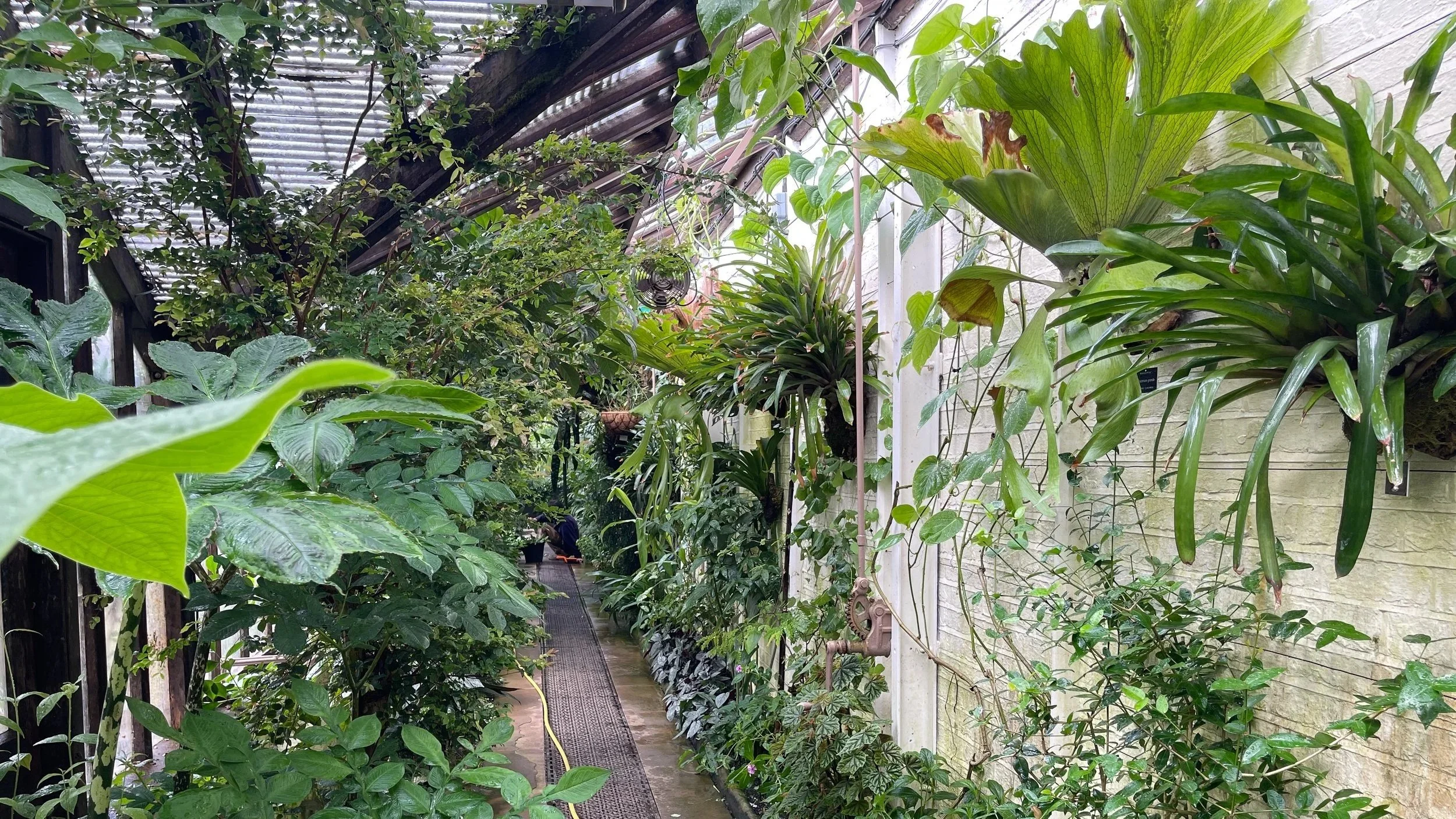
Inside the tropical corridor at the Chelsea Physic Garden. The wall on the right is joins the garden to the outside world. Photograph: Jane Perrone
Transcript
Jane Perrone (00:05) Hello and welcome to On the Ledge Podcast. I'm your host, Jane Perrone and in this week's show I'm visiting London's oldest botanic garden, the Chelsea Physic Garden, taking a potter around their glass houses with curator Emily Hazell. Finding out why some plants love living with ants.
How to make sure your succulents have not been poached and why geophytic pelargoniums might make an excellent addition to your houseplant collection.
More from the Chelsea Physic Garden shortly, but first a little bit of housekeeping. Thank you to those who've joined my Patreon of late. Rosanna has tried a seven-day free trial of the legend tier, and Katie, Steve, Brandon, Tim, and B all became free members. Thank you to all of you for supporting the show. It's much, much appreciated. If you want to go and check it out for seven days for absolutely free.
Please do that. You'll find my Patreon at patreon.com/ontheledge All the info is there, but do drop me a line if you've got any questions. And this is going to be the last episode of the show before I take a short break of three weeks. I am gonna be totally honest with you. I am really severely burnt out right now, having come.
Off of being made redundant, I had to hit the ground running straight away, and it's been a slog. ⁓ on top of well, I don't talk much about personal stuff, but let me just say I've been going through a migraine hell, if I can put it that way, and it's been a really difficult period dealing with up to 10 plus migraines a month for
Well, that's been going on for years to be quite honest, although it has got worse recently, and I'm finally on some medication that is working, which is great, but I am just really burnt out now. So I'm gonna be taking three weeks off. I will probably, if I get the chance, put out some on the ledge reloaded episodes. So bringing back old episodes for you to enjoy for those three weeks.
So there'll be something dropping in your feed, and then I'll be back on July the 17th with a new episode. I just can't keep going. ⁓ and you know, I keep telling myself it's okay to take a break because it is, and I'd say that to you too, as somebody who is phenomenally bad at taking a break and relaxing, that's exactly what I'm gonna try to do.
And if you miss the show, well, all I can say is, you know, do go and join the Patreon because there's so much stuff there. Extra leaf episodes, the first 50 episodes of the show, my audiobook, which if you join for the legend free trial, you get access to The Atlas of Deadly Plants. And if you become a super fan, you can access my other audiobooks, but you could also
Buy those individually as well. So there's just a wealth of content there. So if you're missing the show, please do go and check that out. It's a really great way of supporting me, particularly right now when I'm coming back off rebuilding my freelance business and it's tough. So I would love to have your support. It doesn't have to be in monetary form, it could just be passing on.
That you've enjoyed the show to s another planty person, or maybe leaving a review for my podcast or one of my books. It all massively helps me. So thank you for everyone who does all that already, and thank you to everyone who's planning to do so as a result of this. But yeah, burnout is no joke, and I need to take a breath. So I hope you understand. And yeah, I will see you on the other side. But for now, we're going back.
Into the Chelsea Physic Garden. Join me.
And that's not quite it. We also visited a small conservatory that plays home to a load of cacti, which we didn't end up talking about, but in addition to that, lots of carnivorous plants, which we did talk about. I had to check whether people outside the UK know what a flume ride is, a log ride, a water ride.
That's what I'm talking about when I say ⁓ talk about flumes at the start of this audio. So do enjoy this last chunk of chat from the Chelsea Physic Garden.
Join Emily Hazell, the curator of the Chelsea Physic Garden, as she guides us through the rich history and diverse plant collections of this historic London garden, including the tropical corridor, pelargonium house and the carnivorous plant collection.
OTL housekeeping
Want to buy a copy of my books Legends of the Leaf and The Atlas of Deadly Plants? All the details are here. Don’t delay if you’d like a copy of Legends of the Leaf, the hardback edition - I only have a very few copies left and there won’t be any more, ever!
Want more? Join my Patreon! You can join for free or choose one of my paid tiers. There’s an article for all members - including free ones - about repotting houseplants and what substrates to use to read right now!
Want to visit the Chelsea Physic Garden?
This garden is located in central London and makes for a brilliant day out! Here’s all the info: Chelsea Physic Garden Membership & Tickets. The garden also holds supper clubs and other special events which are definitely worth a look.
Resources & Links:
Pelargonium House
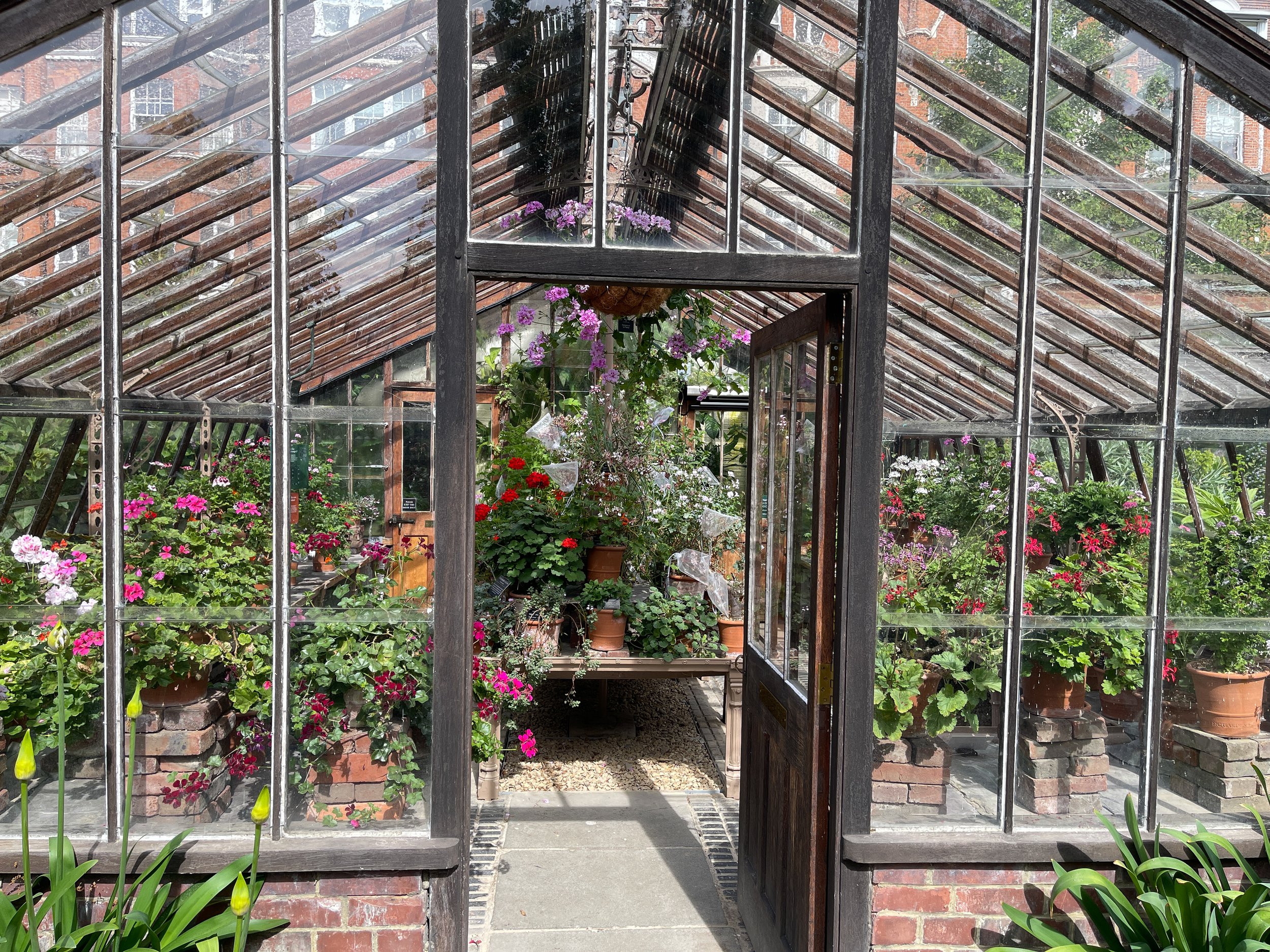
Photograph: Jane Perrone
The pellies we mention in this episode are:
Pelargonium tetragonum - square stalked pelargonium
Pelargonium bowkeri - carrot-leaved pelargonium
Pelargonium radens - rasp-leaved pelargonium
Pelargonium echinatum - cactus pelargonium
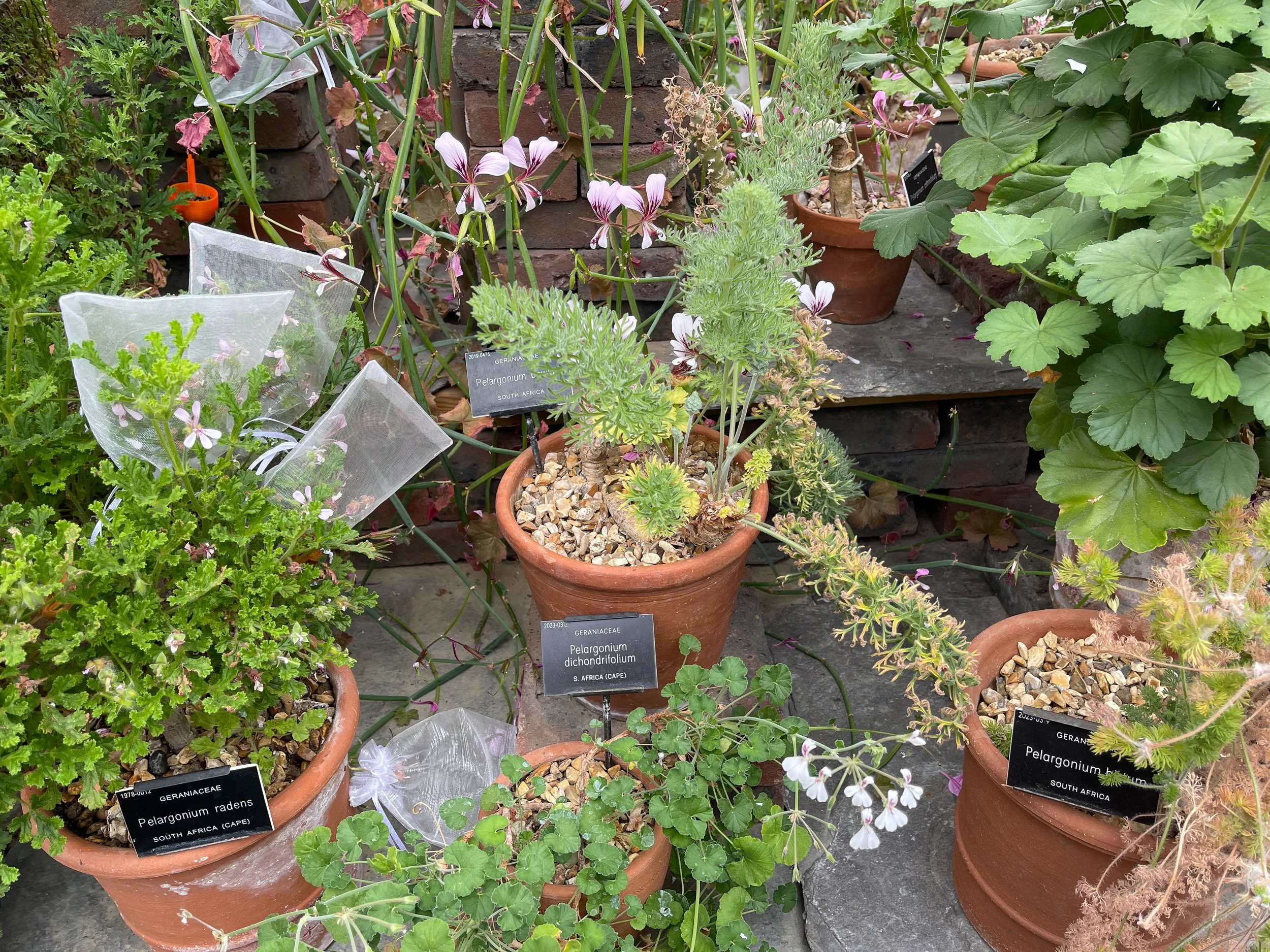
Photograph: Jane Perrone
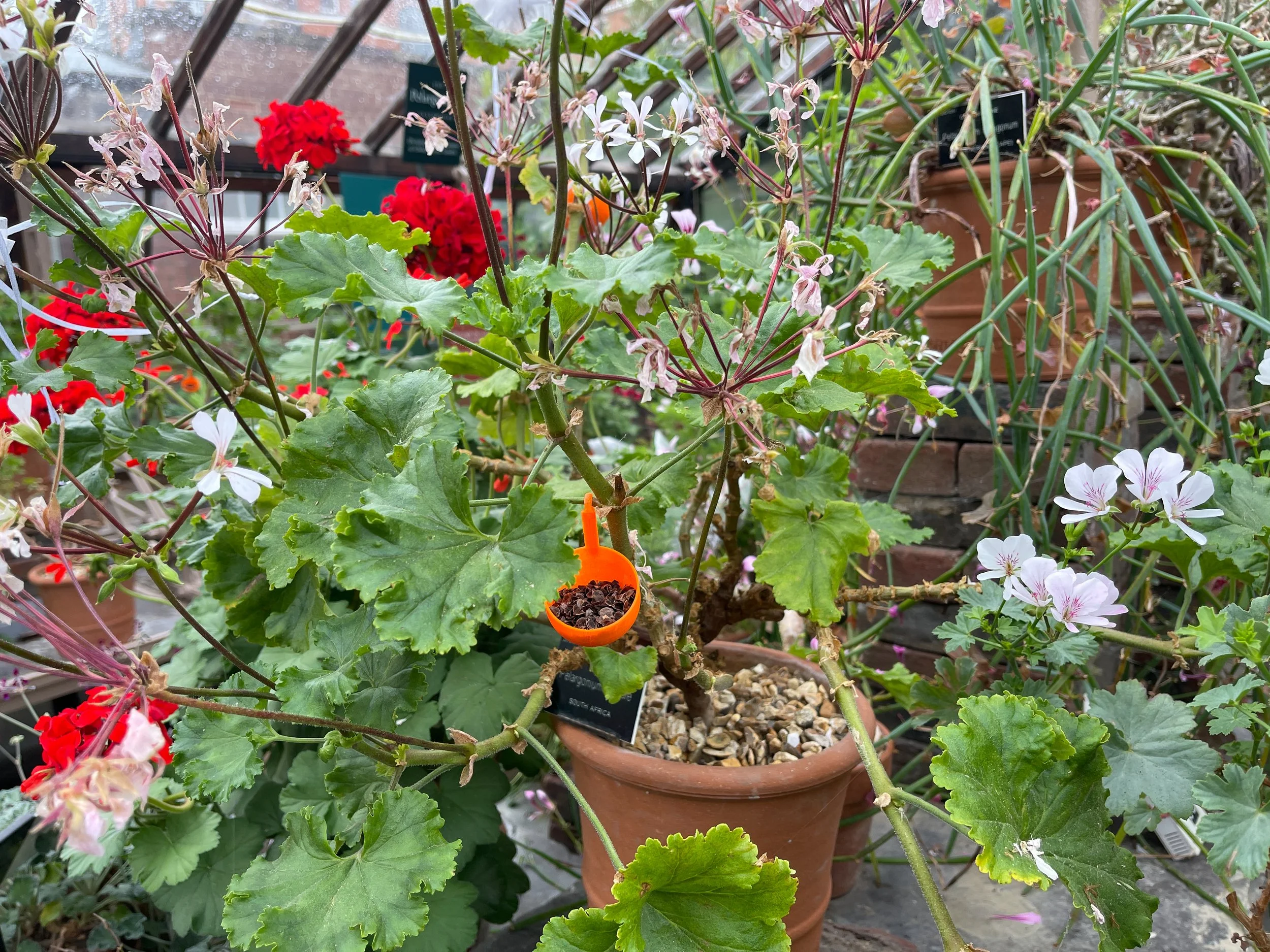
Integrated Pest Management measures are delivered in the orange cups seen in this image. Photograph: Jane Perrone
Tropical Corridor plants
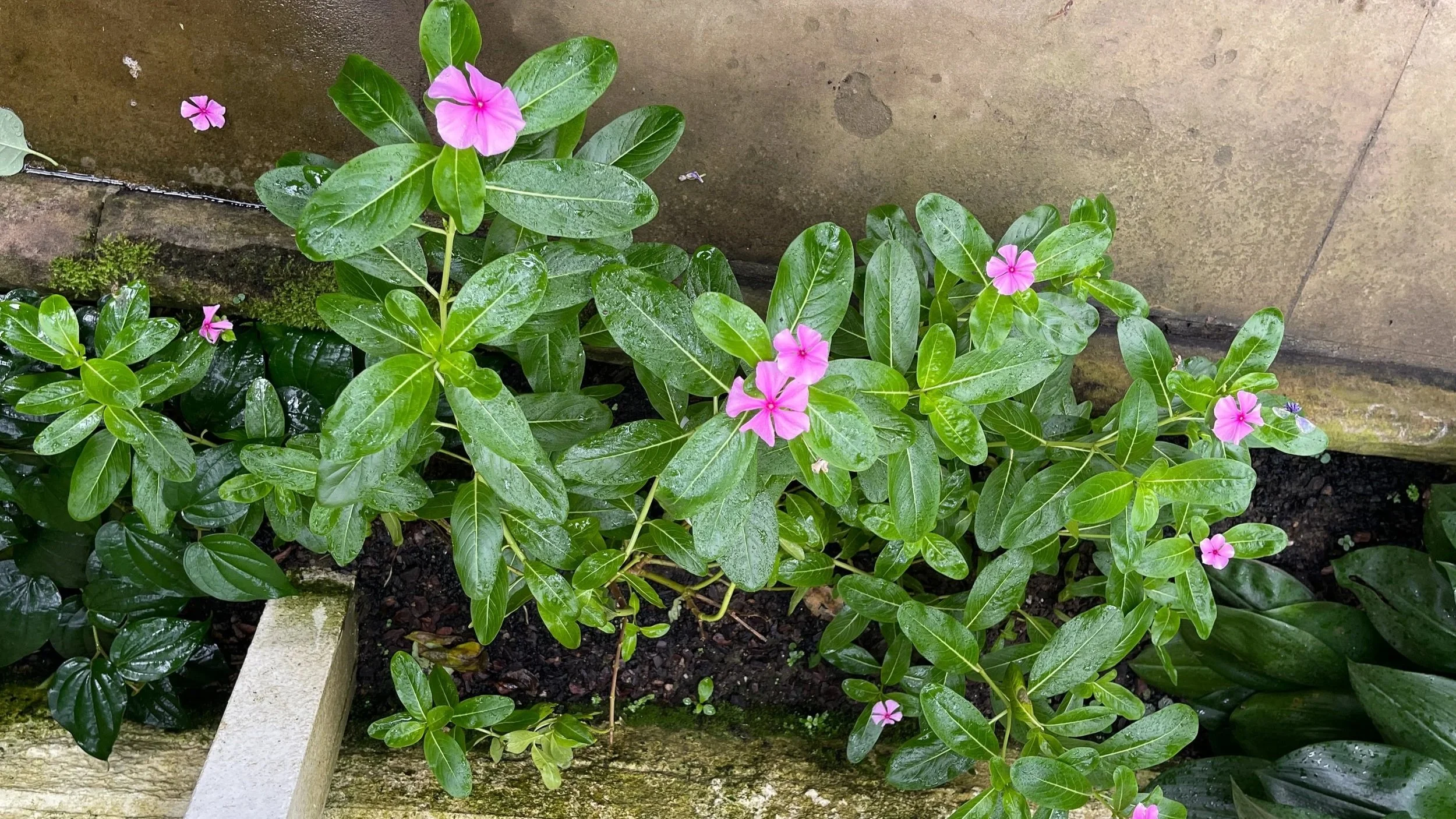
Madagascan periwinkle in the tropical corridor. Scroll down for more images from the Tropical Corridor. Photograph: Jane Perrone
Cataranthus rosaeus - Madagascan periwinkle
Theobroma cacao - cocoa plant
Cinchona pubescens - quinine tree
Platycerium stemaria - African staghorn fern
Platycerium bifurcatum - common staghorn fern
Anthurium wendlingeri - Emily mentions the term ‘perigone’ which is the diamond-shaped structure on the spadix of Anthuriums, each of which contains a tiny flower.
Manihot grahamii - hardy tapioca
Vanilla planifolia - vanilla orchid
Platycerium superbum - giant staghorn fern
Hydnophytum formicarum - ant plant
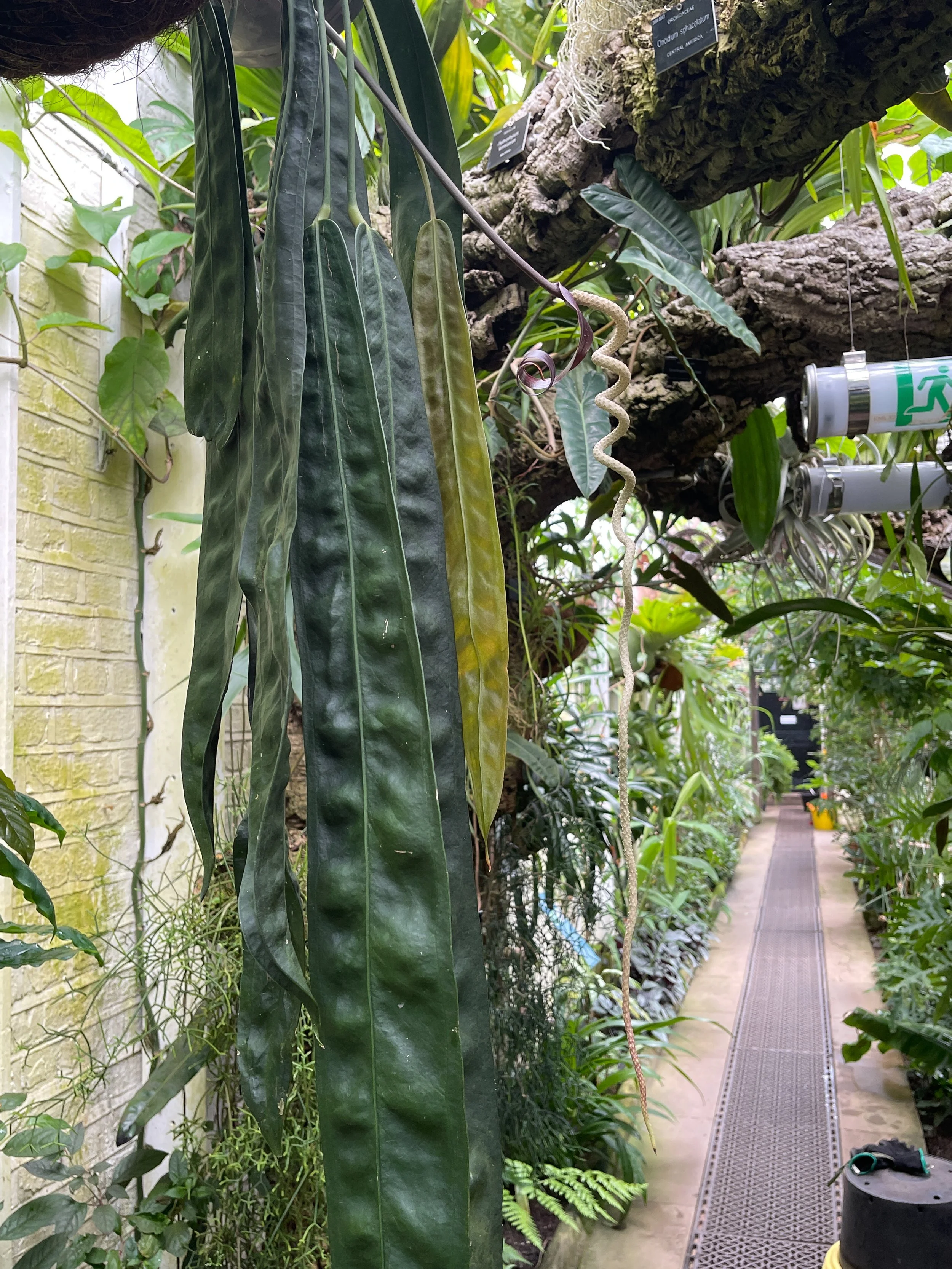
Anthurium wendlingeri in the Tropical Corridor. Photograph: Jane Perrone
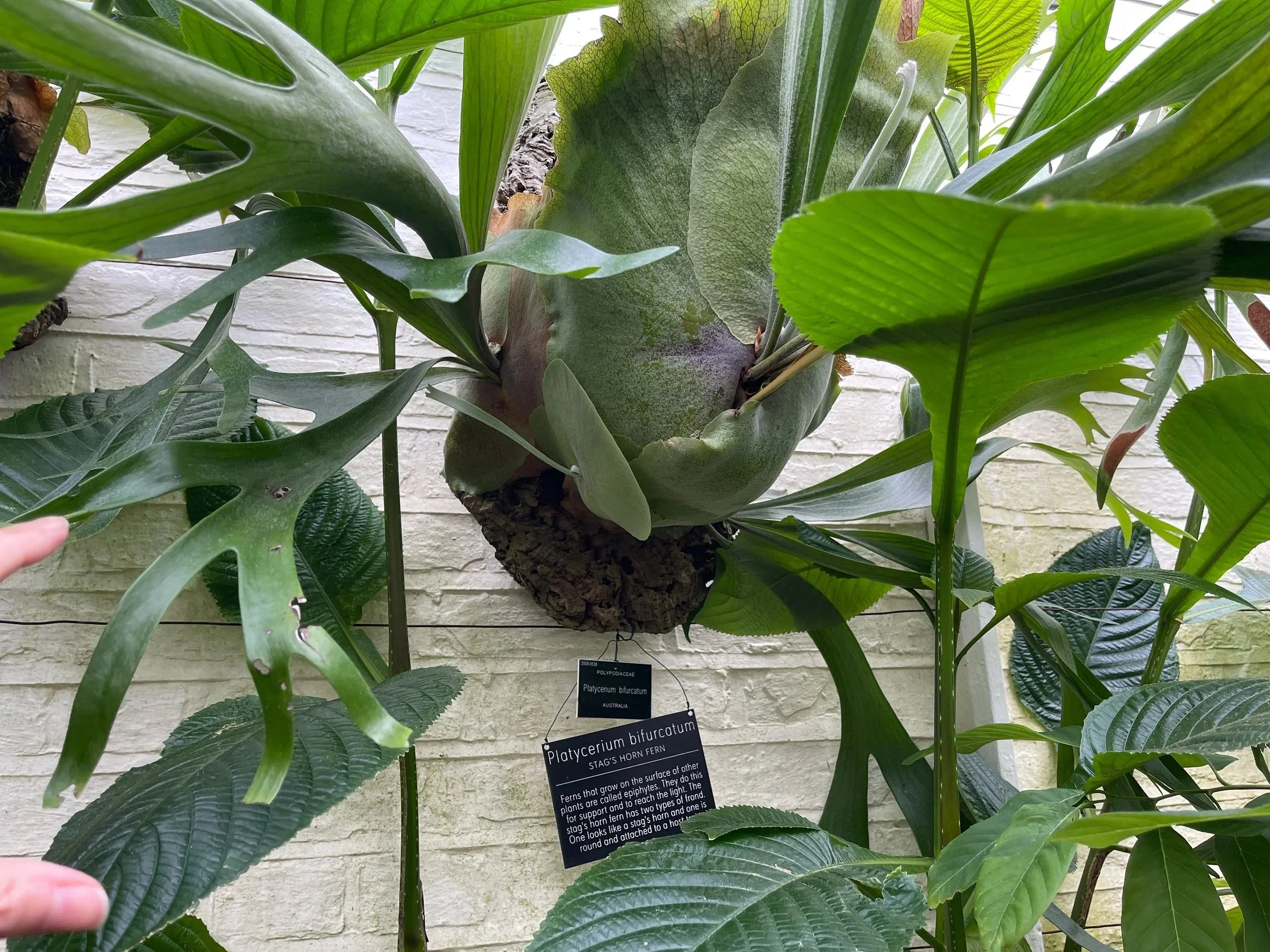
Stagshorn fern. Photograph: Jane Perrone
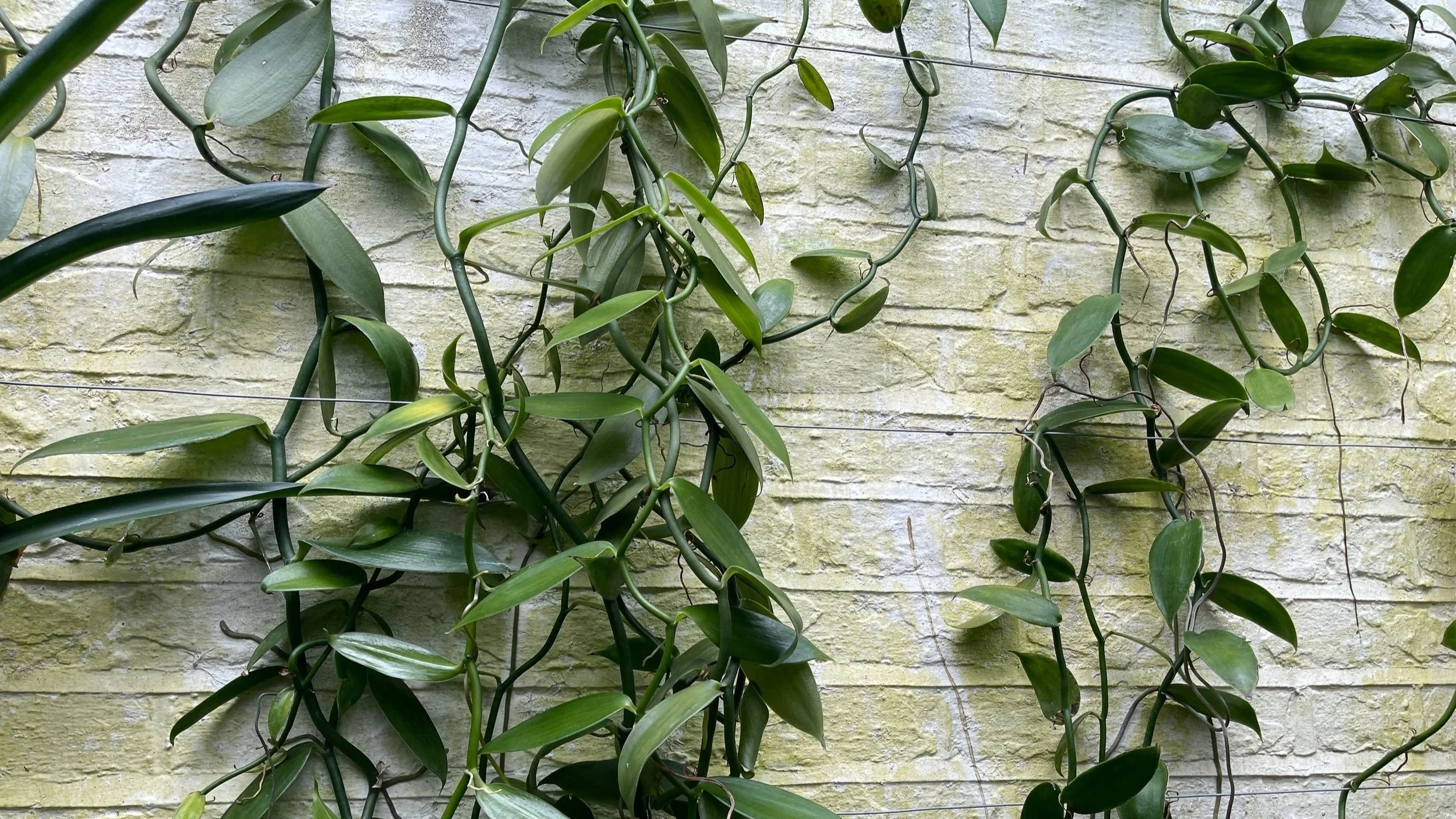
The vanilla orchid. Photograph: Jane Perrone
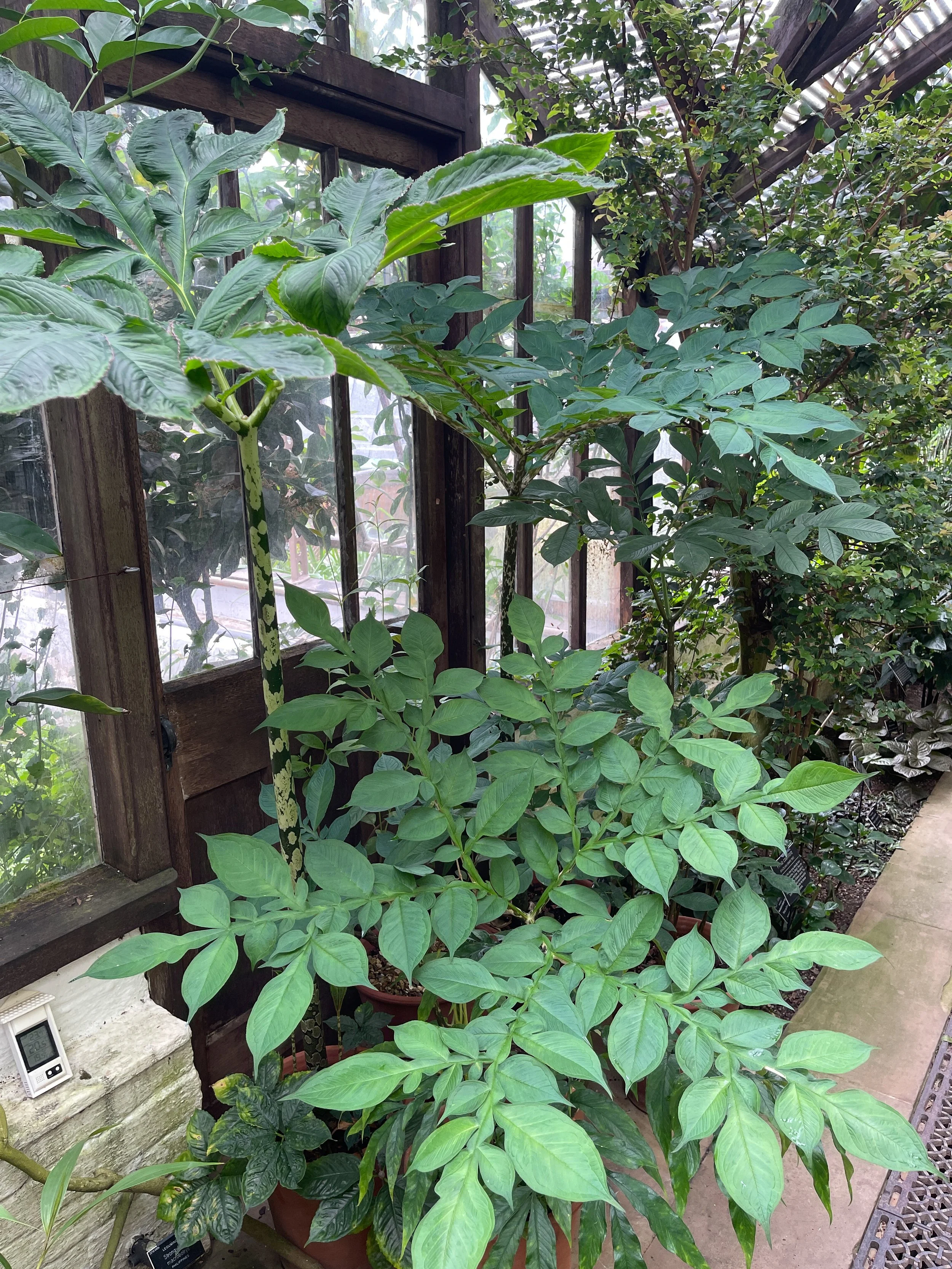
Amorphophallus species. Photograph: Jane Perrone
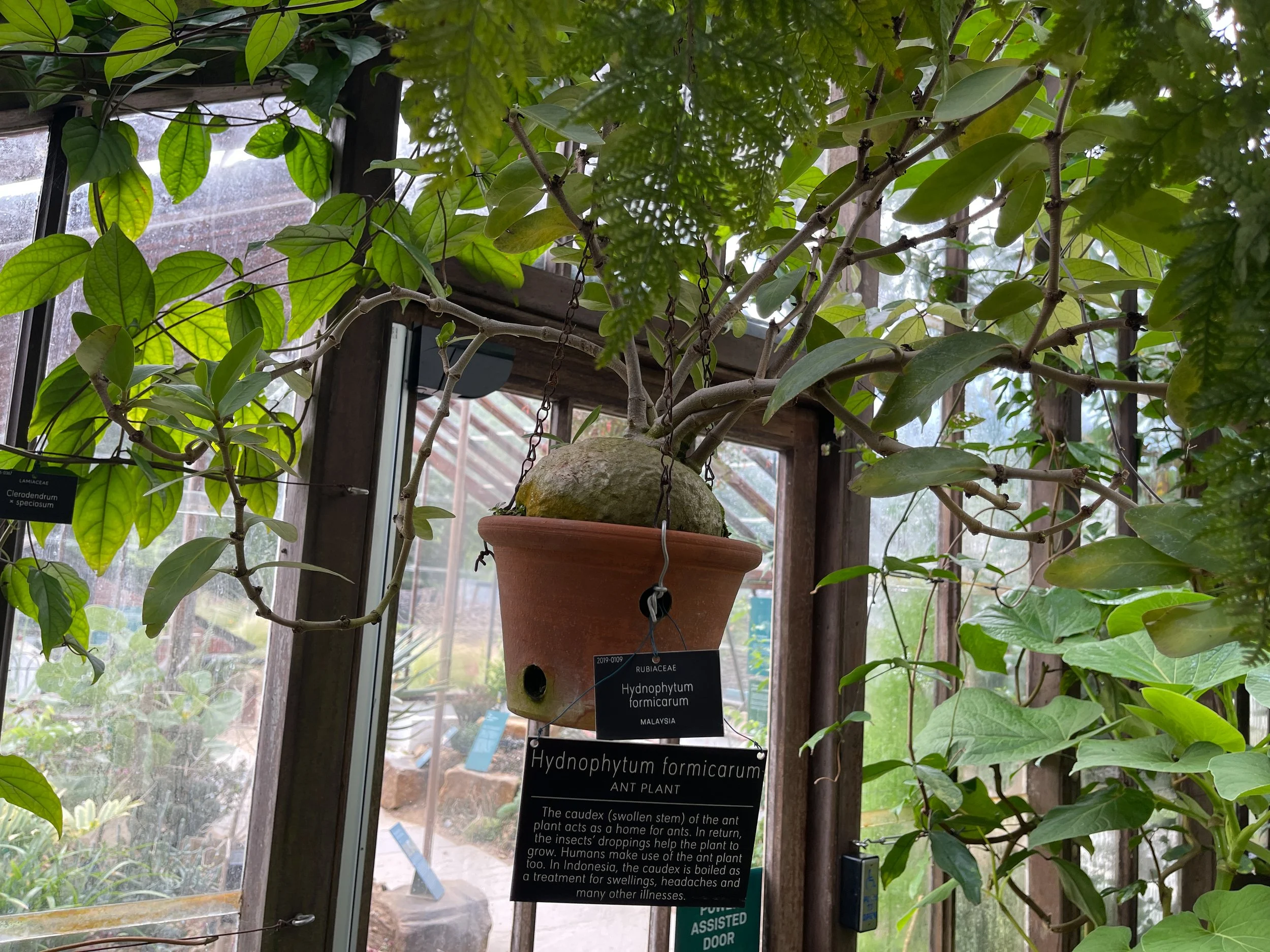
The ant plant. Photograph: Jane Perrone
South African glasshouse plants
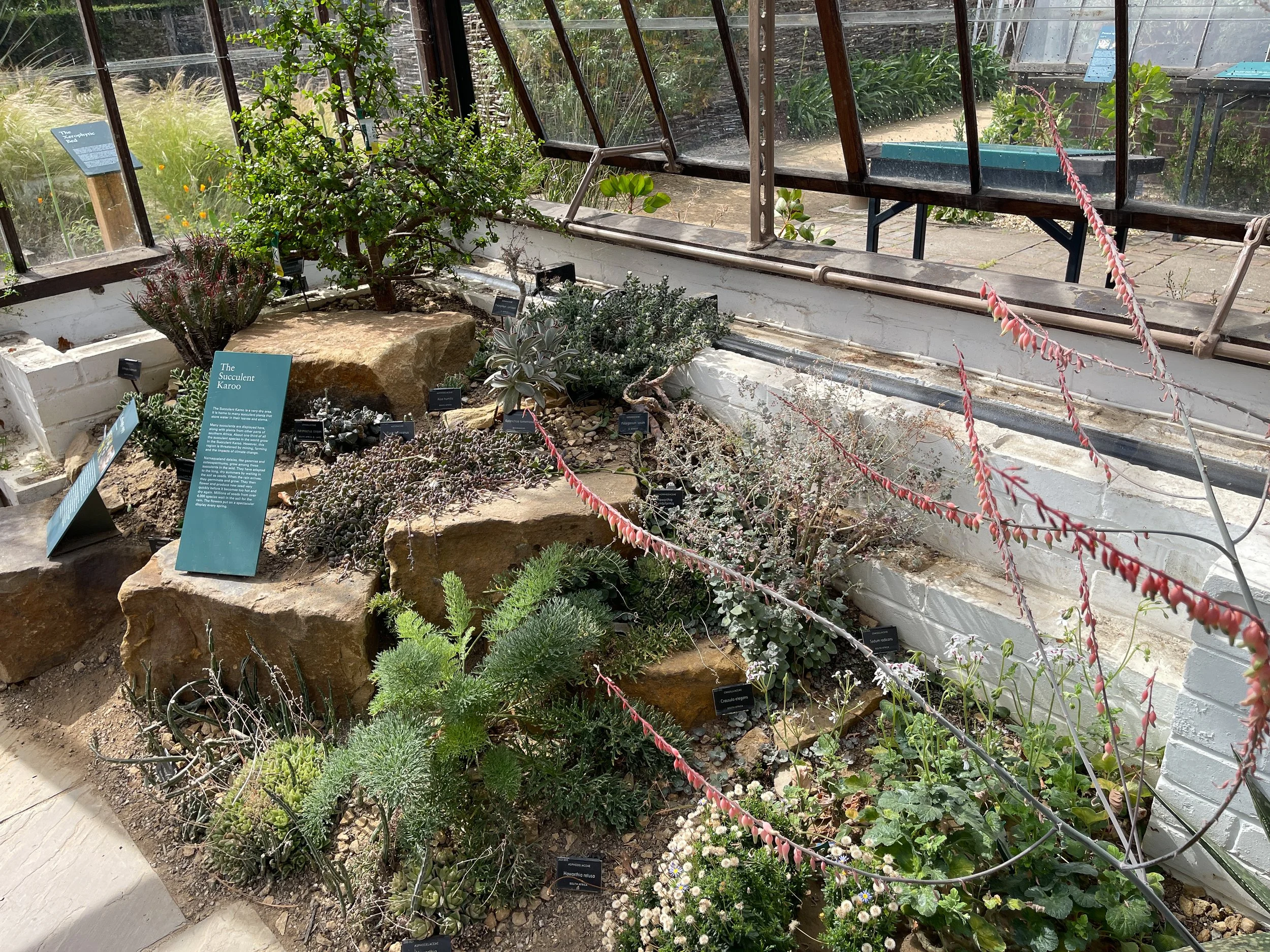
Inside the South African Glasshouse. Note the large Portulacaria afra at the back and the pickle plant (Delosperma echinatum) to its right. Photograph: Jane Perrone
Aloidendron dichotomum - quiver tree
Aristaloe aristata - lace aloe
Delosperma echinatum - pickle plant (check out my episode on pickle plants)
Erythrina latissima (pea family) - broad-leaved coral tree - scroll down for a photo!
Gasteria obliqua - not sure if this is a super-common common name, but I have heard this one called ‘lawyer’s tongue’!
Pelargonium sidoides - African pelargonium
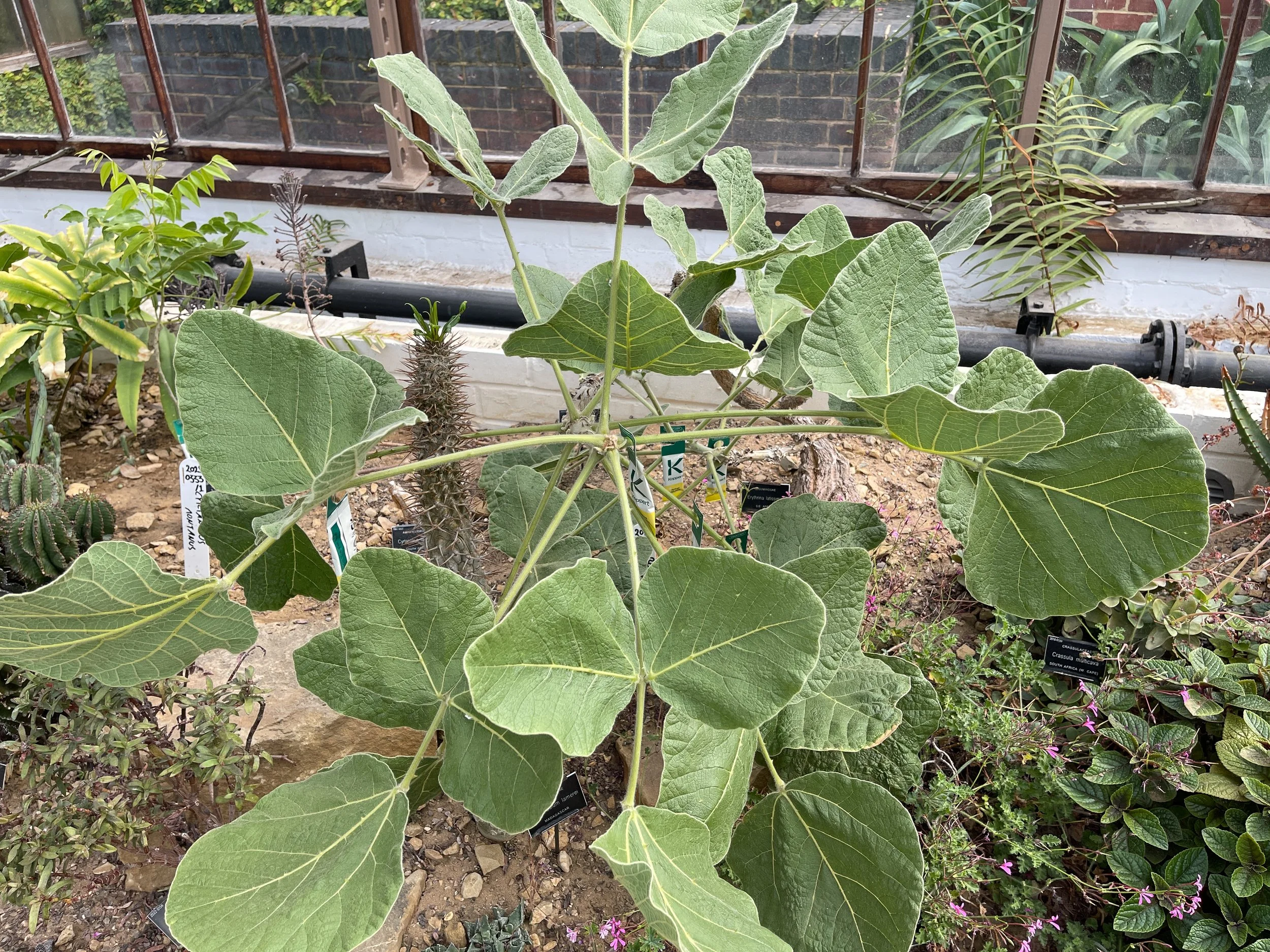
The broad-leaved coral tree a member of the pea family/ Photograph: Jane Perrone
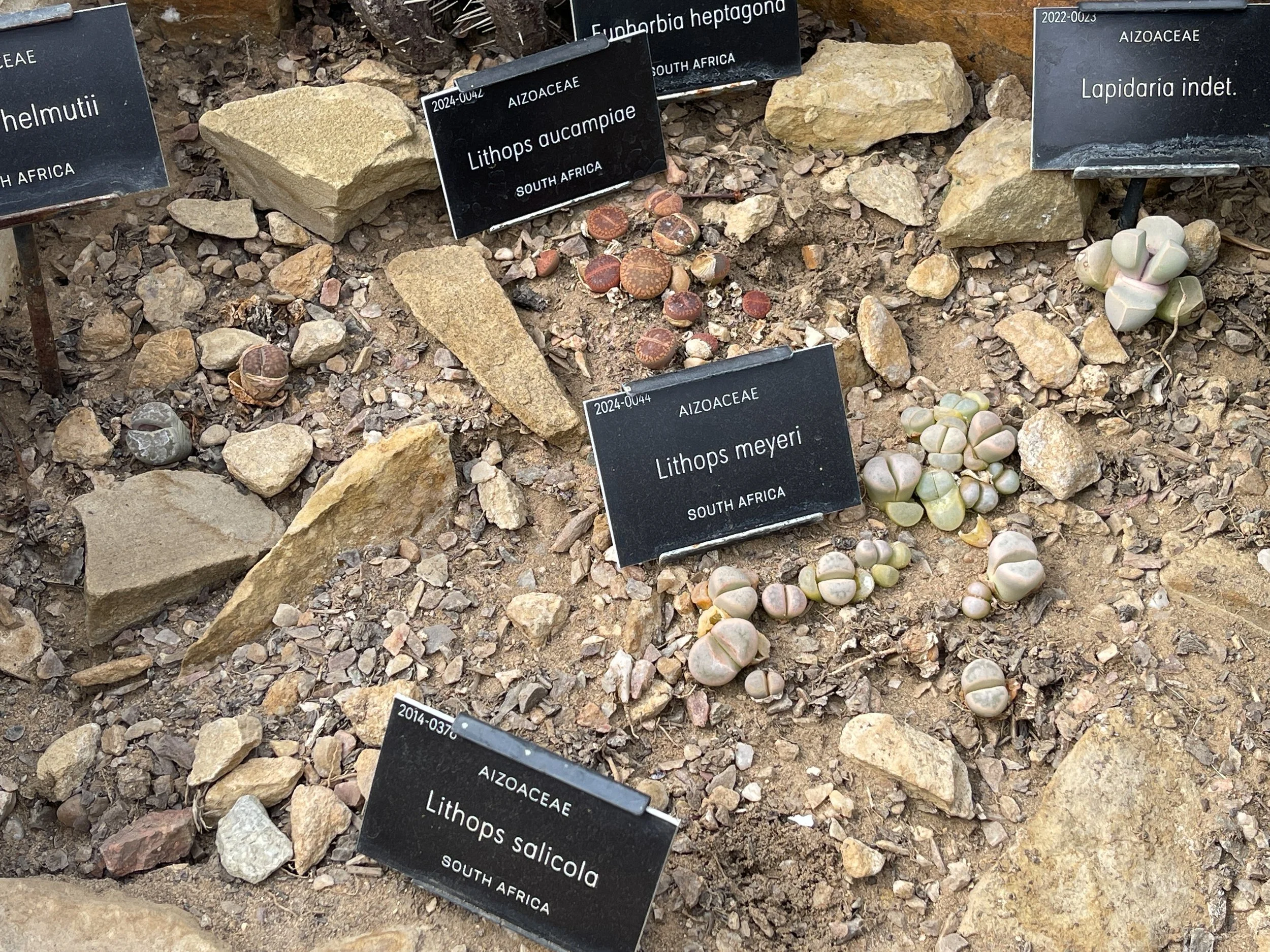
Lithops species. Photograph: Jane Perrone
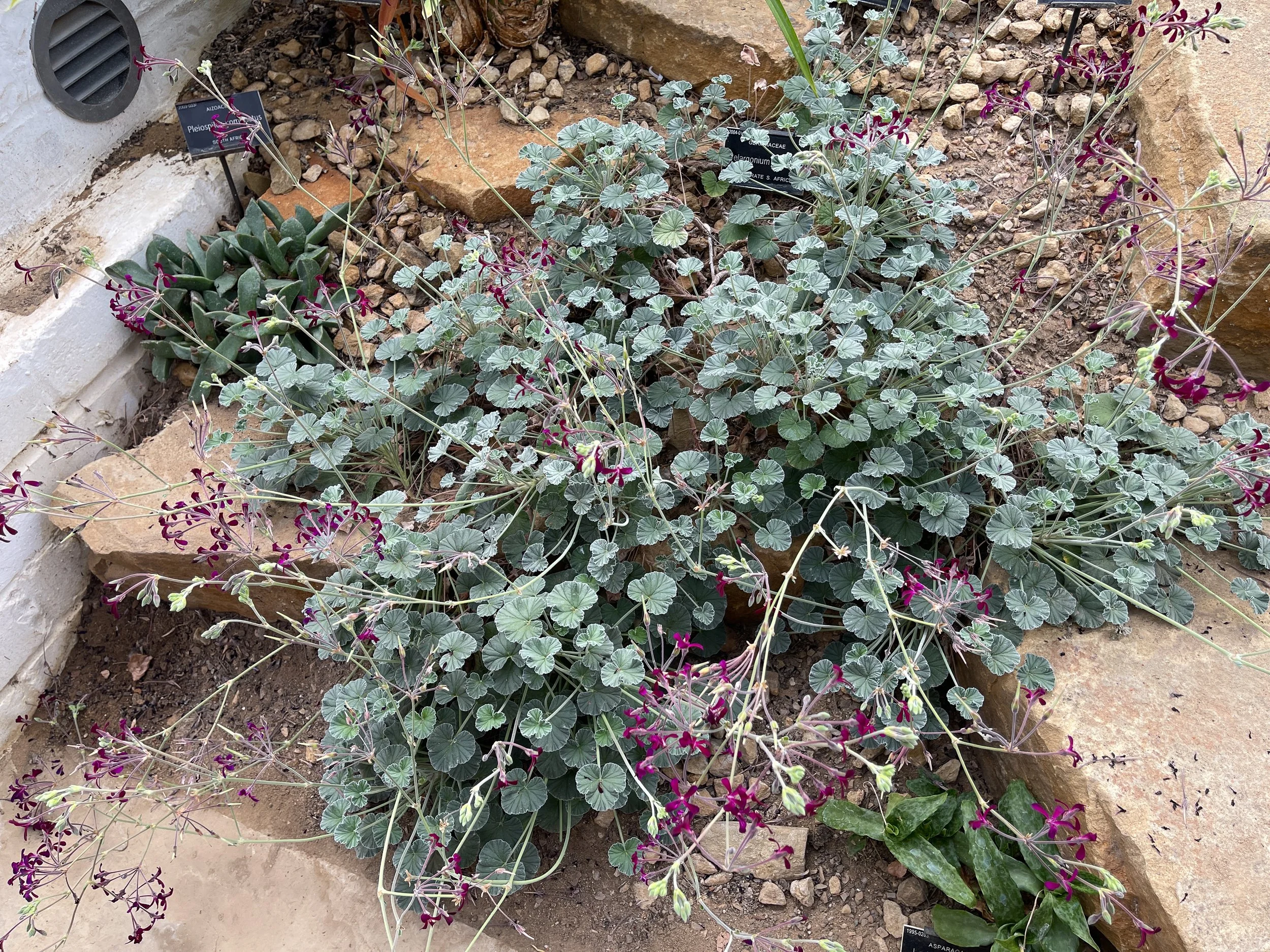
Pelargonium sidoides. Photograph: Jane Perrone
Carnivorous plant and cactus conservatory
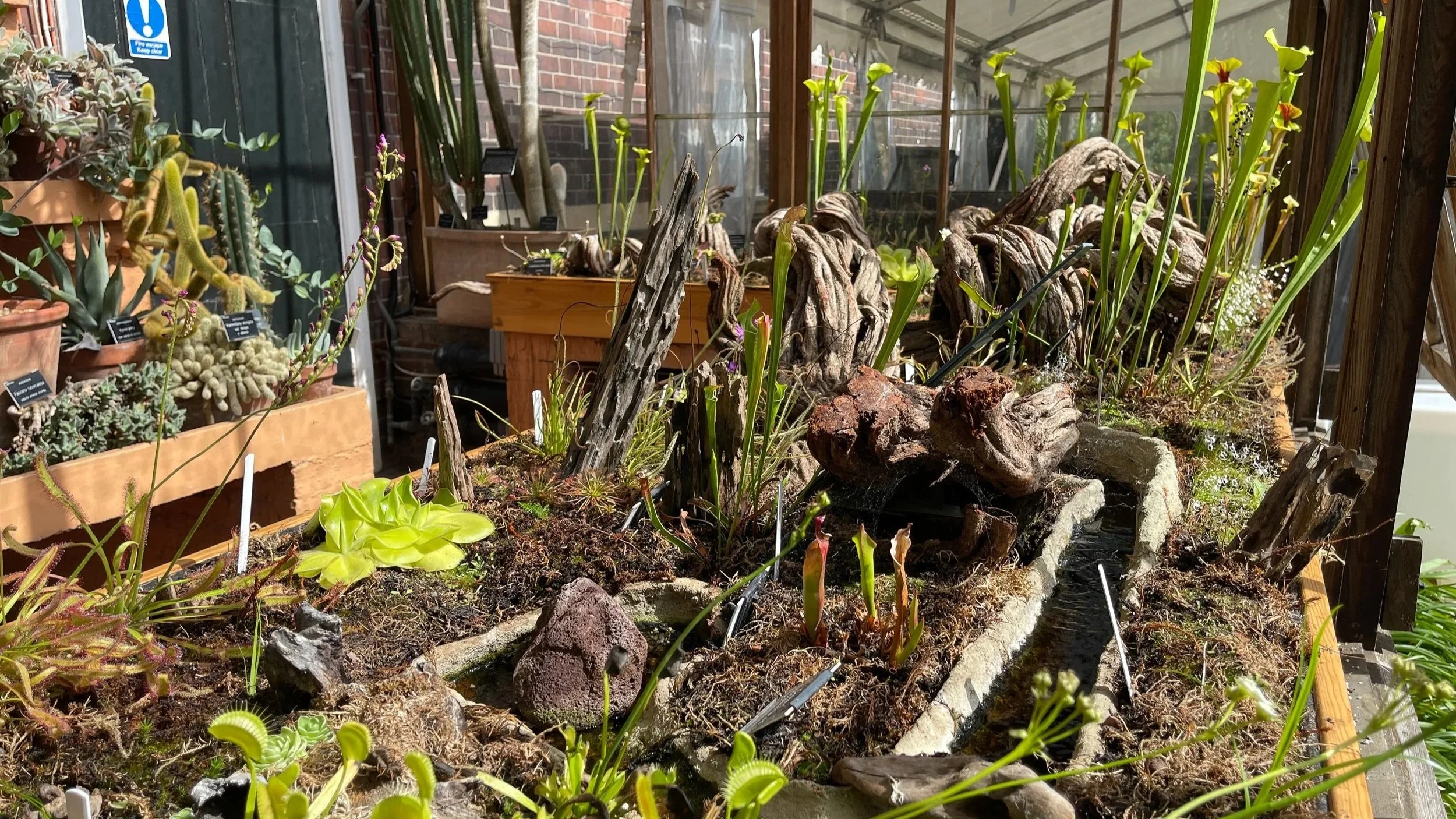
Photograph: Jane Perrone
Carnivorous plant display designed by Michael Antonetti - you can see his Instagram post about the installation here.
Pinguicula moranensis - butterwort
Utricularia sandersonii - Sanderson’s bladderwort
Dionaea muscipula - Venus flytrap
Drosera cuneifolia
Sarracenia species
Timestamps:
00:05 - Introduction to On the Ledge Podcast
00:34 - Exploring Chelsea Physic Garden with Emily Hazel
01:01 - History of the Chelsea Physic Garden
02:25 - Species Pelargoniums and Their Diversity
04:21 - Pollination Procedures at the Garden
05:22 - Beginner Tips for Growing Pelargoniums
07:10 - Challenges of Growing Plants in Glasshouses
09:34 - The Tropical Corridor and Its Unique Plants
12:01 - The History and Significance of Theobroma Cacao
14:10 - Medicinal Plants and Their Uses
15:05 - Staghorn Ferns and Their Unique Features
17:01 - Anthurium Inflorescence and Its Characteristics
18:28 - Expanding Plant Collections Outdoors
20:16 - Vanilla Plant and Its Pollination History
22:10 - Educational Visits and Learning Opportunities
23:09 - Unique and Unusual Plants in the Collection
25:32 - Renovation Challenges and Plant Maintenance
27:51 - Ant Plants and Their Symbiotic Relationships
30:07 - Housekeeping and Patreon Support
34:07 - Southern Africa Glasshouse and Its Plants
36:00 - Importance of Sourcing Plants Responsibly
38:23 - Challenges of Watering Arid Plants
41:20 - Visiting Chelsea Physic Garden: Practical Details
44:01 - The Water Park: Cacti and Carnivorous Plants
CREDITS
This week's show featured Whistle by BenJamin Banger (@benjaminbanger on Insta; website benjaminbanger.com) and The Road We Used to Travel When We Were Kids by Komiku.