Episode 318: How to use propagation to save your plants from disaster
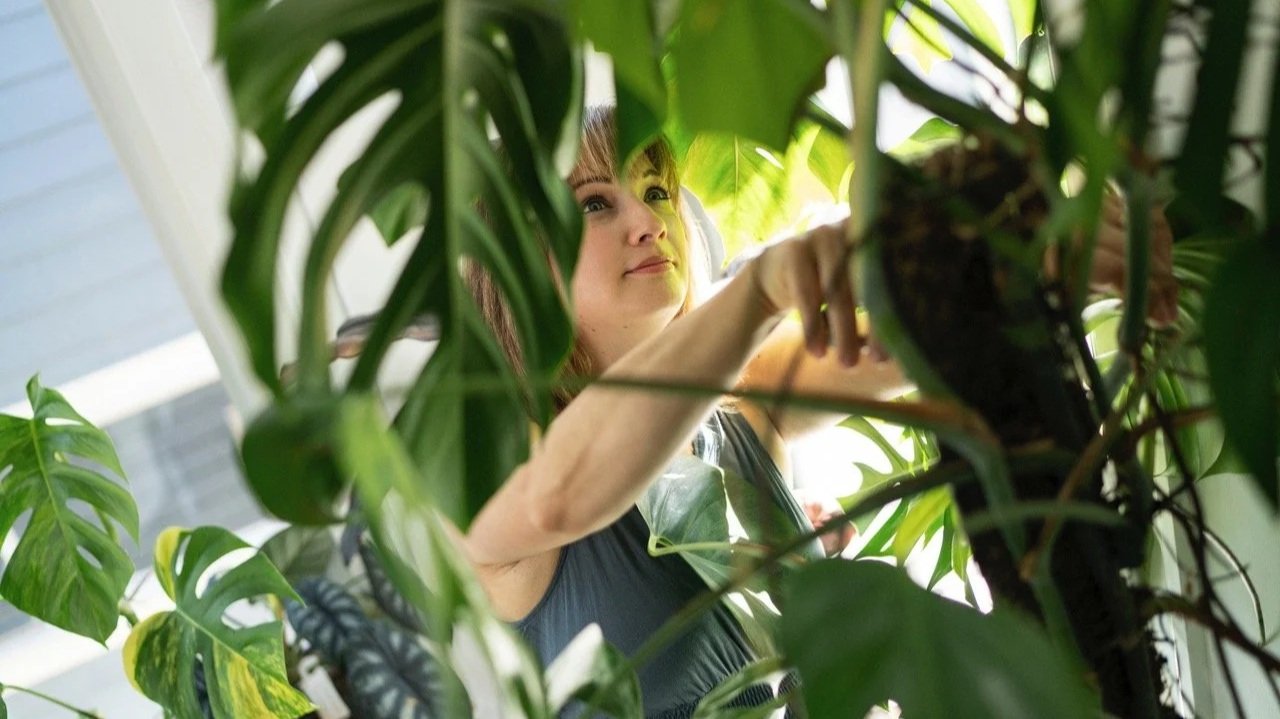
Lindsay Sisti’s new book The Ultimate Guide to Houseplant Propagation is out now. Photograph: Lindsay Sisti
Transcript
Jane Perrone (00:09) Lindsay, thank you so much for joining me on On The Ledge to talk about the eternal issue of propagation. this is one of these things that we all we all love think we love to do, but sometimes I think we just end up throwing away half I don't know about you, maybe it's just me, but I feel like I I do a lot of propagation experiments and a lot of things don't hit the wall. So
Lindsay Sisti (00:29) Yeah.
you
Jane Perrone (00:35) I'm hoping that your expertise is gonna come in here and help us. ⁓ but we're specifically today we're gonna be talking about propagation, the most useful form of propagation perhaps, which is renovation when things have gone ⁓ south a little bit with our plants and we need help. Not doing it for the hell of it, but doing it for a very specific reason.
Lindsay Sisti (00:46) Yes.
Yes.
Jane Perrone (01:00) This is a topic that's covered in your book, so perhaps we can start off ⁓ with you telling us, Lindsay, a bit about your book on propagation, who it's aimed at. It's a very beautifully done, well laid out book. There's so much good information in here, but did you have fun writing it?
Lindsay Sisti (01:16) yes, I had a lot of fun writing it, but like any author, also had some nights where I was thinking, my gosh, I'm never gonna get through this, overall, so I'm brutally honest. So yes, I had some not fun writing it, but I had mostly total joy writing it because I absolutely love sharing information about houseplant propagation, about how you can make.
more plants out of the ones that you have because while we love to buy plants ⁓ and I love buying plants, it's one, very expensive, especially given today's gas prices or the economy, to keep purchasing more and more plants. And that will lead also into what we're talking about today is saving the plants that we have with rehabilitation. And two, ⁓
Jane Perrone (01:57) Mm-hmm.
Lindsay Sisti (02:11) Propagation is just such a beautiful way to make gifts for people and share the plants that you have and take this hobby that you have and spread it to all the people around you. Because there's nothing more joyful or loving than taking a piece of a beautiful plant that you own and handing it to someone else as a gift so that they can start their own indoor garden. So.
It was just a lovely experience to be able to write an entire book to help people to be able to share this thing, this gardening love with other people.
Jane Perrone (02:50) Yeah, that's so true. It's really nice when you ⁓ see somebody that you haven't seen for a while who you've given cuttings to and they've got a plant that's thriving that came from your plant and it's just so satisfying and it's just nice to get I mean I have had some had some failures along the way with cuttings I've been given, but I was just at the weekend at a friend's place and I was like, ⁓ with that that
Lindsay Sisti (03:01) Yes.
Jane Perrone (03:17) That work plant works there, does it? that's interesting. Could can I take some cuttings and try and they're like, yeah, go for your life. Take some cuttings. I mean, I've literally just throwing them into a glass of water and no more than that at the moment. Cause I'm like, I don't know how how to ⁓ propagate this, but they'll be fine for a while. But it's so much fun and you know, in this as you say, in this day and age, it's really nice to be able to not spend money on plants and still have new plants. ⁓ yeah.
Lindsay Sisti (03:23) Hahaha
Right? Right?
Yeah, there's so many
plants that are out there already. I mean, we can just make new ones from the one. If people know how to do it, we can just create hundreds and thousands of plants from the plants that are already out there. There's no need to give Home Depot, Lowe's, these big box stores more of your money. But on the flip side, if you are shopping at a small plant shop, I do recommend spending money at a small business. ⁓ always, when I'm walking into a small business or a small plant shop,
Jane Perrone (04:02) Mm-hmm.
Yes, I agreed.
Lindsay Sisti (04:14) I always try to make it a note to spend money on a little planter, planter, even if I think to myself I could propagate that from someone else's plant, you got to support them.
Jane Perrone (04:23) Yeah. I agree.
I agree. The it's such hard times for houseplant shops right now. Independent houseplant shops, it is not an easy time in the UK or where you are, I'm sure. And yeah, if I can go in there and buy a a book or a planter or maybe a plant, exactly like it's it's wonderful to support them, but as you say, I d do I need to give an international chain my money? Not really, not so much. Although
Lindsay Sisti (04:31) Yes.
No.
No. Nope. Nope.
Jane Perrone (04:51) What's your view on like, you know, you get the people who are like, I found this. ⁓ I mean, I hope people don't do it to plant shops, small plant shops, but you know, I found this piece of succulent on the ground in the big box store. I've taken it home. I mean, I I mean, what what what do we say? I mean, I d I hate it when people do that. In fact, my friend who owns a plant shop said that, but he's had people coming in saying, yeah, I took a cutting of that plant when you first opened it. It's really thriving now.
Lindsay Sisti (05:05) I knew you were going there.
Me too.
Jane Perrone (05:19) What you mean you stole from me? It's not good Yeah.
Lindsay Sisti (05:20) Ooh, yes, prop lifting, prop lifting. And it's funny, it's so
controversial. I saw a video on Instagram the other day of a woman who was bragging. ⁓ It said, you know, if a doctor's office pothos sees me coming, it better watch out. And it was a video of her taking a little snipping at the doctor's office. And on one hand, you know, that doctor's office giant pothos under the fluorescent light is not.
Jane Perrone (05:36) Yes, yeah.
Lindsay Sisti (05:47) really is not going to have any damage from her taking a little cutting. It's going to grow right back ⁓ and it's not hurting anyone. However, overall that is wrong because if we all went in there with our scissors and we all took pieces, then that beautiful office pothos would be no more. So I am ultimately against prop lifting. I think if you do find a little succulent leaf on the floor,
Jane Perrone (06:01) Mm-hmm.
Yeah.
Lindsay Sisti (06:14) I think it's a matter of judgment, right? If the pot that it came from is right next to it, place it in that pot. If there's no pot next to it and it's alone, like in the refrigerator aisle, then someone dropped off a plant by all means rescue it. But usually prop lifting means someone's grabbing a leaf that fell off of a plant and a succulent leaf that fell off of a succulent right next to it.
Jane Perrone (06:32) no.
Mm-hmm.
Lindsay Sisti (06:42) in which case you can place it easily back into that succulent pot and it will grow new roots and a new shoot for the person who purchases that plant. So it's an iffy topic.
Jane Perrone (06:49) Yes. Absolutely. I totally agree.
I agree. Yeah, it's it's an interesting one, but I I I guess it reflects the fact that, you know, this is such ⁓ plants are so generous and sometimes we can take advantage of that, but hopefully without taking advantage of the small houseplant shop, independent houseplant shops who
Lindsay Sisti (07:03) Yes.
Yes.
Jane Perrone (07:11) have to put so much work into into selling plants. It's it's ⁓ not something we want to be doing to those people. ⁓ so
Lindsay Sisti (07:19) Yes, don't
do it to the small house plant.
Jane Perrone (07:22) No, no, exactly. I mean I I love ⁓ I do love propagating plants, but I sometimes find the renovation propagation that we're going to be talking about today is the most stressful kind because it's not just a case of, ⁓ this is nice, I'm gonna take a cutting, and it may or may not work. It's like do or die, this plant needs this to work because something's gone really badly wrong. It's
Lindsay Sisti (07:43) you
Yes. Yep.
Jane Perrone (07:49) It's it's crunch time, right? ⁓ so what what are the sort of the bet the what how does this benefit the plant? I mean obviously if the alternative is just chucking the plant away, then it's a good alternative. But what are we looking for from this form of propagation?
Lindsay Sisti (07:51) Yes.
Sure, sure. you know, and as you mentioned, ⁓ chucking the plant. So it's funny because when I started off in plant care, I had a really good friend in Chicago here who I kind of went through this plant journey with. anytime, anytime her plant had a pest, she just chucks it. And some of you listening might relate, you know, it didn't matter what the plant was. She hated spider mites and thrips so much that if she saw one,
The whole plant went in the compost. It didn't matter if it was big and beautiful and two years old, goodbye. Like the emotional attachment was severed. And I was in awe because I operate very differently. I get emotionally attached to succulent leaves because I can see like it will one day grow into another full plant. So I am on the opposite side of the spectrum and hence why I'm writing a
Jane Perrone (08:41) Mm-hmm.
Lindsay Sisti (09:03) book or wrote a book like this, because I will do anything to save a plant. And, ⁓ it, know, and that's kind of, two different, two different modes of thinking, right? So your plant is sick or not looking right. the first thing that you need to do is an overall evaluation of the situation. have to look at your plant and you have to think like, okay,
Jane Perrone (09:10) Yeah.
Lindsay Sisti (09:33) Is this something I want to work on? Do I have the time in my life to work on this? Does this plant mean enough to me sentimentally? And do I have enough time in my, you know, non plant life and energy to devote to this right now? Sometimes it's not worth it. sometimes, and that's also a road that if you're, if you're the type that you're a nurturer like me and, um, you know, a bleeding heart, sometimes you really have to look at yourself and say, Lindsay, like,
we've got to let this one go. You know, it's, can't do this right now because it does take some time and energy to go through propagation as rehabilitation. ⁓ but sometimes the fix is a lot easier than you think it is. So the first step that you want to do again is an overall evaluation and assess what the issue is. Is it the problem is that structurally I'm talking about. So
Is it that your plant is long and lanky? Because if your plant is simply long and lanky, like a fiddle leaf fig, for example, this is a very common example. It looks like a very long stick with a couple green fiddles on top. That's not necessarily a life or death situation. It just needs a little propagation to make it looking amazing again. And so that can be fixed by simply
chopping the top off. As simple as that. You take a pair of clean cutting shears, you chop that fiddle leaf fig down to a stick that's a few inches, take great care of the bottom and new sprouts and leaves will grow anew. And there's a great house plant influencer, @happyhappyhouseplant that shows on Instagram. Many of you have probably heard of her, Mandy, and she has so many videos.
about all about the fiddle leaf fig and she takes the big chop every year of her fiddle leaf figs and shows beautiful demonstrations of this. So that's, that's an example of some, an easy form of propagation is rehabilitation. And then what do do with that top piece? Well, you stick it in damp sphagnum moss or ⁓ perlite, damp sphagnum moss, ⁓ fluvostratum, any wet substrate, growing substrate, keep it bright.
moist and it will grow new roots too and you're going to end up with two fiddle leaf figs. So that's just a very simple upfront example of this is not a big deal. This is something that's easy. It's cosmetic. You take a quick chop and it's done, but you have to overall evaluate is that my situation? Is my plant just long and lanky? Now, if you're looking at your plant and you're the second thing you want to do,
And even if it's long and linky, you'll want to do this too. You'll want to check for pests. And even if you're not planning on propagate, propagating in this moment, I recommend you do a pest checkup every month on your plants. And maybe I'm a little over the top, but if you have the time once a month, run through, especially in the warmer months when all of the plant pests like to hatch in the winter, they're more dormant.
Jane Perrone (12:33) Mm, mm.
Lindsay Sisti (12:56) But in the summer months, spring months, go around, take a magnifying glass. And I say that because a lot of people will say, well, I don't see spider mites. I don't see webbing. Well, that's because our eyes, unless you have super eyes, are not strong enough to see these tiny pests. You really need a 45X magnifying glass. And I say that because I have pretty much close to perfect vision and I need a 45X magnifying glass with a light to see
a spider mite. And if you want to see a flat mite, which are very common now, they are red and even smaller than spider mites, you really need a 45x magnifying glass or a jeweler's loupe or a little handheld microscope. And go around and take a look at some of your leaves, especially if you have alocasias like me, which are spider mite magnets. Take a look.
Jane Perrone (13:50) Mm. Mm-hmm.
Lindsay Sisti (13:53) Look around, see if you have any leaves that have suspicious yellow edges. Some of your house plants that are struggling might have yellow leaves because it's just called senescence, meaning they are fading over time due to nature. Just like in the autumn, leaves are yellow. That's leaf senescence. That's normal. But if your leaves are turning yellow, especially the newer leaves, you might have some pest issues. So look around, evaluate.
with a magnifying glass or something that helps you see insects up close. So you want to rule out pests before we propagate. If you do find pests, that is a different podcast episode, which how to... Yes, yes. If you do find pests, there's tons of resources out there of how to treat the specific pests that you do find. So that is...
Jane Perrone (14:35) Yeah, that's a whole nother topic. Yeah.
Lindsay Sisti (14:50) kind of how I go about things. I evaluate the situation. I see what it is. Is it long and lanky? Yes or no. And does it have pests? Now, if I see that a plant does not have a pest issue of any kind, or say it does have pests, I'll treat the pests, okay? And I'll get rid of the pests. But maybe it's still struggling. So at this point, I'm like, why is this plant looking meh? Like I want my plants to look beautiful.
Sometimes a plant just looks like it's on its way out. So take a look at the leaves overall. Are they drooping? Are they withered? The top half of your plant, we haven't pulled it out of the soil yet or the substrate, lechuse, a pond, lekka, whatever it's planted in, the leaves and the stems have clues to tell you. So if your leaves, and you've ruled out pests already at this point,
If your leaves again are yellow on the bottom, it's probably just due to nature leaf senescence. It also could be, if you have an excessive amount of yellow leaves on the bottom, could be your plant just needs to be up potted. It might just be struggling in a small pot. However, if the leaves look spotted overall and like a Salvador Dali painting and they're multicolor, this is not a croton.
Jane Perrone (16:16) Mm-hmm.
Lindsay Sisti (16:18) You you have like multi-weird colors going on. You might be dealing with some kind of fungal or bacteria infection or a virus. There are some viruses. This is not that common. So a lot of people in, I'm on a lot of plant message boards, cause that's what I do pretty much in my spare time. Cause I'm a total dork. ⁓ So when I'm not writing about plants, I'm hanging out on the plant message boards.
So, I'm on, and not message boards, like 1980 message boards, like, well, those two, I go back in archives, but a lot of Facebook groups, people are asking all the time, is this a virus? Is this a virus? Is this a bacteria infection? And the answers usually no, because viruses and bacteria infections have to be verified by a laboratory.
Jane Perrone (16:58) Mm.
Mm.
Lindsay Sisti (17:16) So if you have a plant and you want to verify it 100%, you'd have to send that tissue into a lab to verify it. And bacteria and fungal infections typically only happen in very humid greenhouse environments, which our house plants are not growing in typically. So to get a fungal and bacteria infection in your dry home is not that common. It can happen, but it's not that common.
Jane Perrone (17:34) Mm.
Lindsay Sisti (17:45) And a virus can definitely happen. There's like the cucumber mosaic virus, mosaic virus, ⁓ that DMV that spreads along aroids. However, it's not as often as you think. So before you jump into the conclusion that your plant has a virus or bacteria, it might be good idea to post on a Facebook group, ⁓ ask other experts for their opinion. But.
Even before you do that, we're going to check something else. And that's the root system. Because more often than not, these funky looking leaves, if you've ruled out pests, because pests can cause funky looking leaves, you have no pests. You have funky looking leaves or they're withered. More often than not, it's the roots. It's the roots, you know? And Jane's shaking her head. She's like, yep, yep. And it's...
Jane Perrone (18:41) Yeah,
Lindsay Sisti (18:43) You know, that's ⁓ It is.
Jane Perrone (18:45) so true. It it's so true. I think people get so obsessed with the top growth and what's going on there and they don't even think of looking at the roots. And actually, as you say so many times, it's what's going on down there that's causing the problem, be it that it's completely root bound and unable to get any, you know, the water's just running through or the roots are rotting. I mean, there's just so much to learn from a root system that we
Lindsay Sisti (18:55) .
Jane Perrone (19:11) We need to take on board. And ⁓ yeah, that's always my the first thing that I do is looking at the roots. But I know a lot of people don't want to make the mess. It's I mean, it does get difficult when you've got a really big plant. That's the only time I really hesitate. It's like, ⁓ no, I'm gonna give myself a hernia trying to get this out of the pot.
Lindsay Sisti (19:20) Right.
Yes, yes. Jane's like, I go
right for the jugular. I'm just ripping that plant out. But it's true because the roots are, in the more experienced of a horticulturist or a house plant owner you are, the more often you come to the conclusion that it's typically going to be the roots. But when you...
Jane Perrone (19:33) Yeah.
I'm in the houseplant
shop taking the plant out of the pot. I'm I'm that person. Like I'm like, I'm just gonna check the roots on this, but I'm not spending money on something if I haven't seen the roots. Sorry, but that's just a situation.
Lindsay Sisti (19:53) Ha!
Yep.
Right, it's like,
right, sorry, but not sorry. Let me see what this plant is working with. I mean, it's like that, the roots tell the story. Anytime someone posts a picture of their struggling plant on a Facebook page, I say, look at the roots. The roots are going to tell you the story. And I think it's really important to go through those first steps because if a plant has a pest issue,
Jane Perrone (20:07) Yeah.
Yeah.
Yeah.
Yeah.
Lindsay Sisti (20:29) Um, that you have to rule that out first, but ultimately most of the issues besides pests is going to come down to the fact then that once in a while, fungal bacterial virus issue once in a blue moon, that's going to be a very small percent. Most of the time it's because it's overwatered or underwatered or the environmental conditions. It was either, well, likely too cold.
Jane Perrone (20:55) Mm.
Lindsay Sisti (20:57) If a plant, if it was too cold for some of these really warm tropical aroids the root system can collapse. But usually you did not water it soon enough or you watered it too much or the potting media is too dense. So you pick up the plant out of the pot and you look up the roots. And if you are new to houseplants, this can be a very scary thing to do to take your plant out of the pot.
Jane Perrone (21:06) no.
Mm-hmm.
Lindsay Sisti (21:25) I find that a lot of people that I coach through this, that is the one point in the process where they do, they stop. They're like, no, like, wait, everything was fine. And for some people, it's a fear of not wanting to touch dirt actually. I'm surprised.
Jane Perrone (21:36) Mm-hmm.
Yes.
Yes, this is a big issue for people.
This is a big issue. ⁓ I definitely found that. I think we're we're very much in the era of worrying about about dirt and ⁓ being very paranoid about it. And some people do just can't bear to touch it with their hands, which is or it's or sometimes it's a textural thing. It's like they don't like the feel. ⁓ so which is fine, you can wear gloves, it's not a problem, but you've got to get in there and and have a look. I mean
Lindsay Sisti (21:47) Yeah.
Yes.
Right.
Jane Perrone (22:12) Compared to outdoor gardening, I think there's less horrible things that I find in houseplant pots than I do outside. Like outside it can get really, you know, horrible. Like there's, you know, s like, ⁓ I've just pulled this hosta out of the pot and there's a massive slug just sitting there. Or I was potting up some some containers on the patio yesterday and I just bought them. And in the bottom of one of the root balls was a plastic bag. I'm just like, what the hell's that doing there?
Lindsay Sisti (22:16) Yeah.
Yeah.
Ugh.
Right, right, you don't know,
Jane Perrone (22:42) But you don't get those problems.
Yeah. I don't think you get so much of that in the houseplant world. I think the thing that I fear seeing most is as I've said before on the show many times is root mealybugs. If I see root mealybugs, I immediately just have a massive breakdown. It's like I'm gonna have a nervous breakdown if I see root mealybugs. I am so traumatized.
Lindsay Sisti (23:05) That's when you chuck it. That's when you chuck the...
Jane Perrone (23:09) That's right. I mean that's when I'm normally taking cuttings and getting rid of the root ball because it's just it's no fun. But yeah, most of the time there's not anything too hideous to see in houseplant roots. Most of the time it's fairly straightforward. Just maybe some mushy bits where it's rotted is the worst case scenario, I guess. Yeah.
Lindsay Sisti (23:20) No. No. It's fair.
Right, right. And that's exactly
what I was going to say next is that, you know, so you're picking up, you know, the plant and in all of this, you have to think that you're the plant doctor, right? So we're playing plant doctor here. Maybe in this case, we're playing like plant gynecologist because we're lifting, we're looking under the skirt and now we're seeing what's under and in what's below and this
Jane Perrone (23:44) my God. Yeah.
Lindsay Sisti (23:56) is the point where we have to get really diagnostic and get in there. So wear gloves, because you're getting in there and we're going to pick through the roots. It's not enough to just like look at the outside of your root ball hanging in the air. You want to really spread, after my gynecology analogy, using my, I'm gonna stop. I'm the queen, I'm the
Jane Perrone (24:20) Wishing you hadn't said that, but anyway.
Lindsay Sisti (24:24) the queen of thinking things and then saying things and then wishing I didn't say it. And now I'm using like hand analogies. You're gonna spread open the roots. Okay, I'm gonna stop. Okay, rewind. Okay, spread open the roots and we're going to look for any type of root that is not pink or white. And...
Jane Perrone (24:29) I hear you.
Lindsay Sisti (24:47) Even mildly like vanilla colored is okay because on different plants, different plants have pink roots, different plants have white roots. You want pink, white or firm. And those are the roots that are still healthy. If the root is soft, mushy, black, of course, we don't want any black roots. We don't want any brown roots, any slimy roots.
and the worst are the roots and the most deceiving roots. And these are the roots that really got me when I first started with houseplants. I thought, okay, I could do this. I am looking for roots that are brown or black, and I would take a Hoya out of its pot. And I'd look at the root system and say, like a struggling Hoya. And I'd say, ⁓ all these roots are white. Everything's fine. But Hoyas are tricky because.
Hoya's roots will dry out a lot and that's their problem. More often than turning to slimy mush, they will desiccate and dry out and they're still white. And so it's not enough that you are only looking for black and brown roots that are slimy. You also have to look for firm roots that when you take your finger and slide it along,
the outer sheath of the root gently, that the whole outer sheath or outer coating of the root doesn't just slide off. It shouldn't. A root should be one firm, like tube, if you will, tubular ⁓ system. So if it slides right off, it means it's all dried up. And so even if it's a white Hoya root and fragments come off of it, it's desiccated. So that's a bad root too.
And so a lot of times if your Hoyas go down, it's because it dried out too much, which happens a lot with Hoyas because you can go forever without watering Hoyas, not forever, but like two weeks, three weeks. And sometimes life gets in the way and that turns into four weeks and your Hoyas still looks great because these leaves retain water. And then one day you look and that Hoyas not looking great anymore.
And so you water it again and the leaves are still wrinkled. And you say, what, what's going on? The leaves aren't plumping up again. Check for pests, especially flat mites. ⁓ it ruling out pests. You'll lift the plant up and you might find these dried desiccated roots that are still white. But when you run your finger along the edges, the sheath might come off. So it's all about the way that the roots feel
and the way that the roots look. And if you really want to get all your senses involved, the way they smell. Because rotting roots, not the Hoyas, because those are dry, but when you get to like an alocasia, for example, they, there's nothing, nothing smells worse than a rotting alocasia, but the roots will be brown and slimy. Anyway, that will tell you.
Jane Perrone (27:47) Mmm, definitely. Yeah, it's not good.
Yeah.
What can we can we can we conjure
up a phrase to describe the Alocasia rotting root smell? What is it is it like when you go into the bin and there's like bin juice in the bottom? Is it that kind of vibe? I don't know if you say bin juice in America, but that's what we call it here, you know, like when you get that residue at the bottom of at the bottom of your trash can. We call it bin juice.
Lindsay Sisti (28:17) It is that vibe, yes.
Yeah, we don't.
bin juice? I've never, we don't have
a term for that in the US, but I think we should start making it a thing. We should start spreading, Next time something smells in my house, I'm just gonna surprise my family and say, this smells like bin juice. I'm be like, what? My kids are gonna ask for juice. bin juice? No.
Jane Perrone (28:33) Yeah, it's a real thing. It's a real thing, yeah.
Yeah, it's a good one. Not that juice, definitely not.
Lindsay Sisti (28:49) But that's such, I love when there's terms in other languages, because then I get jealous. Like, why don't we have that in English? Because that makes so much sense. It kind of smells like your compost. I don't know if you compost on your counter, because we have a little compost bin. And like, if it's been there for a while and you open it up and it's like all your vegetables from the past few days, it's like, oh God. Bin juice. So yes, don't sniff the bin juice.
Jane Perrone (29:01) Mm.
Yeah.
Lindsay Sisti (29:17) Don't inhale the bin juice Just take off all the roots. ⁓ And so that's the next step. So you're gonna want to, ⁓ in the rehab process, if the roots are bad, which they probably will be if your plant is really struggling and it's not because of pests, it's probably the roots. People say, okay, well.
Jane Perrone (29:19) Ha ha ha
Mm-hmm.
Lindsay Sisti (29:42) Should I just pot it up in a new pot? No, no, no, you have to do surgery. So now you've gone from plant gynecologist to plant gynecological surgeon, you know, that you are, you have like, you have graduated, you know, to a new level of med school and you're going to get your scalpel, you're going this is going to make people dizzy. Okay. We're not talking about real surgery here, but this is, this is plant surgery. So you need a scalpel of some sort or
Jane Perrone (29:52) Yeah.
Lindsay Sisti (30:11) It can be any kind of cutting instrument. I like to use my sharp, smooth knives from my kitchen. Don't tell my husband because if he knows I use this for like rotting plants, he will never let me. I don't cook, he cooks, but then I use all his nice cooking because he has like really nice knives and they work much better than my cheap propagation stuff that I buy on Amazon. I use, I secretly use my husband's really nice knives and
Jane Perrone (30:20) Mm, mm.
Ha ha ha.
Mm.
Lindsay Sisti (30:41) spray rubbing alcohol on them, but you can use any kind of razor blade or even propagation scissors. Fine. Sterilize it by spraying some 70 % rubbing alcohol, 90 % rubbing alcohol on them, wipe them off. And then you are going to remove every single rotting root that you see at the base. You want at the base of the root, you want nothing left of the root system.
Now one caveat, so, or one distinction I'd like to make, because every, it's hard to explain this process for all plants because plants are different. If we're talking about something like say an alocasia or an anthurium that has a rhizome, which is a thick, thick stem. And from this thick stem, imagine like the stem almost as thick as like a thin banana.
and then you have all these roots that are growing out of it, you're going to do exactly what I said. You're going to remove all the rotted material, but you're going to keep that rhizome or maybe a carrot is a better analogy. So you're going to keep the rhizome, which is the main stem, and it's going to end up looking just like a carrot, like a bare carrot. That's what you're going to end up with. However, if you have
an aroid like a philodendron that does not have a rhizome. It just has a stem and then it has a root system on the bottom. Your better bet would be, or a Hoya even, your better bet is instead of just chopping all the roots off, just take a cutting of the plant higher up. Chop all those old, ugly roots off,
because new roots are going to grow from the higher up nodes. Either way, no matter what plant you're dealing with, your goal is to look at the plant that you have and tell yourself all ugly roots must come off because they're not returning back from the dead. They're dead. And they're not going to help in the propagation process. And in fact, if they have rot, that means they have a
Jane Perrone (32:53) Yeah.
Lindsay Sisti (33:06) pathogen, so a bacteria or a fungi that causes rot is now infected in the plant root system. So it's very important that we remove all sections that contain this pathogen. We don't want any rotted sections existing. And if the rot has made its way into the stem or the rhizome of your plant, you have to chop off the stem or rhizome as well. If it's an actual
mushy brown rot issue. That's a pathogen or fungi or bacteria. ⁓ There's numerous types that cause rot. Doesn't matter for you to diagnose what type you'd have to send it to a laboratory. Not important. What's important is that we chop it off. Does that make sense so far?
Jane Perrone (33:37) Mm-hmm.
It's gone. It's gone. That does
make sense. I mean, it can be quite brutal, this can't it? Because you could be left with you know, what starts out as a really big root ball, and you could be left with no roots or one sad... you know, like a not a very great number of roots, which can be really scary. But as you say, there's no point in leaving the stuff that's dead and rotting because it's not gonna help anybody. yeah. It's it's grim.
Lindsay Sisti (34:04) Mm-hmm.
Yes.
No. Yeah, and you might, like you said, you
might be left with no roots and that is totally okay because if you, and that's why this is called propagation renovation
rehabilitation because if you understand the basic tactics of houseplant propagation, like I explain in my book, the ultimate guide to houseplant propagation, such as using a prop box and propagating in moist sphagnum moss or propagating a plant cutting, stem cutting in fluvostratum and perlite. Once you know how to do
those methods, execute those methods, from here you have a multitude of options. So if you're looking at your philodendron stem at this point and it looks like just a long stick with a bunch of nodes and some leaves on top, you can think to yourself, wow, I could either stick this whole thing in water and let it grow new roots. I mean, that's the easiest. Or I could cut it into individual nodes, like little sticks.
So I'll cut along each internode and then I'll have a bunch of little sticks with a node on each one and I'll throw it in a propagation box, which is a clear box filled with sphagnum moss and perlite. And I'll lay the nodes on top, 100 % humidity, put it in bright light and they will root. And then you'll end up with 10 philodendrons, 20 philodendrons. So there's having the tools to be able to propagate.
Jane Perrone (35:53) Mm-hmm.
Lindsay Sisti (35:58) or the knowledge of how to propagate will give you so many options of what to do at this point. And when it comes to alocasias specifically, you're now looking at, you you have a rhizome or even antherium specifically, those two types of plants are the most challenging because you can't just throw them in water at this point. The rhizome is very prone to rot. So a lot of times what arid growers will do
is then propagate them in perlite or leca because these are very airy substrates. So these kind of rhizomes, because they're so sensitive to rot, need very airy porous substrate. They need tons of air, but they need tons of humidity and light amount of moisture. They can't be fully submerged and drenched like a sponge.
and they'll put it in the substrate and then in 100 % humidity and roots will grow almost like it's suspended in air within this moist substrate and a lot of times using a semi hydroponic setup like a little dish of water on the bottom. So it's a little more technical when you're using when you're propagating these types of aroids from here but
other plants you're dealing with, it can be a very, very simple matter of then just sticking the fresh, newly, ⁓ hair-cutted, newly cut and trimmed plant in a glass of water and propagating it from there is that it's basically.
Jane Perrone (37:40) Yeah.
Mm-hmm. Absolutely. And for some plants, I think this is a lifestyle. Like, you know, if you've got Tradescantia, for example, really if you don't do this, unless you've got a very, very specific care regime, you know, your plant is gonna start looking miserable. Anyway, that lots of houseplants just do over periods of time. So this is really something a rhythm you've kind of got to get into to keep your plant looking good, that continuous
Lindsay Sisti (37:59) Right.
Jane Perrone (38:07) propagating ⁓ plus backups obviously as well. But yeah, absolutely. It's ⁓ it it doesn't always have to be like disaster scenario. ⁓ although oftentimes obviously, you know, we all make mistakes and get to that point with
Lindsay Sisti (38:11) Great.
Yes.
Jane Perrone (38:21) plants where things go wrong and ⁓ you know as you say Hoyas can be just really annoying. I love Hoyas, but they just are really annoying ⁓ in doing what you've described in that they can look great for ages. And then you know they get flat mites as well, which as you say I must do an episode on flat mites because they are I think the sort of the the the the secret pest that really people are not aware of.
Lindsay Sisti (38:28) I do.
Right.
Oof.
A newer pest.
Jane Perrone (38:50) Yeah, that people aren't really
Lindsay Sisti (38:50) They're really a newer.
Jane Perrone (38:52) treating for or don't know how to deal with. And ⁓ yeah, there's definitely a lot a lot of undiagnosed flat mite out there. But as you say, it's a it's a great way of of learning about your plant. I guess my only my only other issue with the kind of the this this is your renovation propagation is I wonder if there's another step at the end, which is
going going back to the beginning and saying, well, why did my fiddle leaf fig end up as two leaves at the top of a six foot piece step? Right? In that it you can you you can go through that process of of taking that propagation and growing it again. But it's the same thing's probably gonna happen unless you realize so I guess that's the other thing is like a period of reflection might be necessary to work out
Lindsay Sisti (39:23) Yes. Yes.
Exactly.
Yes, journaling time. But
truly, truly like a period of reflection because you may have fixed the rot, but you have not fixed the environmental conditions that got you there in the first place. So was your plant too close to a draughty window or do you live in wonderful Chicago where it gets from sub-
Jane Perrone (39:56) Yeah, yeah.
Lindsay Sisti (40:06) 20 degrees to 100 degrees and your plant just can't handle that environment. Is it the right plant for you? All these deep life questions you have to answer. But truly, you can't just repot it and say, here we go. The same problem will happen again. And especially speaking with succulents, which we didn't talk about much because I am much more of a tropical plant girly, but I do have succulents that I love.
Jane Perrone (40:09) Mm.
Lindsay Sisti (40:37) And the biggest problem with succulents is that they atoliate, which means, you know, they stretch out towards the light. most people buy succulents ⁓ like Echeveria that are these beautiful, tight looking rosettes. And because they're so beautiful and geometrical and symmetrical. And then over time, they become these long, lanky Dr. Seuss like plants.
Jane Perrone (40:56) Mm-hmm.
Lindsay Sisti (41:07) And this is another extremely ⁓ useful application for propagation as renovation with these succulents ⁓ is, you when you're, when you have these long lanky succulents, you can then pop the leaves off and create from each leaf, a brand new succulent. And that's an amazing way.
It's hard for people to do like, well, what do you mean? I'm going to literally dismantle my entire succulent. Yes, you are going to take every single leaf off and you're gonna end up with a stick and you are going to then have about five, 10, 20 echeverias. And the process of how to do that, it's in my book, you can find it on the internet, it's all over. We won't get into that right now.
However, my point is once you grow these beautiful new tiny rosettes, if you put them back in that same window, you'll have 20 long stretched out echeverias.
Jane Perrone (42:05) Mm-hmm.
And
what what you should be doing is tracking down the beep person who's told you that you can put an echivaria in a low light place, right? I mean, who are these people? yes, they do really well in low- No, they don't. They really don't. I mean, I suppose it's I I also find this with ⁓ snake plants, you know, where people are like, yeah, they're really good, rude low-light plants. I'm like, well.
Lindsay Sisti (42:19) Yes! ⁓
Mm-hmm.
Jane Perrone (42:35) Yes and no. Like I mean I've just got one at the minute, a a s ⁓ a Sanseveria or now Dracina Laurentii that is that's been ⁓ deliberately put ne next to a TV, not in ⁓ in a south facing room but not in enough light and it's now outside and I'm like, yeah, you've got stretched and I'm gonna have to sort you out. But I I did it f in full knowledge, but it after being there for two years, it's now stretched to hell.
Lindsay Sisti (42:55) Yep.
Jane Perrone (43:04) Because it hasn't had enough lights. Like why do people do this to themselves? But I guess, I mean I guess it's tr th th the ultimate struggle to find a low light plant which doesn't really exist. You know, there's not so few plants that are gonna thrive in those conditions. ⁓ but yeah, it it is I mean, succulents, I just think that's the biggest crime of all, is people being told they can grow them in their north facing small window and just
Lindsay Sisti (43:04) Yep.
Right.
I know.
Jane Perrone (43:33) Especially Echavarias, they're the worst 'cause the as you say, they just go off like a firework and it's just and then as you say, you propagate them but then you've got twenty and then you've got twenty plants that you don't have enough light for. I mean, please give them away at that point, right? Or do something.
Lindsay Sisti (43:35) I know.
Right? It's a scam.
That's tragic.
Or buy
a grow light, buy a really strong grow light and don't put that grow light a few feet over the plant. Put it right over that echeveria until maybe you start to see the leaves look like they're a little burnt in color. Then move it up an inch because it needs that much sun. Like it needs so much sun that you are blasting these succulents. I mean, that's how I grow. I shouldn't say.
Jane Perrone (43:51) Yeah.
Mm-hmm.
Lindsay Sisti (44:16) Someone listening to me like, that's not how you measure light. You should be measuring it with a PPFD meter. And there's a lot more people that are more scientific out there in terms of, there's ways to measure how much light your plants should get with a light meter. But if you wanna just experiment with how much light your plants should be getting, ⁓ you could use my very unscientific way, which is put the light very, very close to your plants.
And if after one week or two, you start to see a little discoloration in the leaves, it's not going to ignite your plant on fire. It's just going to be like a slight lightening of your leaves. ⁓ Then I know my plant got enough light, but a little too much. And then I lifted up a little bit and that's how I grow my succulents. And finally, I've finally, after a couple of years in Chicago, I got my grow light to the perfect level for my succulents to be compact.
Jane Perrone (44:48) Mm-hmm.
Lindsay Sisti (45:11) and it is so much closer than I thought it had to be. And I'm talking, it's one of those, ⁓ Soltech large, it's a large Soltech pendant and it is hanging literally like five inches from, I mean, I thought like the plant stand was gonna ignite on fire, but no, I mean, there's no fire risk, but it is so bright. So moral of the story is,
Jane Perrone (45:15) Mm-hmm. Yeah.
Yeah.
Yeah. Yeah. Yeah.
Yeah.
Lindsay Sisti (45:40) You've got to go back and reflect after you do this propagation and reflect and then experiment of what's good. Change your conditions. If you go back and do the same thing that you did the first time, you're going to get rot again.
Jane Perrone (45:47) Mm-hmm.
Yeah, and you're back to square one and that's no fun. I think though a lot of people are just so terrified to begin with this. I think they like it does feel I guess for a somebody who's new to this, it does feel like opening Pandora's box in that you know you start, you get halfway through chopping the roots off and you think, my gosh, what am I doing? Have you got any kind of comforting words of people who've like started this or or are just too afraid to get going with this kind of large scale renovation of a plant?
Lindsay Sisti (46:14) Hahaha
Honestly, well a few comforting words. ⁓ And this is not to sell my book. This is to sell anything that would help you. But my book does walk people through all these steps we spoke about in a very step-by-step manner. So if you could find something like my book or my book, The Ultimate Guide to Houseplant Propagation, or a website that works for you.
just to gain the basic understanding of how to propagate a cutting in water or how to use a propagation box. And if you know how to take a cutting and put it in water and feel confident with that and grow roots from a cutting in water, you'll have the confidence to then start acting more like a plant doctor to your plants.
And the other thing I was going to say is just experiment. Just, I've had so many failures. I have had so many plants that I have killed. I mean, I, it's ridiculous. I used to, I've gotten better. I've gotten a lot better, but I still kill plenty of plants and not on purpose. But ⁓ when I started out,
I was not one of those people that were born with a green thumb. My parents were, and I wanted to be like them. And they used to laugh at me because I killed every single plant that I owned. only, I mean, they really used to laugh at me. was like the joke because I just like had this love for plants, but I didn't understand their needs. I didn't understand light needs. It just clicked so late for me. I used to put every plant in such low light conditions.
Jane Perrone (48:04) Mm-hmm.
Lindsay Sisti (48:22) And then I would overnurture them and water them so much. And then they would all rot because I didn't understand how much light when I was younger, a plant needed and that if you gave them more water, they needed more light to photosynthesize. But none of that was clicking. mean, none of it was. This is like when I was in my twenties, I was obsessed with plants. So if you're there right now in that stage and you're like, gosh, I just can't even keep a plant alive. Keep going. It's okay.
I mean, that's how you learn. That's the best way to learn. I mean, from all of my mistakes is how I eventually became an author. I mean, I should be the least qualified author based on how many plants have killed in my lifetime, but now I'm breeding new species of plants because I've done, and I do endless amounts of experiments and trial and error until I get it right. So don't be afraid to try to get it right.
Jane Perrone (49:21) Mm-hmm.
Lindsay Sisti (49:22) Eventually
you will get it right.
Jane Perrone (49:24) Yeah, and plants want to grow ultimately. And the other thing I like to kind of tell myself w if I'm sort of feeling precious about plants, like I spend a lot of my time as a houseplant podcaster talking about how amazing plants are. But I also have to say to myself, it's not really that different from a carrot. Like it's not i it's just a plant. Like it's not it's not if it all goes wrong, if it all goes as we say in the do you say this, do you say if it goes pear shaped, do you say that? If something goes pear shaped, if something
Lindsay Sisti (49:40) Yeah.
No, but I love it!
Jane Perrone (49:53) If if it all goes pear shaped if it all goes pear shaped then ⁓
Lindsay Sisti (49:53) I got all these new expressions. What's wrong with the shape of a pear?
Jane Perrone (49:59) Well indeed, what is I love a pear, but anyway, that's apparently a bad shape to be. But if it all goes pear shaped then the compost heap awaits and it'll all be fine. But ⁓ yeah, exactly, like don't yeah, they exact
Lindsay Sisti (50:08) ⁓ And then you'll end up in the bin water and you don't want that. ⁓
Jane Perrone (50:14) The bin juice gets involved. yeah, absolutely.
Lindsay Sisti (50:16) the bin juice.
Jane Perrone (50:17) I think it I think it's ⁓ I I I think sometimes we can take ourselves too seriously. I guess the risk is, you know, you buy a very expensive plant and this happens to you, it c can fill very high stakes. But you know, ⁓ that that is ultimately
Lindsay Sisti (50:27) I've been there. ⁓
Jane Perrone (50:33) Being afraid of it is not going to help you succeed, right? You've just got to get right in there. If it is an expensive plant, then it's really worth doing your homework and finding out how to try to revive it because otherwise I mean, is there anything you've brought back from the dead where you've literally thought, this is it, there's no way, and you've still managed to revive something from a very poor position?
Lindsay Sisti (50:37) Right.
Yeah, actually, ⁓ very recently, that's literally just what happened. ⁓ I have a friend named Lucas and he's a horticulturist at the Amazon Spheres, which is an amazing job. So I did not want to mess this up for this guy because he asked for ⁓ a piece of my Alocasia puncakborneensis, which is this really cool Alocasia species. They don't have it at the Amazon Spheres.
Jane Perrone (51:10) Mm-hmm.
Lindsay Sisti (51:25) And I said, oh sure, I'll give you a piece of mine. And right before I went to propagate it, like a few months, no, like a month before, the whole plant collapsed because that's what - Alocasias are a-holes. They like know when you want, they're like, oh, you wanna do something with me? Ah, wah, I'm gonna die. So this plant literally just starts like drooping. You know, this is late Chicago winter too. So probably like a cold draught
came in and was like, can't, no more will to live. So I thought, oh gosh, you know, this is very, very important and very important to me because this is like the conservation of plants. And I want this to be in the Amazon spheres because my plant could die, but there, I want it to live on in the spheres. So I'm like, okay, I really need to propagate this plant. There were no corms. So first I thought, okay, I'm gonna dig for corms. This will be perfect.
I'll find corns in the bottom of the pot and then I'll send this guy, Lucas, a bunch of corns and they'll regrow those at the Spheres. Of course, not a single corn. Thank you plant, thank you. So it was like a giant plant too. And with these huge, it was on its way out anyway. It long, long rhizomes. Some of you that grow Alocasias might know plants that look like this. I don't know if I have one now, but it was getting at the end of its life anyway. So it just had these long stems with some leaves on top.
So I thought I'm going to have to propagate this by rhizome. And I thought, okay, easy. I'll just like take it out of the pot. There will be roots on the bottom and I will chop off the rooted parts and root those for him. And I lifted it out of the Lechuza pon and 99 % of the roots were just mush. So that was why it went downhill, but that's what Alocasias do. They just like decide to rot one day just because
Jane Perrone (53:19) Mm.
Lindsay Sisti (53:21) It's fun for them. So I removed all of the rot, like I said, and what was left was one single root and of one of the rhizomes. And so I chopped it up because I thought, you know what, I'm going to try to really improve my chance of success here. And I chopped up the rhizomes were so long. was a few of them. I chopped them up into little pieces. And I thought, what would be the best and fastest way to propagate this?
I said, I'm going to put this in a propagation box, 100 % humidity. And I've done this before. I think it's going to work. I've let them, and I didn't get into detail on this as we spoke before about the process of rehab. I have a blog article on my website, all the plant babies actually detailing rhizome, alocasia rhizome propagation, if anyone's curious. But what I did next was I let them harden off for a few hours.
so that the cuts could kind of dry and seal to reduce mold. Then I put rooting hormone gel on it, Clonex. Clonex has a mild fungicidal effect, but mainly it's rooting hormone. So I'm setting myself up for like maximum success here. There was no rot on it, so I removed everything. And I put it on top of moist sphagnum moss in a hundred percent humidity box. Nothing can go wrong. Everything's great. The roots are gonna grow.
It's going to go to the Amazon Spheres. So he messages me like a few weeks later to check on how it is and if I could send the package and I opened the box and it was like the alien takeover. I mean white, I don't know if it's from the sphagnum moss or cause I, my hands were sterilized, but white mold, like white fuzzy mold took over the entire top of the box. I mean, it was just like,
Jane Perrone (55:16) Wow. ⁓
Lindsay Sisti (55:17) What,
what is like I use propagation boxes all the time, but what why is everything covered? was like cotton stuffed in there. And he was really nice about. Yes. I was, I was like shutting the box. Like this thing can't come out. Like I cannot start the next COVID pandemic. And yeah, yeah. I can't send that to the Amazon Spheres and kill all their plants. Oh my gosh.
Jane Perrone (55:25) It's like the opening scene from The Last of Us or something. You're like, you created them and you
You can't send that into the Amazon Spheres! ⁓ no.
Lindsay Sisti (55:46) So yes, I closed the lid and then I like took a shower and thought about this and I'm like, okay, what am I gonna do? Because underneath this white fuzz, I've never seen that happen, but obviously in 100 % humidity, there were some mold spores that got in and they spread, which is, it was really crazy and had me rethinking like, gosh, I have to really make sure that I sterilize. And this is why it's important to keep your hands 100 % clean when you propagate.
Jane Perrone (56:00) Yeah.
Lindsay Sisti (56:16) wash, wash, wash, or spray your hands with rubbing alcohol because who knows like maybe I touched another flower that had like some mold or something on it before and that can happen too. But this doesn't happen often, okay? This never happened to me before. So he was really nice about it. He's like, this happens all the time. I'm like, thank you Lucas. As a horticulturist, he sees this stuff. So I thought it was all gone, but I never give up. I
Jane Perrone (56:36) Mm.
Lindsay Sisti (56:43) never give up with plants to a fault. Like at this point I should have just dumped it, but I would not. So I took each one out and I soaked each one in a soak of hydrogen peroxide, 3 % at a ratio of one part hydrogen peroxide to four parts water. And a lot of people do this when there is presence of mold. It's a little controversial because some people
Jane Perrone (56:48) Mm.
Lindsay Sisti (57:13) do think that the hydrogen peroxide can harm living tissue, which it can, but when you have actual mold on your plants, you'll want to do this even at the risk of harming living tissue because you have to get rid of this mold if it's this bad. And so I soaked it and the oxygen, what happens is in hydrogen peroxide, the oxygen oxidizes and actually gets rid of the mold.
Jane Perrone (57:25) Mm.
Lindsay Sisti (57:43) soaked it and then potted up each one individually into a cup of Fluval Stratum and perlite. And instead of in a prop box, I left each one ⁓ in a cup and left it out in ambient conditions so that the top would not mold. No more humidity. I said, I'm just going to give this a to- we're just switching gears. We're switching courses here. Like this, this creature
is not gonna come back because it's not, my room is 30 % humidity, it can't come back. And sure enough, I would say, actually, I think all of them, I think every single one of them grew, roots and sprouts. And it was like an unbelievable comeback. And the mold tried to come back on a couple of them, like a light film, and then I kept spraying it with the hydrogen peroxide, and there was no damage to the tissue.
Jane Perrone (58:12) Mm-hmm.
Lindsay Sisti (58:38) And now I have like four beautiful puncakborneensis Alocasias and I sent a couple of them to the Amazon spheres.
Jane Perrone (58:46) Brilliant. Well, that is a real success story. It just shows you if you've got the time and the energy to keep going, then it's worth it. ⁓ or you're just so yeah, bloody-minded that you're just like, I'm not giving up on this, no way. well, that's an inspirational note to end on. It's been delightful to chat to you, Lindsay, about propagation, and we'll put all the details of your book
Lindsay Sisti (58:52) or the craziness. There's part crazy in my head, yeah.
Never giving up, ever.
You too.
Jane Perrone (59:11) in the show notes of people to to have a look at because it is a really useful guide and it's got so many good step by steps in there which are oftentimes people talk about this stuff but don't actually go into- right what do you do in what order and what do you need. So I highly recommend this book. But it's been a pleasure to chat to you and thank you so much for joining me today.
Lindsay Sisti (59:33) Thank you for having me, I'm so grateful.
If your plants are going through a rough patch, propagation can give them a new lease of life. Houseplant expert and hybridiser Lindsay Sisti (@alltheplantbabies) talks me through her plant renovation tips.
Want to hear more from Lindsay about her Alocasia breeding? Sign up for my Patreon at the Ledge End or Superfan tier to access a bonus podcast episode plus so ad-free episodes and so much more. Already a member? Listen here.
OTL housekeeping
Want to buy a copy of my books Legends of the Leaf and The Atlas of Deadly Plants? All the details are here. Don’t delay if you’d like a copy of Legends of the Leaf, the hardback edition - I only have a very few copies left and there won’t be any more, ever!
Want more? Join my Patreon! You can join for free or choose one of my paid tiers. There’s an article for all members - including free ones - about repotting houseplants and what substrates to use to read right now!
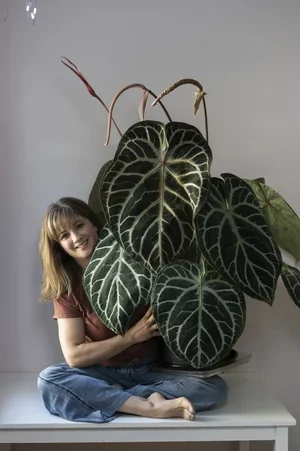
This week’s guest
Lindsay runs a home-based nursery outside of Chicago, USA where she develop and propagates unique collector specimens. Check out her online plant boutique: alltheplantbabies.com
Lindsay’s book The Ultimate Guide to Houseplant Propagation is out now.
Chapters
0:09 Introduction to Propagation
1:00 Lindsay's Book on Propagation
2:11 Benefits of Propagation
4:23 Supporting Small Plant Shops
5:19 Ethics of Prop Lifting
7:22 Renovation Propagation
9:03 Evaluating Plant Health
18:42 Root System Examination
35:00 Propagation Techniques
39:15 Reflection and Learning
50:56 Success Stories and Encouragement
CREDITS
This week's show featured Whistle by BenJamin Banger (@benjaminbanger on Insta; website benjaminbanger.com) and The Road We Used to Travel When We Were Kids by Komiku.