Episode 320: Houseplants that give me the ick
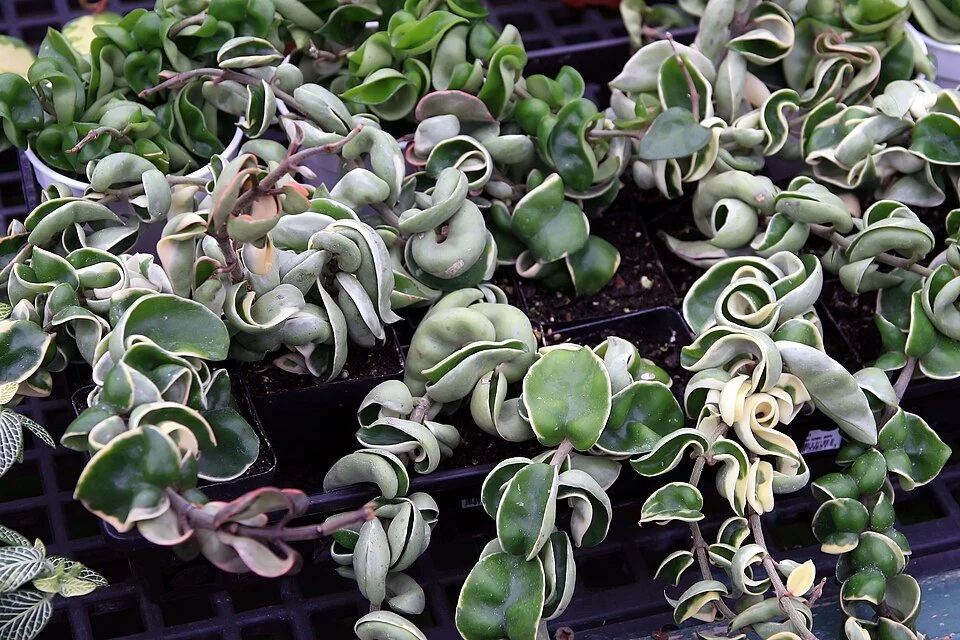
Hoya carnosa ‘Compacta’, or the rope plant. Photograph: David J. Stang via Wikimedia Commons
Transcript
Jane Perrone (00:14.136) Welcome to On The Ledge podcast. I'm your host, Jane Perrone. And this week, a trio of houseplants that give me the ick. This heat wave is making me feel extra salty on top of my usually high sodium levels. And so this week, I thought I would tell you about these three plants that absolutely, I don't know, they just give me, they just, they're not for me.
Maybe you'll agree, maybe you'll disagree, but I will be interested to see your thoughts. Before that, mea culpa. I try not to make mistakes on this show, but it does sometimes happen and it happened with my tiny terrarium plants episode. One of the plants I featured was Macravia umbilata, the monkey paw vine, but I have now realized I have made an egregious error that
actually the plant I was really talking about was not a Margravia after all. I didn't just get the specific epithet wrong, I got the genus wrong as well. Horrifying. Anyway, the plant I was actually talking about was Solanum Evolvulifolium. Tim would let me to choose a plant with ridiculous Latin name. Now interestingly this plant which I should have talked about but didn't
is a member of the nightshade family Solanaceae. They do look very similar in my defense and yeah I can see where I went wrong with this one. Both of these, the one I mentioned and the one I should have mentioned, are great tiny terrarium plants so in a way it's not the worst mistake I've ever made with an ID but I just wanted to correct that just in case you've been looking at the picture on the show notes and thinking
Jane, that's not a Mark Rauvia, but you just haven't been able to bear to tell me that. So that's my correction for today. Please do point out mistakes in the show if you spot any. I do value your input and I know lots of you know loads more than I do. So yeah, if you do spot an error, please let me know and apologies for the mix up. If you're wondering why it's called Evolve Ulefolium, I think it's because
Jane Perrone (02:43.042) the leaves are supposed to look like the genus Evolvulus which is a morning glory type plant and when you look at the leaves of some of those species I can kind of see what they mean so there you go mea culpa
Right on with the first icky plant. And this might be a new one on you. It's been becoming more more popular in-house plant shops and online in recent years here in the UK. And it's called Syngananthus chrysanthus, sometimes with the added cultivar name Macado and is also sometimes just known as the Macado plant.
If you've not seen it, do go and look at the show notes for a picture. If you can't do that right now for whatever reason, let me paint a picture for you. need to imagine a plant that has a rosette at its base, a grassy rosette. So green strappy leaves, maybe half a centimeter across. Not even that most of the time, quite a sparse.
rosette that's poking up in all directions. But that is not the main attraction with this plant because poking above this sparse rosette is a set of stems, sparse and thin with on the top a little button type flower. So if you've ever seen a ladies hat pin, that might be a useful way of thinking about each of these flower topped stems. The flowers are whitish.
green color. Don't imagine anything too dramatic. I guess the overall effect is the view of the flowers en masse atop of these very spindly stems. They tend to vary in length. So they look curious is my main observation about these plants. They're a curious looking plant. The name Mikado, well, that comes from the pick up sticks game, which also
Jane Perrone (05:02.19) came to be the name of a sort of a chocolate straw biscuit thing which you can buy in some parts of the world. And this plant certainly draws the eye because it doesn't look like many other houseplants. It's pretty unique in its appearance. But I'm going to urge you not to buy one of these plants. Certainly not without doing considerable research about how it grows and what it
it needs out of life. I would say this plant is a bit like the Venus flytrap. One of those plants that sold in large numbers, but the number of specimens that are actually alive after six months or a year post purchase is probably negligible because most people just can't meet its needs. Where's it from? Well, this comes from Brazil and I think it also grows a bit in Uruguay.
And the places it grows tend to have particular characteristics. The soil is sandy and free draining, but usually waterlogged. So it can be kind of like coastal dune areas and swamplands, quite high acidity, lots of water around, but also loads of sun. As I say, this is a heliophyte and that's telling you that this plant, when you grow it at home, needs to have roots that are consistently moist.
It's one of those plants that will not cope with drying out. And it also needs really good temperatures year round. So ideally 20 to 21 centigrade. So that's about 68 Fahrenheit and humidity. You'd be looking at say 70 % ideally. So we got that combination of really high light, check. Really high humidity, check. And waterlogged soil.
Remember also that you don't want to be putting hard tap water on this, just like the Venus flytrap. So all around, unless you can meet those very particular needs, which probably involves sticking it under a grow light and if you live in a cold home, might involve some extra heat in winter. This is a plant that may well not survive in your home. I've heard this being described as a disposable novelty.
Jane Perrone (07:28.366) plant and that pretty much sums it up. This is not a plant that the sellers are expecting you to have in five years time. It's something you've to buy because you think, wow, that's cool. And you're going to be coming right back for another one in a few weeks when your first one is dead. To me, that makes it an icky plant because while it's a great plant in the sandy Brazilian coast,
those coastal wetlands in your house, it's quite hard to keep it happy. And I suspect that ultimately it's going to end up in the bin, which for me makes it an unsustainable houseplant. There's so many other things you could choose that are much more likely to have a long and happy life in your home. So unless you are totally dedicated to providing what it needs, just don't bother. Look at the nice pictures and remark on it.
But don't buy yourself one.
Now you may be saying to me, well, Jane, I could just put it in a terrarium. Well, that's true. You can do that. And provided it's got extra light, that might work quite well. But bear in mind, plants grow to about 30 centimetres tall, maybe even a bit taller. So you've got to have a decent sized terrarium to pull this off. It's not going to be happy in a tiny little jar. It's a member of the pipe root family.
areochorlaceae, they're not that far distant from grasses in terms of their taxonomic tree. So that ties into the appearance, as you can imagine. And one of the problems with this plant, if you buy it online, is it's quite hard to transport without damage. So if you imagine those spindly flower stems poking out like hat pins from a pin cushion,
Jane Perrone (09:31.778) of that green grassy base, it's quite hard to send that through the post without damaging the look. And of course, that's what it's all about, is this curious appearance. Without those flower stems, this plant is literally just a green rosette of leaves, which is really not that exciting to look at.
Onto number two. Now this plant is one that's in my book, Legends of the Leaf, and it is the fiddle leaf fig, Ficus lirata. So I'm still not a convert to this particular fig. Why not? Well, I still don't like the leaves. The leaves to me are kind of coarse and ugly in a home situation. I think there are Ficus with far more attractive leaves for an indoor setting.
Outside as a tree if you're in Florida and you have one of these outside or indeed in Africa where this plant comes from great Yeah, love it as an outdoor tree as an indoor tree. It generally ends up looking spindly and sad and Few people manage to grow ones that look good relative to the number that are sold if I can put it that way Now time was when you couldn't find a trendy
front room that didn't have one of these in one of those basket pots in the corner. I mean, I hated it from the start, but maybe some of you are like, it's overexposed now. So maybe you've joined my Ficus laurata hating camp. But I just feel like it's one of those plants that there's just so many better alternatives that aren't so demanding. Don't need the same kind of light levels, which most of us are going to struggle with.
There's a variegated form, obviously, which has become much more available in the last few years with cream variegation. Again, I just, I mean, I'm not, not, I don't hate variegation as a whole. There's plants and species that have variegation that I love, but personally, I don't feel like this cream variegation adds anything to Vagus lirata. And for me,
Jane Perrone (11:47.042) You're just paying a bit extra for some cream, which doesn't really seem worthwhile to me. If you've read my book, you may remember that I talk about the potential for a purple Ficus lyrata because I quote some research that was being done back in the early 2010s about this species by adding grapevine genes to the DNA sequence of Ficus lyrata. Scientists were able to produce a
purple-leaved ficus lyrata, which I don't know, maybe that would be preferable to me, although I doubt it. But you may be wondering where on earth this plant is because you and I have not seen a purple-leaved ficus lyrata on the shelves at the supermarket or at our local garden centre. But in the book, I tell you that follow-up research in 2019 found that actually there was...
problems with the plant. Defoliation and disease resistance problems had shown up in this genetically modified plant and it seems that those haven't been conquered because purpleleve, deficus lirata, as far as I know right now, are still not on the market. The other problem with this plant is that people like to grow it up their very
tall walls and then they refuse to cut it down and you see plants that are horribly crouched because people just won't trim them. So this is a problem across the houseplant world, but yeah, just give your plants a good old trim and you'll end up with a much bushier specimen. But unfortunately, so many of the plants we see have been allowed to just keep racing upwards and it just makes them look
strange and spindly and not good. It's for me, a cultivation problem that again adds to the ick for me personally. If you do have to have one of these, maybe go for one of the much more dwarfing cultivars. think there's one called Bambino, which doesn't get more than about a meter tall. So if you do really want one of these, then go for the smaller one, which you can keep in shape.
Jane Perrone (14:03.81) Or just get your secateurs out because that's the other way to do it. But either way, you'd still do need really good light. So floor to ceiling, south facing window. That's what's going to make this plant happy or indeed a grow light. And as I say in the book, in the care instructions, if you are going to have one of these.
try under planting it with something because there's nothing worse than a big specimen plant with bare soil at the bottom. That is a miserable sight. So you could in the book, I suggest I think asparagus fern or some kind of tough leathery leaf peperomia such as peperomia angulata. if you maybe there are lots of other I'm sure there are lots of other things you could put in there that would work just as well. But yeah, have the soil covered. Don't go for one of those.
horrendous multicoloured mulches. You know what I'm talking about. That also gives me the ick. But green mulch in the form of a living plant is always the way to go. Just a little bit of background on where it comes from. This is an African tree, as I've already said. So the native range is sort of tropical, Western, Central Africa. It gets around 12 metres tall. It's quite popular as a shade tree and in other tropical climates where
this plant can grow so if places like Florida and the Philippines you'll see them growing in the street. The final ick on Ficus lyrata is to do with its name. Now I go into this in the book and I don't know if I can quite bear to run you through it because it's so tedious but the name Ficus lyrata is actually really annoyingly confusing. There's another Ficus species called Ficus pangerata which does actually mean fiddle shaped.
Lirata means liar shaped. The names are confusing and inaccurate and it just winds me up no end. But that's probably a problem for saddos like me rather than the general population. But if you want to read more about that, it is in my book Legends of the Leaf, which I do hope you have a copy of or maybe you've listened to it as an audiobook. Yeah, it's still out there as self-published now. So if you do want to find out more about the Ficus Lirata, then that's a great
Jane Perrone (16:17.368) place to go and I'll link to it in the show notes. Now you may be asking Jane you said they were better plants than Ficus lyrata what are they? Well I don't think you can go far wrong with a Dracaena it's a classic Dracaena marginata what is wrong with that absolutely nothing you could also go for Dracaena circulosa which has spotty leaves I love that one
Or if you've got a bit more money to spend, get yourself a Rapis excelsior, the lady palm. Such a good plant and slow growing and will just look bushy and wonderful and green at all times. And won't throw a hissy fit about a slightly lower light level. That's a really good choice. If you want a bigger leaf, then go for the corn plant, Dracaena fragrans. Again, like good value for money there. Like it can get really large and big. You can chop it back.
fantastic house plant. I would say those would be far better choices than a Ficus lyrata. Or if you definitely want a Ficus, Ficus alii, which I think is actually properly named Maclilandii. I hope I'm getting that right. That's off the top of the old dome. But that plant is a really much easier plant to grow and is a good choice.
You got a much more strappy leaf. It hasn't got the meaty leaf of the Lyra. But I just prefer its growth habit. I'm telling you right now, it's not going to be so worried about bright sunlight.
Jane Perrone (18:02.702) Time for a small amount of housekeeping before we move on to plant number three. First of all, shout out to my new Patreon subscribers. Gerald and Caroline have become crazy plant people. Chris has become a legend. Welcome back Chris. Country Roads, Max, Stephanie, Pams Rooted in Green, Britt, Totally Botanical, Ranil and Linda K. All became free members and Erica took out.a trial of my ledge end level. So this means that they can all access extra stuff. My planting newsletter, which comes out roughly every week, maybe sometimes a little bit less often. And if you're a legend or a super fan, get ad free listening, bonus episodes and access to the audio book of my Atlas of deadly plants.
And as Erica did, you can try that out for free for seven days. So you could just go and listen to the Atlas of deadly plants for absolutely now. Check it out on Patreon now at patreon.com forward slash on the ledge. mentioned it episode three one nine that I've been rather burnt out and to be brutally honest with you, I'm still rather burnt out. So I'm taking yet another week off next week. I will be back.
on July the 31st with a new episode. If any of you have suffered from burnout before, you'll know that it's not just a take a week off kind of scenario and it takes rather longer than that. So I'm trying to pace myself and in that way I can keep the show going in the very long term. So I hope you understand. And in the meantime,
You can go back into the archive. You have more than 300 episodes to choose from. Well, 250 actually, because the first 50 episodes are only accessible to my Patreon legends and super fans. So that's another bonus of joining up to Patreon. But I understand that's not for everybody. So, yeah, do go and check out my website where you'll also find details of all the other podcasts I've appeared on. If you just can't get enough of the sound of my voice.
Jane Perrone (20:20.472) But as always, massive thanks for your support. And I'm hoping the time off will give me plenty of inspiration for upcoming episodes, because I want to do some interesting things with you. We need to get back in that terrarium time machine for one thing. Right, on to plant number three in the meantime. And it's, well, it's another reasonably common house plant, but it's a particular cultivar.
that I want to talk about and that is Hoya carnosa compacta. Now this plant is sometimes known as Hindu Rope. Indeed, that name was trademarked in 1967 by the BL Cobia Nursery in Florida for this plant. I'm not going to use that name again because I don't feel like it's culturally appropriate.
There are a few more examples of this, for example, we say wandering dude and we say Hoya croniana splash rather than their common names, which to be honest belong in a different time. So I'm just going to call it the rope plant because that's indeed what it looks like. Now I should say before I go any further that part of the ick for me of this plant is just simply its appearance. I have, well, I'm not diagnosed officially, but I don't like.
holy things so I think I have what you call tripophobia which if you've ever seen a Lotus pod or the back of a Begonia Ferrox yeah they both set me off terribly with my tripophobia it just makes me want to scratch out the whole and unfortunately the Hoya rope plant brings out a similar feeling in me I tell you what it this is a bit weird but I'll tell you what it makes me think of it reminds me of a Hoya with its sleeves pulled up
Do know what I mean? Like it's all, all the leaves are like crinkled and pushed together. And to me, that's just not, it doesn't scratch my brain in a pleasant way. It makes me feel uncomfortable. I just don't like it. And that's a very personal choice and absolutely up to you if you find this plant gorgeous and attractive.
Jane Perrone (22:35.84) The other thing that really bothers me about this plant, though, is the fact that it is a mealy bug magnet. So that's not to say that there's anything in its chemical makeup that is nectar in particular for mealy bugs, although mealy bugs do generally like Hoyas as a genus.
So I'm not saying it's got some special stuff in it that makes the mealybugs come running that doesn't exist in other Hoyas. But what I am saying is that all of those nooks and crannies created by the crinkly leaves provide a very wonderful hiding place for mealybugs, which can easily, very easily become established in this plant without you knowing a thing about it, because every leaf is folded in several places.
there are lots of hiding places, which is exactly what mealybugs love. And it just means that you might find that your plant has a terrible infestation only when it's got so bad that there's not a lot you can do for your plant. Like all Hoyas, it's got an interesting history. was originally a cultivar that was created by Edward C Hummel, who was a very well-known plant's man of the
40s and 50s, he produced quite a few different Hoya cultivars, including, I think he also created the variegated form of Hoya Bella and he also worked on variegated elephant bushes, that's Portulacaria afra, and also various other succulents as well. He didn't seem to be that hot on trademarking anything, which is why this other nursery in 67
decided to trademark this name for Hoya carnos, a compactor of that I've already mentioned that I'm not going to mention again. Um, but, by that time this plant was quite widely spread and quite popular. Um, I have read some stuff saying that this plant was one that was created by irradiation, which wouldn't entirely surprise me. So if you haven't heard of this, maybe this would be a revelation, but
Jane Perrone (24:54.136) There is a thing where house plant breeders irradiate plants so that they can create genetic mutations that create new cultivars. And this is quite common. This is, think, how we get red-brained fruits and so many other plants have been created this way. There's a really good piece in the Hoyer journal Stemma about the history of Coya carnosa compacta. I'll link to this in the show notes. It's by Rachel Collect Conroy.
And it's definitely worth a read if you want a really deep dive into this plant. She goes into the history of Mr. Hummel and also the Kobia trademark for this plant and the history. It's if you want to get deep into Hoyer stuff, it's a great article to check out. And if you buy one of these plants, can buy them now quite commonly as very small cuttings. And at that point, they do look like a cabbage, basically, like a tiny cabbage in a pot.
And then as they start to grow, they develop these long stems with the very curled up leaves. I liked the description that I found on Reddit from somebody who said that the leaves look like day old shell pasta. Yeah, that's the vibe it's giving me too. And it's not a good vibe. It will grow and produce the lovely classic hoya-kanosa flowers in pink clusters. The flowers I have no problem with is just
the way the plant grows that I'm not a particular fan of. I've seen people grow these stems extremely long. They do seem very prone to just forming that rope shape and I just, I just don't like it. And I don't think I need to say anything more than that, other than I just don't like this plant. If you want a bit of crinkle, but you don't want the full rope plant effect, then there is crinkle eight, which is another Hoya carnos.
cultivar with crinkly leaves, but these do not set me off in the same way. And I'd much prefer one of those than a compacta. Or indeed, one of my oldest houseplants is actually Hoya Carnosa Crimson Queen, which has the outer cream and pinky variegation. And that plant to me is one of the best houseplants in the world. Absolutely love it. And true of so many of the other Carnosa cultivars, I just don't like.
Jane Perrone (27:15.918) Compactor. If you want to apply the looks like it's calling up its sleeves, hiding a Mealybugs, yeah, go for it. Love it for you, but for me, no thank you.
Jane Perrone (27:35.854) That's all for this week, I will be back in two weeks and I do hope you and your plants thrive. Well, at least survive. Let's just go for surviving right now. If this heat wave goes on much longer, I may come back as just a desiccated husk of my former self, but I'll try to stay hydrated and so should you. Bye!
I love houseplants, but I draw the line at these three. Find out which houseplants I really can’t stand, and why!
Timestamps
0:14 — Introduction: three houseplants that give Jane “the ick”
0:49 — A correction from my tiny terrarium plants episode
3:02 — Plant #1: Mikado plant (Syngonanthus chrysanthus)
9:53 — Plant #2: Fiddle-leaf fig
18:02 — Housekeeping and Patreon update
20:48 — Plant #3: Hoya carnosa ‘Compacta’
A correction
In episode 311, I misidentified a plant in my list of tiny terrarium species. Apologies! I said it was Marcgravia umbellata, but the plant pictured was actually Solanum evolvulifolium. In my defence they do look rather similar! I shall correct the original show notes.
The ick list
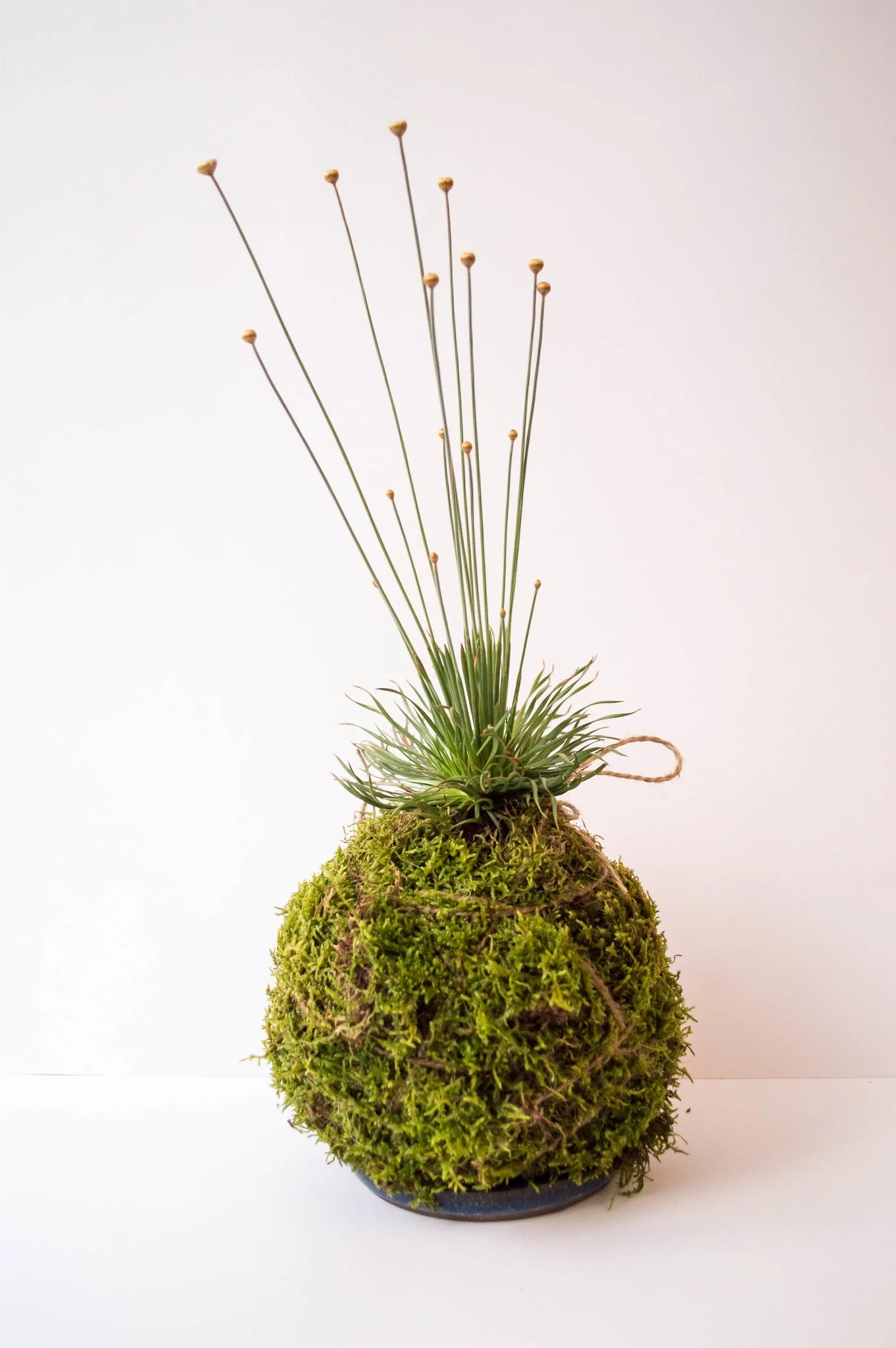
Here’s Syngonanthus chrysanthus grown as a kokedama. Honestly, don’t try this at home, in my opinion this is a really terrible way to grow a plant that likes high moisture levels around its roots. Photograph: Gergely Hideg on Flickr
Mikado plant (Syngonanthus chrysanthus)
This plant comes from SE Brazil and Uruguay - have a look at Plants of the World Online for more info.
It grows in sandy, acidic coastal wetlands and is a member of the piperoot genus - Eriocaulaceae.
This plant has become a popular one on the UK houseplant scene in the last few years - it’s available in a number of online shops and some physical houseplant stores too.
The hatpin-like structures are actually flower stems.
Indoors, its needs are rather like those of the venus flytrap - really high light, constantly damp soil and consistently high temperatures (20-21C - 68F).
Water with ‘soft’ water only. No tap water full of dissolved mineral salts!
Outside a terrarium, you may find these conditions hard to sustain. It’s big for a terrarium, too, at potentially 30+cm tall.
It’s hard to deliver safely through the post owing to its spindly shape.
Yes, it looks cool, but it’s one of those ‘novelty’ plants that has very little chance of surviving in your home for long. Choose something more sustainable instead!
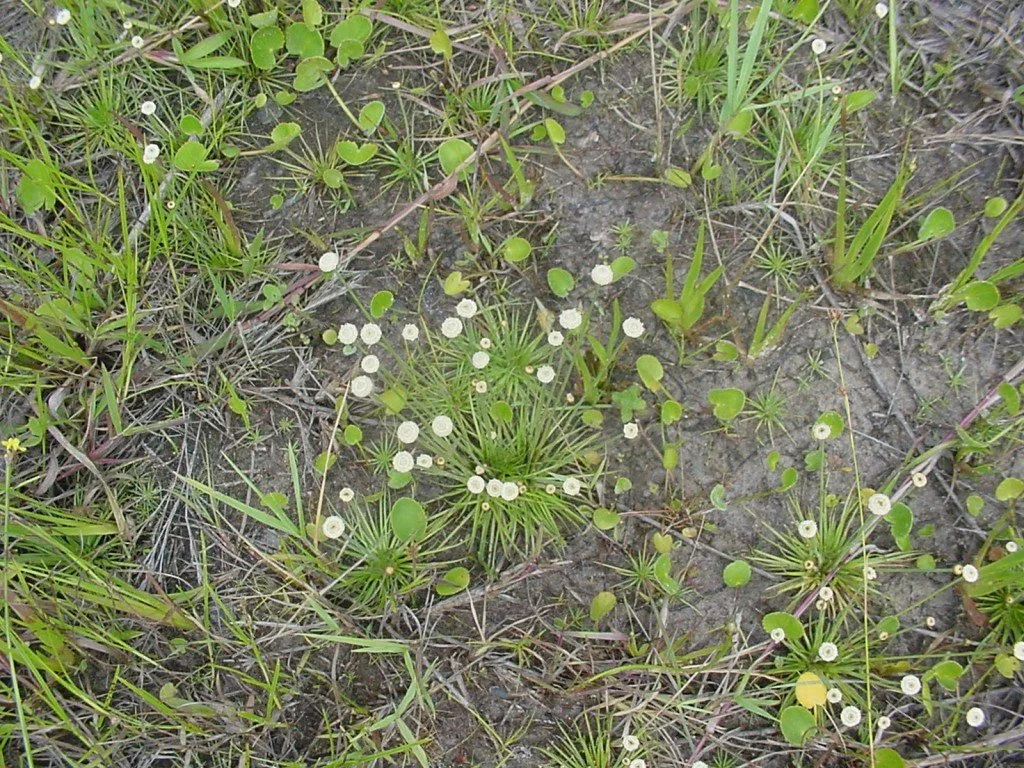
Syngonanthus chrysanthus growing wild in Brazil. Photograph: Marcia Stefani on Flickr
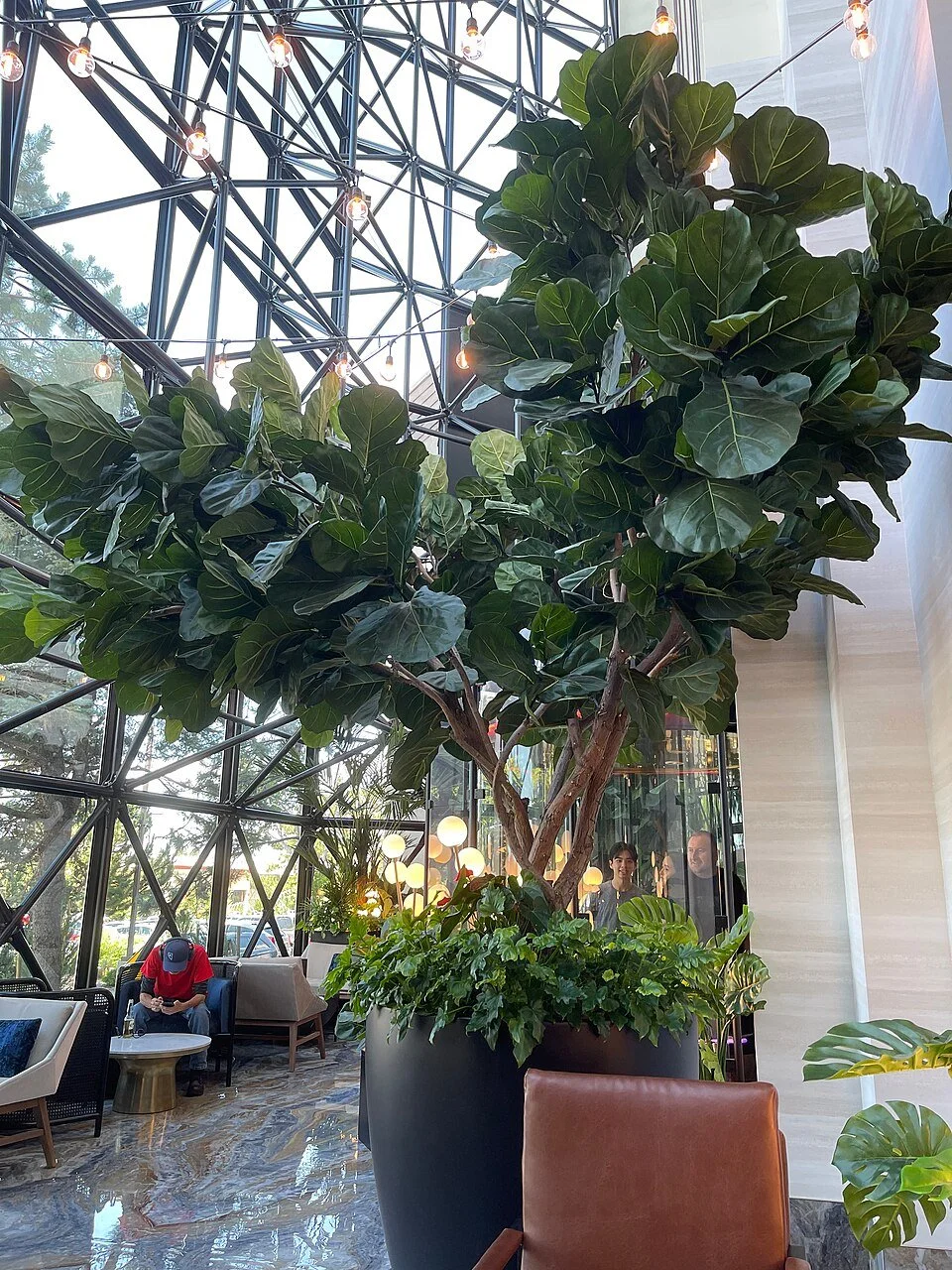
If you have these kinds of windows, you too could successfully grow a fiddle leaf fig! Photograph: Sarah Stierch via Wikimedia Commons
Fiddle leaf fig (Ficus lyrata)
This book has a chapter in my book Legends of the Leaf because it is such a popular and iconic plant - that doesn’t mean I have to like it!
I don’t like the leaves of this plant - they look too coarse for indoors for me. But my main problem with this species is the high levels of light it needs, which means many people struggle to grow it. This African tree loves STRONG light so you ideally need to place it right under a growlight or next to full length, sunny windows.
If you want to avoid a gangly fig, try growing one of the more compact cultivars such as ‘Bambino’. There are also variegated FLFs now widely available, but again - why would you want to?
There’s a bit of a taxonomic tangle around the scientific name of this plant - ‘lyrata’ means lyre-like whereas ‘pandurata’ means fiddle-like, but Ficus pandurata is a different species.
In my book I mentioned that scientists were working on a genetically-modified purple-leaved FLF, with added grapevine genes. This research from the 2010s has not resulted in purple plants hitting the marketplace, because they were found to be unstable and prone to problems.
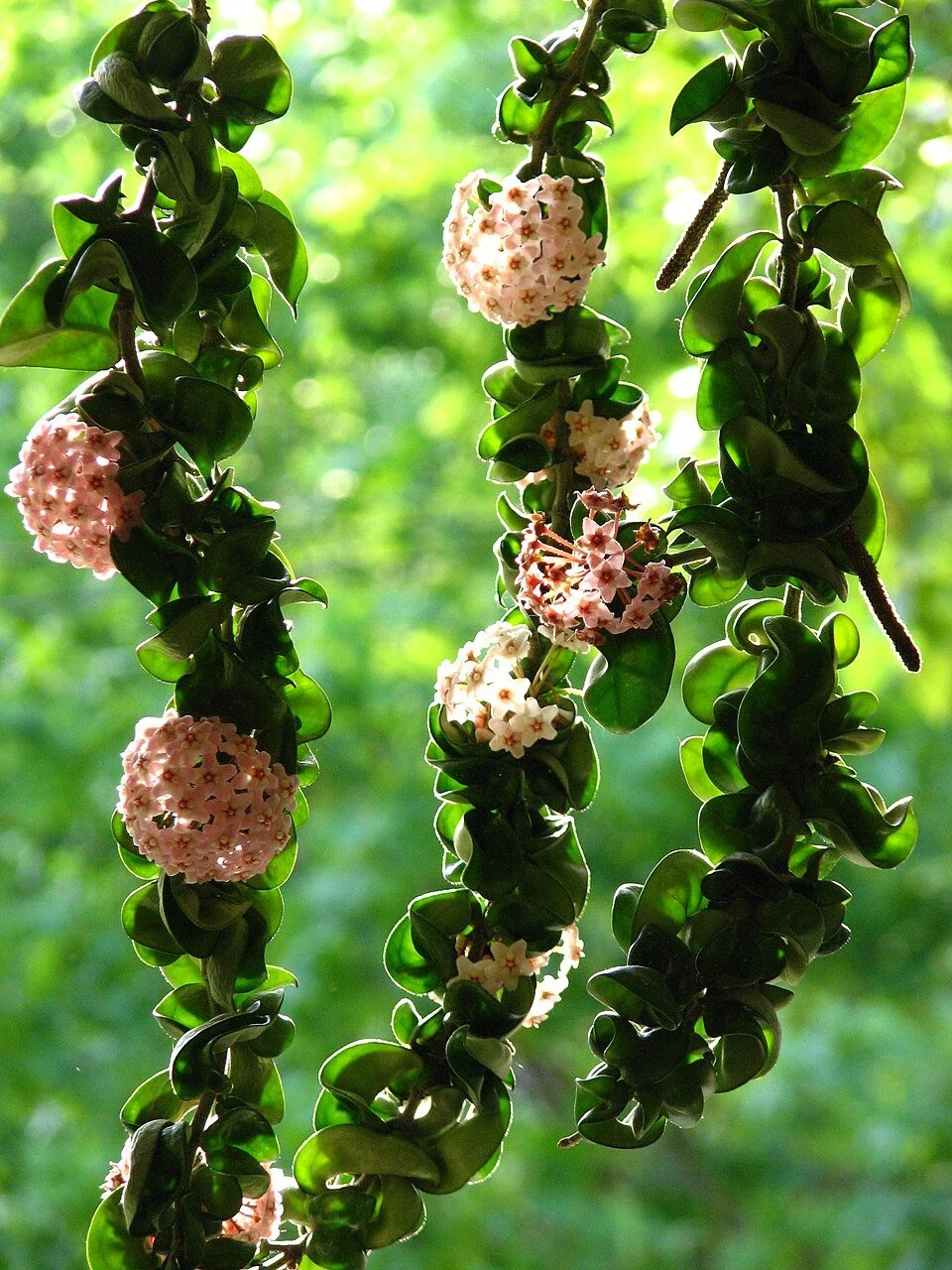
This plant is just … ropey. Photograph: Kor!An (Андрей Корзун) via Wikipedia Commons.
Hoya carnosa ‘Compacta’ - the rope plant
I suffer from trypophobia -so the ‘day old pasta’ leaves make me feel uncomfortable!
This cultivar was bred by Californian plantsman Edward Hummel in the early 1950s, who also produced many other interesting plants, including many succulents. More on Hummel here.
It’s possible this cv was developed using irradiation techniques which are used to induce mutations in plants - although I haven’t found definitive evidence that Hummel used this technique to create this specific cv.
There’s a detailed article on the rope plant in the Hoya journal Stemma that’s well worth a read if you want to go deeper. (There’s also a great piece about mites in this issue but prepare for the giant mite jumpscare when you download the PDF!)
It was trademarked as ‘Hindu Rope’ by the BL Cobia nursery in Florida in 1967. I don’t use this name for the plant as it’s outdated and culturally insensitive. (I just call it the rope plant if I want to use a common name.)
All hoyas are prone to mealy bug infestations but the many nooks and crannies in this plant mean it is particularly prone - and you won’t realise until the problem is really bad.
There are many other cultivars of Hoya carnosa that I prefer, including one of my all-time favourite houseplants, ‘Krimson Queen’.

CREDITS
This week's show featured Whistle by BenJamin Banger (@benjaminbanger on Insta; website benjaminbanger.com) and The Road We Used to Travel When We Were Kids by Komiku.