Episode 311: Teeny Tiny Terrarium Plants - I pick my top five
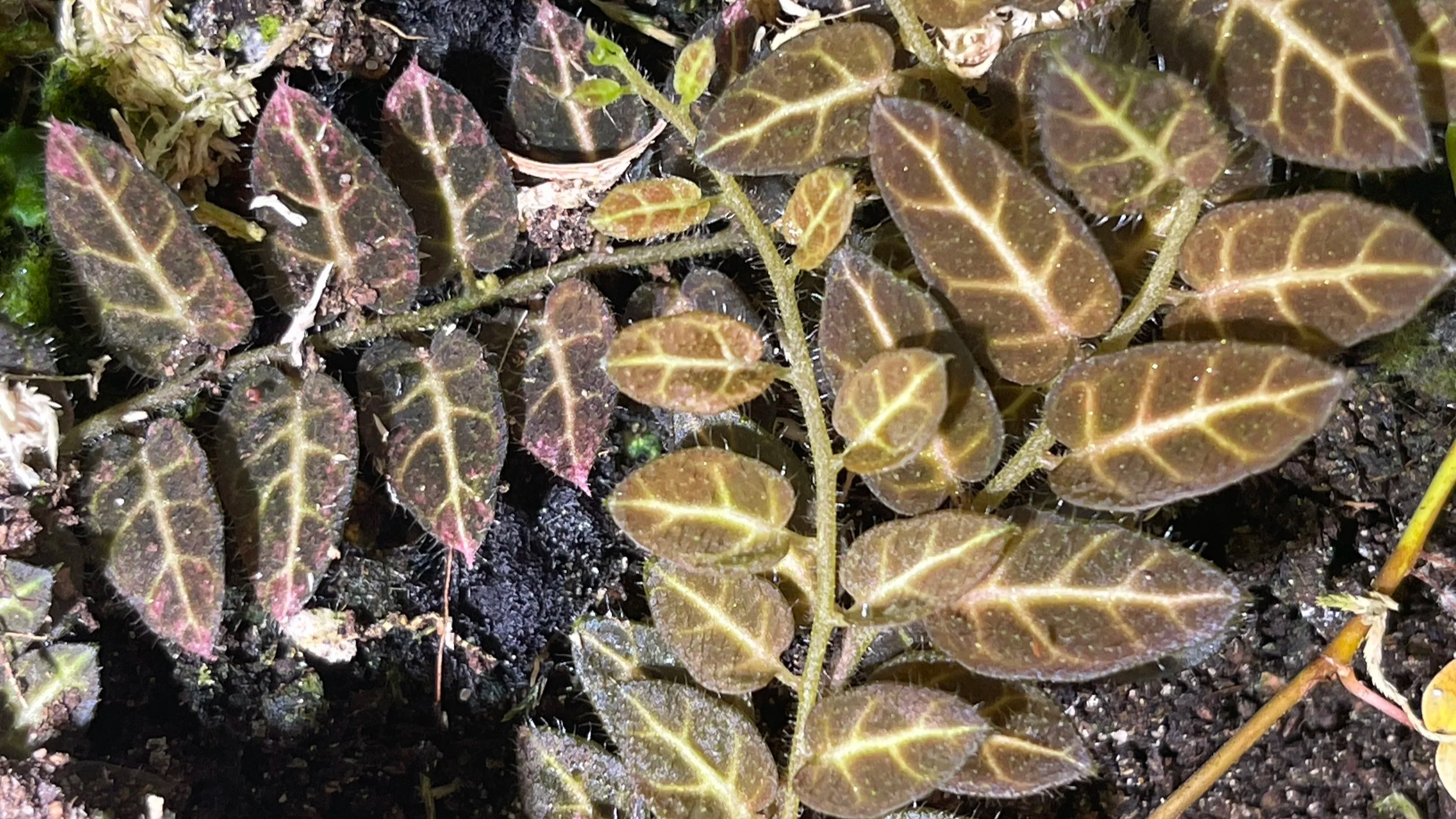
Marcgravia umbellata or the monkey paw plant is perfect for scrambling around your terrarium. Photograph: Jane Perrone
Transcript
[0:02] Hello, I'm Jane Perrone. This is On The Ledge Podcast, and we're here to talk about houseplants. Get in.
[0:29] And if you're not well, don't worry. I am here to cheer you up. I am within acceptable parameters. I would almost say I'm within excellent parameters. That's how well my week is going. This week's show is focused on T-T-T-P, teeny tiny terrarium plants, I've picked my five favourites for you to add to your under glass containers today. And I answer a question about the ultimate tricky houseplant spot. Now, let me just say before we really get started on this episode, I am on the record as saying that I wasn't that in Tutorariums. If you remember back to my Sarah Gerard-Jones, the plant rescuer, and T. Francis episode, that was the wonderful, rather sweary video episode that we did a while back. I think it might have even been the 300th episode. Gosh, I've lost track. Anyway, T's Jungle and The Plant Rescuer, they're both into terrariums. And I said at the time, terrariums, not so much. But I did have a childhood filled with growing plants in fish tanks.
[1:59] Which obviously is a terrarium. And I did have a fish tank that was left over from my children's various pet hobbies when they were younger. And so I have now got a terrarium, which I'm just kind of experimenting with and throwing things into. It's not aesthetically anywhere close to the kind of things that you see these really professional terrarium makers produce. However, I'm having fun with it and seeing what plants do well. It's here in my office. And that means that in the wintertime, it got very cold. It gets down to about 10 degrees centigrade in here because there's just a heater stopping it, you know, getting too cold overnight. So I have had some interesting experiences with terrarium plants so far. But I think one of the things that I've really noticed about terrariums that you see on social media is the same plants pop up over and over again, we see a lot of Fittonias in terrariums.
[3:08] And no wonder because they do really well in terrariums. They are absolute divas outside a terrarium, very prone to suddenly wilting. Inside a terrarium, they're super easy. You can plant cuttings in a terrarium and away they will go. But I'm kind of bored of Vittonias. So I wanted to come up with five other small-leaved plants that will do well, that won't grow massive, that will stay relatively small with a little bit of
[3:36] pruning and will also bring a different look to your space. I've chosen five but I'd also love to know your choices too so please do tell me about the terrarium plants you love.
[4:00] Let's start out strong with a really teeny tiny plant now you know you know i love saxophragias one of them is going to be from the saxophrage family more specifically the irregulares group of the saxophages and that just means the particular subsection of saxophages that have uneven petals some of the petals at the bottom are bigger than the petals at the top and these are called the irregularis and if you've read legends of the leaf you will know that in that group is the strawberry saxophage saxophageus dolonifera which i love and in fact i do have a tricolor one of these in my terrarium right now. It's probably going to get too big for there eventually.
[4:48] But if you like saxophagius, but you don't want a plant that is going to get quite big and start putting out, big stolons like a giant multicolored octopus taking over your mini terrarium then there is a saxophage solutions in fact maybe if i ever start a logistics company it's going to be called saxophage solutions from jane perone yes i love it um this is a plant called saxophage of Stolonifera. And the form in question is called Yakushima, which is the name of a Japanese island where this plant is meant to have been first found. If you are used to the normal size strawberry saxifrage, also sometimes erroneously known as strawberry brigonia, then this plant might come as quite a shock because this is significantly smaller. It's like it's been through one of those shrink rays.
[5:49] It really does stay small. It's not just a baby plant that then grows up to be massive, like when somebody buys what they think is a tiny cockapoo and it turns out to be a massive labradoodle. No, this plant genuinely stays small. The leaves, I would say, are up to about... Half a centimeter diameter. So the rosettes as a whole, they clump up like all strawberry saxophages, but they still stay lovely and small.
[6:20] So if you are making a micro terrarium, a nano terrarium, this is a great plant. And I just love how it looks.
[6:29] Those veined leaves, they often have some red coloration it's just a very beautiful plant i will post in the show notes some links to instagram showing how people have used this plant in interesting ways you can put it on a rock and make a sort of a wet rock and moss kind of effect you can put it into a regular terrarium you need to have something which is not how i've got it set up so far to be fair but you need to have something where this plant can be shown off in all its glory so you don't need much distraction from other leaves but it's a really really beautiful plant. The main thing to remember with any of these strawberry saxophages the yakushima or as it's also sometimes called micro form included is that this is a plant that lives in pretty temperate conditions in the wild and grows on damp rocks and places like that so you don't want this plant to be in a very hot place so keep your terrarium in a cool spot out of direct light it's perfect for growing under a grow light but you don't want it being hit by the hot sun which will then cook it so bear that in mind when you're thinking about planting but this is a really good plant your main challenge may be getting hold of it because up until quite recently it hasn't been that easy to source.
[7:57] I very luckily got given a plant or two by the wonderful Ben Newell of Worcester Terrariums. Thank you Ben, you are a star. I've seen this plant popping up in a few terrarium plant shops online.
[8:13] And it really should start to become more available because it's actually very easy to grow and bulk up and because of the nature of the saxifragia stolonifera's reproduction style putting out these little tiny in the case of the the yakushima tiny little stolons with new plants it should be becoming more common i hope do go back and listen to my saxifragia stolonifera episode I think it's 104 just an update on that or a lack of update actually that episode was recorded in July 2019 and I said at the time I was very keen to get hold of a cultivar called Shishi Henge I probably said that wrong still doesn't seem to be amazing in the UK I do seem to remember that Grow Wild Nursery in the UK had imported some but I presume they're still trying to propagate them so they have enough to sell at some point in the future. But yeah, if you've got any rare saxophagia stolonifera babies, let me know. I'd love to do some swaps. Next up is a hoya. Yeah, I'm playing to all my stereotypes here. Of course, there's going to be a hoya, isn't there? And the hoya in question is hoya curtisii.
[9:33] And this is a lovely small-leaved hoya that comes from Borneo, Malaya, the Philippines and Thailand and is perfect for a terrarium. It's got these tiny little leaves. They're about maybe a centimetre across.
[9:49] Round with a pointy bit at the end. Beautiful silver blister variegation like so many hoyas. And of course, this is an epiphyte or apparently also a lithophyte that grows in the.
[10:02] Humid places. So it makes a really good subject for a terrarium. I got my cutting of this in 2018 and it really did do nothing for quite a few years until I put it into a terrarium. Then it went absolutely wild in the terrarium. Unfortunately, over the winter, as I said at the beginning, my terrarium gets down to about 10 degrees centigrade and that was clearly too cold for the Hoya and it has a lot of yellowing leaves right now. It's still alive but it's not doing so well so come winter I need to think about moving that plant somewhere slightly warmer to make sure that it stays happy but it does really well in a terrarium. I think mine's flowered once and the flowers they're not that dramatic. I would say they're not the main feature of the plant and they're quite small and they tend to hide around the leaves so you don't necessarily even know that your plant's flowering until you smell them and the flowers do have quite a nice smell. They have these reflexed flowers which are sort of a pale green colour which are quite beautiful if you can find them among the foliage.
[11:15] As an epiphyte, a plant that grows on another plant, this plant just, like most hoyas, this really does need a good support. I've had great success growing it on a slab of cork. It really loves that and just grows at a prodigious rate. You can almost see it growing. And comparing that to how it grew outside the terrarium is really quite shocking. It was a dramatic difference and although it does grow quickly the leaves are small they're as I say they're like less than one centimeter squared so it just means that if you have lots of plants in your terrarium it's not going to obscure them and if it does start to get too big it's not because the leaves have got big it's because there's too many stems and so then that case you can easily just prune stems out and of course propagate and give those cuttings to friends. So I think it's a really, really good terrarium plant. As I say, a quick grower once it gets going, but something that you can keep in bounds quite easily. And the little silvery leaves are just so adorable. They do seem to.
[12:27] I did see a post from Cyril Cybernated of his Hoya corticii and it was huge. But as I say, small leaves. So it works. You can keep it cut back and working in a small space. Now, I know Hoya people love that silvery variegation. I have heard that there's an extra silvery form. I mean, this is contentious because is it just that your plant just happens to be extra silvery or is this some special form? Just get a Hoya corticii and you'll be fine. Don't worry about finding some extra special rare form and paying more money for it because actually there's so many environmental factors that can affect that blister variegation and just general mutation. So yeah, don't worry about it. Just buy yourself a corticii and put it in the greenhouse. You'll get some lovely red sun stress if you give it enough light too which you may or may not like the look of.
[13:30] Yeah it's a beautiful plant and I highly recommend.
[13:44] Now it's time for question of the week and this one comes via patreon from annette and annette wants to know what houseplants would thrive best on a low table beside a northwest facing window that has a radiator under it well annette you really have given me the ultimate in tricky questions for houseplants because I think there you've got the perfect storm of not so good things for a houseplant. You've got a window that faces northwest and you've got a radiator that will be pumping out dry heat come autumn and winter and early spring. These things make it tough for houseplants.
[14:35] Why? Well, light is the key when we're talking about houseplant growth and northwest facing, assuming you are in the northern hemisphere, which I'm guessing you are, means that the light levels will be lower. The fact that it's northwest may make a slight improvement on the situation. We don't know one piece of crucial information here though, and that is how big the window is. So if your northwest facing window happened to be floor to ceiling or maybe a patio door kind of setup, that would be one thing. If you're talking about a.
[15:19] Or a, you know, bathroom window or, you know, a tiny bathroom window, we really are looking at extremely limited light for your plant. We also don't know if there's anything obstructing the light from coming in that window. That could be a car parked outside. It could be curtains, blinds, something like that. It could be trees or other buildings and those will all impact light levels. So what I would say, first of all, Annette, is if you don't have a light meter, I'm assuming you don't, then you can test out how bright a particular spot is. Go right next to this low table that you've got and try reading a book without any electric lights on and on an average day and see, can you read that book without having to switch a light on? If it's too dark for that, then it's too dark for a houseplant. There are loads of brilliant grow lights out there now, which you could install in that area to light a house plant and make it much more agreeable. If you can find that you can read a book, then you've got a few limited options.
[16:35] Given the radiator, we are in tricky territory. But I would say that what a lot of people would say right now would be a Sansevieria, a snake plant, because these are always thrown about as the low light plants. Now, yes, a snake plant will just sit there and tolerate whatever the heck you chuck at it, including the dry heat from the radiator, the pretty much complete absence of natural light in that spot.
[17:05] Yes, it probably will survive. However, it won't grow and eventually it will start to stretch and look miserable. So if you want to go down the Sansevieria route there are some really beautiful Sansevierias out there now.
[17:22] The classic Trifaciata with its mottled green leaves or Laurentii with its banana yellow margins, which is a lovely.
[17:35] Bright and cool combination. In my opinion, some people find it a bit overdone, but I just can't get enough of it. That will be great in this setting. you could also try one of the african spears like sansevieria or now as we should be calling it dracaena cylindrica with these spear-like leaves they're very very cool if you like a modernist take on your house plant this is a great choice but what i would do is i'd have two plants now i know of course you're going to say jane of course you want me to buy more house plants well yes and know. What I would do in this situation is I'd have two plants, which I swapped out every month or so. So the other plant would be in a much sunnier situation. And then once a month you switcheroo, do the old switcheroo so that each plant gets a chance to have some time in the sun, which will help to ensure that it does a lot better and stays healthy in the long term. Now, this is like pretty much everything in the universe, not a new thing.
[18:42] If you've read my book, Legends of the Leaf, you'll remember in the Kentia palm chapter that I did a lot of research about rich people. And most people who had Kentia farms in Victorian times were rich people because they were very expensive plants would actually send their plants on a holiday to a nursery so that they could escape from the dark Victorian hallways and parlours behind heavy curtains to actually get some light. So you know.
[19:15] We're kind of doing the modern version of that. Few of us are going to be sending our plants off to somebody else for several months, but we can switch two plants about. So find another spot in your house with better light and keep those two plants switched around. The reason to have the same plant is just, I guess, because then you'll be able to see the difference between the two and notice when they need switching around if one starts to look a bit miserable.
[19:45] And in this kind of setting where light levels are low, the main challenge is going to be not letting the plant suffer from root rot during the winter. So when light levels are super duper low, you'll find that this plant needs very little water and I would recommend keeping it almost completely dry during the winter and then as I say you won't have the problem of the plant not needing any water and finding all this water sat around its roots which then rots because it's not being drawn up through the plant which is caused by photosynthesis and the whole process that happens when plants grow so we want to avoid that so keep it dry in sort of November to March and then at this time of year we're currently in April as I record this is when you can start to water and in fact I've been taking my sansevierias outside and giving them a good soak to get them woken up and growing again.
[20:47] So that's my tip for you, Annette. I hope that's helpful. And if you haven't read my book, Legends of the Leaf, well, I did loads of research like that for this book. So I read old newspaper archives and all sorts to access all this really fascinating information about plants in the past. So if you subscribe to my Patreon and you're a super fan, you can listen for free. You can listen on Audible or Spotify, or you can buy the audiobook direct from my Patreon. So there's a little plug for Legends of the Leaf, also now self-published and available everywhere.
[21:26] And if you've got a question for me at OnTheLedge, do drop me a line to OnTheLedgePodcast at gmail.com.
[21:42] Next up is begonia foliosa aka the fern-leaved begonia begonias can come as huge leaves monstrous big leaves i'm thinking of begonia size morii which is also known as ciliata which is the super hairy begonia i talked about this in episode 281 which i'll link in the show notes when i listed my top 10 begonias. The leaves on that get absolutely enormous. There's probably even larger leaves out there, but that's just the one that springs to mind.
[22:18] But foliosa is not a big-leaved plant. It's a shrubby begonia that comes from the northwest of South America. So we're thinking of Colombia, Ecuador, Peru, Venezuela. And it's sometimes called Varminiata, but according to Plants of the World Online, the incredible Kew website.
[22:41] Is just a synonym. So I'm just going to call it Begonia foliosa. And the common name I've seen most often is the fern leaf Begonia, which makes perfect sense because that's exactly what it looks like. The stems have a reddish tinge, which is rather nice and a bit like the Hoyocurticii. Yes, it can get to a reasonable size, not huge, but because of the leaves being so small, if you cut it back you won't make it look terrible because of those small leaves. So if you imagine you've got a really big leaved begonia that's got five huge enormous leaves that's blocking out all the light in your terrarium. If you take one of those leaves away often you can unbalance the plant and make it look really strange but with that small leaf you can do some pruning sensitively with a pair of snips and the plant will still look great and won't look as if you've touched it at all. And really you mustn't be afraid to give these plants a good cutback in a terrarium because they will start to take over whatever you choose but I just find this a very pleasing form and I think it works really well and this is backed up by the scientific name foliosa that just means leafy I mean.
[23:57] Like that can apply to literally well almost any plant but there you go I guess um it's it's got these kind of dense small leaves so foliosa it is is it going to flower well of course it is and you'll get these either white or pinkish colored flowers which are produced as little chandeliers tiny chandeliers um up to you whether you think they're cool and you want to keep them or whether you just want the green of the foliage and what I love about all the plants I'm talking about today is that you can take lots of cuttings and give them away to friends and is that not the most rewarding way of giving and receiving plants it is it honestly is if you rely on buying plants all the time are you I'm telling you you're missing out on so much joy so yeah get involved in of cutting swap today. I love that for you. If you are on my Instagram, you'll note I was talking about the Xerosychius dangui, which I dedicated an episode to a few years ago. And I was just updating people on my specimen, which I've just repotted. And I'm going to be sending out a couple of cuttings from that plant just to people who wanted them, because why the heck not?
[25:19] So yeah, it's a great thing to do. Let's encourage everyone to get propagating. I know I go on about OTL sew along and that's great, but that's not for everyone. I believe cuttings can be for everyone.
[25:36] Next up is a genus that I think I'm more excited about this genus than any other plant right now. And if you look up the word shingling in the dictionary, I reckon they have a picture of one of these species. And it is, can you guess?
[25:57] Mark gravia. The species I've been growing is Mark gravia umbelata red I think it is or possibly bronze. These plants are perfect I would say for a small terrarium because they are shingling plants so that just means it's going to grow right up against a tree trunk or piece of wood or similar. It's going to be clung on there the leaves are going to be pressed in to the surface the leaves are small the common name for this plant is monkey paws I mean I've got to go and google a monkey's paws now and see if they look anything like but it paints a vivid picture I guess this plant has just.
[26:43] Grown like bilio in my terrarium I am really happy with it I love the look of it with its incredible veined leaves which are reddish it's just so darn attractive there are different margravias out there some of them are going to be too large for the kind of terrariums i'm talking about if you have a large cabinet you could grow something like el coca which is a wonderful dark dark leaves leaves with a white midriff with long oval leaves. Too big for me for what I'm using it for but certainly a good choice if you've got the space. The Numbolata is just ideal for roaming around your terrarium. It just looks so beautiful the alternating leaves on this slightly wiggly stem and just seems to be the easiest thing in the world. I'm in love with Mark Gravia. Are you with me people. This plant I got as a cutting but it really is no issue whatsoever to buy this as a cutting. You can just sling it straight into your terrarium and it will root provided there's a little bit of humidity in there. So it's just so.
[27:56] I can't think of a single negative thing to say about this plant. I'm in love with it. I'm crazy about it. I want it to be in my life for the rest of time. It's just that good. It's almost single-handedly rekindled my love for terrariums and got me doing that thing where I want to turn every single glass container I see into a terrarium. If you've ever been a terrarium nut, you'll know what I'm talking about. You know, you see a container on the side that's full of, I don't know hot sauce and you just think that would make a great terrarium well now that I've been growing Mark Gravia I'm thinking about that for every single container I see so that's got to be a good thing right now if you are a long-term listener to this show or you've read my book Legends of the Leaf you may be thinking oh but this is a shingling vine does that not mean that At some point, it is going to go through heteroblasty, where it's going to develop from the juvenile form into the adult form.
[29:00] Well, yes, technically, yes, this plant comes from the Caribbean. And when it's growing in the wild, yes, it will make that change from the small juvenile leaves to much larger leaves. And so if you go and look at a Q herbarium specimen of this plant, you'll see the leaves look pretty large. However, if you're going to keep this in a terrarium, we don't need to worry about this plant getting massive because it just won't go through that adaptation. It will realize that conditions aren't right for it and it's not going to suddenly start getting giant leaves in your terrarium because you're going to be needing to cut it back quite often. So, you know, just like We don't worry about Epipremnum orium, the devil's ivy, growing into its massive-leaved, split-leaved form. You know, the kind of thing you see when you go to Southeast Asia.
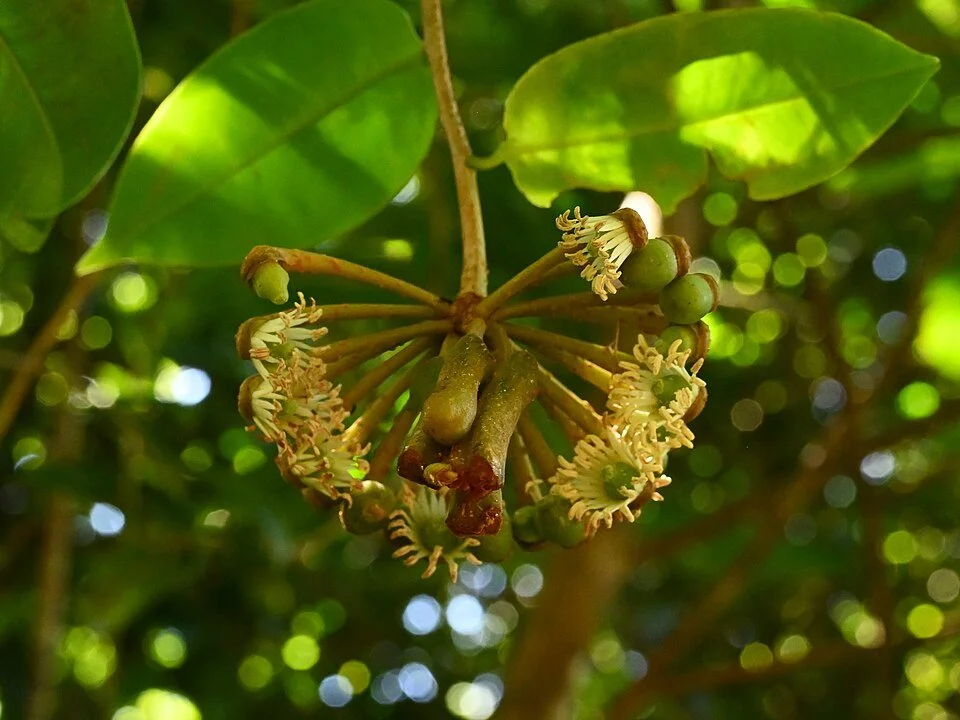
[29:54] We don't worry about our plants in our house turning into that just because the conditions aren't right. So this is why it makes a great terrarian plant. And if I can find one, I'll put a picture of the flowers of the Mark Gravia in the show notes because they are wild. They look like, what do they look like a sort of a dangly squid with.
[30:23] I don't know like something alien is how the only way I can describe it it's it's very odd and very very unusual flying saucer with lights I just don't know how to explain it I'm supposed to be a wordsmith and I really can't explain the flowers of the Margravia so do go and have a look if I don't manage to put a picture in the show notes you're going to have to google but it's going to be worth it because I mean I want a chandelier that looks like this plant because it's very cool so that's Margravia I'd love to know your thoughts about this plant have you grown it and how do you like it in a terrarium are there other species that I must get immediatement because mock graviers are where it's at and the final species I'm going to be talking about today is from two tiny islands off the coast of Madagascar Mauritius and Reunion and it is a fern. It is the eyelash fern, Ateneopteris australis, a beautiful little ferny fern.
[31:41] That looks like somebody has decided to put eyelash extensions on but make them green. This is a wonderful fern that I think looks great in the terrarium. It's only going to get up to about 15 centimetres tall. So yeah, even if it gets massive in eyelash fern terms, it's still going to be relatively small. You do see these plants on sale in houseplant pots in little tiny containers. Outside the terrarium they're really hard to maintain as indeed are many tiny plants because that root ball just dries out so quickly. In the terrarium however you've got much better conditions. The moisture of the air means that they don't dry out, the soil doesn't dry out as quickly and they make a lovely little addition to your terrarium. Now this plant does like it warm. I haven't put one in my current terrarium out here in the office because I don't think it would cope with the cold in winter. So I would prefer to keep this one about above about 16, 17, 18 C, which is about sort of mid 60s Fahrenheit, because I just don't think it would cope with colder temperatures than that in the winter. So yeah if you've got a terrarium that's in kind of normal room heated room temperatures.
[33:00] It would be absolutely fine but probably not for a really cold room this one's very widely available now it's very popular and gosh i've seen it in big box diy stores as well as specialist plant shops so you'll have no problem getting hold of it i think if you're in the uk i do note that grow tropicals who you'll remember from my previous terrarium episode with jacob james currently has these on sale for 3.99 so if you're quick you might be able to grab yourself a bargain there.
[33:31] Are there any other actiniocterous species available as terrarian plants or houseplants more generally? Well not that I've found. I'm really more than happy to be corrected on this but I have not come across any other species of this genus that's available as a houseplant but if you know differently as I say get in touch because I'm really interested in this genus and would love to hear more about it.
[33:57] So there's my top five TTTPs. I'd love to know yours. I'd love to know yours. So do share. Don't be shy. Come forward. Express your opinion. I love it when listeners do that. I'd love to hear what you think. And if you have not had enough terrarium talk yet, fear not because I have more terrarium themed episodes coming up. Yes i'm basically indulging myself here in i'm going through a terrarium phase and so i'm going to be talking about them and that's the joy of this podcast i'm not really driven by what the algorithm is telling me to tell you about it's just all up here in the old noggin things that i'm interested in so yeah i hope you enjoy the ride.
[34:53] I'll be back next week with another new episode if you cannot wait that long join my patreon at patreon.com forward slash on the ledge where you'll find a heck ton of other bits of my voice and words scattered around for your enjoyment so binge away have a great week with your plants.
Need teeny tiny plants for your terrarium? I've got you. I pick my top five plants that will fit into the smallest of glass containers.
OTL housekeeping
Want to buy a copy of my books Legends of the Leaf and The Atlas of Deadly Plants? All the details are here. Don’t delay if you’d like a copy of Legends of the Leaf, the hardback edition - I only have a very few copies left and there won’t be any more, ever!
Want more? Join my Patreon! You can join for free or choose one of my paid tiers. There’s an article for all members - including free ones - about repotting houseplants and what substrates to use to read right now!
Want to get ahead on the OTL Sowalong? Check out these episodes.
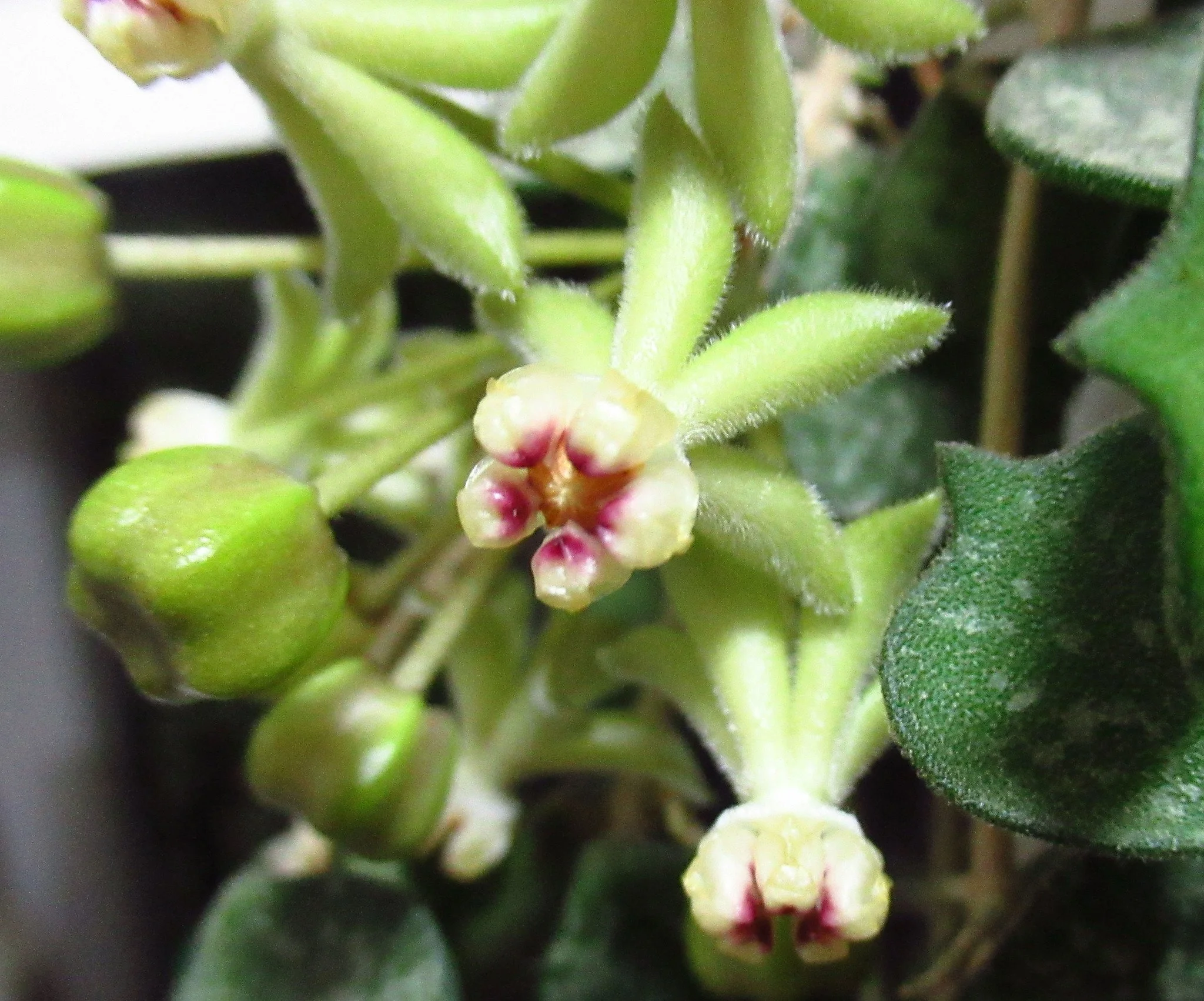
Hoya curtisii flowers. Photograph: Top Tropicals on Flickr
My top tive TTTPs - Teeny Tiny Terrarium Plants
Saxifragaa stolonifera ‘Yakushima’ - sometimes also sold as Micro. This tiny form of the strawberry saxifrage was found on the island of Yakushima in Japan: it’s a temperate plant so make sure your terrarium is not too hot. You can listen back to my strawberry saxifrage episode here.
Hoya curtisii - a small-leaved Hoya that grows much faster in high humidity so is perfectly suited to a terrarium. The flowers are rather cute although sometimes hidden among the foliage: you will smell them before you see them!
Begonia foliosa - the fern leaved Begonia. Foliosa simply means leafy! This Begonia comes from NW South America and is a shrubby type that grows to 2-3ft in the wild but can be kept very small in a terrarium. You can listen to my top ten Begonias episode here.
Marcgravia umbellata - monkey paw vine. This Caribbean shingling vine grows rapidly in a terrarium but won’t have the right conditions to get bigger leaves (known as heteroblasty). The flowers you are unlikely to see in a terrarium but they are pretty cool!
Actiniopteris australis - the eyelash fern. This fern comes from Mauritius and Reunion and probably wouldn’t do well in my terrarium which gets down to 10C in winter: this plant needs a minimum of at last 17-18C I would say. It only grows to 15cm tall though, so it’s a great size for a small terrarium. this one is fairly easy to get hold of and will be far easier to grow under glass than it is when grown in a tiny 5cm pot in normal room conditions.
Question of the week
Annette wanted to know what plant to grow on a table next to a NW facing window and next to a radiator - tricky! I suggest having two plants - snake plants (aka sansevierias) that rotate in and out of the space every month or two, with the other plant offered a spot with good light (eg near a south-facing window). This way both plants will stay healthy because over the course of the year, they receive plenty of light. They should be ok with the dry heat coming off the radiator in winter, provided they are not touching it. Interested in finding out more about snake plants? Listen to my episode on these succulents here.
Want to ask me a question? Email ontheledgepodcast@gmail.com. The more information you can include, the better - pictures of your plant, details of your location and how long you have had the plant are always useful to help solve your issue!
Credits
This week's show featured Whistle by BenJamin Banger (@benjaminbanger on Insta; website benjaminbanger.com) and The Road We Used to Travel When We Were Kids by Komiku.