Episode 312: My houseplant hot takes - and they get increasingly unhinged
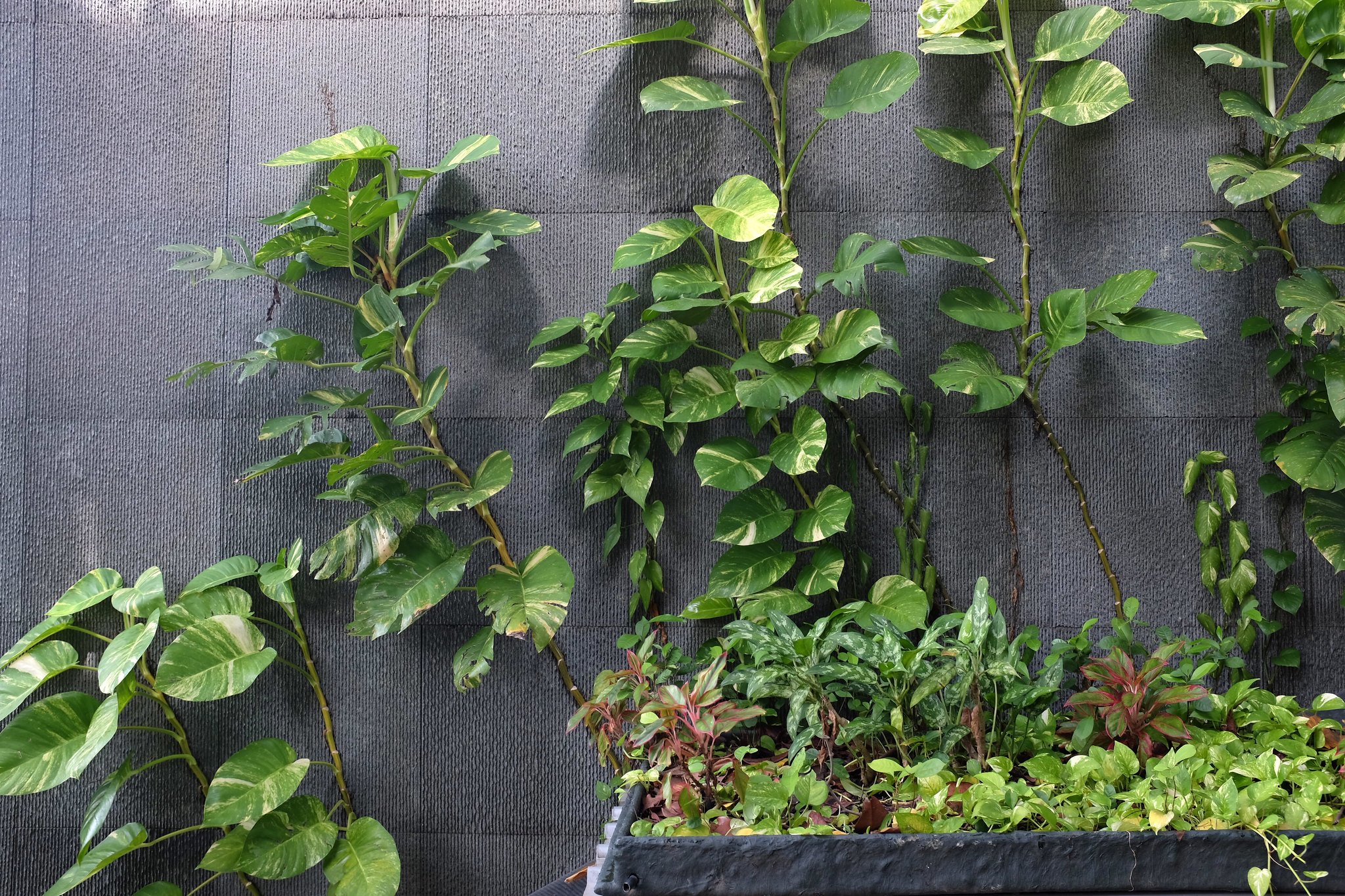
Devil’s ivy: it’s not just green wallpaper. Photograph: Jnzl's Photos on Flickr
Transcript
[0:00] Five houseplant hot takes, one houseplant podcast host, one journey through time and space, and an extremely limited sound effects budget.
[0:16] It's episode 312.
[0:31] No pussyfooting around today. We are getting straight into the hot tea that I am pouring from my brown Betty teapot for you all today. I'm bringing you five houseplant hot takes. And yes, possibly they do become slightly more unhinged as we go. But I'll let you be the judge of that. Are you ready? Let's go.
[1:01] Houseplant heart take number one some of the very best houseplant experts are invisible, now i don't mean literally invisible i haven't gone quite that unhinged yet i say yet for a reason now when i say invisible what i mean is they are invisible to the vast majority of you listening to this podcast. That's because they are not on social media. Well, if you're lucky, they'll be maybe on Facebook. They may have a website, but it's probably not going to be appearing at the top of your searches for a particular plant. You are really only going to come across them if you go to the local branch of your specialist plant societies, or you hang out at specialist plant shows. Now, these people, they're not all boomers, but a lot of them are boomers. They've been growing plants since well before you were born and possibly before your parents were born. And some of them have a lot of privilege. Some of them have grown up in a time when buying a house was possible at a young age and they're probably retired on a full salary pension. So they have a huge privilege of time and money that they can spend on their house plants.
[2:26] But they're also, in my experience, generally incredibly generous at sharing that knowledge. But they don't want to do it on social media. If you go up to them at a show or talk to them, most of them will be more than happy to share. They might be a bit surprised by how much you know. They may be growing plants in a completely different way to you, but they are definitely worth listening to. The wisdom of those people, the experience of those people and the collections of those people need to be preserved and valued. And if you listen to my episode with Mint Plants, Hayley does a wonderful job at saving plant collections of cactus growers in the UK, because some of these collections die with the owner and that is super sad. So those of us who are a little bit younger who are wanting to grow and learn in this world of houseplants and cacti and all the other specialisms within the world of indoor gardening we need to find these people seek them out listen to them learn from them and maybe sometimes we've got something that we can teach them too so maybe we can help them get onto social media or start a podcast.
[3:49] Sometimes that's exactly what they want to do but one of the things i try to do on on the ledge is find these people and get them onto the show so that you can hear from them and hopefully i'll be doing more of that in the next few months but yes the people on social media are not it for the houseplant world, there is so much more out there. Houseplant heart take number two. Prepare to be shooketh. Devil's Ivy, Epipremnum aureum, is probably the most mysterious and fascinating plant in your collection.
[4:37] Devil's ivy, pothos, money tree, whatever common name you wish to give to it, this plant is weird and fascinating.
[4:52] This epiphytic plant with its swirly green and yellow leaves is tough as old boots. It grows everywhere. It's become naturalized outside around the world, but it actually comes from a tiny pacific island called maoria i mean it's just 10 miles across and yet aroid expert peter boyce has tracked this plant down to this one single island you might still read that it's from the solomon islands this is not correct but there's still a lot of mystery surrounding how it actually came about that we grew this yellow swirly form because as far as I know it has not been discovered in nature. The plant that's on the island of Moria is a green species so it's the same species. Obviously this swirly yellow mutation has become ubiquitous in the houseplant world but we don't really know where exactly it sprang from.
[5:54] The guess is that plant hunters in the 19th century found this form and grew it and spread it around the world and possibly even more crazy than that is the fact that pretty much every plant in existence up until fairly recent decades was actually a genetic clone of the first plant that was found why is that well this is what we call a shy flowering plant it doesn't really flower.
[6:27] If you look for records of Epipremnum orium flowering, you'll have to go back until the 60s. In Legends of the Leaf, I talk about a few examples of the plant actually being found to flower.
[6:42] And in 2016, some Chinese, American and Taiwanese researchers discovered that the plant was lacking in a hormone called gibberellic acid. And this is why it struggled to flower. And now we've got all these amazing different forms of devil's ivy, pothos, because breeders have been able to apply gibberellic acid to these plants and create mutations such as things like Marble Queen. There are hundreds of them out there now, which are commonly grown around the world. And it's only because with that discovery that we're able to produce all these many, many, many cultivars. And we must also address the fact that the common name pothos is just darn confusing because it's not a pothos uh this name it was given in the 1880s but it's not a pothos that's a separate genus there are pothos plants but this is not one of them it's also been in the arrow genus Scindapsus as well as Raphidophora, but it's ended up finally in the genus Epipreminum, but not Apothos. Let's try to stop calling it that because it's downright inaccurate, if I'm being frank with you.
[7:58] So this plant from a very tiny island has gone around the world as an all-conquering house plant. It is everywhere. I love the fact that you can go into any chip shop or barber's shop and look around and you'll probably find a devil's ivy lurking there. Maybe it won't look great but it will be alive and it will be in those places where they're not experiencing great care. And that's why they've been such a success. So yay for the devil's ivy. Treat this plant with a lot of respect. It's still mysterious. If you ever find one with flowers on it, then immediately take photos and report to your local botanic garden because you're experiencing a real.
[8:51] Phenomenon, if I can put it that way. There is one theory that they might be gregarious flowering plants. So at some point in the next few years or decades, we may suddenly find all of our epipremium orium start flowering together, just like bamboo do. And one other thing I wanted to note is when you're looking at devil's ivy, the vast amount of times you're seeing it, you're seeing it in its juvenile form. So if you go to the Royal Horticultural Society's flagship garden, Wisley in Surrey in England. They've got a huge one that has got its mature leaves. They're massive. They're probably, I don't know, some of them are a metre across with slashes and cuts and a yellow colouration. They are just awesome plants when they have reached their mature form. We call this heteroblasty. But unlike something like Monstrua deliciosa, which will get towards its mature form indoors. If you want to grow this plant to its mature leaves indoors, you really need to give it a bloody good moss pole and lots of attention. People have done it and it looks great, but normally if it's grown in the normal ways we do, putting it against walls and growing it and trailing it down shelves.
[10:13] Then it's the juvenile formed that we're looking at yay for heteroblasty how cool is that but yeah so have another look at your devil's ivy today because it's a truly fascinating plant.
[10:25] Houseplant heart take number three. There is no such thing as a houseplant.
[10:35] Now I know it's a very convenient term and in fact I've used it many times in this podcast and thousands of times outside this podcast but yeah it's still not really a thing in botanical terms. If you ask a botanist to define a house plant, they will not be able to do it in botanical terms. And this word really describes where plants grow as their shared characteristic rather than what they are. I mean, incidentally, there is no such thing as a tree botanically, as I understand it either. Well at least no universally agreed definition because does it have one trunk? Does it have several trunks? How tall is it? How small is it? The boundaries are very blurred and so too with houseplants. Does the term houseplant help us at all really when we're talking about plants? Well I guess it gives us some kind of parameters because even though conditions can widely vary in homes across the world, they are generally a lot more standardised in the modern age than, say...
[11:56] Different climates in the wild. So we know that most houses are going to be roughly in a window of say 14, 15 degrees centigrade up to about 30 degrees centigrade, depending on the existence of air conditioning, heating, etc. And that there's going to be a containerized environment and that the plants are going to be receiving significantly less light than they would be if they were outside and they are going to be more sheltered. All of these things can, of course, be moderated by the use of technology like LED grow lights and so on. And indeed, you know, anything potentially could be a house plant.
[12:45] People are growing huge trees like the Willemi pine. Incidentally, not a pine. Wilhelmia nobilis. This coniferous tree was discovered not that long ago. It's a living fossil and people are growing it as houseplants, even though it can get enormously tall. So yeah, 12 meters plus. So people grow all sorts as houseplants. People grow carnivorous plants, desert plants, forest plants, understory plants, epiphytic plants. The range is huge. So the challenge might also be well what can you not grow as a house plant and I do think the term house plant sometimes does separate us indoor growers from outdoor growers in a way that's not necessarily helpful thinking of ourselves in our own little silo and not realizing that there's a wealth of knowledge that we can get from outdoor gardeners and vice versa that could help for us all to grow our plants better.
[13:49] Let me just say, I'm absolutely cool with everybody continuing to use the word houseplant. I will continue to use it. To be fair, you know, it's not a term that's been in existence forever. If you look back in the old gardening books and magazines and journals, often plants were called stove plants because they grew in heated glass houses, not in the home, which at the time was poisoned with air pollution from gas lighting and heating. Or they might be known as pot plants or ledge plants there were all kinds of different names but houseplants is a relatively new innovation it works in the modern age but maybe in the future we'll be calling houseplants something else.
[14:43] Let's take a short break from the hot takes for some housekeeping. You join me after I've just finished ugly crying over the death of Ted, the Patadale Terrier, who was a feature on the show Gone Fishing with Paul Whitehouse and Bob Mortimer.
[15:07] I'm just actually reading his second book. yeah the dog's written two books and i love this dog and any dog dying is just so sad and this is extra sad because he was such a personality so if you don't know about the show gone fishing with bob and paul and ted as was go and check it out on bbc iplayer if you're in the uk or britbox if you're not I guess it's probably on there what a great show if you're looking for a show that's as relaxing as on the ledge then even if you don't like fishing and I really don't like fishing that is a great show and I'm yeah I've just gotta pull myself together after crying over the death of Ted he made it to the age of I think he was 14 but it's just so sad.
[15:59] It's so sad. Right, okay, pull yourself together, Perone, on with the show. Thank you to my new Patreon subscribers this week, who are Simon, Eve, Pamela, Cherish, Artel Domi, Alison, Kate, Mark, Craig and Jock. They all became free members. Ernestina upgraded from free to legend and Sarah became a legend. Thank you to all of you there's some great names in there anyone who knows the mr gum books will recognize the name pamela pamela pamela pamela pamela um again if you're not another cultural recommendation even if you don't have children you need to read the mr gum books by andy what's his last name, Andy, by Andy Stanton.
[16:55] Such a good series of books. If you like kind of surreal comedy, it's making me want to reread the books. Anyway, there's about nine characters called Pamela in one of the books, which is making me just enjoy hearing the name Pamela. But Pamela and all the other people who've joined me as a free member, thank you. And also to those new legends thank you also great to have you on the patreon there's lots more coming on patreon i'm really trying to up my patreon game so go and have a look patreon.com forward slash on the ledge and i've had an email from sally about last week's question about the northwest window and the table and the radiator and sally says for the listener who sent in their question i thought terrarium Well, gosh, Sally, why in the heck didn't I think of that? I mean, the whole episode was about terrariums and there I was not mentioning terrariums. But yes, that's actually a good idea. Terrariums are insulated against changes in temperature and they're also little humidity domes. So a terrarium might be a really good choice for our listener Annette to consider.
[18:15] And if you've got a question for me, please do drop me a line. I love to opine about houseplants. And I've pretty much gone through all the questions that have come in during my time off. So I'm looking for new blood, for new people to terrorise with my answers. If you've got a question that you'd like answered, please drop me a line on theledgepodcast at gmail.com and the more information you can provide the better right back to the houseblood hot takes.
[19:00] Houseplant hot take number four. Being good at indoor gardening is not an inherited genetic predisposition.
[19:13] Most of the people who appear to be naturally green-fingered have a combination of two things if they're indoor gardeners. The first thing they have is the right kind of house, which mainly means light so if they live in a house with really big windows and doors spaces to put plants where they can thrive because of the amount of light they're probably going to think that they're green fingered move that person to a cottage with tiny porthole style windows and it would be a different story unless they got themselves a heck ton of grow lights likewise there's a reason why people who are retired or don't have a lot of caring responsibilities for relatives elderly people children are good at plants it's because they've got a lot of time on their hands i get really annoyed when people say oh everybody's got the same 24 hours in the day yeah i mean that's accurate in a literal sense but doesn't reflect the fact that some people have got huge burdens of caring for other people that they have to take care of before they can start anything else in their life. They've got to earn a living.
[20:40] They've got to keep their house tidy and that reduces the amount of time one has to look after plants. And.
[20:49] Yeah, if you've got a whole day that you can dedicate to looking after your plants every week or you're an influencer full time and your job is making content and looking after your house plants. Of course, I'm expecting your house plants to look really good. If you have to hustle and earn money elsewhere and look after children or elderly people or friends or relatives who need your attention, then you are squeezed for time. And your plants will reflect that if you have a lot of them and that's just how it is. I would love to say that I have gardening in my blood. My granddad John Admiral Bing had five allotment plots and grew absolutely everything so I'd love to claim that I've got this incredible genetic.
[21:40] Legacy from him but I don't think that's true I just think that I just happen to be captivated by plants at a young age and happen to have the privilege and resources to be able to buy them and to talk about them and to make them my career how privileged am I very privileged oh I should say. So yeah I think that anybody given the right amount of time, the right setting and the right tools and education can become brilliant with houseplants. There is no such thing as a green thumb or a black thumb. It just doesn't exist. You know we are not all equal as gardeners and that's okay but we have to recognize that and that's very useful to think about when you're looking at Instagram, social media more generally. And when you're looking at somebody who you're feeling envious of, just stop for a second and think why they might be able to do and grow things that you can't. It's not a level playing field out there, people. Houseplant heart take number five.
[22:55] There is very little, and I mean very little, that's genuinely new about the world of indoor gardening. Now, let's get out of the way, the two things that I think are new. Number one, LED lighting. Led lighting has revolutionized indoor growing i think in many ways bringing cheap lightweight easy to use lights within the reach of everybody and i do think that's made a huge difference to the way that we garden indoors and that i'm going to put that right out there from the beginning that is a big change number two would be tissue culture again we've talked about this in other episodes. Yes, tissue culture has changed the way we garden and the accessibility of plants. Again, a topic for another interview. But really, other than those two things, I really don't think there's much that we can genuinely classify as new. The moss poles, the rare aroids, The obsession with big leaves. They feel so very 2020s.
[24:19] Or should I say, 1820s? Do you want to come on a journey? A journey through time. I want you to step inside my time machine. Now, obviously, it's a terrarium. Come on, come in. There's enough room for all of you. Just step in carefully. There's a big fern in the corner. She does not like being squashed. So just take care. Oh, and make sure there aren't any stray vines escaping from the seal, right? Because that could cause all kinds of havoc. That's it. You at the back. Is it German? Yeah, German. Can you shut the door, please? And yeah, Bobby, give him a hand. It's sometimes a little bit tricky. Yeah, thanks. Let me get the destination locked in. We're going to East London, to Hackney specifically. specifically, a street called Mare Street in the year 1825. Well, about around there. Well, that's what we're aiming for. Right, everyone ready? Let's go.
[25:48] Right we're here is everyone okay great well get that door open and let's go outside i think We're lucky. I think we've landed just outside the Grand Palm House at Loddage's Nursery. Come on, let's go and take a look. Now, don't worry too much about standing out. We've arrived on a Sunday and that's when the local working classes were able to come and visit the nursery for free. So I'm sure you'll fit in absolutely fine. What's that? You've never heard of Loddiges? Right, well, let me tell you about Loddiges. This is the most famous nursery in Europe. Now, you may be thinking, wow, we're not in London, we're in the countryside. Well, of course, at this time, Hackney was the countryside because London hadn't expanded that much. And it's run by a chap called George Loddiges. There he is over there. Look, see the guy who looks a little bit like Liam Gallagher? Yeah, that's him. Look, he's going into the palm house. Let's follow him in.
[27:04] So we're inside the palm house. As you can see, it's really tall. The ceiling above is about 40 feet away. It's 60 feet wide, 80 feet long. Yeah, I know some of you probably did notice another really long greenhouse. That's the Camellia house. This is the palm house, which was the jewel in the crown. And as you can see, it's packed with tropical delights. So in here right now, we've got 25 species of orchids. If we went forward in our time machine, by 1839, we'd find there were 1,600 species. And by 1845, nearly 2,000 species of just orchids. Now, in about four years' time, they're going to value this collection, and it's going to be valued at about 200,000 pounds. In the money of that time and what's that in today's money about cool 16 million pounds yeah now let's have a look around see what you can see other than the orchids we've got bananas, hundreds of palm species we've got what is that no no that's not right.
[28:21] Is that Zamioculcas zamiifolia? The ZZ plant? Yes, it is. Now this plant, you probably were told this plant only came into cultivation in maybe the 1990s, the 2000s. Wrong. So this plant, by 1828, this plant will be described in the botanical cabinet, which is our friend George's, well, it's the modern day merch, really. If you read my book legends of the leaf you'll have heard of this i described it as a combination of today's sarah raven nursery catalogue and a plant fluencer instagram feed and yeah zamiococcus zamiifolia was in there they knew it at the time as caladium zamiifolium but yeah that's it that's the plant that we love to grow that toughie anyone else notice something else have you noticed the way that some of the plants are being grown up mossy trunks.
[29:22] Looks remarkably similar to our modern moss poles eh oh hang on sorry it's a bit wet now they've turned on the misting system so our friend George he actually invented a steam powered heating system for this and all the other stove houses at the nursery in fact a couple of years ago the RHS gave him a medal for that so yeah it's pretty impressive and there's a rainfall system you know that's why we're getting wet right now pipes releasing water to emulate the rainforest.
[30:03] Right, we don't have long. You've got about 10 minutes to look around before somebody's going to realise that we're not really meant to be here. So spread out, have a look around. I'll meet you back at the terrarium time machine in 10. Don't bring any plant samples back with you. It's going to mess with the timeline, okay? Have fun.
[30:32] I do hope you enjoyed that little flight of fancy and that it hammered home the point that whenever we're talking about houseplant culture or the hype around rare plants, we have to remember that this is not new behaviour. The love of house plants, of tropical plants, goes way back 200 years and further. And many of the plants that we see and think of as being terribly new and innovative were being obsessed about back then too. There was merch, If you were rich enough, you could lay your hands on a copy of Loddage's Botanical Cabinet and enjoy looking at all those plants. And if you were rich enough, you could probably afford to build your own stove house and grow some of those epiphytic orchids and aroids on what we would call moss poles. Yeah.
[31:39] So I just wanted you to really reflect on the fact that we've got such an amazing history behind us and we have to also reflect on the fact that in order to create this huge wealth, we had to take it from other people and destroy other environments and it's still happening today so much as I would love to jump in my time machine and go back to lodages we have to remember that, people paid the price for this in the places where these plants came from one of the things that tissue culture one of the big innovations we have seen in the last few years has done is to democratize plant keeping that's also come about through the arrival of central heating in temperate parts of the world which means that we don't have to have a stove house anymore in our modest homes we can grow plants that would amaze our ancestors back in the 1820s so maybe if we allowed George Loddiges to hop into the terrarium time machine with us and come forward 2026 and have a look at some of our plant setups. I think he would be amazed too.
[33:00] Well, those are my houseplant hot takes. And now I want to hear yours. I'd love to know what you think. Please share. It's the most delightful thing when an email or a message pings into my messages from one of you. I just can't get over how exciting it is to chat to you. So please do get in touch and I'll share some of your houseplant hot takes in an upcoming episode. So Don't voice note me, email me, direct message me on Instagram.
[34:13] Tracks are licensed under Creative Commons. Visit the show notes for details.
One houseplant podcaster pouring the hottest of houseplant tea, in five perfectly portioned hot takes. And yes, they may well get slightly more unhinged towards the end.
Hot take 1: Some of the best houseplant experts are invisible (on social media)
Lots of the most interesting and knowledgeable people in the houseplant world do not have a presence on social media - you’ll need to visit specialist plant societies’ shows and other events to find them. Listen to my episode with Hayley of Mint Plants for more on rescuing old plant collections.
Hot take 2: Devil’s ivy is probably the most mysterious and fascinating plant in your collection
It may seem like the most ubiquitous - and therefore the most boring plant, but Epipremnum aureum, to give it the scientific name, is the keeper of a fascinating story. It comes from a tiny island in the Pacific Island - something science only worked out in the early 2000s - and we still don’t know where the swirly gold variegated plant came from in terms of arriving in western cultivation. On top of that - devil’s ivy is a shy-flowering plant, last recorded blooming in the 1960s. Breeders began treating devil’s ivy with gibberellic acid in recent decades to make it flower, after research proved it was a lack of this plant hormone that was preventing it flowering.
To read Peter Boyce’s academic paper on Epipremnum aureum, and its origins on the Pacific Island of Mo’orea, click here. To read about gibberellic acid and flowering led by Chiu-Yueh Hung click here.
For more on devil’s ivy, read my book Legends of the Leaf, which has a whole chapter on the history and culture of this plant.
Hot take 3. There is no such thing as a houseplant
Yes, I know I talk about houseplants all the time. However, in botanical terms, ‘houseplants’ don’t exist. The term just describes where they grow: and any number of species can be grown indoors. Houseplant is a fairly new term too - a lot of the species we know and love were once known as ‘stove plants’, ‘pot plants’ or ‘window plants’.
Hot take 4. Being ‘green-fingered’ is not a thing
There are two factors that generally determine how thriving your houseplants are: conditions (mainly light) in your home, and the amount of time you have to dedicate to your plants.
Hot take 5. There’s little that’s truly new in the houseplant world*

Goerge Loddiges. Do you agree with me that he looks a bit like Liam Gallagher?
Come with me in my terrarium time machine to visit the Grand Palm House at Loddiges Nursery, the largest hothouse in the world, in 1825. I’ll show you how ‘moss poles’, fascination for large tropical leaves and elaborate systems for growing under glass are really nothing new.
A few links if you are interested in learning more about Loddiges:
More on Loddiges’ Botanical Cabinet - the houseplant hobbyist merch of its time - here.
This local newspaper article on Loddiges was published in 2019
The book Loddiges of Hackney: the Largest Hothouse in the World by David Solman is a great book to read if you are interested in delving into the history of Loddiges and its impact on horticulture.
See an illustration of the interior of the Grand Palm House at Loddiges on the Hackney Archive website.
Wondering what happened to Loddiges? It closed in the mid-1850s owing to a number of different factors. Here’s a contemporaneous account of the closure from The Gardeners’ Magazine.
For more on the ZZ plant (Zamioculcas zamiifolia) check out Legends of the Leaf - there’s a whole chapter on it!
*I do believe there are a couple of genuinely new things in the plant world: specifically tissue culture and LED growlights. You can listen to episodes on tissue culture in episodes 161 and 275 and LED lights in episode 61.
CREDITS
This week's show featured Whistle by BenJamin Banger (@benjaminbanger on Insta; website benjaminbanger.com) and The Road We Used to Travel When We Were Kids by Komiku.