Episode 310: OTL sowalong - pollinating and growing Anthuriums from seed
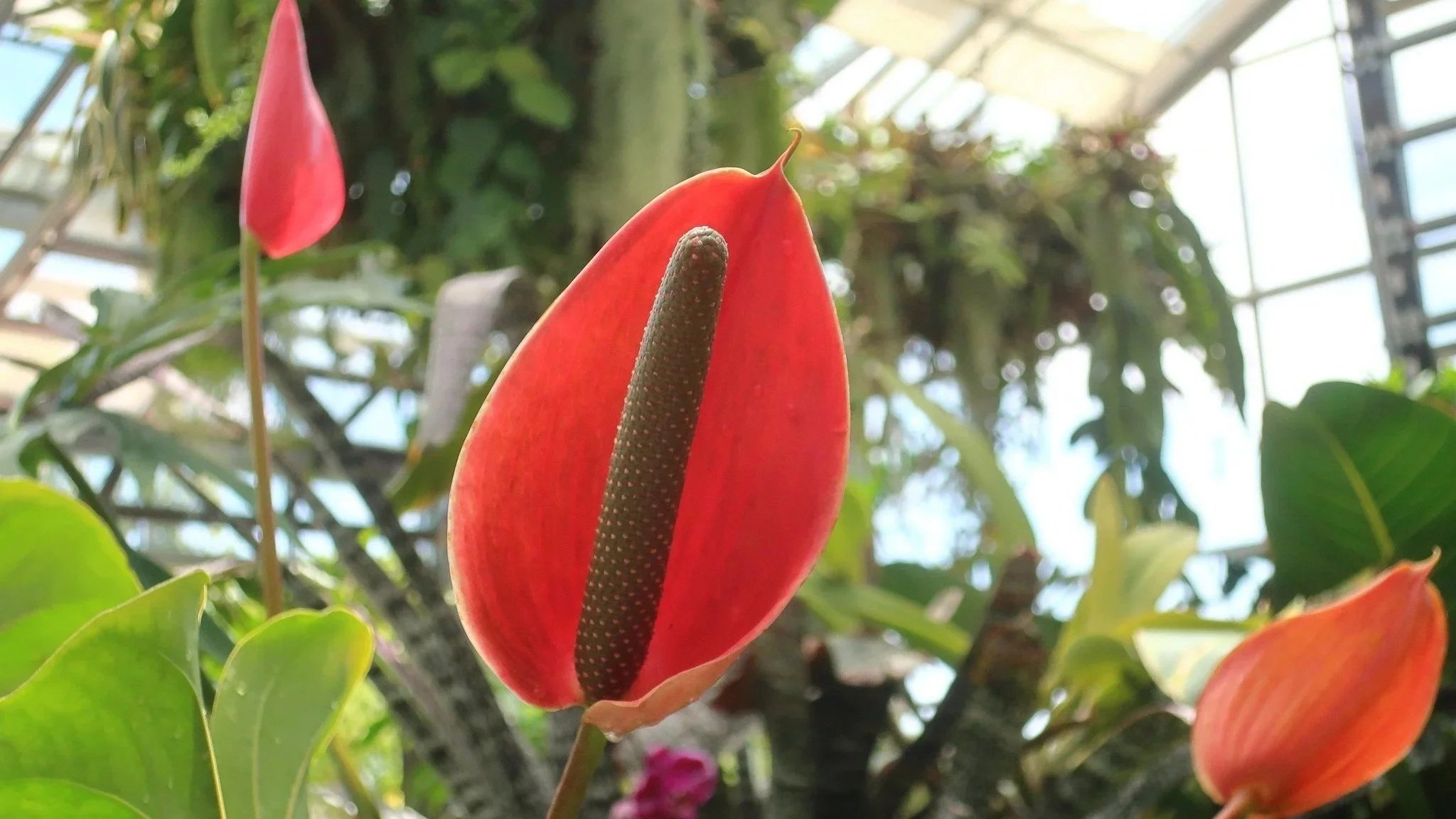
Photograph: KM on Flickr
Subscribe to On The Ledge via Spotify, Apple Podcasts, Player FM, Podchaser and YouTube.
Gemma Haigh aka The Plant Parlour joins me to share her tips on how to pollinate and grow Anthuriums from seed, in the latest instalment of the OTL sowalong, my mission to get listeners growing houseplants from seed.
Warning to listeners with children: this episode does not contain any swear words but discusses the sexual reproduction of plants, with a bit of sexual innuendo along the way. I’d say it’s fine for teenagers and above, but parents, use your discretion!
Transcript
[0:38] This is On The Ledge, I am Jane Perrone, we're talking about anthuriums from seed - that's all you need to know. Hello and welcome to On The Ledge podcast. Let me expand on that brief introduction. This episode is deducated to an aspect of the On the Ledge sowalong that I haven't covered before. I'll be talking to Gemma Haigh, aka The Plant Parlour, about how to pollinate anthuriums, how to harvest the berries and grow these plants from seed.
[0:59] Just a little warning that this episode is about the sexual reproduction of plants, which is what pollination and seed formation is all about. There is a little bit of what I'd call sexual innuendo in my chat with Gemma. There's no swearing, but we do sort of get a little bit smutty when we're talking about pollination. So if you have very little children listening, Maybe this is not an episode for them, but I would say fine for teenagers and above.
[1:35] If you've not come across the On The Ledge sowalong before, let me explain. This is my project to get you growing houseplants from seed. We're all used to taking cuttings and buying plants and swapping plants, But growing houseplants from seed is a really fantastic way to learn about plants. It's hit and miss. It doesn't always work. Sometimes you end up with tons of plants. Often you end up with zero plants, but it's a very cheap way to experiment. And I do hope you will join me. So if you haven't listened before, may I recommend that you go to the show notes at JanePerrone.com where you'll find links to all the other On The Ledge sowalong episodes where we cover everything from the structures of the seed to growing ferns from spores and cacti from seeds to substrates and so much more. So a really great introduction to the sowalong and if you'd like to post some content or tell me about what you're doing you can use the hashtag OTLsowalong and I will see it or drop me an email to ontheledgepodcast at gmail.com.
[2:49] I know several listeners have requested coverage of growing anthuriums from seed, but this is not something I've ever tried. If you've seen my Instagram this week @j.l.perone, you'll know I talked about how aroids are not my favourite group of plants. I don't mind them, but they're not something I'm super passionate about. But I know somebody who is, and that is Gemma Haigh. Gemma is a houseplant designer and consultant. who goes by the name of the Plant Parlour and she has a formidable collection of anthuriums which makes her the perfect person to chat to me an anthurium noob about how to get these plants growing from seed. Gemma lives in Surrey in the UK and you can find her on instagram as @theplant parlourgram i'll put all of her links in the show notes so you can go and have a look at some of her amazing plants.
[3:57] Gemma, thank you so much for joining me. We are here for the annual sowalong, which is very exciting for those of us who like to grow plants from seed. But I have to admit, I have never grown an anthurium from seed. And this is something that lots of people who listen to the show want to know about. So this is where you come in. Anthurium from seed. I want to know, first of all, is it worth it? I mean, in the day and age where everyone's just buying plants willy nilly online, what are the joys of anthuriums from seed?
[4:34] Anthuriums are a little bit weird. I'll start by saying that they are a bit weird. And the key reason that anthuriums are weird, I mean, there's a lot of reasons. But when it comes to seed growing with anthuriums, anthurium seeds only stay fresh for a small amount of time. So you really have to act on them quite quickly before they kind of turn and they're no good anymore so that can be a kind of space of about two weeks two three weeks maybe um so it's quite a very slim amount of time you can kind of keep them a little bit fresher by not bursting the berry because they come in berries and you can maybe hold on to those until they get very wrinkly and sad and squeeze them out but honestly I would say yeah probably I'm I'm a very lazy plant parent So I'd say probably about two weeks is about right. Yeah, that's a tricky one because for those of us who like to sort of buy seed and then leave it hanging around for ages, this is the timers of the essence here, I imagine. If we want to get pollinating our anthuriums.
[5:37] Where do we start what what parts of the plant are we looking at and what do we do? The flowers are a little bit unusual they're a bit ugly i would say you're not growing anthuriums to the flower maybe a flamingo plant but other than that it's the leaves really aren't we that we're going for flamingo flowers yeah they're quite nice that's anthurium andreanum don't know if i'm saying that right but that's how i pronounce it i don't think there is a right or wrong i'm gonna say that i would say andrianum but that's just me and i there isn't a right and a wrong that's what i'm gonna say on this that sounds quite posh jane i like that well you know i like to make it posh as possible but anyway tell me about amphurium flowers what are we dealing with here okay so they pop out on a rather large long stem and they reach out right through the leaves so if you've got lots of lovely luscious leaves whether they're long or heart-shaped whatever they are and then you have this kind of huge stem pops out and at the end you've got this long shaped thing which I think I'd describe a little bit like a finger, very narrow finger and that kind of pulls out and along and that is that is part of the spadix so that is the spadix where you get all of your kind of bits and pieces for pollen.
[6:56] Anthurian flowers do male and female so you have to catch them at the right time in order to collect the right things and pollinate but first the spadix turns female so what happens is all of these kind of little areas open up with these kind of little dots and that's where you produce all of the like the hormonal processes whatever you want to call it of the plant and first of all you get stigmatic fluid that's like a little juicy thing that oozes out.
[7:30] Is that for pollinators, to attract pollinators? Yes. So basically that's kind of where the pollinators are attracted to. That's where they, you know, maybe they'll get some nectar from that. So they'll sit on there with anthuriums because they are kind of ugly. I'm pretty sure that a lot of anthuriums are pollinated by like little flies and beetles and things, as opposed to, you know, bees like we might have in the UK. So what happens is they kind of land on there, you know, drink this tasty stuff. And they may have pollen on them from a different flower. So that would then pollinate the spadix. And, you know, you might start growing seeds from that.
[8:12] But essentially what happens is that, so that process goes all the way along the spadix from the bottom up over a process of a few days to a week. And then it produces pollen from all of these kind of little areas. And almost like little kind of weird ovaries, I suppose. Once it's kind of gone through that process all the way up, then it starts going through the male process all the way up from the bottom up. So it starts producing pollen from the bottom of the spadix all the way up to the tip of the spadix. And at that point of the process, what you can do is collect that pollen. So that pollen can then be used to pollinate a different flower that's in the female stage. I see. So you'll need more than one flower there. you'll need more than one plant, two plants to cross. They can self-pollinate. So you can have two flowers on the same anthurium, one flower on one anthurium. Can't do both simply because the stages are in the wrong order.
[9:10] So you need the pollen in order to pollinate the female part and the fluid comes first. So you have to have the pollen to start with. Otherwise you just can't pollinate.
[9:21] The female parts so what you would need is two flowers on the same anthurium both in different stages or you would need two different anthuriums and then you could use the pollen from one to pollinate the other a third option is you can collect pollen whilst you have a flower on one anthurium you can save that you can actually put it in the freezer don't eat that dear that's the anthurium pollen, Yeah, I have to like write a little note because I tend to put it in tinfoil. So I knock it off sometimes with a paintbrush if I'm feeling precise. But other times I literally just put a piece of tinfoil over and just whack it off. Are you whacking off your plants, Gemma? I do whack off my plants, Jane. Oh, my God. The life of a plant person. What can I say?
[10:10] That's absolutely foul. But I love it. Well, you've got all these packets of foil in your freezer with anthurium pollen in them. In takeaway containers. So then you've got it ready for when you do have a plant that's receptive to the, is in the female stage that you can then use that pollen and have a little pollinate. And is this how you're making different crosses, presumably between different anthuriums? Yeah, so this is how people cross anthuriums and get new types of anthuriums. So anthuriums are quite interesting in that lots of the different types of anthuriums can be kind of intercrossed with each other within kind of regions. So within specific kind of areas of anthurium. So, for example, you've got your long leafed ones. They can generally be crossed with each other. You've got your heart shaped ones. They can generally be crossed with each other. And so you have, within that, you have a lot of ability to play around and create new types of Anthurium, which is what you'll see when people say, I've got this X, this is, you know, that's two
[11:20] different types of Anthurium that have been crossed to produce a new type.
[11:24] Sometimes what we're seeing more and more now is that then people give them fancy, crazy names like Goliath, for example. The difficulty with that, though, is... When you produce when you do that that crossing and with sexual reproduction you're going to presumably when you get those seedlings they're all going to be quite different you're not going to get a uniform result like you do from taking a cutting of a plant it can be quite random i would imagine yeah definitely so um it's and they may all have completely different characteristics so you might have for example a really good example with anthuriums is uh forgetii which has like a closed sinus so the leaf shape is very kind of oval at the top like a round circular part and it comes down to more of a point at the bottom but what you get is people use that anthurium forgetii and they might cross it with something that has more of a heart shape so it has lobes at the top so it has like an open sinus with a heart shape you might cross say that heart shaped one such as crystallinum with a forgetii and you don't know which characteristics you're going to get in the offspring you might get the lobes or you might get the clothes with the circular top you just don't know and it's the same with colouring veining all sorts of different characteristics and this.
[12:42] Is why people love playing around with anthuriums because it's a bit of a luck of the draw you never know what you're going to get from the from the offspring i guess that is the delights of a growing house plants from seed so assuming you've been successful you've pollinated successfully uh you've got these fruits that then form but what happens next yeah that's right so yeah and we've we've pollinated just to make that super clear as well i would usually use like a paintbrush or something if i'm feeling very lazy i use my finger that has been known to work i will say um and it's a bit weird isn't it actually thinking about it stroking.
[13:18] Stroking plant sexual parts with your finger breeders have been doing it for generations it's okay but yeah I see what you're saying, The paintbrush is, I guess the paintbrush is emulating the parts of the pollinator more effectively in that that's kind of more delicate than one's finger. But yeah, I think if it works, great.
[13:41] Both work, I will say. So essentially what you would do is you would, and it has to be just to be super, super clear as well. It has to be the part where the female phase is in full swing. So you have to have that little fluid and you have to paint it with the pollen whilst you have that stigmatic fluid present on that spadix um otherwise it's just not going to work it's not in the right stage um and you won't get berries forming um what i will say about anthurians as well is i found that they are they need specific conditions in order to produce the seeds as well because you can have a successful pollination in that you've done it all at the right time but if your anthurium isn't happy and they're a little bit fussy about this but anthuriums generally speaking I like to think are actually quite chilled they they'll do anything I have mine all in room condition however I have tried to pollinate the ones that are in my household conditions and they do not want to create berries they just don't and that's probably I have a humidity of around I would say 50 or 60 percent it's average household humidity I've found that I cannot have a successful pollination.
[14:52] As a result of that humidity. Anthuriums do like higher humidity. I've also had more luck, pollinating them with a successful pollination attempt outside in my greenhouse and that's all natural light. I do keep the greenhouse at a reasonable temperature so it's always above about 16 or 18 degrees in the greenhouse and it has natural light and I've had a lot more success with pollination attempts in the greenhouse than I have in my home. The humidity tends to be a little bit higher in there as well we're probably talking about 70% or so or more now as a result of that you will get berries form hopefully if you've done everything right and this is something I've tried many many times by the way so you know it it can be a trial and error process of working out exactly.
[15:44] The right way to do it. But if you have done it right, you will get berries forming. And at first you get these kind of little bumps that are kind of forming on the spadix as those kind of, I guess it's like their ovaries, you know, they've been fruited. Yeah, they're fertilized and they're ready to go. So you get little raised bumps
[16:04] on the spadix at first, and then those gradually grow into berries. And that process is different for each type of anthurium, but it can take, you know maybe a few weeks or a few months um the longest can take months and months and months so i think ethereum clarinervium for example that can take up to a year to produce berries believe it or not that's a long time to wait but presumably how do you know when the berries are ready to um to harvest as it were yeah so once they look rather large and plump um what you can do is you can kind of run your finger over them and see if they're going to come loose and if they are and they pop off um just like i guess a berry or anything else if you've you know grown vegetables or fruits like raspberries or something you know when they come off don't eat them though just a little health warning there i don't think they're very good for you well i actually yeah i don't know i think that's that's contrary i'm not sure i think you can eat some of them i'm not sure you'd want to plus also if you're going to proceed like you know it's.
[17:08] You've waited a long time for these seeds gonna eat them honestly i don't think they're very nutritious either that the berries on anthuriums tend to be quite small unless you live in a botanic garden and have giant aroids that you know produce these huge huge berries um but most of us don't so we're talking very small we're talking like bird food size so you've got these berries you can put them in your fridge you can cover them and i reckon like i said at the start a couple of weeks you can probably hold them for before they start getting wrinkly it's like any fruits that you put in your fridge essentially they're going to rot eventually they're not going to last forever um but what you do if you want to plant them is you take these berries and what I do is I squeeze them and actually just use my finger most of the time um just to kind of squeeze and pop them it's a bit weird but a little bit like a zit yeah I can see that.
[18:11] More on anthuriums shortly and i should just say please don't try eating anthurium berries they may be tasty in some cases but health warning they are not going to be good for you so yeah no eating anthurium berries people, A little bit of housekeeping now. I've had some feedback about last week's show on Whimsical Houseplants. Patreon subscriber Brian B got in touch about petrocosmias. You'll remember these were the ones with the fractal rosettes of furry leaves that I absolutely adore. And Brian agrees. Brian says, I love them so much they do well in terrariums. That's a really good point, Brian. I didn't mention terrariums, but they do do well in a terrarium environment. Just don't let it cook. on a warm windowsill because they really don't like the heat. And Brian also very helpfully points out that in the US, you can find them at two nurseries, Violet Barn and Linden Lions.
[19:13] And listener Bill D got in touch about agar jelly. Now, I mentioned this in passing and Bill was right to pick me up on this because I seem to indicate that you can eat agar jelly. Now, that is not the case I did know this in the back of my mind somewhere but obviously my brain just heard the word jelly and went mmm jelly but yes agar jelly has a few different uses primarily in our context tissue culture and Bill points out that it's made from Irish moss a seaweed not a food it did occur to me why is it colored I went over to Reddit there are loads of Reddit threads on agar for some reason and apparently it helps to indicate contamination when you use food colouring colours in the agar jelly so the more you know eh guys and also Bill pointed out that a fluffernutter I mentioned this because there's a petrocosmia called fluffernutter apparently it's a peanut butter and marshmallow cream sandwich, The European people in the audience right now are rolling their eyes to heaven, I suspect.
[20:26] What? What the heck? Why would you eat those two things? I mean, peanut butter, I love. I love peanut butter on a slice of crisp toast, but don't get the marshmallow cream involved. However, I think it's quite a cute name for a petrocosmia, so I will allow. And thank you, Bill, for pointing those two things out thanks also to those who've joined my patreon i now have almost 400 of you signed up either to the free tier or one of the paid tiers and joining them this week are mk who became a super fan so mk has an exclusive card heading their way in the mail signed by me with some extra little goodies in there too and mk will have access to all of my audiobooks and an enhanced christmas mail out while legend here gained bella nicole brandon melissa and meg while rebecca christine and robert became free members and charlotte became a crazy plant person If you head on over to my Patreon and become a free member, you'll be able to access an article I've just written about repotting plants, potting mixes and so on.
[21:43] And if you're a crazy plant person, which is my lowest tier, you also will get access to my planty posts, which regularly come out. There's one coming out on Sunday about tiny forest cacti. So if you are a Patreon subscriber, you can look forward to that.
[22:02] And if you want to give my legend tier a go, but you want to check it out before you commit, then be like Helen. Helen took out a seven day trial for free of my legend tier so if you wanted to you could sign up for my legend tier on a free trial listen to the Atlas of Deadly Plants audiobook listen to my back catalogue for a week for free and then not sign up and that's absolutely fine go for it love that for you and you could just become a free member at the end if you wanted to or just not do any of that and cancel completely it's all good I would love to see you and to give you a chance to try things out and to give me a chance to convince you that my Patreon is worthwhile it's been going for a long time so there's a heck ton of content on there that's the great thing about it you're not just signing up for a new Patreon where there's very little of a back catalogue. No, there is tons of stuff to listen to. So even if you just sign up for a month or two or take the free trial, there's loads of value in there.
[23:18] Then you get the berries the sorry the seeds are coming out um and then then what do you do do you have to because they're kind of the sticky do we dry them out do we plant them straight away do we sow them yeah so um you get kind of two to three seeds maybe maybe more if you're lucky in your in your berries you squeeze them out um i tend to use like a piece of kind of damp kitchen paper to do that so you squeeze them out onto the kitchen paper and then i kind of wipe them off a little bit sometimes with a pair of tweezers just kind of like move them around a bit get rid of the juice and the reason for that is that if you plant them with a bit of juice on it it can cause rot and you don't want that with your berries obviously with your seeds so you want to get rid of as much juice as possible really um you could also alternatively put them in a little dish of water swell them around mix them up and then take them out again and again then you've got rid of most of that juicy stuff once you've done that you're ready to plant your seeds but they are not going to last so you're going to have to do it pretty fast i would say so how i do that is i've got like a little seed propagator um i filled with a layer of perlite and then on top of that i put a layer of sphagnum moss and then i put each and every seed on that top layer of sphagnum moss and if you're a good plant person you're going to label it so you know what you've done oh.
[24:41] Gosh that is maybe my number one uh piece of good advice for so long is just label things properly because i'm terrible at that.
[24:49] I agree i'm terrible at then you go what is this thing i've grown and then i don't know.
[24:56] So how long it might it take for those to germinate then how might long might you be expecting to see some growth.
[25:04] Yeah, so I think it helps if you, if you provide a little bit of warmth. So for example, I grow mine on in the greenhouse, which has a little radiator in, my seed propagator is quite near the radiator. So you keep it nice and moist inside there, keep it nice and warm as well. And they might germinate in a matter of weeks. So which is, I think it's pretty normal for most seeds. So you probably will start to see signs of whether it's going to push out a new growth tip, either a root or a leaf, because you can get either first it just depends how the seed feels really so you will see signs in two to three weeks as to whether they've been successful some take longer than others though I have to say I mean some of mine have taken six to eight weeks to really show any signs so I wouldn't I wouldn't give up hope I wouldn't chuck them away I'd give them a couple of months see how they're going and then you'll be able to tell as well you'll see signs you'll either have fresh green and you'll have fresh roots coming through which will be nice and furry or you will have kind of they'll start to yellow or brown and then you'll see that those seeds have not been successful. I would also make a point of saying here that I've had less success with anthuriums that have been self-pollinated so aka if you're using two inflorescences from the same anthurium I've had lower.
[26:25] Lower yield of successful seeds from the same plant so it's more successful if you have a wider genetic pool to work with yeah that makes perfect sense so when when you've got the seedlings presumably then it's just like are there anything else you might grow from seed that they're going to get to a certain size where you're ready to maybe put them in an individual pot once they get big enough yes exactly so once once they get big enough um i would then pop them up i usually wait till they have roots of you know like an inch or so um and then I would probably look at potting them up um usually I'd wait until they have at least one leaf although with a with an inch or so of roots I would say they usually do they've usually got one to three leaves.
[27:07] By that point um and then I would pot them up uh however I think is best for them I personally like to use semi-hydro so I use lacuzapon and they're usually ready for that by that point I usually just top mine with a bit of sphagnum moss to give them a bit of extra moisture keep that nice and wet so it's not too much of a shock for them because they've obviously come from this nice moist sphagnum moss um in this closed environment of the seed propagator so uh potting them up and keeping them moist is important um but you don't want them too wet because you don't want those roots to rot yeah that's great advice i did an episode on pond a while ago with look is it how do you say it even is it i say lacusa but lisa bauer who's happy plant collector she's german and she told me that's wrong so who knows well anyway i did an episode with them i don't know how i pronounced it at the time if you know i'll put that in the show notes if anyone wants to go back and learn about semi-hydro also um uh yeah it's a it's a great way of raising that kind of plant so i can see why that would work um.
[28:08] But that's really good advice. Is there anything else we need to know about this whole process that we haven't spoken about? It seems fairly straightforward. I think it just seems like a bit of a waiting game that you never quite know what you're going to get. Yeah, it is a labour of love, I would say. You know, pollinating anthuriums, it takes a long time. The whole process takes time. You know, it's not a quick fix. It takes weeks from the time you first have the spadix and the inflorescence to when you actually know if you're successful with the pollination. So it is a waiting game. You do have to be very, very patient. What I would also say is if you are giving it a go, label your inflorescence, because this, again, is another thing that I've made the mistake of so many times. So I actually bought some of those plastic tree labels, if you've ever seen them. They're a little bit big, but there's not really I haven't really found a great alternative to it. So what I tend to do now is I label what I've done, what I've pollinated, I've pollinated this plant with.
[29:08] X the other plant um and I make sure I stick that on there I also have um just to protect it and this is just my process but you don't have to do this I had these tiny little organza bags and I I pop a hat on my pop a hat on my inflorescence and I kind of like tighten it up uh so that I know that that little kind of ecosystem that little bubble is contained um and you know everything stays within that um and doesn't get affected by other things so that's another tip that's great advice yeah i love that i love that pop a little little bag on it and a great use for those little bags that you get given with gifts in that you don't then know whatever know what to do with so that's a top tip well that is brilliant advice jemma um i think that for me that's answered all my questions i'm really intrigued to hear from listeners to us who've given this a try as to whether they would recommend it. I think in this day and age of like everything being instant, the idea that you have to wait.
[30:10] And be patient and things are unpredictable and may not work out is actually a really nice lesson for us all so i really hope that um people with anthuriums will give this a try as an anthurium uh refuse nick i won't be giving it a try because i don't have any anthuriums to do it with but however i do love to spread the anthurium word for those who are enthusiastic and what a great way to make new plants i mean you're going to end up with a few duds i guess along the way but do you have seedlings that you're like oh no that one's going in the compost heap or what do you do with your seedlings I think you tend to know you know after a few weeks to two months I tend to know which ones are just not going to be successful you know they do go brown and yellow and you can see that they just sometimes they start to grow mold on them and you're like okay yeah that's a goner that's a no um and and then it's just yeah I just yeah throw those ones away but yeah you usually know as well you know the ones that are a bit weak or are going to rot But again.
[31:06] You know, as you grow them on over the kind of coming months, you'll see which ones are just not not going to be successful. Brilliant. Well, thank you so much for joining me today. It's been a pleasure, Gemma. And let's hope we hear about lots of anthurian babies coming our way before very long. Thanks, Jane. Thank you for having me.
[31:59] You the address is on the ledge podcast at gmail.com that is all for this week's show i shall be back next friday with another episode so until then.
OTL housekeeping
Want to buy a copy of my books Legends of the Leaf and The Atlas of Deadly Plants? All the details are here. Don’t delay if you’d like a copy of Legends of the Leaf, the hardback edition - I only have a very few copies left and there won’t be any more, ever!
Want more? Join my Patreon! You can join for free or choose one of my paid tiers. There’s an article for all members - including free ones - about repotting houseplants and what substrates to use to read right now!
Want to get ahead on the OTL Sowalong? Check out these episodes.
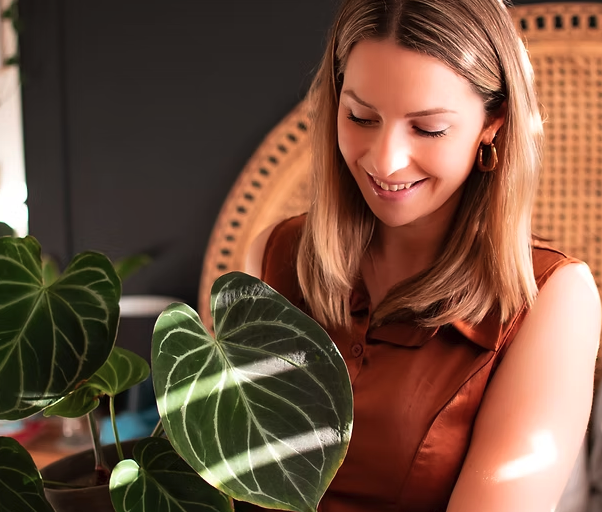
This week’s guest
Gemma Haigh aka The Plant Parlour is an Anthurium grower, a houseplant designer and consultant. You can also hear my interview with Gemma about her Anthurium collection in episode 289. Her website is theplantparlour.com and you can find her on Instagram as @theplantparlourgram.
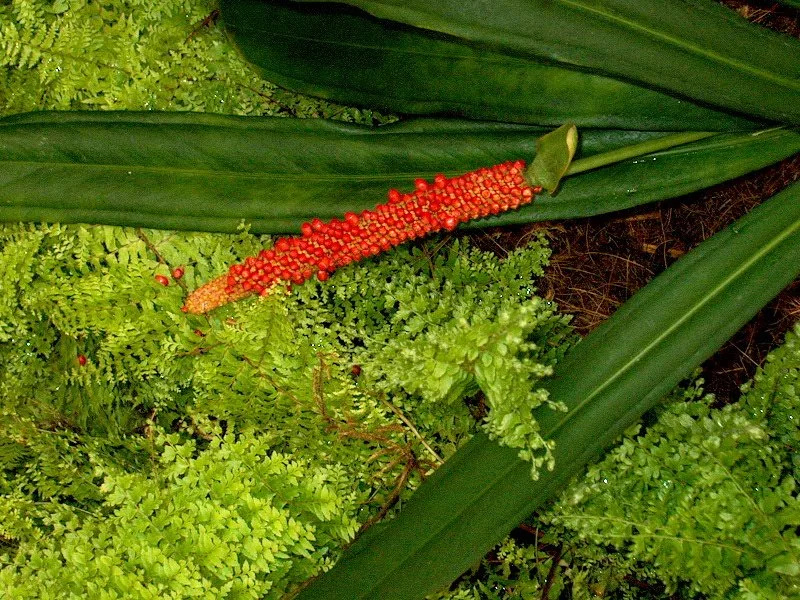
Anthurium berries take weeks or even months to mature. Photograph: The Fun Chronicles on Flickr
CREDITS
This week's show featured Whistle by BenJamin Banger (@benjaminbanger on Insta; website benjaminbanger.com) and The Road We Used to Travel When We Were Kids by Komiku.