Episode 322: hop in the terrarium time machine… we’re going back to the sixties!
Transcript
[0:11] Hello and welcome to On The Ledge podcast. So glad to have you here with me because today we are going on another journey.
[0:23] If you've not travelled in the terrarium time machine before, let me explain. Yes, I have a time machine. Yes, it's made out of a terrarium. So when you step inside, it's full of plants and it can take us anywhere to visit any garden in the world at any time what a treat, the good news is that I can take all of you along with me where are we going today well step inside and let me tell you all about our destination, yeah this way come through just yep keep to the paths, Anthony yeah there's a watering can on the floor just over there near Judy the bird's nest fern please could you just give her some water because it's been hot in here and she's feeling a bit parched thanks Anthony, let me just shut the door now everyone's in.
[1:29] Right everything is set and I will tell you where we're going when we arrive.
[1:48] Everyone feeling okay? Take a beat, relax, while I tell you a little bit about where and when we are. We are in the village of Broadchalk in Wiltshire. Now, for those of you not familiar with the geography, we are in southwest England, about eight miles west of Salisbury.
[2:15] And when are we? well unfortunately the terrarium time machine is a little bit inaccurate but i think we should have landed, around the early 1960s and it's definitely august thanks everyone for putting on your 1960s gear you all look amazing there's definitely a couple of you who could pass for a fifth beetle, And Jackie, that's an absolutely gorgeous caftan. Just remember, please keep your phones hidden. Don't take any photographs. We don't want anyone to figure out that we're not actually from the 1960s. Now, what do we know about Broad Chalk? Well, it's a village, population approximately 556. That's according to the 1961 census.
[3:14] And probably its best known resident is Cecil Beaton, CBE. And we've landed in his garden at Reddish House on South Street, where he has lived since 1947, when he bought this place for £10,000. pounds. And he lived here until 1980 when he died and he was buried less than 200 yards from where we are now at All Saints Church a little bit further along South Street.
[3:53] Now, he's a CBE at this point. He doesn't become Sir Cecil Beaton until 1972. Now, we've landed conveniently hidden away in the midst of the cutting garden, which is in full bloom right now. But if you look over there out the glass, you will see Reddish House. Now, this is a Queen Anne country home set in the beautiful countryside of the Chalk Valley. And it's an absolute jewel box of a house. Now Cecil Beaton has spent quite a lot of money and time restoring the house, putting his own stamp on it. But as you can see, it's the epitome of the British, country retreat with roses blooming all over the walls of the house and plenty of space outside for an English gentleman at play. So let's make our way into the house and we're going to sneak into the winter garden. Follow me.
[5:04] Now, I know a few of you may not have heard of Cecil Beaton, so let me give you a brief bio of this stylish, creative man. He was a photographer, an illustrator, a writer, a diarist, a theatre designer, and an art director. He took fashion photographs, war photographs during World War II and was well known within the covers of Vogue magazine. And he knew anyone who was worth knowing. And many of them visited Reddish House. Cecil's great friend Greta Garbo came and stayed for six weeks. Bianca Jagger, Truman Capote, Francis Bacon, Lucian Freud, David Hockney. He knew them all now I don't think Cecil is in residence right now, I think he may be in his London house but over there on the other side of the cutting garden I think I can see John better known as Jack Smallpiece who was Cecil's gardener here for more than 20 years and the man And responsible for putting all of Cecil Beaton's beautiful garden moments into effect.
[6:25] Oh, and yes, Cecil Beaton loved pugs. And I think this might be his pug, Simba. Not entirely sure of the name. Anyway, he seems very friendly. Hello. I'm not sure if he's excited to see us or just acting like a tiny guard dog. But we'll just carry on and hope he warms to us, I think he's probably missing his master.
[6:59] Right let's head into the garden room.
[7:03] And if anyone's listening back to this trip and was unable to join us in person you can see links to the images of the winter garden as it was in the 1960s at the show notes at janeperrone.com. Here we are let's go into the winter garden. Cecil redid this room in the mid-1950s working with designer Felix Harbord. Now this has been called the heart of Reddish House and you can see why. And as you can see this room's got this beautiful black and white tiled floor above us as we know as houseplant people. We need light so we've got this incredible glass dome ceiling lots of windows. I just love the choice of that yellow paint for the window frames. It looks magnificent. Just through there is the drawing room where Cecil would entertain his guests but many of them were also photographed here in the Winter Garden. The walls of the drawing room are a deep wine red and the design is distinctly Edwardian and if you've seen any of Cecil Beaton's stage designs it may be familiar to you. Cecil Beaton himself described this room as my Lady Windermere's fan decor drawing room.
[8:31] So do feel free to have a look around the drawing room once we've finished in here, but back to the winter garden where we really do have a rather different feeling to the room and what a setting with these beautiful wicker peacock chairs which I believe came from the deep south, and the plants are growing up bamboo trellises and if you're careful you can take a seat on the porcelain garden seats in the amazing blue and white Chinese designs, or yes have a wander around just be careful of the pond, and this pond is in the shape of a quatrefoil which is a classic moorish design which you'll recognize if you've ever been to parts of Spain or the Middle East or Turkey, Uh, Simba, I don't think you're meant to be drinking out of the pond. Watch out for the goldfish.
[9:34] And yes, there's also some mimosa trees in here. Now, I do know that in his famous diaries, which I do recommend that you go and read, they're wonderfully gossipy and starry and, and occasionally waspish, in 1956 when Cecil was working on the musical of My Fair Lady, he writes to Eileen to ask if he can get a mimosa treat for the winter garden. And indeed here they are, looking absolutely gorgeous.
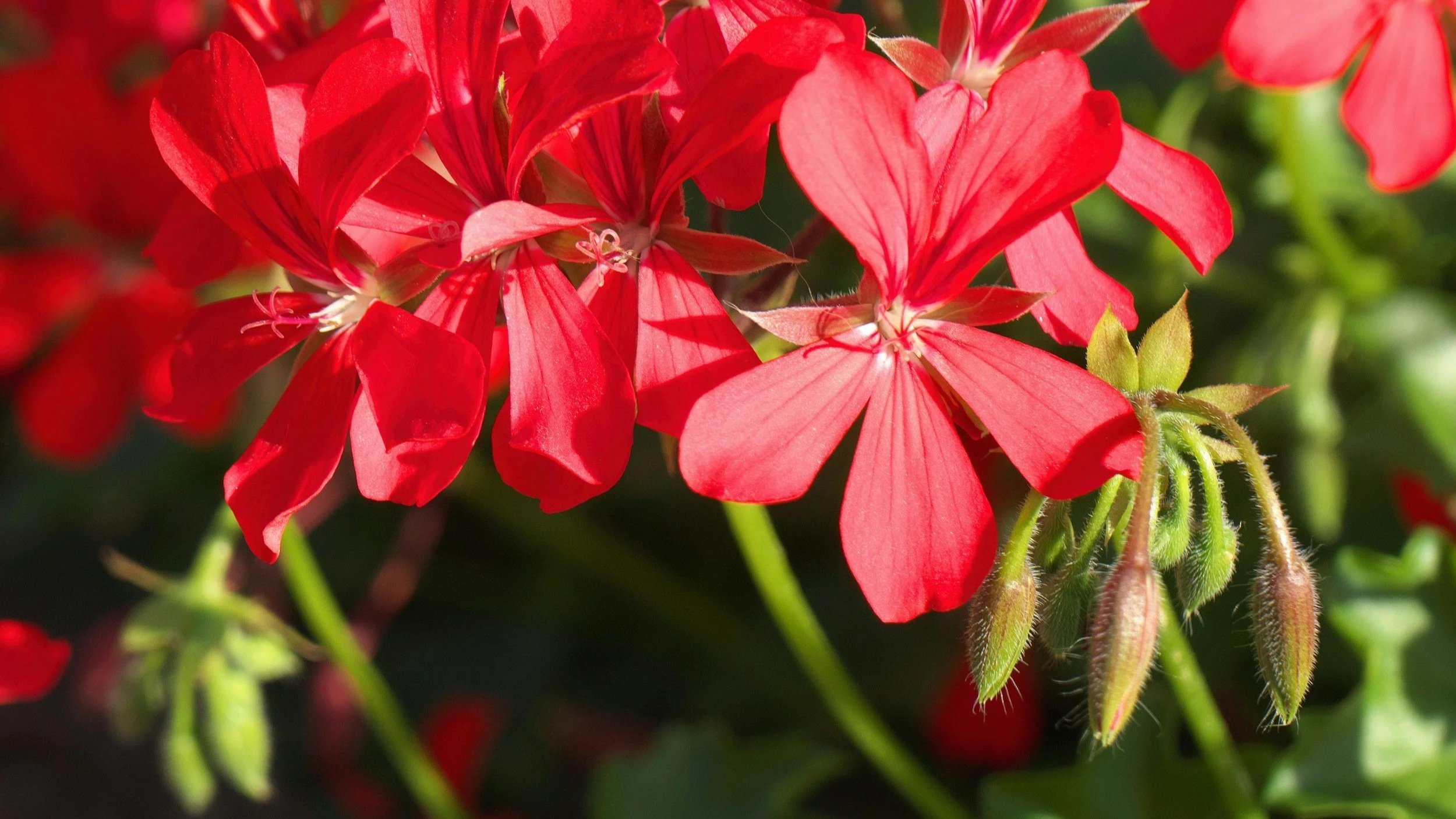
[10:08] There are so many plants here that I absolutely love. The dramatic Rex begonias, that big Sparmania in the corner with its beautiful big fuzzy leaves. A really great plant for conservatories. The jasmine clothing the wall so beautifully. And of course, those bright, vivacious Pelagoniums, which look so wonderful in this space. And you may have noticed that there's this very distinctive planter in the room with is it an angel, and the planter is made of the wings I think Cecil used this a lot for growing spring bulbs but he was also not afraid as you can see to bring in plants from this amazing cutting garden at reddish house and he's got some beautiful, electric blue delphiniums on display right now, and this beautifully curated space looks like a stage because well it really was a stage so many famous people photographed here by Cecil who was by this point in his 60s but still very much a style icon. So what can we learn about indoor gardening from Cecil? Well he's not here to tell us unfortunately but here's my take.
[11:35] Cecil was a stage designer, so he saw every plant not only as a plant, but also as a piece of set design that he could use to set the mood. And all the senses are catered for here, from the sound of the running water from the pond, to the scent of the jasmines and lilies, the feel of the various textures of the leaves and of course the beautiful light coming into the windows from above and the side from the garden. It's a really useful exercise to think of your room as a stage set. What mood do you want to create and what raw materials in the form of plants and other decor do you want to use to set that mood. Of course he was involved in the practical elements of gardening when he was here at Reddish House and Settle was sometimes to be found digging in the borders and working with Mr Small Piece on new designs. So he was a hands-on gardener but he also thought like an artist, like a creator and that meant that if anything didn't look right, if anything didn't suit the mood.
[12:59] It wouldn't just sit there. It would be edited. This collection of plants was constantly being edited, added to, adjusted to suit Cecil's creative vision. And I think that's something we can all learn from.
[13:16] And it's worth acknowledging that although this was very much a place of work for Cecil, it was also his haven and his place of tranquillity.
[13:30] London, Paris, New York, the French Riviera. He travels around the world, but there is no place that Cecil Beaton prefers to be than his own home and garden. And in 1955, he wrote in his diary, here the pressure is relaxed. Even if my windows are shut, the clear country air seeps into my soul.
[13:57] I'm able to read write and think and it is here that i give my subconscious an opportunity to assert itself, now from here you can spill outside into the garden i think we can probably get away with a few more minutes to wander around if you do see mr small piece just start talking about roses and you'll be absolutely fine, i'm afraid there's no time to take tea delightful though that tea tray there looks, right we'll meet back here in five minutes if anyone stops and asks you're a reporter from the architectural digest okay that's your cover story see you in five.
[14:50] I do hope you've enjoyed this trip to Reddish, brief though it may be. Let's head back to the terrarium time machine now because we don't want her to run out of juice before we get home.
[15:27] Well, thank you so much for joining me on our little trip today. If you're listening to this back and you didn't get the chance to come along, as I said before, do check out the show notes where you can learn lots more about Cecil Beaton through the, links that I've included and the images that you can find, about his career and his incredible life. And I do recommend that you go and read his diaries, which are intensely entertaining. I'll put links for those as well. And you know what? It's inspired me to think about getting hold of some seeds of Ipomia heavenly blue and try growing them in my conservatory. Well that's all for this week's show. I will be back next week and if you've got somewhere you want the Terrarium Time Machine to take us, please let me know. Just drop a line to on the ledge podcast at gmail.com until our next trip have a great week with you and your plants bye.
[16:39] The music you heard in this episode was whistle by benjamin banger and beethoven, which was i I believe one of Cecil Beaton's favorite classical composers, and we heard his piano sonata number 15 in D major, opus 28, Pastoral, played by Corrine Gilanian.
[6:05] And just the fact that your child asked a question about a house plant is a really good sign. Now this question in particular looks at the watermelon plant. Ethan, the kid in question, out of the blue at dinner the other night, asked why the watermelon plant has variegation on its leaves, that silvery variegation, and wanted to know what it was all about. Jonathan was interested to know if there was any current hypotheses that I could pass on to his suddenly interested teenager. We're talking here about Peperomia ardurea, the watermelon plant, a very popular peperomia with beautiful with fleshy shield-shaped leaves with silvery variegation that occurs between the veins of the plant which are arranged, in a kind of a starburst pattern so, the first thing we need to know is what kind of variegation is this.
[7:11] You'll note that this variegation is the same from one leaf to another, so it's not like, say, a Marble Queen Epipremnum or a Thai Constellation Monstera. The variegation on those is random and every leaf is different, but on the Watermelon Peperomia it's pretty routinely the same as the plant pushes out leaf after leaf. And it's what we call structural variegation, also known as blister variegation, also known as airspace variegation. I think those are the main three names I've seen given to this type of variegation. And it's not caused by pigmentation. So usually with variegation, we can say that there's a lack of chlorophyll, for example, which might give us a creamy color to a leaf or, a shortage of chlorophyll, which might give us a mint colored leaf or section of a leaf. Or we get red variegation caused by anthocyanin pigments in leaves and combinations of those different pigments give us leaves of different colors.
[8:27] No, indeed, this variegation is caused by a lack of something. So, and the word blister is giving us a clue here there are air spaces in the leaves so gaps between cells which produce this silvery effect when viewed from above i did find a really interesting paper which i'll link to in the show notes, called a revised classification of leaf variegation types which came out in 2020, and this is well worth looking at if you want to delve deeper into the world of variegation because it's got loads of detail. And they split different types of leaf variegation up in by different categories. So they have fishbone shaped, they have blotched, v-shaped, spotted, striped, reticulate and pinnate. And they would class the variegation of the watermelon plant as blotched.
[9:24] And they describe it as the pattern of variegation is blurry and irregular, often located between primary lateral veins or in some species located across the veins. And they found 881 species with this type of variegation. Now, blister variegation does occur on loads of different plants. So we see it a lot in Hoyers. It's what's known amongst Hoyer grows as Splash, where you see these irregular splotches of silvery areas. And again, it's caused by gaps in between cells below the epidermis, below the surface layer of the leaf. And in this paper, there's a microscope image from a species called Sonorilla cantonensis. Now sonorilla are popular terrarium plants so this might be one that you see occasionally in terrarium setups, and if you look at the image you can actually see the air spaces that are creating the silvery areas on the leaf when you look at a cross section of the leaf it's kind of fascinating to see that where the pigments are where the air spaces are.
[10:38] And where the cells with the chlorophyll lay, it's very illustrative of the, idea that leaves can arrange themselves in all different kinds of ways to produce this kind of blister variegation. And the paper makes it clear that different species can have a couple of different types of variegation going on at the same time. So they can have air spaces and they can have pigments going on in one leaf so that you get multiple different effects.
[11:11] And why do these areas of blister variegation look silvery? Well, as sunlight passes into the leaf and moves through these spaces, it causes the light to reflect and scatter about. And to our eyes, that comes out as silver. So we know the type of variegation. It is blister or airspace or structural variegation. And what we don't know is why this plant has chosen or evolved to display in this way. Now, I do mention in Legends of the Leaf, in the chapter on Begonia Immaculata, one theory about blister variegation and its purpose. One is that it mimics damage from pests, particularly the leaf miners, which go under the surface of the leaf and eat out the material there, creating their own airspaces and thus creating this kind of silvery effect. So the theory goes that the plant is creating this kind of variegation so that actual leaf miners think oh gosh that leaf is already occupied I'm not going to lay my eggs there because, I need to find a leaf that's got more real estate for my larvae to work on and there are other theories as well to do with providing a bit of a, sunscreen for plants to protect them from the sunlight by scattering it around the leaf.
[12:39] Those air spaces reflecting and sending the light around the leaf so that the plant is not damaged by the radiation of the sun, because much as plants need the sun, they also can be damaged by too much sun. I don't know the reason for the variegation in peperomia argyrea and I haven't found despite quite a lot of academic paper searches anyone, finding definitively what causes the variegation in that particular plant and it's worth bearing in mind that peperomias as a whole well not all of them have this kind of variegation some of them, have no variegation at all some of them have red, bottoms to their leaves some of them have leaf windows.
[13:26] For example, Peperomia graviolans has leaf windows, which are meant to direct the light in a particular way through the leaf. So, yeah, even within this particular genus, there are different ways of arranging themselves. And we just don't know enough. As far as I can see from the research, I can access to know exactly what's causing the watermelon plant to grow as it does. Bear in mind this plant comes from Brazil, and is going to be growing underneath other plants and is generally growing not in full sun it's usually growing either on the ground or as an epiphyte, covered by other vegetation so that needs to be borne in mind when we're thinking about how it might be dealing with light but also the fact that it is growing in a place with a lot of sun. So I would love to know if anyone has any more information about Peperomia Argyrea and its variegation and the causes. Every day is a school day. And so I'm keeping on learning and hopefully you are too. So Ethan, I'm sorry that it's not a total answer, but hopefully that gives you a bit of an insight into that.
[14:52] Next up, the question comes from Lois, who is delighted to hear that On the Ledge is back on the air. Thank you, Lois. It's great to be back. And Lois, who describes herself as an anxious plant mum, is worried about her beloved homolumena maggie. What a good plant, a really wonderful house plant. And I highly recommend this to anyone who just wants a really nice, big architectural plant that's easy to take care of. And Lois has had her plant for quite a few years and says that it's about four times the size it was when they got it. But unfortunately, all is not well in Maggie's world because Maggie has started to lean over.
[15:42] And the plant, like many of these, is in a cluster and there's separate shoots coming up from a base. And a couple of these shoots have just keeled over. and are leaning right out, to one side and others are bending over. So the beautiful architectural look of the plant is being somewhat spoiled, but worse than that, is Maggie okay?
[16:07] Lois has been working on this by repotting into a larger pot, but the plant's starting to grow sideways and canes that have been tied in aren't helping either. So Lois is convinced that it doesn't have anything to do with light because it's leaning away from the window. And Lois comments, it doesn't get much light at all. As I gather, it grows naturally in dappled shade, but it's never been a problem before. So I'm not sure that's the reason. And Lois also notes that the lovely maroon colored stems that they loved are gone pale green. And there are some pictures which I'll add to the show notes. So what's going on? Lois is convinced it's not light. What do I think? Well, the first thing to say with this kind of situation is that we often, make the mistake when a plant suddenly starts looking miserable of thinking that something has recently happened that has impacted the plant and made a problem.
[17:18] I very strongly suspect in this plant's case that the problem has been happening for a long time and this very tough plant is only now starting to show the signs that it's suffering and I'm going to disagree with you Lois because I think it's all to do with light so the shield plant as homilomena rebessens is known comes from, South Asia comes from, Asia it's native to, Bangladesh and the parts of eastern India, and it's growing on the forest floor underneath.
[18:01] Other plants and trees in a, tropical in a subtropical forest and it's got these beautiful shield-shaped leaves as the name suggests held up on these maroon stems and I think the main thing to say about this plant is that, just because something lives in, and I'm putting big inverted commas around this, in shade in Southeast Asia doesn't mean that it's going to like a very dark corner, in your house because those two types of shade are radically, radically different.
[18:41] And the reason why houseplants are chosen as houseplants is because they can put up with suboptimal conditions for a really long time. In the case of plants like this, they can make do with low light levels for a great deal of time before they start to become affected. But affected, they will be in the end. And in this case, the plant is over time becoming more and more etiolated, more stretched out. Those red stems are losing their pigmentation because of the lack of light. And the ultimate effect for Lois's Maggie is that eventually the plant becomes top heavy and falls over. So what can Lois do? Well, obvious answer is more light. But this has to be done gradually because this plant is used to low light conditions.
[19:34] And will burn if put straight into a south facing window but it could definitely benefit from more light so moving gradually towards a larger window would really help, I used to have one of these not quite in a south facing bay window but not far from it about probably a meter away and it absolutely loved it so you know I would say that you know an indoor window bay window like in my house a 1930s semi-detached house like we have in here in the UK.
[20:08] It could go in that window with some time to adapt and would be perfectly happy the other thing to bear in mind when you're giving more light gradually is that it will need more water, but plants that are in low light will, survive on virtually nothing because they're not really photosynthesizing a lot so my advice would be to lois to gradually get this plant into some more sun uh, you know you're not gonna unstretch those stretch stems but hopefully the plant will start putting out some more compact growth i've seen this, this summer with some tradiscantia some inch plant that i have put into an outdoor pot and it started off the year, with quite long internodal spaces the gap between each sort of, node each section of leaf, but now that it's been outside for a while.
[21:03] Outside not in direct sun but still in much higher light levels those internodal spaces have gone down to nearly nothing.
[21:11] But that's just new growth that's changing the look of the plant so this is what has to happen with the maggie, repotting it won't really help it has to get more light and then the new growth will reflect that in the way it grows and also the, addition of those beautiful maroon stems once more. So I hope that helps, Lois. And good luck with your plant. It's such a good house plant. It's testament to how good a house plant it is that it's done so well in staying alive for as long as it has. But just find the nearest window and get it closer to it. That really is the key. Well, I hope that helps, Lois, and let me know how you get on with your plant. And for those of you who haven't grown a homolomena maggie, I do recommend, provided you give them enough light, they are really good plants.
[22:07] Now, the final question I wanted to answer comes from Jackie, and Jackie, you really made me laugh with this one. Sorry, this has been sitting in my inbox for an inordinate amount of time, but I wanted to come to it because it just made me laugh. Now, Jackie tells me that Norman is a large Dracaena that was rescued 10 years ago from my brother's dungeon.
[22:37] You don't say, Jackie, why your brother has a dungeon, what kind of dungeon it is. But I don't know if I want to know more about that. It sounds a little bit sketchy to me. So we'll just move swiftly on because you tell me that Norman has suffered because you moved house. And this involved Norman being placed on a hand truck and pushed down a long icy driveway, covered like a hostage in a black garbage bag.
[23:08] Poor Norman this sounds terrible I mean I know house moves can be traumatic for house plants but that sounds a lot for Norman to cope with that said Dracaenas I'm guessing this is a Dracaena marginata, although it could be one of the other dragon tree species it could even be if you're up to date with your taxonomy what we used to call a Sansevieria which have now been reclassified as Dracaenas but I'm not sure you don't send me a photo although you do send me a photo of the icy driveway, anyway Jackie's question is this Norman says the least I can do is give him a drink of filtered water as opposed to hard should I indulge are Dracaenas one of those plants that require filtered water he's such a brat, uh well first of all poor Norman I mean indulging him brat I think this is the kind of talk that leads to you, not taking good care of your houseplants Jackie I think houseplants should always be indulged uh where possible and giving them, water that is not hard is I would say going to benefit all houseplants generally uh plants are, Given rainwater, love it. All mine get rainwater because I'm just that girl.
[24:38] But I do take your point. Should filtered water be used instead of hard to keep Norman that bit healthier? If you have a water filter jug, it's fine to use that to water your houseplants. And it will take out some of the chlorine from the water as well as fluoride and heavy metals and mineral salts that can harm houseplants. And Drasenas in particular, yes, they are sensitive to fluoride, chlorine and therefore filtered water might be a good choice. I have a zero water filter, which is rather useful because it comes with a TDS meter, total dissolved solids, which tells me when my water has been completely.
[25:26] Filtered from all of those things that might cause problems to the more sensitive plants. Also useful when I run out of rainwater for carnivorous plants. So yeah I would say filtered water would do Norman some good and, it's not an indulgence but if you can collect rainwater, or even just get some of that snow if it's the right time of year and melt it down and you will be able to use that just make sure it's not absolutely freezing cold um, the issue with dracaenas is also comes up with other house plants it's not going to kill them to give them hard tap water because they're tough house plants see the homilomena maggie story of earlier, but if you want your plant to look its absolute best then yes probably uh, filtered water or ideally rain water is the best for them, And yeah, when you're moving house, plants will always suffer a bit. They're also likely to suffer from the change of location. It might be a good move in that they're getting more light closer to a window, or it might be a bad move in that you're moving somewhere with less light.
[26:43] So the shock of going down that icy driveway will have been felt by Norman. And I mean, living in a dungeon for 10 years isn't going to help either. But Dracaenas are so tough. I'm looking at mine right now and it's not a plant that I spend hardly any time looking after. It officially belongs to my husband and it does absolutely fine. So I'm sure Norman will be OK. But yeah, give him a treat. Give him some filtered water.
[27:13] You know, why not treat your house plants like the kings and queens that they are, Jackie? That's what I would say. But at the same time, like if you're giving them tap water and that's what life allows right now. I'm not going to tell you off for that either, because sometimes life is bigger than house plants. There, I've said it. Oh, and just to say also, because this does come up sometimes with watering. If you have an in-house built-in water softening system, don't use that to water your plants. It's not good for them. It's got a lot of sodium in there, which is not ideal for plants. So again, another reason to get a water bath so that you can use that to water your houseplants. In this current drought we're suffering in the UK, I have seen people talking about using grey water on their houseplants. And much as I would advise trying to get the most out of your water by reusing that grey water, maybe from your bathtub or your washing up sink, I would not use it on your houseplants. Why? Well, because unlike the plants in your garden, potted plants have nowhere to send all of the...
[28:32] Extra bits that are in your grey water so that water is going to contain soaps food debris and that's just going to sit in your plant and make it unhappy at the very least grey water is fine to use outside so I often use it to water my fruit trees in the garden my crab apple and my quince.
[28:55] But I tend to move it around so I don't water in the same place with the grey water every time I move it to different parts of the garden that way you're not overexposing any particular plant to all of the, surfactants and other materials that are contained in soap and so on and that way you can use it without uh affecting your garden too badly, but not on your house plants please with the gray water um i've, yeah i've seen a few things uh of people talking about doing that and it's just, it's not a good idea it goes in the same folder as people using menstrual blood, to fertilize their house plants. It's just it's not a good idea. Don't do it. Why do that when you've got perfectly good fertilizers that you can purchase?
[29:55] You don't have to use that particular body.
Come with me to Broad Chalke in Wiltshire on a sunny summer’s day in the early 1960s as we explore SIr Cecil Beaton’s Winter Garden at his home Reddish House.
Want to hear this podcast ad-free? Sign up for my Patreon now to unlock ad-free episodes, bonus episodes and much more!
More on Cecil Beaton
Want to see images of the Winter Garden at Reddish House? Start here. For images of how it looks today, check out this page, where you’ll also see photographs of some of Beaton’s famous friends at Reddish.
Cecil Beaton produced some of the most iconic photography of the twentieth century. Learn more about his work here.
Read more about Reddish House at Gardenista.
Architectural Digest really did visit Reddish House in the 1960s!
More on the Terrarium Time Machine
If you missed our trip to Loddiges Nursery in London in the 1820s, you can listen here. I answer some commonly asked questions about the Terrarium Time Machine here.

CREDITS
This week's show featured Whistle by BenJamin Banger (@benjaminbanger on Insta; website benjaminbanger.com) and Beethoven - Piano Sonata nr.15 in D major op.28 "Pastoral" - III. Scherzo. Allegro VivacebyKarine Gilanyan.