Episode 323: So you've been given a miniature rose...
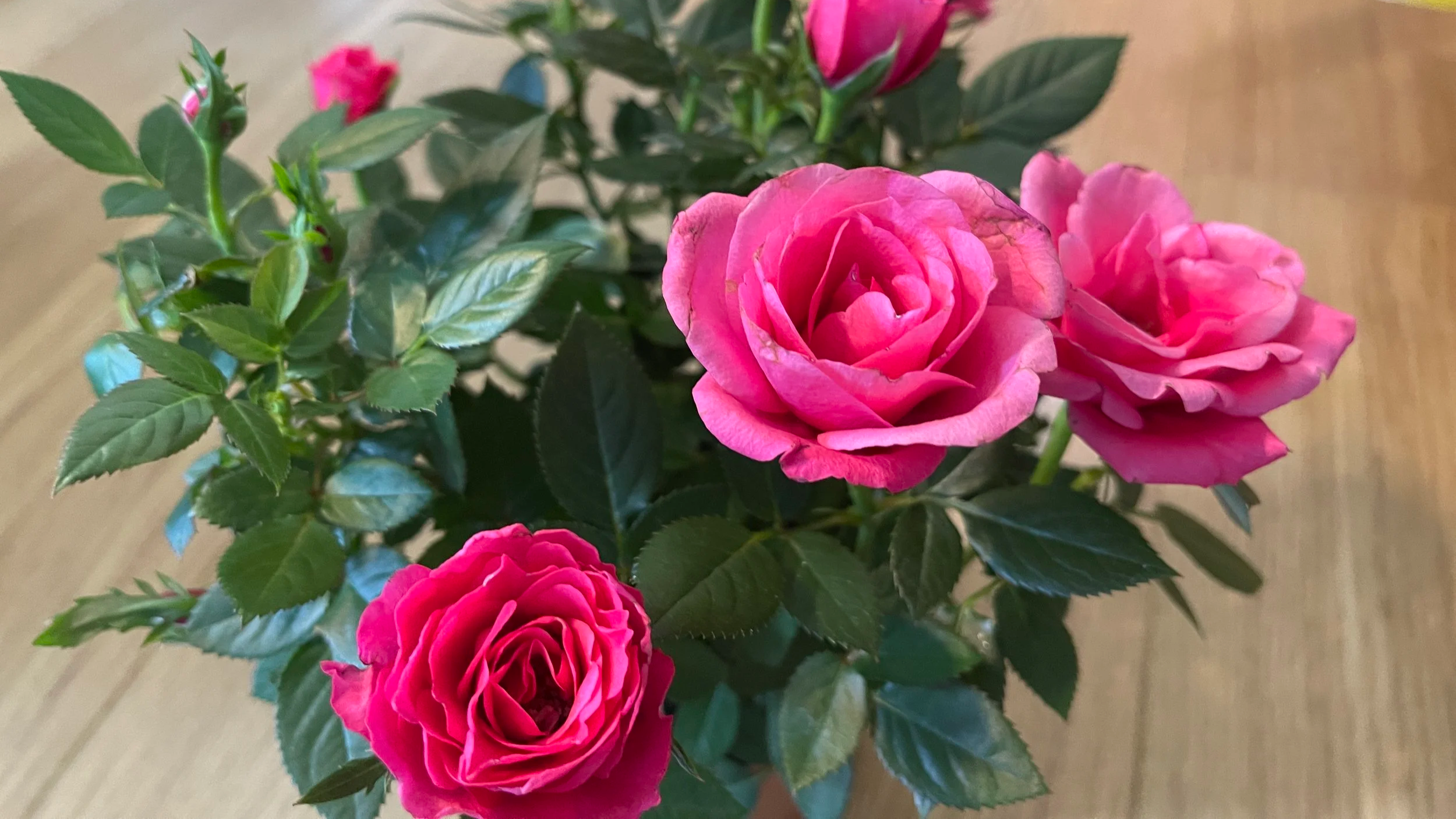
Millions of miniature pot roses are sold every year globally. Photograph: Jane Perrone
Transcript
[0:04] Hello and welcome to On The Ledge Podcast. I do hope you've recovered from any time travel related nausea brought on, go and listen to On The Ledge podcast episode 322, which came out last week
[0:30] as I speak, where I travel back in time in my time machine shaped like a terrarium. Yeah, I think the heat really is getting to me here in the UK right now. But this week we go from the ridiculous to the, well, I wish I could say sublime, but we're talking about miniature roses. So it's more like They're ridiculous to the exasperating? Ridiculous to the fleeting? If you want to go from the ridiculous to the delightful, then do stay tuned because halfway through the episode, I'll be telling you about my giveaway where you can win a six week online houseplant course, courtesy of the wonderful friend of the show and botanist Dr. Scott Zona. And if you're a Patreon subscriber at any level, including the free tier, you have an extra chance to win.
[1:26] But for now back to the abomination that is mini roses in a pot I have grazed this subject on on the ledge in the past but, I saw some miniature roses in Morrison's the other day the British supermarket I'm not gonna lie I'd gone to buy something else I can't remember what now or possibly just get out of the hellish heat wave that we're still in here in the UK and I ended up being drawn to the plant area just inside the door. Now I know you know what I'm talking about because you've been there too I'm sure and like a bunch of iron filings to a giant magnet I was straight over to look at the plants. Now you know we're talking about supermarket plants so these generally look a bit sad and miserable and I generally don't buy them. There was the usual ray of small succulents in cutesy ceramic pots, drooping peace lilies and pot-bound cheese plants trying to escape their containers, and a few things that did resemble dead sticks. But among them were some very healthy looking pots of miniature roses.
[2:37] And it made me think, how many of these are sold each year? And it had to be millions, I thought to myself. Well, I came home and did a bit of digging. And I was right. Pot roses, these miniature roses sold as temporary houseplants, are the number two pot flowers in the world. Now, can you guess what they are behind? Well, the number one is, of course, the moth orchid.
[3:06] Both of these are grown by the million and sold every year now I found some figures from Royal Flora Holland which is the organization that promotes Dutch growers saying that 15.7 million pot roses were sold in 2020 there while in China I found some data saying that the figure is about 30 million a year. Now that's compared to 40 million anthurium, which I'm presuming is mainly made up of the flamingo flower rather than foliage anthuriums, and 70 million phalaenopsis orchid, the moth orchid. So I feel as if it behooves me, yes I really did just use the word behoove as the world's longest running house plant podcast, to dedicate some air time to these tricksy little plants if i can save just a few of them from their usual fate decorating the bottom of a rubbish bin i consider my work here is done.
[4:12] Now, a little bit of botany here. We have to answer the question, first of all, what is a miniature rose? So with the number of, frankly, deeply misleading common names out there for houseplants, it really is worth establishing what we're actually dealing with when we say miniature rose, because there's so many plants that are called geranium that aren't geranium, called begonia but aren't begonia, etc., etc., ad infinitum. But the miniature rose really is a rose and not a rose lookalike so its origins are a little bit blurry but like their beefier relatives miniature roses come from China they've been bred to the nth degree, but their most important source species is rosachinensis just like our garden roses and they were very popular in history they were known as fairy roses in the 19th century and you can understand why they were so fascinating to people. People, gardeners included, love miniature things and these miniature roses really are miniaturized in every way. Tiny leaves, tiny blooms, tiny stems, it's just like they've been zapped with a shrink ray.
[5:30] And I should add they're not just small because they're planted in a small pot. So if you see, I don't know, a bonsai of an oak tree that's tiny that's been trained specifically to be tiny through the bonsai process, that's not the case with miniature roses they are small because they are small although as we'll find out they do grow a little bit bigger than the plants you'll find in the pot at the supermarket, I'm sure that most of you have either bought or been given one of these plants in your life, and i'm going to bet that unless you did one specific thing they died.
[6:10] And very fast, most likely. My main advice would be don't buy one. Just don't go there. I'm going to cover later on in the episode some of the much more sustainable and longstanding flowering plant alternatives. But let's assume that the ship has already sailed to the land of teeny tiny roses, in which case you're going to need to know a few things to keep your rose looking rosy.
[6:44] The first thing you need to know, is something you may have heard if you've listened to On The Ledge before. If you're a new listener, hello. If you found me through this episode, then welcome. There's more than 300 episodes to catch up on, so you better get your ears plugged in. And you'll hear me say this several times through different episodes.
[7:06] That a lot of houseplants are sold to us, not as one plant in a pot, but as a set of baby plants or cuttings in a single pot. Now, in the case of miniature roses, you'll usually find in a nine or 10 centimeter diameter pot that you've got four or five cuttings growing together in the pot. So four pieces of plant that have been rooted and grown together. Now this makes a lot of sense if you're a grower because it's so much quicker to grow these cuttings and put them together in a pot than to grow one single plant to the size that can fill a pot, and for these growers speed really is of the essence they're out there to make money this is they are not charities so they really want to maximize the number of the millions of roses they can produce. So they're putting cuttings together in a pot. And the other reality here is that growers just don't expect you to keep this plant alive, that they are expecting you to kill it and come back, you know, days, weeks or months later for another one.
[8:18] But, you know, if you're anything like me, you really love it when someone tells you you can't do something because that makes you want to try to do that very thing even harder.
[8:30] Yep. Now, one other thing to note about miniature roses is a way that they're significantly different from those bigger garden roses that we love seeing in our gardens. And that is they are grown on their own roots and not on a rootstock. Now, if you're not familiar with this idea of rootstocks, it's the same in the fruit tree world as the rose world, that many, many, the majority of garden roses are grafted, onto the roots of a much more vigorous type of rose. So a graft is just joining two bits of plant material together. It's like a sort of botanical cut and shut. And you get the roots and a bit of stem. And then the rose that you want to flower is grafted onto that.
[9:24] So below the ground, you've got one plant and above the ground, you've got another. It's a bit of a Frankenstein thing, really, but it works really well for things like fruit trees and roses because the plants that produce the beautiful blooms and the beautiful fruits don't tend to be the ones that have really robust roots that can survive all kinds of conditions. So that's why grafting happens. In the case of the miniature rose, no grafting. So the plants are grown on their own roots and this is a bit of a tangent there is a whole thing about growing roses on their own roots and you can certainly give it a try but if you've ever had a, super super muscly sucker stem, vigorous stem come out the bottom of your rose bush and this will be from sort of ground level below the graft where the two are joined together and you find that it looks and flowers different to the rest of your plant, then that is where the rootstock has decided to throw up some of its own growth and these suckers need cutting off because they will look different to the rest of your plant and won't be the rows that you want to grow.
[10:39] Anyway, back to miniature roses. So these aren't grafted and they grow on their own roots. They're in a pot, so they don't need to be overly vigorous.
[10:49] And the main problem with growing these roses indoors is, well, you're growing them indoors. Roses need lots of sun and indoors, as I often say on on the ledge, is a lot darker than even the shadiest spot outdoors.
[11:09] So one of the things to bear in mind if you've got a miniature rose is to find it a really bright sunny spot, and keep that soil moist because a rose in a sunny spot will be transpiring quickly and we'll need to draw up a lot of water so make sure the soil is damp but it's in full sun if you have damp soil and no sun then you're going to get rot as that water sits around the roots and does nothing and ends up starving the roots of oxygen, so sunlight is really important and the thing to bear in mind with roses and if you speak to any outdoor gardener they will tell you this roses are really hungry plants so the reality for the miniature rose growing indoors is that you've got four hungry fast growing cuttings in a small pot, and generally that's going to mean that those cuttings quite quickly start competing with each other and there's not enough nutrients or water or light to go around and they start looking really really miserable.
[12:15] The other thing to say is, please do remove the cellophane wrapper that your plant probably came in. If you leave it in that, you're massively limiting the plant's airflow, which is important for avoiding fungal conditions, especially in the winter. So get rid of that cellophane wrap as soon as you get the plants home. So sunny spot, remove the cellophane. What else do we need to know? While your plant is indoors there is one pest that absolutely loves the miniature rose and that is the red spider mite and this one just is very attracted to stressed, plants and if you let that miniature rose get stressed and that's probably going to involve a dried out substrate not enough light or maybe you've left it in the plastic sleeve, that will be absolute catnip to the red spider mite and you probably won't spot it until it's too late so the signs to look out for would be just generally the plant looking miserable if it's got some webbing developing then that's a pretty decent infestation if you get the old hand lens out or a jeweler's loop or a magnifying glass you should be able to see the little crab like creatures bimbling about.
[13:35] If you do find red spider mite I would put this plant outside immediately trim off the growth, and let it recover and it will be fine it will recover from this but it won't recover if you just leave it in the house in the same pot.
[13:52] Now, even if you do your absolute best with this plant and care for it perfectly, give it great light, it's only going to be a temporary plant in your home. Think of it like an extended bouquet rather than a permanent resident. This is a fully hardy plant. So the good news is once it's starting to look a bit sad, it can go to an outdoor space where it will generally be a lot happier. If you're listening to this in winter, your plant will have been brought on in the nursery to flower at an unnatural time of year because roses don't flower in winter. So when they go outside, they will look really sad because roses go dormant in the winter. That's when we like to transplant them and move them about and buy them bare root and plant them because they're having a nice rest.
[14:53] And it's a lot less troublesome than moving them at other times of year. So once your rose has started to look a bit sad inside.
[15:03] That's the time to act before they are a dead stick. So you want to get them when maybe they've got some leaves dropping, the flowers are finished, they've stopped looking good and you're not sure what to do. So we've got a couple of D's to address first, debris and deadheading. Now hopefully you've been deadheading your roses as they have been producing blooms which will have helped them to keep flowering that bit longer if not just snip away all the dead blooms, and have a look at the surface level of the pot you might find there's.
[15:37] Wrinkled leaves drop leaves bits and pieces lying down there you want to get rid of all of that material because that is going to also potentially lead to, diseases and other things setting in that you do not want to experience so you sort out the debris, you deadhead and you want to de-stress the plant. How do you do that? Well, the first thing is to get it out of that ridiculously small pot. Now, the orthodoxy on this varies. Some people will tell you you need to immediately separate those three cuttings and get them into separate containers. I think at this point, personally, the plant has been through a lot if it had eyes it would have a thousand yard stare because it's, it's experience going from the nirvana of the nursery where it's been produced with millions of its buddies to your house which quite literally is a bit of a torture chamber for a rose so.
[16:38] I would say personally, I would just pot the cuttings up together in a bigger pot. Now you can buy specialist rose compost for your roses, but they'll also be absolutely fine with a mix like John Innis number two or even multi-purpose compost, they are not particularly fussy. So yeah, make sure that when you take them out of the pot that the roots all look healthy, trim off anything that looks a bit miserable or mushy or stringy and then, I would also poke some holes into that root ball just to aid with air movement and then pop them up into a pot that's a little bit larger maybe double the size of the previous pot and, then it's a question of putting your plant somewhere where it can have a bit of ah and ah.
[17:39] If you want to know what to buy for your friends and family instead of a mini rose, stay tuned. But for now, let's get on to our giveaway. So I know that you love really good quality, very accurate, very informative houseplant information. And that's why I've teamed up with Dr. Scott Zona, botanist and friend of the show, and the NC State Extension to offer you a chance to get a place on Scott Zona's six-week online houseplant course. It launches on September the 1st, 2026. And if you have a look at the show notes, you'll find a link to find out more. It costs $149, but you get the chance to join in for free by entering my giveaway. You can do that via Instagram and you can also email me at ontheledgepodcast.gmail.com just.
[18:40] Use the subject line price draw and give me your name and email address. You've got until 2 p.m. BST on Friday, August the 21st, 2026 to enter. And I will be drawing the winners in the next couple of days. Now, I say winners because there are actually two chances to win if you happen to be on my Patreon. So if you are a free follower on my Patreon or a paid for follower on my Patreon.
[19:13] You can enter there as well. So go to patreon.com forward slash on the ledge to become a free member. It costs you nothing. You just have to input your email address and you get other benefits like updates from me and information about what I'm up to. And if you're a paid subscriber great you can also enter you've got no more chance or less chance of winning than the free people but you can all enter there if you are a member of my patreon so you just go on to the post that's at the top of the page right now and comment course to enter all of the terms and conditions are on my website in the show notes as well so hopefully somebody's going to bag themselves a wonderful experience. Well, two people, actually, one Patreon subscriber and one other person. So head on over to my Instagram and my Patreon to check that out now. And thanks also to Maria for rejoining my legend tier this week. I really appreciate your support. It's these people who help to keep the show literally going. So thank you to all my Patreon subscribers. You're brilliant.
[20:27] Right back to the roses. A rose by any other name would be as awkward to grow.
[20:35] So depending on the time of year your cuttings will slowly start to recover and once each of them has a decent root system and the roots are filling the new pot then you can go ahead and pot them up separately. They can go into containers or straight into the ground and I have heard of people using them as path edging which of course they are perfect for because they are low to the ground they will grow bigger than they will do in the original pot so you might get 30 to 40 to 50 centimeters growth, eventual height on these roses they're never going to be massive but they will get much bigger if they are happily accommodated in soil outside in a pot or border.
[21:27] And if you don't have a garden, what do you do? Well, find a friend who's got some outdoor space, a pot on a step. There are various ways of doing it without having to have a huge garden. And indeed, this plant is very well suited to a tiny space. Just remember, if you are going to put it in a pot outside, that you don't want to put it somewhere where you're going to forget about it and let it dry out. Because it will also die if left to suffer from dry soil outside. Of course if you're dealing with this plant in the depths of winter pretty much nothing's going to happen until spring if you've got an unheated greenhouse you could have the pot in there, or a cold frame and that will give it a little bit of protection as it starts out if you are dealing with your cuttings in the summertime or spring then they should start putting on growth much more quickly. Some people recommend putting the cuttings in a plastic bag and definitely if your plants were looking pretty miserable at the start that's not a bad idea just to get them going again and that can also help if they've had an infestation of red spider mite because it raises humidity around the plant which the mites do not like. So that's how to deal with your miniature rose but what can you do if you want to avoid this whole disaster in the first place.
[22:54] The good news is there are plenty of other plants that you can grow for flowers that will last. You can give them as a gift. They'll be beautiful.
[23:03] And I would recommend all of these above the disaster area that is a miniature rose. But before I tell you about those, I must tell you about a couple of other plants that kind of fit into the same category as the miniature rose. And I wouldn't recommend. Number one is Celosia. Now I hadn't actually seen any of these, being sold for indoor growth until I went to the Morrisons I was talking about and indeed they had celosia plants labelled as an indoor plant. What on earth is a celosia? Well I think its common name is the coxcomb and they are members of the amaranth family and the star attraction is their flowers which are.
[23:50] Well dramatic it doesn't really cover it. They come in shades of red, pink, magenta, orange, yellow and they're generally feathery. You can really, if you've ever seen amaranth then you'll recognise the flowers but lots of breeding has gone on with these plants and you'll find some really unusual ones. There are some cristate forms. Some of them look like corals or brains. They really are quite unusual in fact the RHS is currently conducting a celosia or coxcomb trial, at RHS at RHS garden in Wisley this is an outdoor trial though so they're not testing how they grow indoors but how they grow outdoors, looking at the three different species which are Christata, Plumosa and Spicata and you can see why somebody might want to sell this as an indoor plant because they really are quite dramatic I like the plumy natural looking ones not so much the, brain imitators personally, but if you like that shade of color the reds the yellows the oranges they're worth looking at but again they don't really last long as a house plant and they're much better off outdoors in my opinion.
[25:08] Next up is another plant beginning with C. And I think this might have been one of the very first plants I bought. It's the Calciallaria. I couldn't remember the common name of this plant, but I wanted to call it the pocket plant.
[25:23] And looking it up, I realized that I wasn't close. It's actually called the pocket book plant. It's got a kind of a pouchy flower that comes again in yellow and orange. Again it's a really nice plant but not the easiest thing to grow on a windowsill it's very prone to flowers dropping a bit like another, house plant that flowers that begins with a C the cyclamen it likes cool brightly lit places, and will last probably a few weeks indoors but not much longer than that it's one of those plants that tends to come out around springtime and, I love them I've just there's something about them that I really enjoy. But yeah, I wouldn't buy one to grow indoors just because I don't think it's that sustainable. But let's move on to some plants that really are. I mentioned anthuriums in the start of this podcast and the flamingo flower, the flowering anthurium, I think is such a good plant to buy as a gift for somebody because it's just so easy to grow, and I say this because my sister has one and she's managed to keep it alive and my sister she would freely admit is not a very planty person so if she's kept this one alive then you can too.
[26:43] Like all anthuriums they enjoy bright light I've got mine currently sitting, in a north facing window but there is a big skylight above it and it's pushing out new flowers and very happy with life they really don't need much care and they will keep flowering if they have enough light.
[27:04] Second up, Kalanchoe. There are a million ways to pronounce this, Kalanchoe, Kalanchoe, I mean the world's your oyster. But the plant we're talking about is a succulent and is best known for this species, Blossifeldiana, which has little flowers that come in. Again, it's the same colours as the Celosia and the Calciolaria, reds, oranges, yellows, except this one will last. It puts up with a lot of neglect so that's the classic I mean it's got the terrible common name widow's thrill so I would much prefer to use its other common name flaming katie.
[27:45] But apart from that it's a really good tough as old boots plant that you can give as a gift, if you want to be a bit more adventurous there are loads of fantastic cal and co species to choose from there's one called magic bells which has these really big bell like green and orange flowers which i think is absolutely wonderful, i do also rather like cal and co pumila which is called the flower dust plant and this one has got very very silvery, scalloped leaves and pink flowers that look a little bit like oxalis and they're rather cute and they flower all through the year I think they're rather lovely, a bit more subtle but there's no harm in that now that one you probably won't see in the supermarket but I do know that it's reasonably widely available in the UK.
[28:41] It's available from Dibley's for example but if you're in charge of a miniature rose well I hope this helps and good luck and godspeed please let me know, how your miniature rose is doing of course when I do these kind of episodes there's always somebody who messages in and says oh well I've had my miniature rose inside for the last 52 years and it's doing absolutely fine if that's you well done, give yourself a pat on the back and please send me a photo because I'd love to see it, that's all for this week's show I will be back next week with another episode.
[29:15] But for now keep yourself hydrated your plants hydrated and don't forget to deadhead bye.
[32:43] This week's episode is all.
How do you keep these tricksy plants alive indoors? With 100million+ mini roses sold every year, I am out to help save a few from the trash… and suggest some better flowering alternatives.
Want to hear this podcast ad-free? Sign up for my Patreon now to unlock ad-free episodes, bonus episodes and much more!
Chapters
0:36 Mini Roses and Giveaway
4:12 What Is a Miniature Rose?
8:30 Grafting and Rootstocks
10:49 Light, Water, and Pests
14:57 Repot and Recover
17:39 Giveaway Time
20:26 Moving Roses Outdoors
23:11 Better Flowering Alternatives
28:40 Final Rose Advice
GIVEAWAY
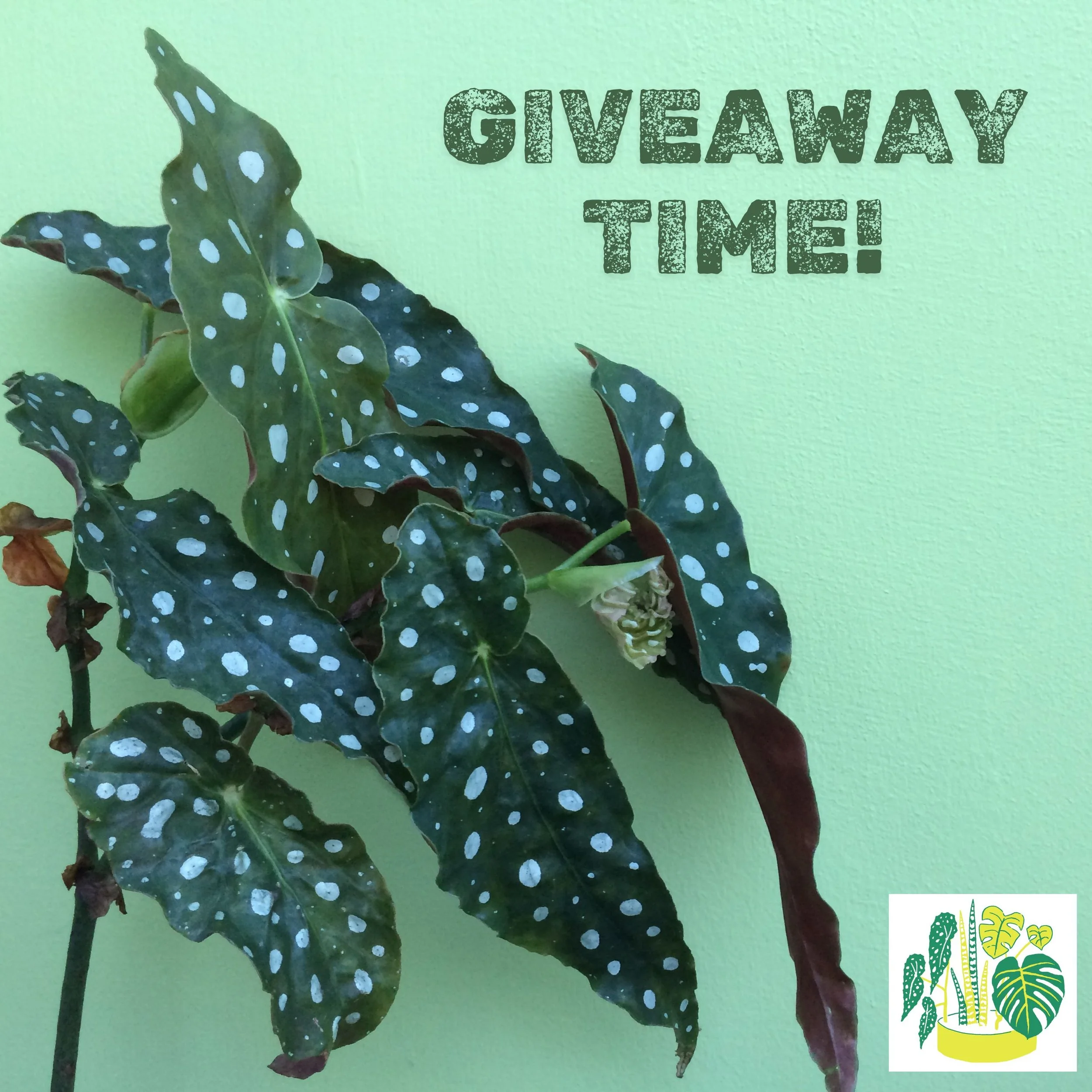
If you really want to get to know your houseplants, this is the one for you!
I am giving away ONE free spot on friend of the show and botanist Dr Scott Zona’s highly anticipated, 6-week online Houseplant Horticulture course (worth $149 USD) in association with @NCstateextension launching September 1st! 🚀
🪴Whether you are a beginner or an experienced plant parent, you'll master everything from botany basics and watering to propagation and advanced care for your favourite aroids, ferns, and succulents. Screenshot the QR code in the third image to access all the course info or visit https://go.ncsu.edu/houseplant
🤩 If you are an #OnTheLedgePodcast Patreon free follower OR paid subscriber at ANY level, you can hop on over to my Patreon for another chance to win a place on the course!
Want to enter my giveaway for Scott Zona's online houseplant course? Patreon members go here: https://www.patreon.com/ontheledge/posts/enter-now-for-to-166655730
And non-Patreon members visit Instagram: https://www.instagram.com/p/DcBe8aviMe6/
Entries close August 21 2026 at 2pm! Full Ts and Cs for the Insta competition are below.
Official Rules & Terms and Conditions: NO PURCHASE OR PAYMENT OF ANY KIND IS NECESSARY TO ENTER OR WIN. A PURCHASE OR PAYMENT WILL NOT INCREASE YOUR CHANCES OF WINNING.
1. This prize draw is open to the general public who possess a valid, public Instagram account. Entrants must be at least 18 years old at the time of entry. Void where prohibited or restricted by local law.
2. The sponsor of this promotion is Scott Zona ("Sponsor").
This prize draw is in no way sponsored, endorsed, administered by, or associated with Instagram or Meta Platforms, Inc. By entering, you completely release Instagram from any and all liability associated with this promotion.
3. There are two ways to enter the prize draw, ensuring an equal opportunity for all participants:
Instagram Entry: Comment the word COURSE on the official giveaway post on Instagram.
Alternative Method of Entry (AMOE): Individuals who do not wish to enter via Instagram may enter by sending an email to ontheledgepodcast@gmail.com with the subject line "Prize Draw Entry" and their full name.
Entry Limit: Limit of one (1) entry per person, regardless of the method of entry. Multiple accounts or automated entries will be disqualified.
4. The draw opens for entries on Friday, August 14, 2026, at 2:00 PM BST.End Date: All entries must be received or active by 2:00 PM BST on Friday, August 21, 2026 (the "Closing Date”).
5. One (1) winner will be selected at random from all eligible entries received across both entry methods. The draw will take place on or about August 22, 2026.The odds of winning depend entirely on the total number of eligible entries received. The winner will be notified via Instagram Direct Message (DM) or email within five (5) days of the draw.
If a winner cannot be contacted or fails to respond within five (5) days of notification, the prize will be forfeited and an alternative winner will be randomly selected.
6. The prize is one (1) place on Scott Zona's 6-week online Houseplant Horticulture course. Details can be found at the NC State Extension Course Page.The approximate retail value (ARV) of the prize is $149 USD.
Restrictions: The prize is non-transferable, and no cash alternatives or substitutions will be offered, except at the Sponsor's sole discretion.
7. Delivery & TaxesTaxes: The winner is solely responsible for any local taxes, customs fees, or duties incurred by receiving the prize.
8. Any personal data provided by entrants (such as name, email, or Instagram handle) will be used solely for the administration of this prize draw and prize fulfilment, in accordance with standard privacy practices.
9. By participating, entrants release the Sponsor and Instagram from any liability, losses, or damages of any kind resulting from acceptance, possession, or use of the prize, or participation in this promotion.
10. These terms and conditions are governed by the laws of the United Kingdom.

CREDITS
This week's show featured Whistle by BenJamin Banger (@benjaminbanger on Insta; website benjaminbanger.com) and The Road We Used to Travel When We Were Kids by Komiku.