Episode 313: Getting our hands dirty with terrariums - goo and begonias under glass with The Begonia Ladies
Transcript
Jane Perrone (00:09) Welcome to On The Ledge podcast. I'm your host, Jane Perrone. And this week we're talking about goo. I just love saying that word. It makes me so happy. Specifically the goo that goes into terrariums to make a wonderful landscape for your plants. And in this podcast, we'll be talking specifically about begonias in terrariums. And I'm joined by two wonderful guests in the form of the Begonia Ladies
that's Ash and Nina and they specialize in begonias for terrariums and also substrates for those plants and environments. So I think you're really going to enjoy this week's show. Just before we get into that, a couple of pieces of housekeeping. Thanks to everyone who enjoyed the terrarium time machine episode last week, had lots of lovely feedback.
I had a message from Sarah the plant rescuer saying more terrarium time machine please so yes I think I might have to take the terrarium time machine for another spin not quite sure where yet so let me know if you've got thoughts on that and just to be clear I referenced German and Bobby in the podcast and asked them to shut the door they are real listeners and I got a message from German saying that how much he enjoyed the show and thanking me for taking
him along on my botanical time travels. So yeah, maybe you'd like to come along next time. What do you think? Also ⁓ on Patreon, lots of new Patreon subscribers this week. We've got Colleen, who's a crazy plant person. Roxanne and Kelly became free members and Anne and Matt became Ledge Ends on my free trial and Doreen became a Superfan ⁓ It's great to have you on board and if you're interested in my Patreon to unlock.
exclusive content and also add free episodes check out patreon.com/ontheledge - right without any further ado let's get into the chat with Ash and Nina the goo is go...
Jane Perrone (02:16) Nina and Ash, welcome to On the Ledge podcast. Thank you very much for joining me. I think we should probably start with some, a little tale of how you got into this wonderful hobby of being obsessed with indoor plants and begonia specifically and goo. How did this all begin? ⁓ Are we talking about ⁓ a lockdown fascination or a lifelong obsession with houseplants?
How did you get here? Is my question today. If you can remember.
Nina (02:46) Neither. It's very much neither for me. So I lived in a flat
for 13 years before we moved and brought our first house three months before lockdown. So just pure coincidence that it happened during lockdown. But I always wanted to have my own garden once we bought a house. So that was the first thing we did. Outdoor gardening is pretty much what I started with. Then succulents. I have cats. So you have to obviously be quite careful about what sort of plants you've got.
It turns out they weren't really that bothered, so I could sort of branch out a little bit more. And like everybody, started with your aroids, so lots of philodendrons seemed to be the thing that I was interested in. So you can see there's still a few hanging around, not many. And then I discovered begonias and growing from seed. And that's pretty much the end of that story. And that's pretty much all I do now. Yeah, and I just love it. No, go on.
Ash (03:32) you
Jane Perrone (03:34) And what about you, Ash? Sorry.
Ash (03:37) It's alright, no, for me a little bit of a different journey. So I moved out of home, I had a peace lily and I had a peace lily, I'm not saying it was the same one, but a peace lily for probably the next decade and that was it. Then I had a pretty life-changing health diagnosis and plants became something that...
gave me a reason to get up and gave me some motivation and some, to be honest, psychological reward as well of nourishing something, seeing it grow. And I started out as lots of us do with aroids and my hoard grew and it got to a point where I couldn't cope anymore. And all the rewards that were coming from it were fizzling away in the face of having to get up and water 300 plants every morning.
I, I hopefully other people can relate to that. I don't think I'm the only one, but from there I started moving into terrariums and I was like, I don't have to water them. This is amazing. I can just enjoy my plants and I can be creative and that's where the goo comes from as well. And we'll probably get more into the details of how I came to that, but really.
It was from a point of wanting to manage my tendency to go, ooh, that's pretty, I need one in my house. In a more effective way.
Jane Perrone (05:12) Yeah.
That's very relatable. think lots of people start with aroids. I don't really know why aroids. If I say this, sounds like such a such an old fart like aroids, why people are so into aroids. But it is it is such a common starting point. But you've obviously found your
true love in a slightly different direction in the form of terrariums and obviously begonias feature heavily in that. What is it that you both love about begonias starting with you Nina?
Nina (05:46) say it's
different for both of us for sure. For me it's texture. I love the hairy ones and the ones with the funny shaped leaves. My favourite type of begonia is Yamor. They have like cloud shaped leaves. They're really kind of puffy and they just have really different shapes about them. I also like any of the ones with sort of different colours as well. ⁓ Yes, it's the leaf shape more than anything for me to be honest. The flowers are pretty too but the stylistic way that they
Jane Perrone (05:49) Okay.
Mmm.
Nina (06:14) And there's such a variety as well to choose from is what draws me to them.
Jane Perrone (06:21) And Ash?
Ash (06:22) So I was gonna say, your Ymors are beautiful though. They are, and fluffy, frilly, gorgeousness.
Nina (06:25) there.
You can't actually see them, they're over there. I might have to go
and grab one in a minute.
Ash (06:32) you do have to punch that off. Name is your most asked, don't I?
Jane Perrone (06:32) Yeah. What is it? Tell me the name. I'm
not catching the name of this Begonia very well begonia very well that you're saying.
Nina (06:37) That's because for most begonias there are no
names. There are so many unidentified species that they either are numbered or they're just called Noids. for most of our collections they don't have a name to be honest.
Jane Perrone (06:43) Okay.
it's a.
Ash (06:50) it's going to be SP and then the location where they're
Jane Perrone (06:50) Yeah.
Ash (06:53) found. For example, there's at least, I can think of 12 distinct SP Kalamantan. It's just a location where they were found originally. So the one we're talking about that Nina loves is Yamor It's from Papau, the island of Papau. And that's just a location where...
Jane Perrone (07:01) Hmm.
Mm-hmm.
Ash (07:14) of that particular type grow, but there's lots of variety within that. If you look at two different S.p. Yamor, they're very likely not the same, ⁓ but they're unclassified. They're not, we can't say they're two distinct species. They've not been recorded yet. Yeah.
Jane Perrone (07:24) Mmm.
and NOID presumably just stands for no ID.
Nina (07:34) Pretty much, yep. Took me a while to learn that actually when I first
got into plants. I was like, what is everybody on about? was like, oh, yeah, no, that makes sense.
Jane Perrone (07:43) It's a mystery in itself.
Ash (07:43) I always call them... yeah... no ideas.
Nina (07:45) Yeah.
Jane Perrone (07:48) Yeah well that's the
thing isn't it there's lots of plants out there we still we're still it is amazing though that we're growing all these plants that are essentially still very very new to western botanists that's a really amazing scenario that we have them in our homes.
Nina (08:02) Yes. ⁓
It is, but it's also a little, you have
to be so careful about how you get hold of them as well. unfortunately they do get just kind of collected in the wild and shipped off to various places. you do have to, we try to be very careful about where we get our seeds from and learn about the people that we're buying things from before we do it. Cause we don't want to encourage destroying the habitat just so I can have a pretty plant in my house.
Jane Perrone (08:14) Right.
Absolutely.
Yeah, but presumably also that's a sort of a reason to extend, you know, your head what sources of seed are good. I mean, then you're able to get these plants out to more people and that way you can spread them without having to take any more from habitat, which is a good thing.
Nina (08:39) Yes. Yeah.
Yes, although I'm sure I shall tell you, getting
Ash (08:50) That's one.
Nina (08:51) plants out of us is difficult.
Jane Perrone (08:54) Why is that? Why is it difficult? Tell me because you just want to keep them all
Nina (08:58) But yeah, you
have to be trusted to look after them basically.
Ash (09:01) Yeah.
Jane Perrone (09:04) Do I, is it like adopting a dog where you have to do it? I have to do a full sort of, you know, paperwork.
Ash (09:05) with
Nina (09:08) Pretty much.
Ash (09:10) In an ideal
world, I'd come around, check your house, make sure your terrarium is set up nicely, get references from at least three people, including one of your junior school teachers. You know, just to be sure. It's not quite that bad, but...
Jane Perrone (09:20) Okay. Okay, I see. Well, that's- I understand that!
Nina (09:25) They are
quite finicky as well. They're not easy plants. You don't just stick them in a terrarium and they're going to be great. A lot of them have different soil needs, which is hence why Ash has been experimenting and creating a range of different substrates for the plants that we grow. And they have different light needs as well. They're not all kind of put them in the same terrarium and they'll thrive. They absolutely won't. And that's why it's so important to understand a bit more about where they come from, their lighting, their conditions, and the types of
Jane Perrone (09:32) Mm.
Nina (09:53) know, substrates that they grow in naturally. A lot of them like just leaf litter, some of them like more calcium, limestone, rocks and that's what they grow on. So playing and experimenting is really the only way to work out how to make them happy and even then sometimes we still fail. So and that's I think that's probably what we both enjoy as isn't it's challenge of it as well.
Jane Perrone (09:57) Mm-hmm.
Ash (10:15) It is, to be honest, that's what I was going to say. It's the appeal of begonias. Partly it's the beauty and the range because I genuinely don't think that there is a niche in the plant world that you can't find a begonia to fill. It doesn't matter what you want. If you want tiny, beautiful leaves, if you want big flashy ones, if you want vining or trailing, if you want tuberous, there is a begonia that fits whatever you want. And I think that's incredible.
Jane Perrone (10:15) Yeah.
Ash (10:44) just this one family everywhere doing everything. But the challenge of working out, a lot of the species that we grow are being grown for the first time in the UK or in Europe even. We're the only people growing them potentially in domestication. and it is difficult to get information.
about where was it growing originally, is it growing in a karst region, is it growing in the understory, is it high up on cliffs, and that's the kind of information that's going to inform how we plant it. So there is, as Nina says, we've killed our own share of our own plants, working out what it is that they need from us in order to thrive in this indoor ecosystem.
Nina (11:26) Absolutely. Yeah.
Jane Perrone (11:30) Hmm.
So we've established that we all love begonias, which is great. What we want to get into in this main interview, we're to go bit heavier into the begonias in the Extra Leaf podcast for patrons, subscribers, but in this main interview, we're going to be talking about terrarium goo. And I just love saying that. It's just such a satisfying phrase. Yeah. I mean, it, it,
Nina (11:53) I love playing with it, honestly, it's so much fun.
Jane Perrone (11:59) It's taking me back to the play-doh days of my children's upbringing and indeed my own play-doh days because this is a fun substance. But for those who are uninitiated into terrarium goo, what is it and why do we love it so much?
Ash (12:15) you
Nina (12:18) Ash, over to you. She's just opened some up for you.
Ash (12:19) I don't know if
I have, have, because I should have sent it to you before you can see it's all squishy. It does actually have the texture sort of of Play-Doh so I'm just scooping some and if you can see me on video you can see that I'm giving it a good squidge. ⁓ It is squishy and gooey, it really is, it's also super sticky.
Jane Perrone (12:38) It is very squidgy.
Nina (12:41) And you also don't realize how much she hates doing that right now. She's a gloves girl. She absolutely hates getting her hands dirty.
⁓
Ash (12:47) Alright, don't dump me in.
I am the Duchess of Dirt, likes wearing gloves. ⁓ I do. That's why I've got tea towel handy to clean my hand off. It's ⁓ basically a clay based substrate that I blend that we use for vertical planting. In a terrarium, one of the major issues that you've got is that you've got a glass jar or a glass tank.
Nina (12:53) She does.
Jane Perrone (12:55) Fair enough,
Nina (12:58) You
Ash (13:14) and you've got their sides and there are options. You can do expanding foam and coco coir. That's kind of a classic. You can do cork panels. You can do coco coir panels that you're gluing on. And for me, the problem with those is that none of them are actually nutritive to the plants. So you've still got to have your stuff starting in the substrate and then you can pin it onto those backgrounds. It might even latch onto them and pull them, pull itself up.
Nina (13:31) a little on that.
Ash (13:44) but they don't nourish the plant. They don't have any kind of benefit for it. I don't like using stuff like expanding foam, which means I was stuck with flat backgrounds. They're not exciting. They don't interest me. When I'm building a terrarium, what I really want to do is build a little window into the jungle. I don't want expanding foam in my jungle. Thank you. So this was my answer to it.
it's a sticky clay, I can stick it up the side of things and it's nutritious, it's a proper functional substrate that happens to be sticky, which means that I can just plant upwards. My plants, I can stick a cutting into it, it will root into the goo directly. Climbing plants will lock onto it, pull themselves over the surfaces it covers, they can derive fluid, fluid? What am talking about?
they can get hydrated from it, they can get their water. But it's also really nutrient rich, it has vermicast in it and during nutrition they grow faster, they grow more healthily and to be honest it looks cool. Sorry, it does.
Nina (14:55) and it's fun to play with.
Jane Perrone (14:57) Yeah, I definitely
And did you did I mean, obviously I'm not expecting you to give me your your secret recipe, but those are the main components in some form of clay and a worm cast type element. Is that right?
Ash (14:58) So, yeah.
Yeah, absolutely. I mean There are loads of recipes out there. I'm not the only person that makes a vertical planting substrate There are some ones that I have and I'm be honest here really weird ingredients When I was researching and thinking how do I solve this problem? I've got one of the recipes I read online I didn't try this one included ground-up cat litter ⁓ There are some yeah
Jane Perrone (15:26) Okay.
Okay.
Ash (15:38) it's because it's an absorbent clay material. ⁓ So yeah. Yeah, I mean they're...
Jane Perrone (15:41) Yeah, it's molar clay, isn't it? If you use the right one. Just don't want to get that wrong. You could be putting anything in
Nina (15:42) Yeah.
The text is not great though. Yeah.
Jane Perrone (15:50) there.
Ash (15:52) ⁓ I've been through dozens of variations trying to dial it in and get the one that I thought caught the right balance that sticks to everything. I test this by picking up big globby lumps of it when I'm making a new batch and throwing it at stuff to make sure it's sticky. ⁓ It sticks to basically everything, including hands. It is skin safe. It's non-toxic.
Jane Perrone (16:07) Hmm.
Yeah.
Nina (16:20) It's easy to wash off as
well.
Ash (16:21) as I really wish.
All right. It is easy to wash off.
Jane Perrone (16:25) And presumably if your terrarium
design doesn't quite go according to plan and you look at it and think, oh, I'm not so happy with this, presumably you can then just break it down, take it apart and redo without much worry because it is just a squidgy substance that you can kind of endlessly mould in the way that you want to.
Nina (16:49) Pretty much, yep.
Ash (16:49) Exactly so.
The one thing I would say about it is that it needs to be kept in humidity. It's not a product that's going to work if you want it out in the open air, if you want a lot of airflow. The most airflow exposure that I have used it in, I have an experimental orchidarium that I've been working on and twiddling with since about last November.
Jane Perrone (17:04) Mm-hmm.
Ash (17:16) where I have a wall of goo that's open to the air on both sides and this particular orchidarium has got forced air from a fan. ⁓ It's quite an open flowing affair. And there I have a drip wall set up so that I can run water over the goo. So even in that situation, I can keep it hydrated, but I have to have the drip wall on a timer.
it would dry out if I just left it and at that point it would just crumble off. It's not suitable for use in the ambient sort of humidity. But yeah, as long as you keep it, yeah, keep it humid and it's pretty much endlessly playable with. I know Nina quite looks forward to an excuse to take hers apart and have another go.
Jane Perrone (17:55) Hmm. Right, I see.
Nina (18:06) Well, we
Jane Perrone (18:07) you
Nina (18:07) actually sent some to Spain twice as part of a giveaway and unfortunately never quite made it. So it went missing for about four months and it came back and I just added a bit of water to it and used it and built one of my terrariums with it. It was perfectly fine. So it's really good at rehydrating itself. Yeah, absolutely. In the pot, you just add a bit of water and it's perfectly fine to use again.
Jane Perrone (18:21) it was fine so it can dry out I see ⁓
I mean, can it go wrong in terms of, I mean, is there a point where that you get to the point where you've got too thick a layer or too thin a layer?
Nina (18:37) Too thin, yeah, I've done too thin a few times.
⁓ I speak particularly with, can't see them at the minute, but there's some Akerbars [from IKEA] down here. You probably just about see them. And I've been playing around with the airflow on those because I keep isopods as well and I like to keep them in my planted terrarium. So the Begonias are always the most important thing, but to try and give them both what they needed, I added a mesh layer to the top of the Akerbar. And the plants were okay in it, but the goo was not coping with the extra.
Ash (18:41) Yeah.
Jane Perrone (18:52) Hmm.
Nina (19:06) ⁓ airflow. I've since kind of modified it. So I've now got half and half. So half the plastic cover, half the mesh, and that's working a lot better. So and the pods should be all right with that as well. I've yet to test it. But yes, you do have to kind of tweak it if you want something with a bit more airflow. If you're growing lots of mini orchids, for example, they need a bit more. And it can be done. But some of the like I'm growing a dressleri, Specklinia at the moment, which is a tiny, tiny mini orchid. don't know an orchid is about this big. It's so small.
Ash (19:06) Mm.
Nina (19:34) But I put it in goo as an experiment to see if it liked it. And it's working. It's growing. It's growing twice as much as the one I planted in moss. So it's not just the begonias that are enjoying it. We use it for Marcgravia as well. We started experimenting just putting them straight onto a firm block with goo. They love it. So yeah, there's a wide variety of terrarium plants that you can use it with.
Jane Perrone (19:34) Mm-hmm.
Mmm.
Yeah, yeah.
And ⁓ if you've got sausage fingers like me and you're trying to design something. So I mean, I'm just worried that I don't have very good design skills, but I don't really need them, I guess.
Nina (19:59) It's the best way to do it. Scoop and slap, honestly. That's actually better. You don't need them. literally, no, you just literally
scoop a handful out and shove it where you want it. And the thicker and the more in your hand, the better, because then you can push it and just squidge it into the shape that you want. And it's the easiest way to do it personally. I've used, you know, pokey things and palette things to shape it if it's a smaller jar, but.
I do find it's easier to play with and maneuvering it into how you want it if you've got a larger lump of it in the first place to just kind of squidge it about. Yeah.
Ash (20:35) I
think some of the more impressive things that I've seen have been people making things like ledges out of it. Someone made an arch, which is so cool. It's not something that would have occurred to me to do. So seeing someone else take my thing and do other stuff with it is always very exciting. Recently, that's I was just gonna say. Yeah, yeah, so.
Jane Perrone (20:35) Yeah.
Mm.
Nina (20:53) Talk about the wallows. Just thinking about the wallows. ⁓ there you go.
Ash (21:02) What I occasionally do for friends who've got exotic pets is custom substrates. So we'll talk about what the animals' requirements are, their natural habitat, those kind of things. These are for planted vivariums. So a situation where you've got your exotic plants, you've matched the environment that your pets come from.
⁓ and we did one for some dart frogs which was very exciting, particularly because our friend with the dart frogs
They come from the Amazon where redart clay is commonly used. It's a hematite and iron heavy clay, which isn't what I usually use. But we adapted Yagu to use hematite heavy clays, which are lovely red colour. And he used them to sculpt wallows where the frogs can go and have little clay baths. was really sweet. But it's amazing to see when you...
Jane Perrone (21:40) Mm-hmm.
That is really sweet.
Ash (21:57) match the environment. The animals and the plants in that vivarium are really thriving now. They've created a tiny ecosystem that replicates what they would have in the wild, which is like we said, that's kind of our goal when we're building a terrarium. That's what we're thinking about. How do we make this like the plant's natural environment?
Jane Perrone (22:14) Yeah.
And it's interesting that you're not only just using it as a sort sculptural backdrop, but obviously it's a medium in which they can root and grow over and grow into. Does that mean that at some point when you're trying to ⁓ maybe dismantle something and redo it, that you've got to wash off lots of roots? mean, can you just wash the roots off if they're covered in the goo? How does that work if you're to extricate plants from displays that you've made?
Nina (22:46) I you could, I don't think I've actually done that yet to be honest, so couldn't tell you. But I'd probably just pull it out. I mean I tend really, probably every sort of three or four months I end up redoing my acobars because something dies or something doesn't quite work or something's too big. So I only did mine again I think over the Christmas holidays. So they're all kind of thriving at the minute. But I have got a couple as I say where the goo was drying out. So I literally just snapped it off even with the plant inside it. And then I've just put the plant in a plastic tub and just added some water.
Jane Perrone (22:51) You
Nina (23:16) actually haven't actually put anything else in there. I've just left the goo in a bit of water and the plants are still growing. They're up in my other plant room in the attic. But that's probably the closest I've come to sort of dismantling something with the goo at the minute. But I don't think it'd be too challenging. don't know about you Ash.
Ash (23:32) Okay so I have, but I don't rinse the roots off. I don't think it's necessary, I just take them, take the whole plant, roots, goo, everything, because I'm going to be sticking it back into another goo situation. ⁓ As long as the goo is hydrated you can just scoop or use a silicone spatula if you're me and don't like getting mud under your fingernails.
Yeah, does root into, plants root into it. So you certainly could wash the roots off. I'm just not sure why you'd want to. In the same way that when you repot one of your houseplants, you're probably not gonna rinse all the substrate off them first. If you've got begonias, please don't do that. It's very bad for them. Yeah. No.
Jane Perrone (24:11) Yeah.
Nina (24:21) They really hate it. Yeah.
Jane Perrone (24:23) They don't like it. I will I guess and
also with begonias the great thing is is that we know that you know any little fragment of a leaf or a stem a piece of you know a leafy stem can quite easily be made into another plant which I guess maybe is one of the problems with begonias in that you eat you know I've had plants that have got too big and I've just taken them apart and then I've ended up with
Ash (24:34) Mm.
Jane Perrone (24:50) 10 plants. Like I've made the problem worse, not better. Like I've got, this is going too big for my space, but now I've got 10 of this begonia, which I guess, you know, is a nice problem to have, but they are just so ready to make new plants, aren't they? On the whole, I don't think I've met a begonia that doesn't want to ⁓ turn into more plants in some way or other. So yeah, they're very generous, I find. ⁓ And obviously, ⁓
Ash (24:52) You
Jane Perrone (25:16) that can then be a source of plants for more terrariums, which is how we all end up with too many plants, I guess. But let's talk about about begonias in terrariums. Moving on from the goo, which, as I say, is a wonderfully literally fertile topic. say that you can obviously you can make your own using
Nina (25:19) Yes.
Jane Perrone (25:36) As you say, there's lots of recipes around, you can also buy it from you guys. So if people don't want the hassle of buying individual ⁓ materials and mixing it together, which I have done in the past. And I can say is really tedious and messy and makes up a lot of space. So I could highly recommend buying it from you two instead. So I will put the details in the show notes for for getting hold of you and your goo.
Nina (25:41) Absolutely.
Ash (25:57) you
Jane Perrone (26:04) ⁓ because I'm sure some listeners will want to invest in some. But let's talk about begonias in terrariums. Obviously, we've got an audience who's a range of levels of expertise in this, but ⁓ obviously, you're growing lots of these lovely rare begonias, which we don't have been necessarily described to science. But when we're talking about ones that maybe are a bit more widely available and a bit more predictable, where should people start with getting a
beautiful gooey terrarium with some nice begonias. What are your recommendations?
Nina (26:37) I I'd always start with some Lichenora because it's just such a versatile plant so I don't know if you've seen one I can find you one I've got it in literally everything I grow it's in so let me see there's some in there I mean it's not the biggest one but this one here Lichenora yeah so it's a tiny it stays quite small like this but it crawls and grows it'll do vertical it'll do you know it'll crawl across the bottom as well
Jane Perrone (26:48) Okay.
And to say the name for me again, Lichenora did you say?
Mm-hmm.
Nina (27:02) but it's fairly indestructible, I find. And because it's such a good grower as well, you're always going to have lots of it to add to your terrariums. It just looks great in every situation. So that one's pretty good. If you want something that's kind of tall and upright. I see if I could find something simple. Actually, you're quite easy. This is actually quite a rare one. So I'm talking to the back of my head now, this is a Sumatra.
Jane Perrone (27:06) Mm-hmm.
That's alright.
Nina (27:29) So it's got beautiful fairy leaves and veining, but although she's quite rare and you can't find it too often, she's coming a bit more available and she's quite easy to look after and she flowers quite readily as well. A lot of my plants and Ash does the same will self pollinate. So with the Begonias you always say you want an heir and a spare. So you want at least three basically of each of your plants, particularly if they are a favourite so you can keep them alive. So those ones are quite easy. A lot of the hybrids are usually a lot
Jane Perrone (27:30) Mm-hmm.
Mm-hmm.
Nina (27:59) easier to look after. you think of like darthvaderiana which you've probably heard of, has recently been remarketed as green spots as a hybrid, ⁓ tissue cultured and sent around to various garden centers. But it's not actually a true darth, it's a hybrid. But hybrids are a lot more versatile and a lot easier to look after. They tend to have similar growing habits to the parent plant, but also when you grow begonias, when you hybridize them yourself.
Jane Perrone (28:05) Mm-hmm.
Nina (28:27) You get such a variety. So this one I have as a dark purple colour, a lighter green with white spots, or this one you can see is quite pink. So you get a real good range. So, I mean, you're not going to find too many that you know the name of, guess, for terrarium begonias, Ash, unless you can think of any. I mean, there's burkillii but they're quite big. And you want something quite small and slow growing. Yes, I've got one over there. Absolutely. Yeah.
Ash (28:48) Bacchyl is too big for a cerarean, find. That one lives in a prop box for me.
So something with the lichenora, the first one that Nina was talking about, which you didn't mention, but it's my favourite part of it, is that in lower lights, a lot of our plants look their best in lower lights and it takes on this wonderful iridescent sparkly blue colour. Like what could be more magical than sparkly blue plants with glittery bits in the leaves?
Jane Perrone (29:14) Mm.
Ash (29:17) ⁓ I'm sorry, half of your listeners are just going, please stop talking about the sparkly bits, but...
Jane Perrone (29:22) No, I'm sure my listeners will
totally be in agreement with you on that. That is, who doesn't want sparkly blue plants, indeed?
Ash (29:27) It's...
Exactly, who doesn't?
But I think to add on to what Nina's saying.
Terrarium begonias are quite difficult to source. There are few growers in the UK, they're sensitive, they're not the kind of plants typically that can easily be imported in bulk and sold on the open market, which is why a lot of the plants we grow aren't sort of present here. It's not that they're not beautiful in a lot of cases, it's not even that they're super, super, super hard to take care of, it's that they're too sensitive to be imported or sold in very high volume, which is
Jane Perrone (29:48) Mm-hmm.
Ash (30:05) where most of our plants are coming from, as Nina said as well, sort of the tissue culture market. They're not suitable for that very large volume sale.
Jane Perrone (30:09) Mm.
Ash (30:19) You are when you're looking for an entry level species, stuff like Lictinora is relatively easy to access. I would say probably things like Biganolita, which is a small vining plant that comes from South America. I think it's Brazilian originally. It's another one that's quite unassuming, nice sort of background detail, but catch it in the right light. And again, you get that iridescence. She's got some lovely heart shaped leaves as well.
If you're for something that you want a centrepiece for your terrarium, ⁓ in terms of something that's easy to look after, would go, as Nina says, for a hybrid if you can find one. The most widely available one is that Darth Greedenspots. It does appear to be a lot easier to look after than the true Darth Vaderiana, which I'm just going to admit now I've melted my... ⁓
Nina (31:14) I have one.
Ash (31:19) They're alive. I have melted at least two. ⁓
Nina (31:22) It is live, this one.
Jane Perrone (31:24) What is it
with the melting Begonias? Tell me, this seems to be an issue that people come across with.
Nina (31:27) They melt or they ash. they either they like
to be in high humidity, but sometimes they don't want to be a high humidity. So they melt their leaves and they turn to goo. Or they decide they want a bit of airflow and you give it to them and then decide to ash their leaves. So this is where they basically they crumble. They don't go all soggy. And darthvaderiana is is I mean, I know several people who are much more experienced growing begonias have been doing a lot longer for me and there's all dead too. If you let it flower, it will die.
Jane Perrone (31:43) Hmm.
Nina (31:55) If you let it grow, it will die. These are all props from my original plant and I'm basically not touching it. I have another one, which I also haven't touched, but she's ashing. So you'll see that the leaves are crumbly. You can see that very well, but they're kind of like crumbly edges. Yes, this is where you have an heir and a spare. Absolutely.
Jane Perrone (32:03) Yeah.
I guess this is why you need to have several plants just to make sure
Ash (32:16) Yeah.
They're not all this bad. We're putting people off, Nina ⁓
Jane Perrone (32:19) yeah yeah absolutely
Nina (32:22) I know, but this is the intention, is it not?
Jane Perrone (32:23) ⁓ I was going to say this is going back to your
point about your very careful vetting process before you allow people to buy your plants.
Nina (32:29) Yes. Yeah. And also we generally only have one ourselves,
Ash (32:31) I think.
Nina (32:35) right? So we actually haven't got enough to share at this point.
Jane Perrone (32:37) Right, right.
Ash (32:40) It does depend.
Jane Perrone (32:41) And do you, are you going to markets? Are you going to plant fairs and things to sell as well as selling online now?
Nina (32:44) So we did a plant fair in
Bristol, didn't we? What was that? Three weeks ago now, maybe four weeks ago. It was the first one we've ever done. And we did really, really well. And we were quite surprised how interested he was, to be honest. We've got another one on the 5th of July. We're doing the Birmingham Rare Plant Fair. And that's what we've got in the diary at the moment. We tried a couple of just kind of local.
Ash (32:51) Yeah, sounds about right.
Nina (33:10) fairs last year just to kind of you know put our hands in and see what we needed to learn about setting stalls up and all that kind of stuff. It was kind of interesting but the kind of market was the wrong one so it more outdoor plants and people were interested in making terrariums and we did well on that side didn't we Ash in terms of people learning what you need and the kind of substrates etc but the kind of the entry-level plants for most people is your Fittonias and you know the things that you generally see in in terrariums that you can buy in a supermarket.
Ash (33:27) Mm.
Jane Perrone (33:31) Hmm.
Nina (33:38) Which is fine, right? Everybody has to learn and kind of play with something somewhere, but we're kind of more at the other end of that scale because of the types of plants that we grow.
Jane Perrone (33:47) If
I never see another Fittonia in a terrarium, I won't be too soon. Is that okay to say?
Ash (33:49) Yeah.
Nina (33:50) Honestly, I absolutely hate them. absolutely hate them. No,
it's absolutely fine. I hate Fittonia with a passion. Tradescantia and Fittonia do not come anywhere near me.
Jane Perrone (33:56) I I used to quite like them, but I feel like they're overexposed now, right? Everyone's...
Well, yeah, Tradescantia I have my own issues with, but Fittonias I'm just kind of bored of them Interariums. I just think they're the number one plant people choose, and I'm not that desperately excited by their leaves. ⁓ you know, as you say, the reason why they're so popular is they're...
Nina (34:08) haha
Yeah. Yeah.
No. You got to start somewhere.
Jane Perrone (34:23) They're widely available. Everyone can get hold of one. And that's where people start, is great. I mustn't be too mean to Fittonias But you mentioned their substrates. Let's just talk a little bit about that. Because obviously, I presume you can kind of get very deep into the grass here. And it can get very, very complicated. what's the main tenet when you're thinking of maybe a begonia-based terrarium?
Nina (34:29) Yes.
Ash is the technical lady.
Ash (34:44) You
Jane Perrone (34:50) and you're not going for anything too out there, where do you start with what you're how to make up your substrate?
Ash (34:57) So for me, it depends. Am I just doing begonias or am I doing begonias and other plants? So here's one I made earlier. ⁓ So this is one of our substrates. This one is our begonia substrate. This is the one I use if I know the begonia is a bit plussier. And that is based on pumice, acadama, biochar.
Jane Perrone (35:11) Yes, there you go.
Ash (35:27) It's got my beloved Vermicast worm castings in there. Can't go wrong with those. It uses coco coir. We don't use peat for anything. That's really important to me. I care about the natural environment. So I want to make sure that I'm respecting it with what we make. But this one, what I'm thinking about if I'm using that is consistent moisture.
But I'm also thinking about the fact that my begonias are really greedy little girlies. They need, I can see that smile and nod there. ⁓ Yeah, they're hungry plants and we're striking that balance between feeding them enough to get them growing and avoiding root burn, which is why Akadama is such an important part. Yeah, also that, yeah. ⁓
Nina (36:12) And maintenance as well.
Ash (36:18) It makes me sound bad again. It's not all calculated around how can I avoid watering everything and or feeding. Akadama is really clever because it's got this capacity to store nutrients within the clay. Akadama is a Japanese bonsai substrate. It's clay based again. Not everything I make has clay in it, but a lot of it does. It catches the nutrition when you fertilize with water. ⁓
Nina (36:23) I was referring to myself, not yourself.
Ash (36:48) It's absorbing those nutrients and slowly releasing them through this process of osmosis, diffusion, osmosis is water. It's releasing them slowly to maintain a healthy level in the substrate and prevent root burn, which obviously we're always going to be trying to avoid. So we've got that nutrient aspect to it. At the same time, I'm thinking about consistent moisture. In a terrarium situation, you've got
qualities relating to wicking. Wicking is how the substrate absorbs the water from the drainage layer and from the condensation on the walls. If you're not careful, if you've got a badly designed substrate, you're going to end up with puddles. No one wants puddles. No one wants a soggy substrate. What we want is a medium that is going to draw the water evenly across it.
and that is going to help us to avoid wet roots. Begonias want consistent moisture, not too much, plenty of oxygen. They're not fussy or anything, you know, just everything exactly so. And that's where I'd start with something that's more demanding. If I've got like a less demanding substrate, sorry, less demanding plant, then I'm going to start with this one, which is my terrarium substrate.
This one also uses Akadama for the same reason, but it's... I want to say it's a more complicated mix. I'm not sure that that's necessarily true. This one is based more on a true sort forest floor situation. So there are things like leaf litter in there and orchid bark. They're giving textural variation.
It's got sphagnum moss in it which slightly tweaks the pH balance to more reflect our forest floor situation. Again, looking for that even wicking quality, but a little bit more complexity. They're both bioactive, so they contain fungi. A lot of the time when you buy substrates from us, you do get a free gift in the form of springtails. Because we've got those bioactive substrates, they come
sort of pre-prepared to form a sort of virtuous system in your terrarium where you've got microfauna and microflora supporting your main plants that you've intentionally added. Sorry, I've probably talked enough now.
Jane Perrone (39:26) Yeah. No, that's great.
mean, that's all really useful information to know. And as you say, love a spring tail. Nothing wrong with that. Having a a great impact on a positive impact on terrariums. Well, that's really, all really useful to know. I just maybe should finish by asking you to name your current. I know it's current and maybe it changes on a day by day basis, but what's your current absolute fave begonia that you are?
totally in love with right now, starting with Nina. Okay, Ash is going to go and get hers. Nina is going to go and get hers, sorry. Ash, what's yours?
Nina (39:55) You ask first, I'll go and get mine. I'll go and get mine.
Ash (40:04) So it does vary on a day-to-day basis. But typically speaking, I'm a pink girl. It drives Nina mad. She cannot stand it. I keep sneaking into her house and leaving pink begonias around. ⁓ But I think probably, I do steal my own, or steal from you, but you get pink ones in return and I feel like that's a fair exchange, you know?
Nina (40:20) She goes off with a few as well.
Jane Perrone (40:24) you
Ash (40:33) I absolutely adore Begonia roseopunctata. Just, she has everything. Pink spots, this elegant, upright habit. Sort of stunning. Begonia's obviously famous for their angel wing shapes and Punctata doesn't have that. She's got a more sort of curvy, undulating shape to the leaf. And I just adore her. My other favorite one is Begonia SP Lampung.
It's an undescribed species, but it's colloquially known as 'Crazy Pink'. And I just think they're incredibly fun. These really vibrant colors and it's sort of elegant fringed shape. They grow forwards and the leaves overlap one another in a really beautiful way. You still organize and you're your more.
Nina (41:23) Sorry, I'm
Jane Perrone (41:24) Hmm that sounds lovely.
Nina (41:26) picking all yours up for you. So there's your
Roseopunctata The lower leaf is on its way out, which is why it's looking a little bleh. And these are your crazy pinks. Well, that's the silver version, which is a morph. And that's the normal pink one. Never a pink. I did quite like the silver morph, I'll give you that. Obviously I like Roseo. I mean, yours came from there, so.
Jane Perrone (41:30) yeah, look at that. Okay, nice.
Ash (41:35) Mine's in a big terrarium downstairs.
Jane Perrone (41:47) you
Nina (41:51) And as I mentioned earlier, I like the fluffy cloud. Begonia's right. So this is a Yamor And she is absolutely beautiful. So she's actually planted on a piece of wood. She probably doesn't need the Velcro anymore, but there's a view all the way up the inside of here so that she can grow more upright. Because she's got such big flouncy, probably flouncy leaves, it gives her a bit more room. So she's in quite a tall cloche by herself. I say by herself. She's got some litch, obviously. And this is a...
Jane Perrone (41:58) wow. Mmm.
Mm-hmm.
Hmm.
Nina (42:20) SP Japan, remind me. Thank you. So yeah, she is my favourite at the moment. And I've got a few more similar ones growing, although the trouble, and this is the other challenge with getting seeds for these sorts of species is they're generally quite old. So the germination rate is quite poor. So you'll only get kind of two or three and you need to nurse them through to maturity. So.
Ash (42:22) Piper SP Japan.
Jane Perrone (42:29) Beautiful.
Mmm.
Nina (42:47) Nobody else has one of these and I don't actually have a spare at the minute. So if she dies, you won't ever see me again because I will be miserable. ⁓
Jane Perrone (42:55) Well, hopefully I can beg some pictures of those plants for the show notes so ⁓ people can see them if they've missed the video. those look incredible. I mean, can totally imagine that you're going from one plant to another on a daily basis with all those wonderful plants around you. It's been fascinating. Yeah. Yeah, absolutely. Absolutely. It's been lovely to chat to you both. Thank you so much.
Nina (42:57) Absolutely, of course.
you you're not that's why you grow them in ceramiums it's so much easier
Like place.
Jane Perrone (43:21) Thank you today. yeah, do go and check out your ⁓ Nina and Ash's accounts because they're absolutely a box of delights of interesting begonia things. ⁓ And ⁓ thank you for your goo tips. And I hope everyone's going to go away and get their hands very gooey making incredible terrariums with terrarium goo. So thank you so much, both of you.
Nina (43:43) You're welcome. Thank
you for asking us along.
I'm joined by The Begonia Ladies aka Ash and Nina to talk terrarium goo and begonias under glass.
More on my guests
Nina can be found on Instagram as @begonia_lady and Ash is at @begoni.ash. Visit The Begonia Ladies website to check out their terrarium goo and other products.
Want more on this topic? Patreon subscribers at the Ledge End and Superfan level can watch An Extra Leaf 130 right now, where I talk to Nina and Ash about even more Begonia-related matters! Check it out now.
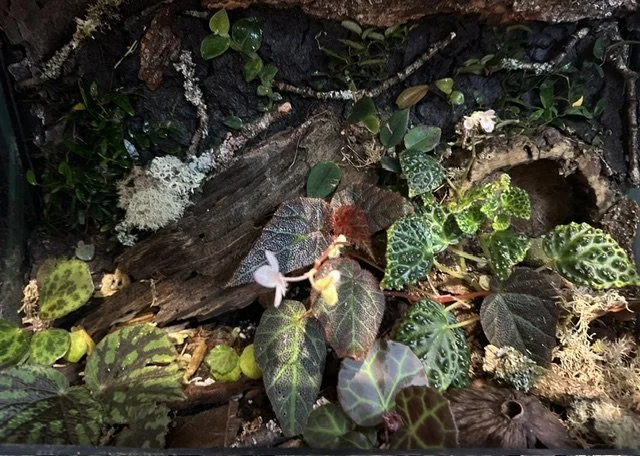
Begonias that thrive in humid environments do well in terrariums. Photograph: Nina Henderson-Woodcraft
OTL housekeeping
Want to buy a copy of my books Legends of the Leaf and The Atlas of Deadly Plants? All the details are here. Don’t delay if you’d like a copy of Legends of the Leaf, the hardback edition - I only have a very few copies left and there won’t be any more, ever!
Want more? Join my Patreon! You can join for free or choose one of my paid tiers. There’s an article for all members - including free ones - about repotting houseplants and what substrates to use to read right now!
Want to get ahead on the OTL Sowalong? Check out these episodes.
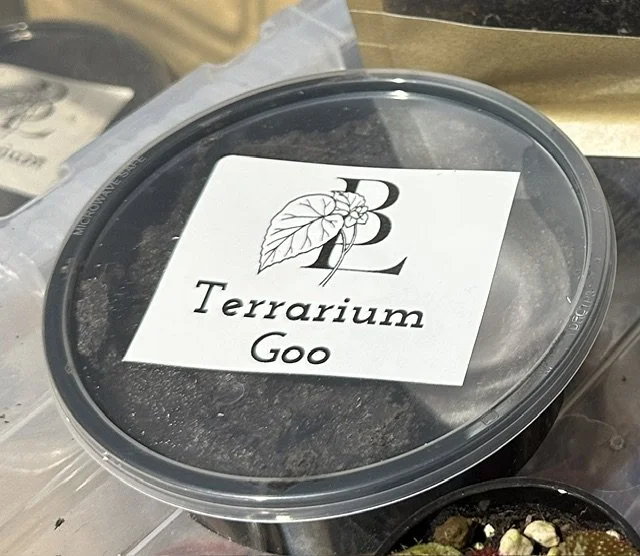
The Begonia Ladies’ Terrarium Goo product makes sculpting substrates for terrariums easy. Photograph: Nina Woodcraft-Henderson
Chapters
00:00 Journey into Indoor Gardening
03:37 The Allure of Begonias
06:37 Understanding Begonia Varieties
09:32 Conservation and Ethical Sourcing
12:41 The Magic of Terrarium Goo
15:37 Creating with Terrarium Goo
18:37 Experimentation and Plant Care
19:34 Creative Approaches to Terrarium Design
20:35 Custom Substrates for Exotic Pets
22:14 Building Thriving Ecosystems in Terrariums
25:16 The Generosity of Begonias
26:04 Choosing the Right Begonias for Terrariums
26:37 Exploring Versatile Begonia Varieties
28:27 Challenges in Sourcing Terrarium Begonias
30:19 Understanding Begonia Care and Maintenance
33:38 Substrate Essentials for Begonia Terrariums
39:55 Favorite Begonias and Personal Preferences
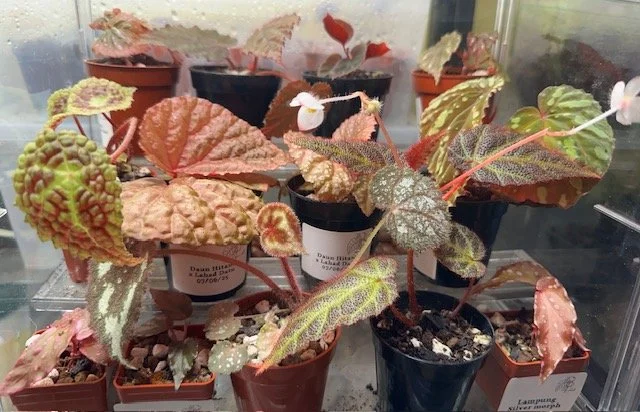
Nina and Ash love growing Begonias from seed and propagating them too. Photograph: Nina Woodcraft-Henderson
CREDITS
This week's show featured Whistle by BenJamin Banger (@benjaminbanger on Insta; website benjaminbanger.com) and The Road We Used to Travel When We Were Kids by Komiku.