Episode 331: My golden rules for defeating fungus gnats
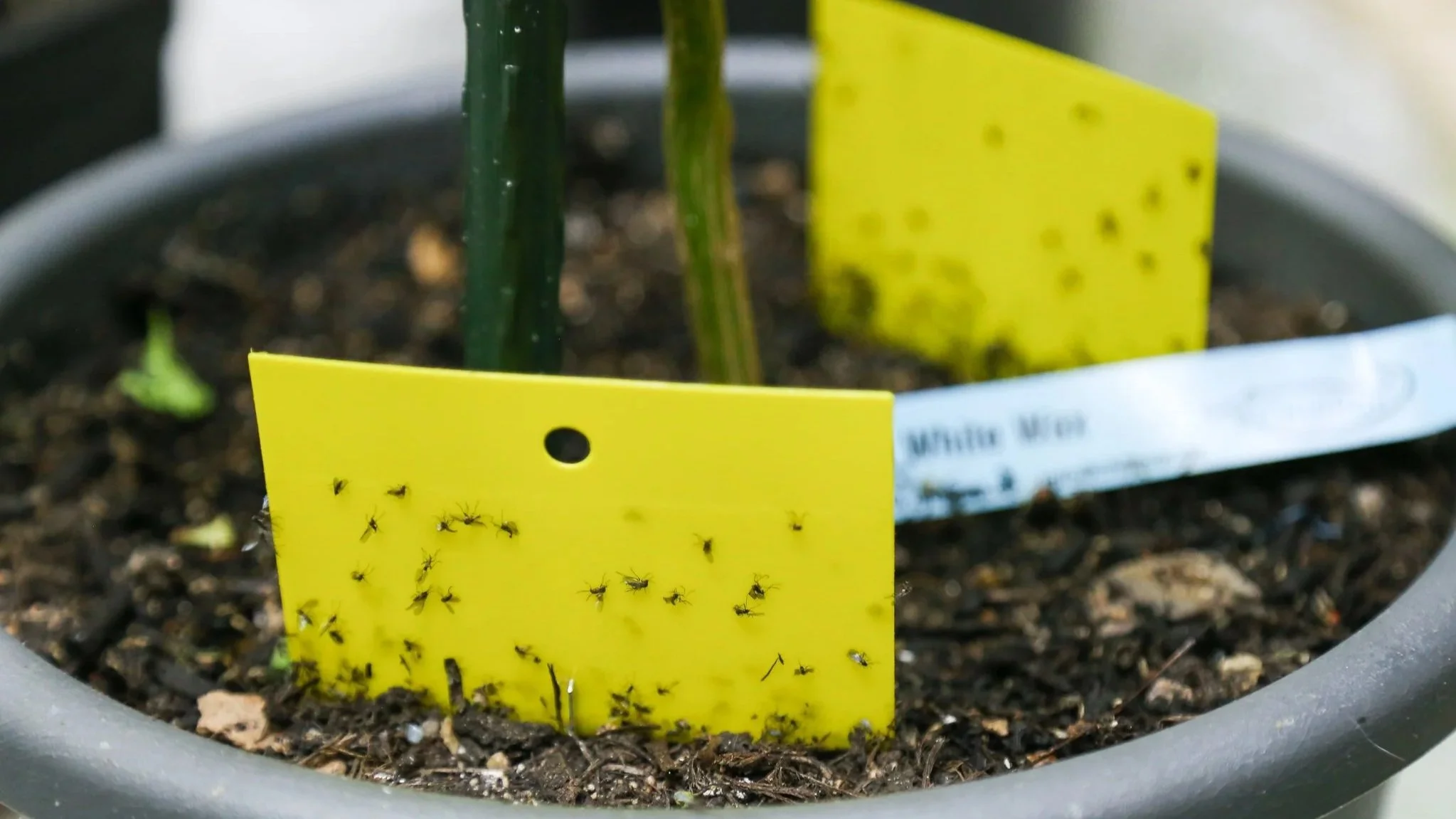
Photograph: Maja Dumt on Flickr
Transcript
Transcript © Jane Perrone. Originally published at janeperrone.com. Please do not reproduce or republish without permission.
[0:04] Hello and welcome to On The Ledge Podcast, episode 331.
[0:10] And think of today's episode as rather like a shot of vodka. It's short, it's sharp, and it will have an immediate effect on you. It's fungus gnat season right now. Their two peaks come in September, October and March, April time. So it's the perfect season to bring you my five golden rules for fungus gnats. So let's get on with it. No hanging around today. Number one, know your enemy. Now these flies are really tiny relatives of the housefly, different from a fruit fly. The way you tell the difference is a fruit fly is generally dark brown and kind of bumblebee shaped, but obviously tiny. And they tend to fly steadily, whereas fungus gnats are the queens of the waft. They sort of waft about as if blown on a breeze they are black colored and they are finer looking than the fruit fly so that's how you tell the difference.
[1:22] They come in at around two to four millimeters long and just look for these black wafty flies they are the ones that are laying their eggs in your house plants, and truth be told they don't do, much damage to house plants unless you've got a load of fungus nat larvae that are eating away at the roots of seedlings, generally speaking in a houseplant collection, they're not doing a lot of harm compared to other pests we might like to mention, or rather would not like to mention like thrips and mealybugs. These guys are pretty ineffective because they eat fungus, as the name suggests. They're feeding on rotting material and fungi in the soil, but they do cause us a great deal of irritation floating around and annoying us by hanging around our faces. They're attracted to the carbon dioxide in your breath, by the way. That's why they like to try to get into your mouth. Oh, and I should just say, maybe you've never seen a fungus gnat larvae. It's basically something you might only see if you have good eyesight. They are a few millimeters long, worm-shaped with a translucent body and a dark, head. And you might see them wriggling around in the soil, but you could have quite a big infestation without spotting any of these.
[2:45] How do they come in? Well, they're usually arriving on the soil of plants coming into the house or in bags of substrate. And they're pretty hard to spot. They can also just fly in the window. So if you've got a house plant collection of any kind of magnitude from one upwards, at some point you're going to have fungus gnats. As I say, you know, March, April time, there's a peak. And right now there's a peak in sort of September, October time. So it's something to watch out for.
[3:17] There are things you can do, but that brings me to point number two. Stop chasing the Internet hacks. Don't listen to the people who are telling you that things like a surface coating of cinnamon or, tea tree oil or garlic or chili oil infused water is the solution. Um people will tell you to take all the potting mix off your plants wash off the roots and repot again these things don't work neem oil uh it's not licensed for pesticide use in the uk.
[3:56] And i wouldn't recommend using it anyway because there's way better things to use so just be very very skeptical about anything any quick fixes you read online most of them are absolute, rubbish if I can be polite in that regard. A lot of these magic cures they don't really make much of a dent in a big infestation and you know one of the other things that you'll see recommended is bottom watering and allowing the compost to dry out. Now.
[4:28] And yes, if your compost is less wet, that may help a little, but it's not a magic bullet. I've had fungus gnats in soil that seems to me to be bone dry. I don't water my houseplants very much. I'm a bit of a mean waterer and I still have fungus gnats. So don't focus on that kind of advice. It just isn't worth changing your habits. It's not going to have an impact on your fungus gnat problem, number three make sure it's a family affair, and what i mean by that is we really need to make sure that we're not just focusing on one part of the fungus gnat lifestyle but the whole thing so we want to be targeting the flying adults as well as the larvae in the soil.
[5:22] No one approach is going to completely solve the problem. With the flying adults, you're not immediately going to get rid of them by just putting a few sticky traps about, but the sticky traps will help. They will trap some of the flying adults and they will also give you a guide to whether your population is going up or down. And that's a good thing because it might give you some comfort when you're finding your pest infestation is taking its toll because it really does it can be the most annoying thing to have a.
[6:02] The other thing you're doing by catching those adults is hopefully stopping the females from laying some eggs. It's probably very unrealistic that you've got to catch them before they do any egg laying. But every little helps. It is all part of the multi-pronged strategy,
[6:21] which brings us to point number four. You need to call in the biological control squad. And compared to the home remedies I've just described, these biological controls are the MF doom to their vanilla ice, if you catch my drift. So this is the best solution in the long term, a biological control. Now, in the UK, the best treatment that is licensed for use as a pesticide domestically, are the Steinonema feltii nematodes, tiny microscopic worms. And they're usually sold as fungus gnat control or scarred fly control. And for the vast majority of houseplants, these work really well.
[7:15] They are absolute destroyers of fungus gnats in the larval form in the soil, reliant on them being applied properly and the soil being moist enough so these worms they move through the soil using water if the soil's dry they won't be able to move around and target their prey so you want to make sure when you water them on you they come in this sort of, lumpy bumpy stuff brown stuff I call it the forbidden hummus, you mix that into water at a certain ratio again just read the instructions and then water it onto your plants and make sure that they then stay moist for a couple of weeks, because you need them to move around. So give your houseplants a bit of extra water for a couple of weeks if you want to fix this problem using a biological control in the form of these stein and nematodes. Now there is an alternative for really dry loving plants, so if you've got cacti and succulents with fungus gnats, and yes that does happen, you can get hypoaspis mites which are now more accurately sold as a stratiolelaps scimitus, so they also move through the soil but not dependent on water and they will kill the larvae so two techniques that really work well, if you are in, parts of the world where bti.
[8:44] Is available as a biological control that also works really well. I can't recommend it because it's not licensed for use in the UK but as I say if you're outside the UK then it might be available for your area and legal in your area. What is BTI? BTI stands for Bacillus the root, I knew I wasn't going to be able to say this, Bacillus phyringiensis, subspecies Israelensis. Now this is another biological control in the form of a bacterium that basically kills the larvae like an insecticide like a biological insecticide it's a great solution again it's really safe you can get it in various forms which you soak in water and then water that on it's not instant but if you use it regularly you will find that it works very well now some of you who are in the UK may say well I have BTI I've bought it so it can't be illegal. Unfortunately, the nature of the global marketplace means that these products are available in the UK, even though they're not legally allowed to be used. By domestic users they are licensed for professionals to use professional horticulturists.
[10:03] So it's a bit of a blurry line from all the research i've done i would say they're completely safe i think probably the regulatory issue is more to do, with the hoops you have to jump through to get these products approved for domestic use which hasn't happened yet but it's another great solution if you can use it and are able to get hold of it. And like any product that you're going to be using as a pesticide, read the instructions and follow the instructions. Don't think that you are gonna get a better result by doubling the dose or doing something different than it says on the packet. Just do what it says and follow the instructions and the safety guidance and you should be fine.
[10:52] And the final rule comes in two parts part one is patience is a virtue and the second part is, practice makes perfect so you're probably going to have to apply biological controls at least twice a year around those peak times of spring and autumn slash fall because even if you manage to defeat the fungus gnats another fungus gnats going to be bimbling in through your back door before you know it.
[11:19] So plan ahead don't treat these biological controls like they are a one and done they are a project that you're going to have to do probably, once or twice a year depending on, your circumstances and how many plants you have I mean it varies one year I think it was last year I had the worst fungus gnat infestation on my Dracaena marginata. And I mentioned earlier about fungus gnats flying around your mouth and face because they were attracted to the carbon dioxide.
[11:54] I reckon that everybody who owns houseplants has eaten many, many, many fungus gnats over the years because they just end up in your mouth, around your mouth. And that's one of the things that gets really unpleasant when you have a lot of them because they just won't leave you alone. So, yeah, be persistent, be patient and keep things regular. And that way you can keep your houseplant collection and your own sanity intact.
[12:31] So that's my advice on fungus gnats. I hope you found that useful. If there's anything I've missed out or questions you have about fungus gnats, please do ask. I love to answer questions. I'm not one of these houseplant people who says, oh, oh, questions, more questions. No, I love the questions. I want the questions. So please ask away.
Want to go toe-to-toe with your fungus gnat infestation? This advice will save you time - and your sanity.
Want to hear this podcast ad-free? Sign up for my Patreon now to unlock ad-free episodes, bonus episodes and much more!
Here they are! My five golden rules for tackling gnats
1. Know your enemy
Fungus gnats are tiny black flies that fly around houseplants and lay their eggs into their pots: if untreated, populations can get huge! They are relatives of house flies, and are species from the genera Orfelia and Bradysia. They are also known as sciarid flies. They are slightly smaller (2-4mm long) and blacker than fruit flies, and waft around rather than flying steadily. They will not bite you and ar not harmful to pets or children. They usually arrive as larvae in the soil of newly introduced plants, or in bags of substrate, so are hard to spot. The adults can also fly in through open doors and windows. If you have a houseplant collection of any size, you will inevitably face a fungus gnat infestation at some point. Populations tend to peak in March and April, and again in September and October, although they can arrive at any time of year.
The larvae are found in the soil and have clear bodies and black heads. They are just large enough to see with the naked eye. They eat fungus and rotting material, so will not do much damage to established plants, although they may weaken seedlings. Fungus gnats tend to fly near your face, as they are attracted to the carbon dioxide in your breath. They are also attracted to light.
2. Stop chasing internet hacks
Cinnamon, garlic water, will the home remedies never end? The internet is full of supposed fungus gnat cures, but most won’t make a big difference to an infestation. Bottom watering and letting compost dry out can help a little, but neither is a magic bullet. Don’t waste time and money on remedies that can’t tackle the problem properly.
3. Make it a family affair
You need to tackle all stages of the fungus gnat lifecycle, which runs like this:
Day 1: Eggs laid by adult females
Day 3-5: Eggs hatch into larvae
Day 13-19: Larvae turn into pupae
Day 23-25: Adults emerge and live for about a week
Yellow sticky traps are useful for catching adult gnats and monitoring how bad the infestation is as well as preventing some eggs being laid, but they won’t eliminate the next generation developing in your pots. The key to getting on top of fungus gnats is to tackle the larvae in the growing medium, where the next wave of adults is waiting to emerge.
4. Call in the biological control squad
Your best long-term weapon is biological control. In the UK, look for Steinernema feltiae nematodes, often sold as sciarid fly control, or predatory mites called Stratiolaelaps scimitus, often sold as hypoaspis mites. Nematodes hunt down larvae in moist compost, so they need damp substrates in order to move around and find their prey, so keep houseplant pots moist for the two weeks after application. Predatory mites feed on larvae in the substrate and can cope better with drier conditions, so work well for cacti and succulents. Buy from a reputable supplier and follow the application instructions carefully. BTI (Bacillus thuringiensis subsp. israelensis) is a biological control that targets fungus gnat larvae in the growing medium. It works really well but is not currently licensed for domestic use in the UK so I can’t recommend it. Where legal, it is generally regarded as a safe and reliable treatment.
5. Patience is a virtue and practice makes perfect
Whatever you do, fungus gnats will turn up from time to time especially in spring and autumn. So be ready with your biological controls: if you treat once or twice a year, it’s easy enough to keep on top of the issue.

CREDITS
This week's show featured Whistle by BenJamin Banger (@benjaminbanger on Insta; website benjaminbanger.com).