Episode 332: Ooh, What’s that plant? New houseplants catching my eye
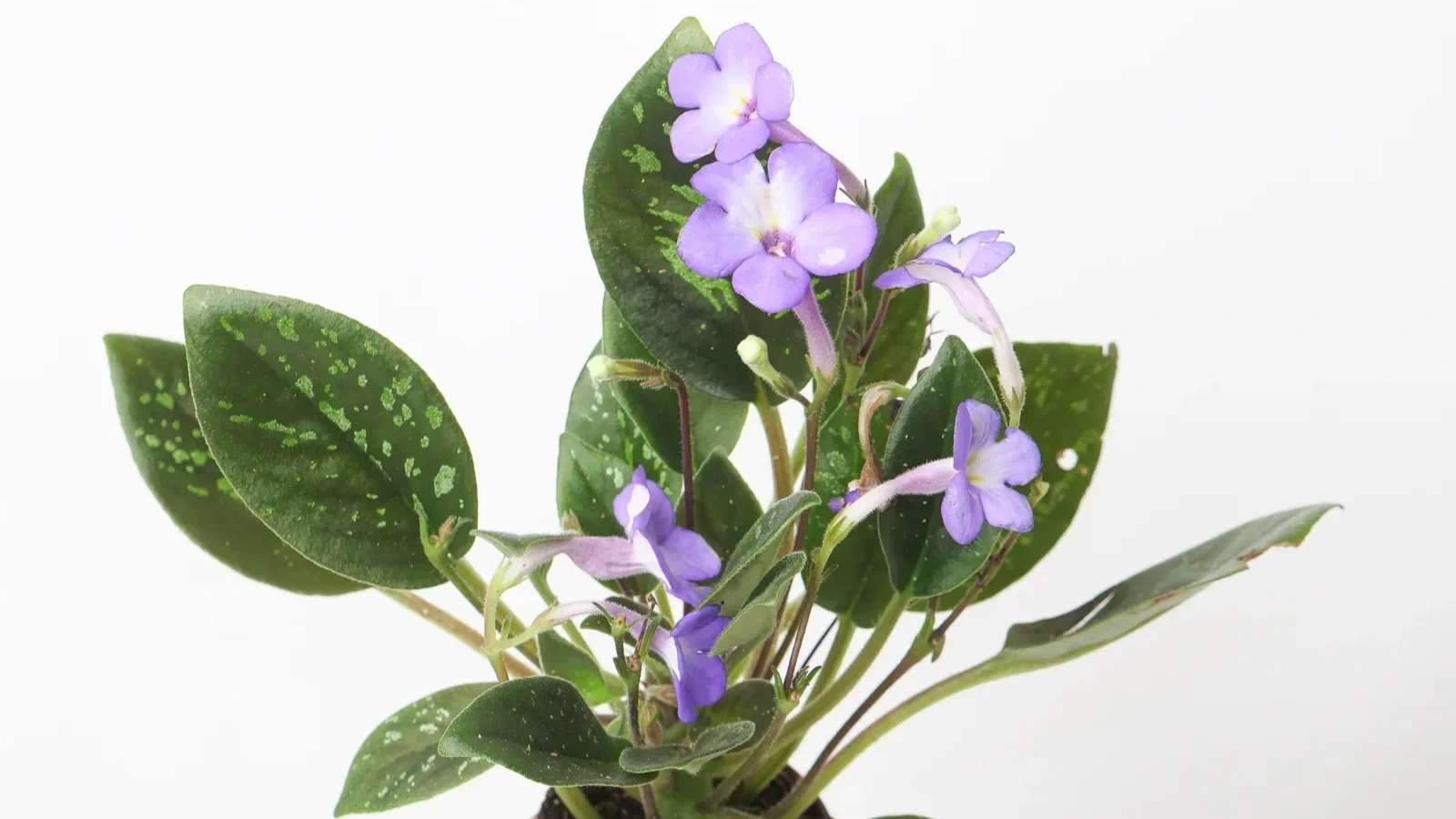
The Vietnam violet was described for science in 2020. Photograph: Grow Tropicals
Transcript
Transcript © Jane Perrone. Originally published at janeperrone.com. Please do not reproduce or republish without permission.
[0:00] This episode is sponsored by Kipos. Kipos is the app for your iPhone that lets you start tracking your gardening progress today.
[0:10] Set a watering routine, log your care and keep your plant photos and notes together. Kipos houses your entire gardening journey in one spot so you can see your hard work and you get to share the result with friends. Real effort from real people. Kipos is on the iPhone now. Use code OTL2026 during sign up to get a whole year of free access to the Kipos app. Find Kipos on the App Store today. That's K-I-P-O-S and start tracking your planty progress.
[0:57] Hello, a generous hat tip from my green fedora, as I welcome you to the podcast, that takes houseplants seriously, or sometimes not quite so seriously. Yeah, I do actually have a green fedora, and if enough of you ask, I will post it on Instagram.
[1:18] What a treat. Well, this week's show is my opportunity to go, oh what's that plant because I'm bringing you the plants that are registering a blip on my radar right now and they're a really interesting bunch plus we're going to go back to a plant that was last talked about on on the ledge I think it was five years ago and find out whether this elusive plant has finally hit the general market, do you remember the everfresh tree. Well, don't worry if you don't, I will be updating you. And I'll be answering a question about pricking out your succulents, which is honestly a lot less rude than it sounds.
[2:06] Well, let's kick off with my first plant on the radar, and it's got a great name. To its friends, it's the Vietnam Violet, but to us planty people, we might also know it as Michael Malaria Vietnamensis.
[2:28] Now this plant really is new to the horticultural trade. As we've often seen on this show, there are some plants that appear to be a newbie but actually have been around for much longer. But this mycomyllaria is the only member of a newly created genus which only dates back to 2020. So what do we know about this plant? Well first off, and there's no, coincidence here that this just happens to be a gusneriad yes i love my gusneriads and this is one of that family so relatives include things like african violets and streptocarpus but this plant comes not from the continent of africa but from southeast asia specifically vietnam as the name's already given away.
[3:21] And if you're wondering what it looks like, do go and check the show notes for photographs. But I'll do my best to paint you a picture here. If you have seen a primulina, then you're along the right lines when you think about this plant. It has oval leaves, fleshy like the African violet, with splashes of silver down the midrib and to the sides. And beautiful lilac flowers quite similar to the primulina flowers a bit violet looking hence the name Vietnam Violet even though it's not closely related to an actual violet.
[4:01] And where can you grow it in your house well this is most definitely a plant that needs a terrarium or some kind of enhanced humidity environment, if I can put it that way. It likes to be at a nice comfortable 18 plus centigrade and humidity that is decently high. So we're talking about probably a plant that's not going to be too happy in average room humidity, much better off in your IKEA plant cabinet or similar. It's a low growing plant, it's only going to get to 10-15 centimetres tall and, unlike some of the other gesneriads you can think of it grows from tubers under the ground so underground storage organs, and the paper that described this species and the genus for the very first time is entitled michael malaria brackets gesneriaceae, a new lithophilus dwelling genus and species with zigzag corolla tube from southern vietnam.
[5:06] Well let's translate that shall we unpacking is always good lithophilus is pretty easy to decode litho meaning rock and phyllis meaning liking so it comes from a place, where it likes to grow on rocky ground and what pray tell is a zigzag corolla tube.
[5:26] Well, it's the base of the petals, basically, where the petals all kind of come together to form a funnel. Well, that is the Corolla tube. So it's part of the flower. And in this case, it's got a zigzag shape. Now, a little side note here, just to say you might be wondering how on earth in the 2020s, there are still plant species that are just being described to science. Well this paper provides an interesting answer to this question because it explains that the country of Vietnam is what is known as undersampled which means there are not a lot of botanists going in there and checking out what plant species and plant communities are around so the stats are that in Vietnam.
[6:12] There are 43 collections per 100 square meters as opposed to Thailand which has 75 and And that could be down to a number of reasons, including access, including the nature of the ground being surveyed, the availability of scientists to go in and do the work. So that's why there are still species that are being described anew in the 2020s. And the Michael Malaria genus name, it is a bit of a mouthful. And as is often the case, this genus has been named after somebody connected with plants, but not the person who collected this species. Now he's a chap called Michael Moller who works at the Royal Botanic Gardens Edinburgh and he, does research into gesneriads and perhaps a look at where this plant grows will illustrate why it hasn't been described to science before 2020.
[7:05] It's tricky to rain to say the least. It's growing on sandstone cliffs and sandstone hills under evergreen broadleaf trees. So they have managed to collect examples of this species from less extreme slopes but it certainly doesn't make it easy to go in there and investigate when the landscape is quite so rocky. And the species was first spotted in 2018 and the paper came out, two years later and it's published by Fang Nguyen et al and if you want to have a look at that paper it is an open access paper I will put the details in the show notes for you to check out, now sadly this plant is classed as critically endangered in Vietnam due to a number of different pressures on the environment in which it grows so I guess it's good that it's being cultivated outside of its habitat so that we can ensure this plant survives and there's already availability of this plant certainly in the UK.
[8:09] I know that online seller in the UK Grow Tropicals has it on their books at the moment and it's also available at Plants for All Seasons which is another online grower. In the US I've also seen it on sale with a few specialist sellers so do look out for this plant. It's currently costing around 30 to 40 pounds or dollars. I'm sure that price is going to drop as time goes by and the plant is propagated more and more.
[8:42] And things move fast in the plant world these days. There's already a variety called Sapphire of this species, which has a patent pending on it from Altman Plants in the US. It won the Cool Product Award at this year's Tropical Plant International Expo in Florida.
[9:03] So this is a plant that's being tipped for success. And it'll be interesting to see whether it catches on and becomes a staple of our house plant world this variety, sapphire I think the main selling point seems to be higher variegation more, silver variegation on the leaves and darker flowers, So that's number one. Let's move on to the second one. And this one, I think I might be the only person. Well, as far as I know, I'm the only person who is pushing this plant as an indoor plant. But I think this shows great promise. But that's because I'm mad on saxophagia, another one of my favorite genera. It's almost like I'm biased towards certain genera, but.
[9:51] That's just how I'm going to roll I want you to know about this plant it's called saxifragia epiphylla precious piggy and I can't remember if I've talked on the show about it before I try to push it on to every planty person that I meet so I apologize if I've gone on about this plant before but I'm still going to go on more because I really do think it's worth it so saxifragia epiphylla precious piggy is a fairly close relative of a house plant that I've banged on about in the show before the strawberry saxophage saxophagia stolonifera but I don't find much records of saxophagia epiphylla being grown indoors and why on earth is it called precious piggy well that's because rather than producing baby plants on stolons it produces baby plants at the base of the leaf where the leaf blade joins the petiole, the leaf stem.
[10:48] And it's being sold as an outside sort of shady ground cover plant. But just like Stolonifera, I found this does really nicely inside. It's a really easy plant. It grows really well indoors. I can't recommend it highly enough. Just like the Strawberry Saxifrage, you need to avoid giving it fryingly hot temperatures. And it doesn't need a heck of a lot of light. You're certainly not going to want to put it with your cacti and succulents. But it will do fine in most room conditions, provided you don't plunge it into darkness. Now, this plant comes from Yunnan province in China, which is a rich territory for houseplants, home of the Chinese money plant, among other things, and was first collected by Western plant collectors, as far as we know, by...
[11:39] Krug Farm Plants, well-known plant collectors and nursery owners Sue and Blevin Wynne-Jones in 2000. So this one has a slightly longer history in cultivation in the west and it's from the Irregulares section of Saxophagia just like Stodonifera so they're quite strongly related and the flowers are very similar which is why I thought I would give this plant a chance inside and it does really well it's got the same sort of kidney shaped leaves with some nice variegation sort of paler sections on the leaves and then you've got the interest of these baby plants growing from the leaves themselves so I think it's a really good plant, I would love to see more people growing it it's available in a few places here in the UK, Grow Wild Nursery has it farmyard nursery has it it's also been sold by swines meadow farm which is where i got it from when they came to give a talk to my local gardening club, so it's available in the uk and i suspect it's probably becoming available elsewhere as well and i'd love you to give it a try because it's just really easy a nice plant.
[12:55] If you're a planty person and someone comes to your house and sees this, they're going to ask about it because it's not your normal run of the mill house plant but that's why I love it I do love an indoor outdoor plant and yes this is hardly enough to grow outside I think just like Stolonifera it would make a good ground cover in a pot where you've got sort of bare pot and you could use it in that way in the house as well so it's a very very handy plant and anytime you want to remove one of those leaves and pot it up that's what I've done and hey presto you've got a new plant.
[13:32] And I've just leaned over into my prop box to grab the, baby precious piggy that I have been cultivating which I took this off my plant a few weeks ago now and I can see that it's got oh it's dripping all over the keyboard hang on let me grab a tissue all.
[13:57] Right that's better uh yeah so this leaf's been off the plant a few weeks it was just snipped off and the plant, has grown from that part of the leaf and it's very cute looking in fact I can see that it's actually producing roots now and the roots are.
[14:19] Growing above the leaf so that's a bit interesting because you would think that the leaves, would be above the root I mean I'm just gonna have to see if I can turn it over and see what's happening underneath, yeah I can see roots going down into the soil so it is rooting I've got this held down with, an unfolded paper clip and it's growing nicely and will soon make a decent sized new plant so the only other thing to bear in mind with these saxifragias it's the same with stolonifera, i suspect it'll be likewise for epiphylla precious piggy that they can be a bit short-lived as, perennials so it's always worth having a few plants propagating so that you've got plants ready to, to sort of stand in and also as i say if you want to use them for ground cover in a big pot as a sort of living mulch in a big container of something bigger then you are going to want to have quite a few of these plants so propagate like mad that's what i'd say.
[15:34] Before we tackle number three, which is an unusual orchid, we will talk about the question of the week. Now, this brings me to my Patreon. This is the place you can go if you want more from On The Ledge. You can become a free member. You can become a member of one of my paid tiers, of which there are three. And it's a great way of supporting the show. free members get access to my planty posts which I put up as often as possible which talk about all kinds of houseplant issues and they also get access to my group chats and I've just opened a new group chat which is called the plant clinic so if you've got a question about a houseplant you can go and ask me and, our merry band of houseplant experts and I wanted to share with you a question that came in on that platform this very day. Came from Suzanne and her query involves succulent babies.
[16:36] Suzanne has a tray absolutely covered in leaf propagations of, well, I want to say it's a Pachyphytum, but I'm not entirely sure what the species is, Suzanne. It's a tiny bean-like succulent, the exact nature of which I'm not sure. It could be Burrow's tail, Sedum morganianum, but it might not be. It might be a Pachyphytum or something else. But the good news is the advice is basically the same. So Suzanne is asking about replanting these babies. They've been in the tray for many months and Suzanne asks, are they ready to be transplanted? Now my thoughts on this are usually that I leave things as long as possible before I take them out of that initial tray. Why? Because the root system is all and if they've got a good chance to develop a really good root system they've got a better chance of surviving the shock of being transplanted to another pot. They're not going to break any records in terms of speed of growth so it's fine to leave them for a bit longer you've got to kind of be patient. That said I understand that we all do have the drive to pot stuff up so if Suzanne does want to get cracking my suggestion would be to, excavate one of these propagation babies and see what the root system's like and try potting it up because she's got at least a couple of dozen plants here and that way she can actually.
[18:05] Have a go and she's still got plenty left.
[18:08] They could be potted up and then she can compare the progress between the two I think that's a really good strategy the other issue being of course that we are moving into the, dormancy period for succulents so it kind of depends on whether you're going to give them additional light over winter in which case it may well be okay to transplant otherwise I would leave it till spring, because with the best will in the world when you come to transplant, You're going to damage some of those roots. Inevitably, that's just going to happen. And you might set the plants back rather than moving them forward, which is always a risk. But they do look great, Suzanne. Well done for getting on with some propagation there. And you're going to have a load of new plants to share with friends, give away, sell or your choice of outcomes. Don't you just love propagation? It's just so cool. Well, Suzanne, thank you for that question. And I hope that has helped you. And if you would like to ask a question of the plant clinic, then please sign up to be a free or paid member of my Patreon. You can find all the details in the show notes or visit patreon.com forward slash on the ledge.
[19:27] Right, plant number three, and we're moving away from the Gesneriads now and on to the orchid family. Now, if you've listened to Flowering Plants Week, you'll know that the moth orchids, Phalaenopsis, have undergone huge amounts of breeding work, and that's going on. It's continuing. And one of the new things that I spotted, which just caught my attention, was the Phalaenopsis cingalo. Now can you guess what the feature of this phalaenopsis, moth orchid is gold star if you guessed it right yes it's a phalaenopsis with a single large flower so it looks a little bit like apathyopedalum another type of orchid that generally has one flower at a time, why would you want a phalaenopsis with just one flower when they are known for, looking like a cloud of butterflies not a single butterfly well I guess the advantage is that you've got this one, very dramatic flower that's compact and won't take up as much room as a plant that's got sprays of flowers coming out of it I have to admit I haven't seen this one in the flesh but the information I've seen suggests that the bloom is.
[20:50] Larger than the palm of your hand so I'm looking at my palm I have got quite meaty palms so if it's that big that will be quite impressive and the ones I'm seeing come in the usual kind of phalaenopsis color range so pure white.
[21:05] Cerise and white variations on that theme a more purpley one as well so again I think this is one of these things where this could appeal to somebody maybe it's good for the gifting market I suppose is one thing to say that it's kind of trying to be more of a showstopper something different and the advantage of fitting on a small windowsill, I suspect from the point of view of the growers too that it's quite.
[21:34] Good for them because it is so compact and one of their main expenses is transport and if you're transporting a single headed orchid that's compact and relatively short that's probably going to save you some money in transport costs. In other moth orchid news some of you may have seen that I shared a reel over on Instagram of my orchid boo-boo where I snapped the stem of a phalaenopsis orchid while talking about staking. Now full disclosure this was a reel that I'd first used on TikTok a while ago but I thought hey it's an orchid that we're featuring in flowering plants week so why not bring this reel over to Instagram and everyone's loved it, loved watching me break my plant but it also reminded me of another plant that I've seen that's coming on to the phalaenopsis orchid market and this may be the answer to all my problems, these phalaenopsis are called elastica and they are a series of the kind of cascading flowered.
[22:40] Moth orchids and the feature that Elastica has is as the name suggests that it has flexible resilient and supple stems and you can bend them and shape them to your will so, obviously I'm not the only person who has snapped an orchid spike before so they come in a range of different colors there's a white one well there's several white ones actually and, one that looks very blotchy dark magenta and white called spilled ink which I rather like, if you are the kind of person that likes to train orchid stems in a circle and things like that this might be the one for you, I like as I said in the reel my orchids to be unstaked so maybe this isn't one for me or maybe it is because I wouldn't be able to break the stem even if it's not staked, anyway a phalanopsis elastica they are available now so check out that and singalo if you see them around I'd love to know what you think.
[23:44] Well that's the last of the new plants but now we need to talk about a plant that has featured on the show before the everfresh tree if you've got a good memory and you've been listening to the show for a long time you may remember that episode 201 contained information about this plant the everfresh tree prompted by a question from listener Graham who wanted to know where he could get this plant that he'd spotted now we need to start by clearing up confusion about the name of this plant, the scientific name I mean because, when I was first talking about this back in 2021, we were calling it Pithosalobium convertum or possibly Albizia splendanes. However, in the intervening five years, that's been resolved and it has now been correctly.
[24:36] Pinned down as being Kajoba arborea and the common names changed too it seems to be being sold now here in the UK as the zen sleeper or sleeping tree now if you don't remember what this plant looked like it's got mimosa like qualities so it's got quite fine ferny leaves and the name zen sleeper comes about because it is one of those plants that fold up its leaves at night and where does this plant come from well this is one of the interesting things because the plant that we thought it was came from southeast asia and cajoba arborea comes from central america and parts of south america specifically the northwest so bolivia columbia and ecuador, and according to the ever useful website useful tropical plants it's grown as an ornamental and shade tree and its timber which is known in the trade as Bahama sabiku.
[25:37] Is also harvested. I'll link to a page in the show notes that shows a tree in the wild or rather the base of the tree which shows apparently the trees vary quite a lot in their appearance but the tree that's being shown in the picture has these amazing buttresses to its base. It looks really huge at the bottom with the buttresses giving it a very irregular shape it's very cool looking and the fruits are, Well, they look a bit like a spiral of DNA with this amazing bright red and black colour combination. Do check out the show notes for that image. Now, I know that Grow Tropicals has this plant currently. Mentioned them before, they're a UK houseplant grower. So I messaged Jacob James of Grow Tropicals to ask how long they've had it. And he said they've had this plant on sale for about a month so far. And that there is a producer in the Netherlands who is selling this plant so it's coming to a market near you I would say, well I haven't grown one of these because as I've said it hasn't been available to get hold of in the UK but it doesn't sound too tricky it's gonna need 15c plus according to the Grow Tropical site, as a rainforest plant I suspect it would like some humidity too, in the US and Canada again it seems to be slowly coming onto the market but not necessarily something that's going to be in every.
[27:05] Big box store quite yet so it's interesting to see how these plants make their way through the house plant.
[27:13] Industry and ecosystem to get onto the market in the case of the everfresh tree it seems to have taken a while for this plant to get established and who knows it may be that it's just not as easy to propagate and therefore it's going to be very limited, as to its availability for a while yet but I do know this was something that obviously listeners were interested in back in 2021 and I'm sure there are some of you who are still out there waiting to get hold of your ever fresh tree so there is hope.
[27:47] So that completes my roundup of new and interesting plants on my radar. I'd love to know what you think of them all, which ones you want to grow, or maybe you're already growing them and you're ahead of the curve. Please do drop me a line. And don't forget to become one of my free or paid for Patreon subscribers so you can take a look at my group chats, including the new plant clinic.
I’ve been mooching around looking for the coolest new plants - here’s my pick. Plus, whatever happened to the everfresh tree, and I answer a question about propagating succulents.
Want to hear this podcast ad-free? Sign up for my Patreon now to unlock ad-free episodes, bonus episodes and much more!
Vietnam violet
Michaelmoelleria vietnamensis is a new genus and species that was only described in 2020. It’s a beautiful gesneriad that needs terrarium/high humidity conditions to thrive.
You can read the scientific paper from 2020 describing the new genus and the species here.
Grow Tropicals are selling this plant in the UK now and I am predicting it will be popular - its silvery variegation and purple flowers are lovely.
It is named after gesneriad researcher Dr Michael Möller from RBGE.
There’s even a new variety available, called ‘Sapphire’.
‘Precious Piggy’
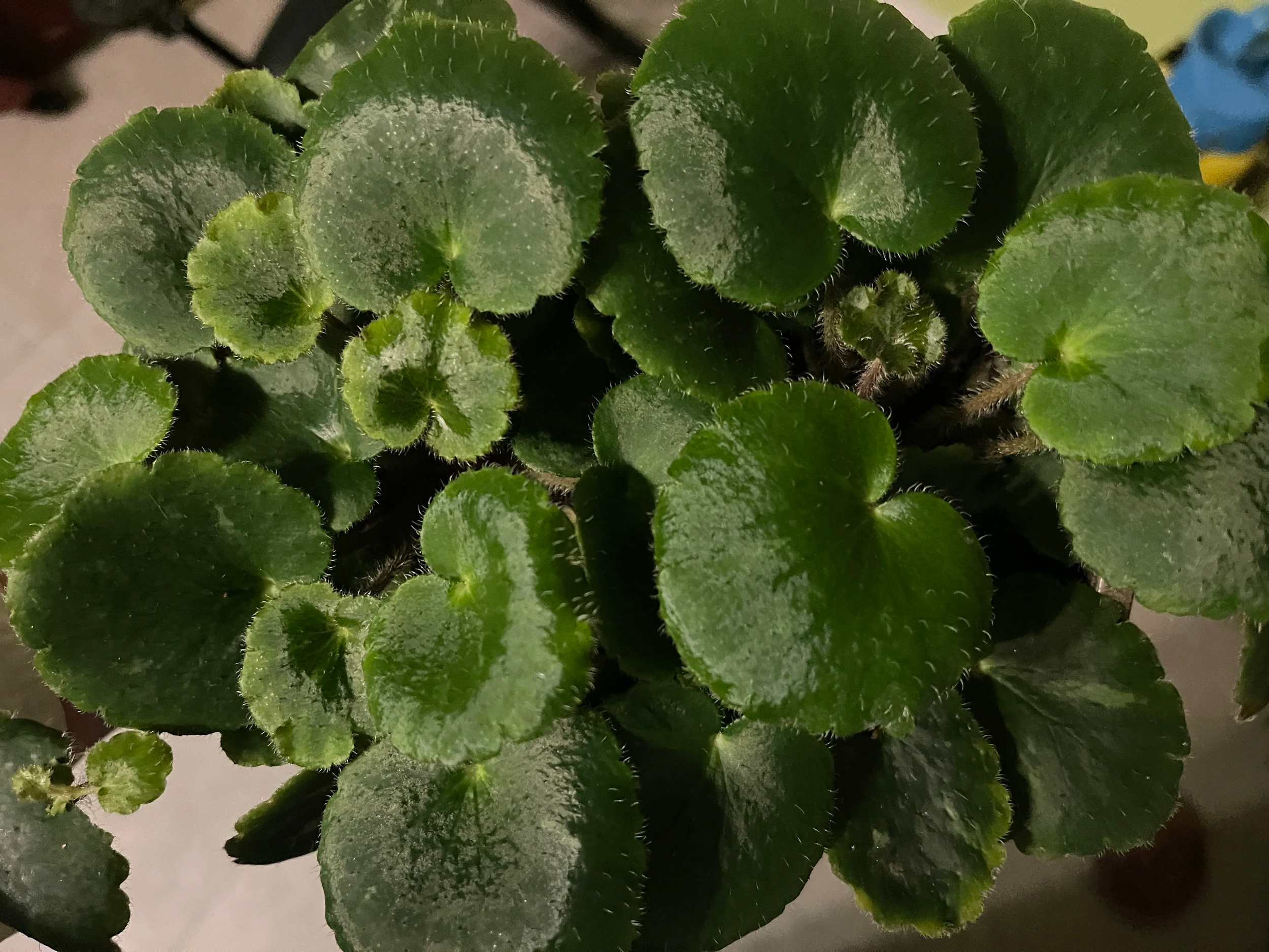
Saxifraga epiphylla ‘Precious Piggy’. Photograph: Jane Perrone.
Saxifraga epiphylla ‘Precious Piggy’ is, like the strawberry saxifrage, a member of the Irregulares section of Saxifraga, and it has very similar flowers.
It has a different method of reproducing - rather than stolons with baby plants on the end, the baby plants grow from the base of the leaf blade where it joins the petiole (leaf stem).
It likes coolish conditions indoors and copes with a wide range of light conditions. You could use this as a ‘green mulch’ around the base of bigger specimen plants.
It is also hardy enough to grow outdoors in temperate climates and can be used in dry shade and other tricky spots.
This plant was collected from Yunnan Province in China by Sue and Bleddyn Wynn Jones of Crûg Farm Nursery. It is now available for sale in a few other places in the UK, but I got mine from Swines Meadow Farm nursery.
Notable new Phalaenopsis
As we saw during flowering plants week, Phalaenopsis breeders are constantly innovating. Here are a couple of newish moth orchids I’ve spotted:
Phalaenopsis ‘Singolo’ has - you guessed it - a large single flower per plant. Great if you’re short of space - but maybe not my cup of tea.
Phalaenopsis ‘Elastica’ series has supple stems which may save me from more moth orchid stem disasters!
Whatever happened to the everfresh tree?
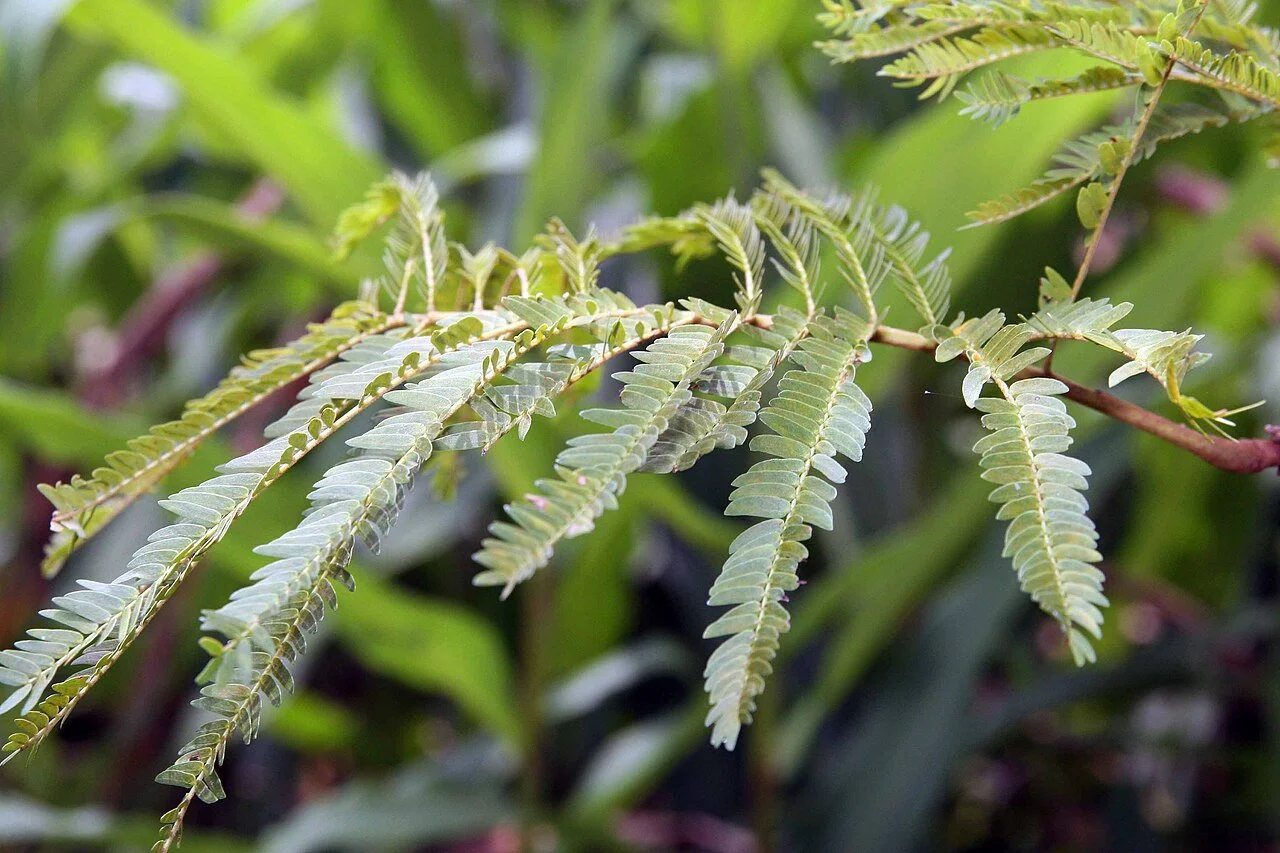
Photograph: David J. Stang on Wikimedia Commons. First published at ZipcodeZoo.com

The fruit of Cojoba arborea. Photograph: Dick Culbert from Gibsons, B.C., Canada on Wikimedia Commons.
I first mentioned this plant in episode 201 of On The Ledge back in 2021 when listener Graham wondered where he could pick one of these up. I followed up in episode 226.
There’s been a LOT of confusion about the true identity of this plant. Back in 2021, we thought it was called Pithecellobium confertum, but it has now been properly identified as Cojoba arborea. There’s an interesting picture of its trunk here.
Five years later, the plant is now starting to come onto the UK market. But it’s being sold under a new common name, the zen sleeper tree, referencing the fact that it closes up its leaves at night.
It’s now available from Grow Tropicals in the UK and from a few specialist sellers in the US and Europe. Jacob James from Grow Tropicals tells me that they have had the plant on their books for about a month, after sourcing the plant from a Dutch supplier.

This week's sponsor
Kipos
Kipos makes gardening social. We house your entire gardening journey in one spot, so you can see your hard work and share the results with friends — real effort from real people.
Set a watering routine, log care, and keep your plant photos and notes together. Kipos is available to download for your iPhone now.
Use code OTL2026 during sign-up to gain a year of free access to Kipos. Start tracking your progress today!
Question of the week
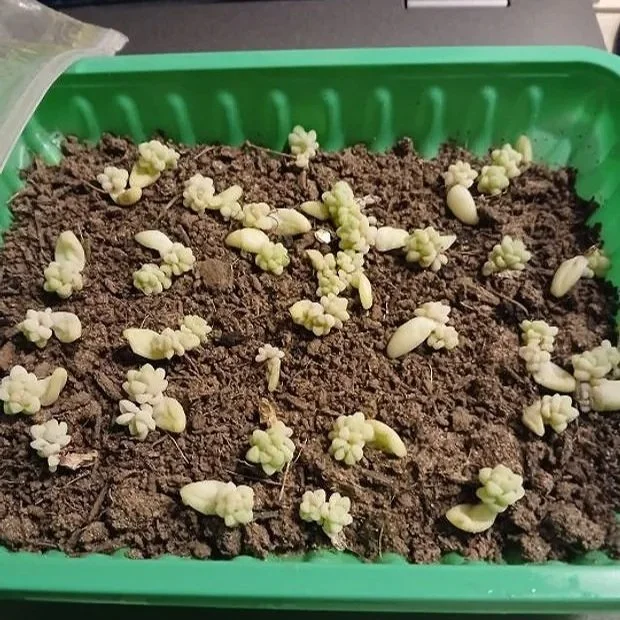
Susanne’s succulents.
Susanne got in touch about her succulent propagations - should she move them onto a new pot? I advised leaving these be over winter because they will have extra time to develop new roots.
It could be worth experimenting by pricking one plant out and potting it up - then you can compare how it does! By waiting til spring when light is increasing, Susanne will give the plants a really good root system and a chance to start growing as the days grow longer.
Want to ask a question in my Patreon plant clinic or shoot the breeze with me and other planty people in my chat lounge? Both free and paid Patreon members can access these chats. Become a Patreon member or find out more here. Not a Patreon member? Email ontheledgepodcast@gmail.com.
The more information you can include, the better - pictures of your plant, details of your location and how long you have had the plant are always useful to help solve your issue!

CREDITS
This week's show featured Whistle by BenJamin Banger (@benjaminbanger on Insta; website benjaminbanger.com) and and ad music Quasi Motion by Kevin Macleod.