Episode 330: My pick of the best flowering houseplants
Every day for the next week I’ll be picking my top seven flowering houseplants, explaining why i adore them and telling you how to grow one in your home. Day seven is going to surprise you!
Want to hear this podcast ad-free? Sign up for my Patreon now to unlock ad-free episodes, bonus episodes and much more!
Want to listen to all seven picks together? Play the audio below. Otherwise scroll down for a chance to listen to each mini-episode separately.
Click below to jump straight to your favourite plant…
Flamingo flower | Lipstick plant ‘Mona Lisa’ | Primulina dryas | Bird of paradise |
Moth orchid | Crown of thorns | Carrion plant
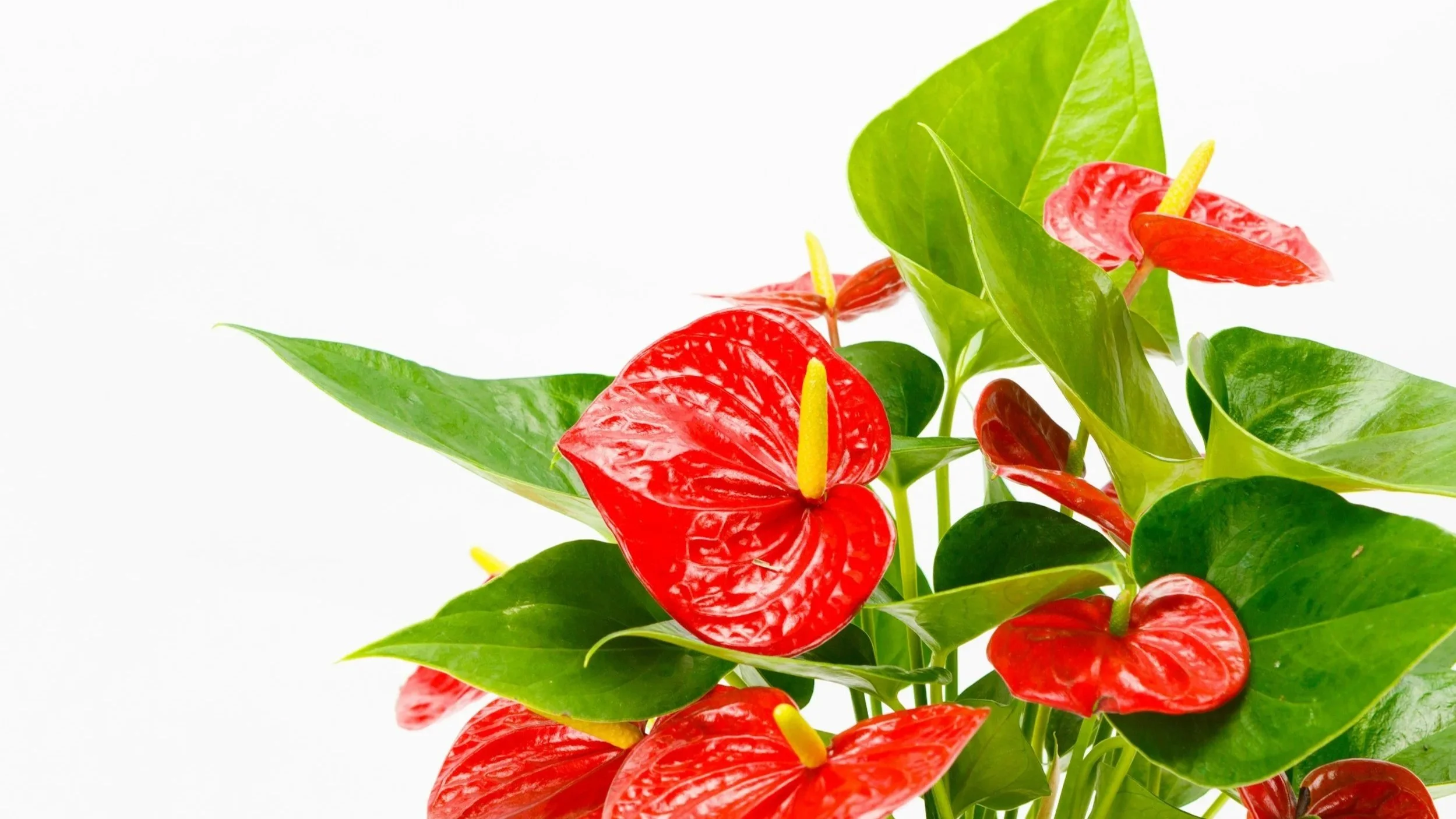
Day one - the flamingo flower
Transcript
© Jane Perrone. Originally published at janeperrone.com. Please do not reproduce or republish without permission.
[0:03] Watcher, it's On The Ledge podcast and it's flowering houseplant week because we love the flowers, So here's the deal. I'm going to pick seven of my favourite flowering houseplants and each day in the coming week, I'm going to be telling you about one of them, a short, sweet podcast that covers all the basics on that plant's care, where it comes from, etc.
[0:32] Etc, so that you can expand your mind about the options when it comes to flowering plants indoors. Because I think so much of the time we focus on the foliage and we don't give the flowers the attention they deserve. They are, after all, the plant's way of reproducing and often provide a way of telling one species from another, although obviously that's been somewhat superseded by genetic testing. But anyway, what I want to say is I love houseplants that flower and make a beautiful display of it, and so should you. So without any further ado let's kick off with today's houseplant and this will be a surprise for any long-term listeners to the show. It's an aroid.
[1:20] I'm not normally known as the biggest fan of aroids but this one I think is one of the best flowering houseplants. It's Anthurium andrianum, the flamingo flower, painter's palette.
[1:36] Whatever you decide to call this plant you cannot deny its incredible sexy looks. Let's talk about where it comes from to start with. It hails from Colombia and Ecuador where it grows in trees. Yes, this is an epiphyte, something that lots of people don't realize. Usually it's up growing in the crook of a tree. So if you have a look at your anthurium flamingo flowers roots, you might be able to tell actually because they look a bit like moth orchid roots. They're juicy and thick and they can be used to anchor the plant and to pick up nutrients.
[2:14] That is one of the things you'll find with these plants if they're left and somewhat neglected. Oftentimes these roots are everywhere and that's a good sign that the plant needs a repot. But that epiphytic nature I think makes them one of the easiest houseplants there is. Let's just put it this way. My sister's kept one alive and my sister is not.
[2:38] She would fully admit a particularly good houseplant keeper. If you want them to flower regularly though I think you need to give them a bit of love and the main way that we give plants love well it's light it's just purely light, So these do really well on a north, east, west windowsill. They will love it there in the winter. We find probably on a south-facing windowsill, provided it's not absolutely baking hot. I can't see that being a problem. Mine is on a north-facing windowsill, but with a window above. And it's in the kitchen, so it gets a nice boost of humidity. Because remember, this is from Colombia and Ecuador. It's going to need a reasonable amount of humidity do not stick it next to a hot radiator this winter but if you get it growing you'll find that it will flower very continuously, mine I bought it from not another jungle.
[3:40] Uh I think last Christmas and it's been flowering almost ever since I think it had a little bit of a pause of a couple of months but it's now putting out new flowers and what flowers they are you can see why this is called the painter's palette because you've got the spade the modified bract that embraces the spadix the inflorescence the stick with all the flowers on it, and together they do look a bit like a paintbrush and a palette or maybe something ruder but I mean I'm not going to.
[4:13] Labor the point on that use your imagination is what I would say but the key point here is that the bract the spade bit is not actually doing anything in terms of attracting pollinators it's just there as a kind of a guardrail for that spadix which is where the action happens now i'm going to use a few words here that are may not be familiar to you but i want to tell you about this because i think it's interesting the inflorescence so the stick with loads of tiny male and female flowers on it is what is known as protogenous.
[4:49] Fancy that. And all that means is that the female flowers do their thing before the male flowers. This means that the plant doesn't self-pollinate. Instead, it needs to attract pollinators from other plants. And it does that by producing this fluid, this sticky, clear fluid from its stigma, the stigmatic fluid. So once your spadix becomes sticky, that means that it's receptive to pollen from other plants. And then once that stage is over, then the male flowers are ready to produce pollen. So that's how this plant works, how the pollination biology works. And it's as far as I can see, it's always difficult to get very detailed pollinator information because pollination research is quite hard. But this seems to be quite a generalist anthurium that's pollinated by bees, flies, beetles, weevils and the like. And I did read up some interesting stuff about anthurium pollination.
[5:52] I'll put the link in the show notes to this piece, but it was talking about some research showing that anthuriums, tend to flower at the same time in the same area. So if you've got an area of forest and you might have a dozen Anthurium species, they'll usually kick into blooming at the same moment. So it's kind of a bit of a festival for all the pollinators that want to come in and are attracted to the various smells of the Anthurium species, which apparently vary from vomit. I mean, not the kind smell I'm attracted to but I'm not a pollinator and also.
[6:30] Blueberry and marzipan so there you go native, wild anthuriums can offer up all kinds of scents so yeah I mean what an amazing thing if you could ever get to the forests of Colombia or Ecuador look out for flowering anthuriums with their incredible inflorescences and you may not be disappointed but back to caring for this plant so yes it's going to be living in a tree in nature so in that regard the substrate needs to be chunky so don't put it in a very heavy mix with no drainage material added you want to add things like fine orchid bark expanded clay pebbles.
[7:14] Some mineral substrates like pumice would be good, shove those in there and then just adjust your watering to make sure that the plant isn't allowed to dry out too much but yeah it will do fine in, as I say yeah it doesn't need a particularly fancy amount of care if you've got some aroid mix that'll be fine if you've got some mix that you've used for other epiphytes that will also be fine, good drainage is very important, but other than that they don't need a lot of care and attention they will just keep on throwing out flowers. If it isn't flowering then I would say take it to a window and get it some more light because that's most likely the problem with this plant.
[7:57] And if I've inspired you to pick one of these up, it's worth saying that the breeders have gone a bit wild on this one. And there are now an array of different Anthurium andrianum cultivars to collect. The Spath and Spadix can come in a wide range of colours. Anything from the classic bright red, which is what I love. Hot pink, purple, white, if you want to be classy. Even like almost black there's one called Paris black which is this really really dark purple spade and spadix which I have to say is rather attractive and I'm wanting to own one of those, there's a few purpley ones out there as well and of course because you know breeders gonna breed there are also ones with variegated spades and variegated leaves if such a thing is your bag.
[8:54] Look around and see what's out there as I say the classic red I don't think I can, fault that as a Christmas plant but if I'm going to be branching out into something to suit my decor I might want to go for a classic white although I think that's probably the, most boring choice of all there's one called white champion if you like white uh hot pink never a bad decision.
[9:18] Uh so go out there and have a look at what's out there and if you buy this plant and give it pretty minimal care it will be with you for years and years and years so it's such a good flowering plant I love it you should love it too and yeah I hope that you enjoy growing this one final note for pet owners this one like so many aroids is toxic for pets so if you have the odd nibbler in your house this is one to keep well out of their way, well that's it for today and I'll be back tomorrow with another flowering houseplant for you to enjoy so do, join me then oh and by the way if you don't want to listen to all of these short individual episodes I will be putting out the whole week as a single episode at the end of the week so come back for that if that's what you're after, have a great week with your plants. See you later.
It’s sexy, it’s from South America and you need one in your home this autumn! Hear why this aroid epiphyte is one of my absolute favourites.
Want to hear this podcast ad-free? Sign up for my Patreon now to unlock ad-free episodes, bonus episodes and much more!
The lowdown on the flamingo flower
This aroid’s Latin name is Anthurium andreanum and it comes from Colombia and Ecuador and grows as an epiphyte; hence it has thick roots that anchor the plant to a tree.
The spathe and spadix design of the flowers have earned this plant the common name painter’s palette but it has also drawn comparisons with something far saucier.
There are loads of different cultivars available, with spathes ranging from white, red or pink to almost black, via purple and lilac. Variegated cultivars are also available if you like!
The colourful spathe is what most people would think of as a flower but it’s atually a modified bract surrounding the sticklike spadix, which is an inflorescence - ie it carries the plant's tiny flowers.
The spadix is protogynous — the female flowers become receptive before the male flowers produce pollen. During the female phase, the stigma produces a sticky, clear stigmatic fluid that can receive pollen: the male phase follows on, when the male flowers produce pollen to pollinate other flowers.
The male phase follows, when pollen is produced
This plant loves lots of light: don’t stick it in a dark corner! It will do well on most windowsills other than a huge south-facing window in the height of summer! If your plant hasn’t flowered for ages, that’s probably why!
Given its native home, the flamingo flower likes decent humidity - at least 50% is helpful.
Make sure the substrate is free-draining, to emulate its home in the trees: add chunky drainage material such as leca, perlite, fine bark and the like.
Watering can be fairly generous provided it doesn’t sit in water, its situation is in good light and the substrate is free draining. Rein back the watering in winter.
In the wild, several different Anthurium species can flower at the same time in one area, providing a bonanza for pollinators. The smell of the flowers can vary from marzipan to vomit. Here’s a scientific paper on this topic.
Like many aroids, Anthurium andraeanum is toxic to pets, so keep it away from animals that like to nibble plants.
Day TWO - aeschynanthus ‘mona lisa’
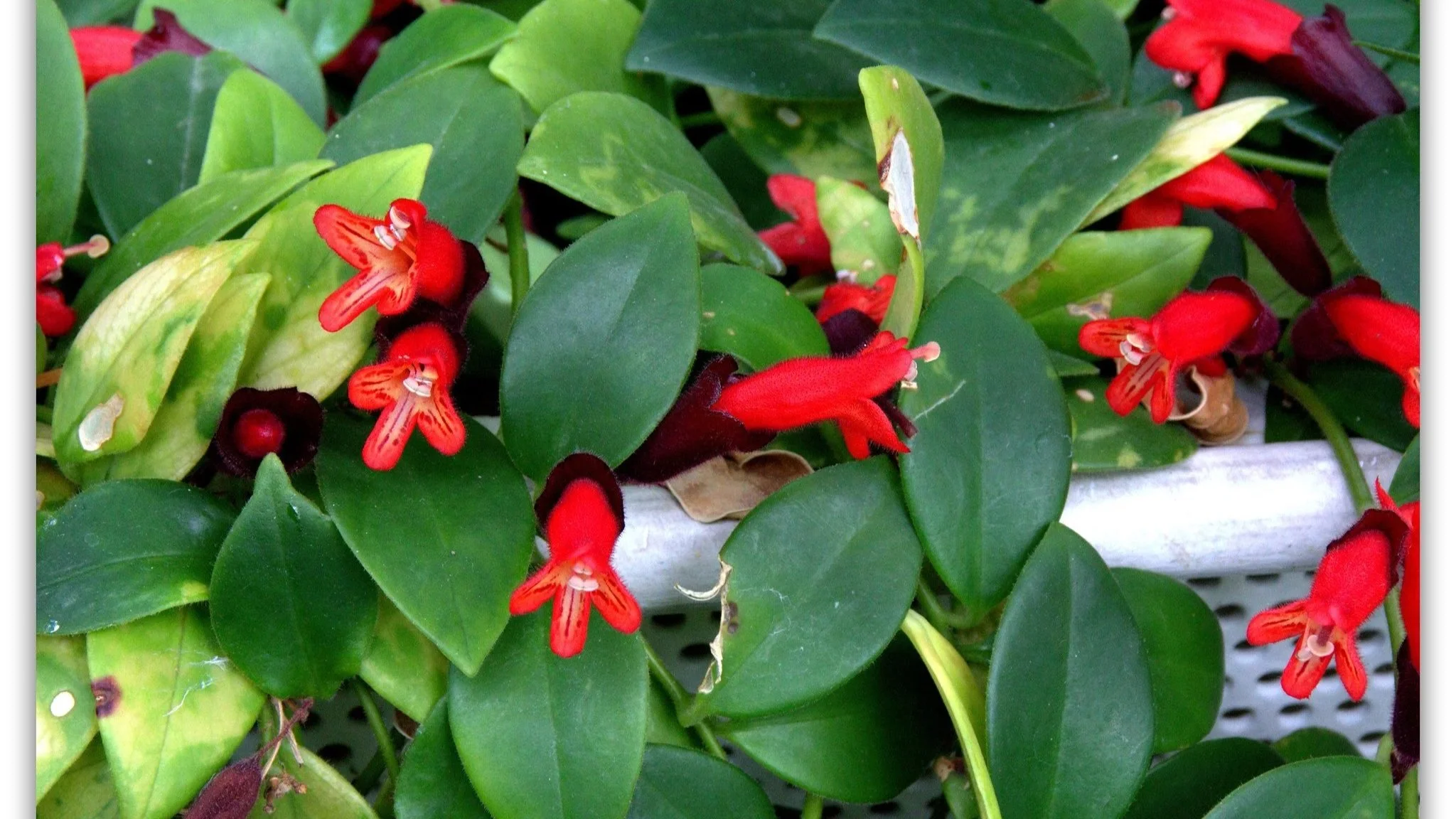
Aeschynanthus ‘Mona Lisa’. Photograph: m. m. v. on Flickr.
Transcript
Transcript © Jane Perrone. Originally published at janeperrone.com. Please do not reproduce or republish without permission.
[0:16] Hello, I'm Jane Perrone, your host, and this week I am naming my top seven flowering houseplants. Yesterday, I covered the flamingo flower, the unabashed sexy beast of the group, and today we're going a little bit more subtle with a plant called Escananthus mona lisa. Now, I'm a big Nat King Cole fan, so this immediately has me humming the classic song about the lady with the strangeness in your smile, I'm not for copyright reasons allowed to play that song, but go and load it up on your phone, on your vinyl, however you have that song It's a fantastic song. Love a bit of Nat King Cole. Anyway, let's get on to Escananthus, Mona Lisa. Why are these Escananthus not more popular? I put it down to the fact that their name is spelt very weirdly and they're hard to pronounce.
[1:22] You want to pronounce it Isky something, Isk, Isk, I don't know. But the correct pronunciation, as I understand it, is Escananthus. And these are members of the Gesneriad family, where we also find the African violets, the Streptocarpus. What else is in there? The Petrocosmias, the Primulinas. So a really nice group
[1:44] of plants, in my humble opinion. So why have I picked out Escananthus mona lisa? It doesn't have the most dramatic leaves. They are just oval chunky and green and shiny not too much to write home about and then you have the classic lipstick plant flowers so these plants are generally known as the lipstick plants because of the shape of the flowers and in mona lisa we get this, dark purpley maroon colored calyx which is the sort of cup that the actual flower sits in and then coming out of that is this sort of orangey tomato red tube known as the corolla.
[2:28] And that's what creates that lipstick appearance. So the flowers on this plant are really nice, I actually prefer them when it's just the calyx, I think they just look really cool, they also look really nice when the corolla emerges as well, I love a red flower as we already know from the fact that I've picked the flamingo flower and they come very freely and often with this plant, and if you're wondering where the actual name Escanathus comes from it comes from two greek words um anthos bit at the end just means the flowers and the, first part I don't know how to pronounce this properly but it's spelt, it's a greek word and it's spelt a-i-s-c-h-u-n-e greek speakers please tell me how to pronounce that, a scoon I'm gonna guess but I don't know.
[3:21] And that just means shame so the fact that these flowers are kind of blushing red I think is the idea that they're shame flowers I don't think that's a particularly good selling point either but the thing that I love about this plant is it's just so unassuming and easy and I'm gonna be honest I love a plain green leaf I just think it's a classic beautiful, trailing plant that looks beautiful and doesn't try to fob you off with variegation or fancy features it's just a good honest house plant so this plant is an epiphyte, and sometimes a lithophyte so that means it grows on rocks or trees, and it comes from southeast asia specifically places like thailand malaya borneo and the interesting thing about this epiphyte so the vast majority of epiphytes that we kind of have visualized are things that create vines that climb, this is a cascader not a climber, so the pictures that I've seen of it growing in habitat show that it's on a branch and then dangling down.
[4:30] And I think maybe that's to do with the way that it's pollinated it's pollinated by sunbirds and I guess maybe that gives them the chance to kind of come in and get near to the flowers. So this is a really good plant to have trailing. A lot of Hoyas and things, people want to have them trailing, but actually they don't necessarily want to trail. They want to be connected to something. These actually want to cascade and trail. So if that's the kind of plant you're looking for, then this is a really good choice.
[5:02] There are other Escananthus to choose from. Probably my second choice would be Escananthus Black Pagoda, which is the species Escananthus, Longiculis, which has this wonderful black marbling to the leaves.
[5:20] And rather nice dark orange flowers, marmalade colours, I guess. That's a really nice choice if you do need a bit more of leaf interest. The one that I really don't like, and again, I've covered this on the show before in my Ick episode, Escananthus rasta, I think that's a radicans cultivar. I just don't like leaves that twist around. I've said it before about the rope hoyer. I just don't like those weirdly wibbly leaves, not for me. But there's various ones out there that you can look for and enjoy. I just love the plain and simple Mona Lisa. It's just classic. It's classy. And I do know that when I've been helping out in a houseplant shop, this plant has sold really well. And I've been able to say to people, this is a really easy plant that will grow.
[6:15] Be happy in a lot of different locations in your home and will grow well.
[6:21] It's an epiphyte so you've got to bear in mind that it's not going to want to be awash with water every day. I tend to be on the mean side with watering and just it's mine's by the sink so it just gets when there's a half abandoned glass of water on the side the water from that gets chucked on this plant and it does absolutely fine I think if I wanted it to flower more consistently I probably have to give it a little bit more light than it's getting so yeah the main thing that is going to stop this plant flowering is lack of light so if yours has never flowered move it somewhere brighter like the flamingo flower it's going to benefit from good light next to a east west north facing window or a little bit back from the south facing window all good.
[7:05] It will be happy in those conditions potting mix wise same as yesterday's plant really get your epiphytic soil mix so you want some houseplant compost but you want to add things like fine bark uh, expanded clay pebbles uh a bit of cocoa coir just anything to sort of add different textures and things with air holes which can then you know hold moisture and nutrients for the plant, and that's about all you need to know one thing I didn't mention with the flamingo flower yesterday was propagation usually with that plant you'll find when you buy it that, after a few months you can take it out of the pot and you'll find there's more than one plant that you can separate out and make a new plant with today's plant Escananthus mona lisa it's a, stem cutting situation so grab one of those stems cut it just, above a node and then trim to just below a node, remove those lower leaves and stick it in a prop box or in a glass of water and it will root to make a new plant. Just make sure that the stem that you pick is not a flowering stem and.
[8:19] And you will be pretty much guaranteed success to make a new plant to either bush up your own plant or to give away to somebody else. And if your plant is overactively producing lots of growth, then you can, of course, prune it back and take cuttings that way.
[8:38] Well, that's all from the flowering houseplant week today. I'll be back tomorrow with my third choice. I hope you're enjoying these and i'd love to know what your favorite flowering house plants are so do share in the comments or drop me a line at on the ledge podcast at gmail.com.
[8:59] And have a blooming good day i'll see you tomorrow.
I take a look at this beautiful trailing plant from SE Asia, that’s as easy as can be to grow.
Want to hear this podcast ad-free? Sign up for my Patreon now to unlock ad-free episodes, bonus episodes and much more!
The lowdown on Aeschynanthus 'Mona Lisa' — the lipstick plant
This is a member of the gesneriad family and its name is pronounced Ess-kin-NAN-thus.
Aeschynanthus comes from the Greek word anthos meaning flowers and aischyne meaning shame, apparently referring to the flowers' blushing-red colour.
They grow wild in Southeast Asia, including Thailand, Malaya and Borneo, and live as epiphytes in trees or sometimes as lithophytes (growing on rocks). Unlike many epiphytes, they don’t cling to the tree but hang down - perhaps to help their main pollinator, the sunbird, reach the flowers? It’s a good choice if you want a truly trailing plant!
These plants love a bright spot in a north, south or west facing window. If they don’t flower, they are probably in need of more light!
Combine houseplant compost with ingredients such as fine bark, expanded clay pebbles and coco coir, so that you create a mixture with plenty of air spaces while still retaining some moisture and nutrients.
They are easy to propogate from stem cuttings - make sure you choose a non-flowering stem to cut!
Other Aeschynanthus worth exploring:
Aeschynanthus 'Black Pagoda' (A. longicaulis) — attractive dark marbling on the leaves and dark orange/marmalade-coloured flowers
Aeschynanthus 'Rasta' — has twisted foliage. I don’t like this one but lots of people do!

DAY THREE - Primulina dryas
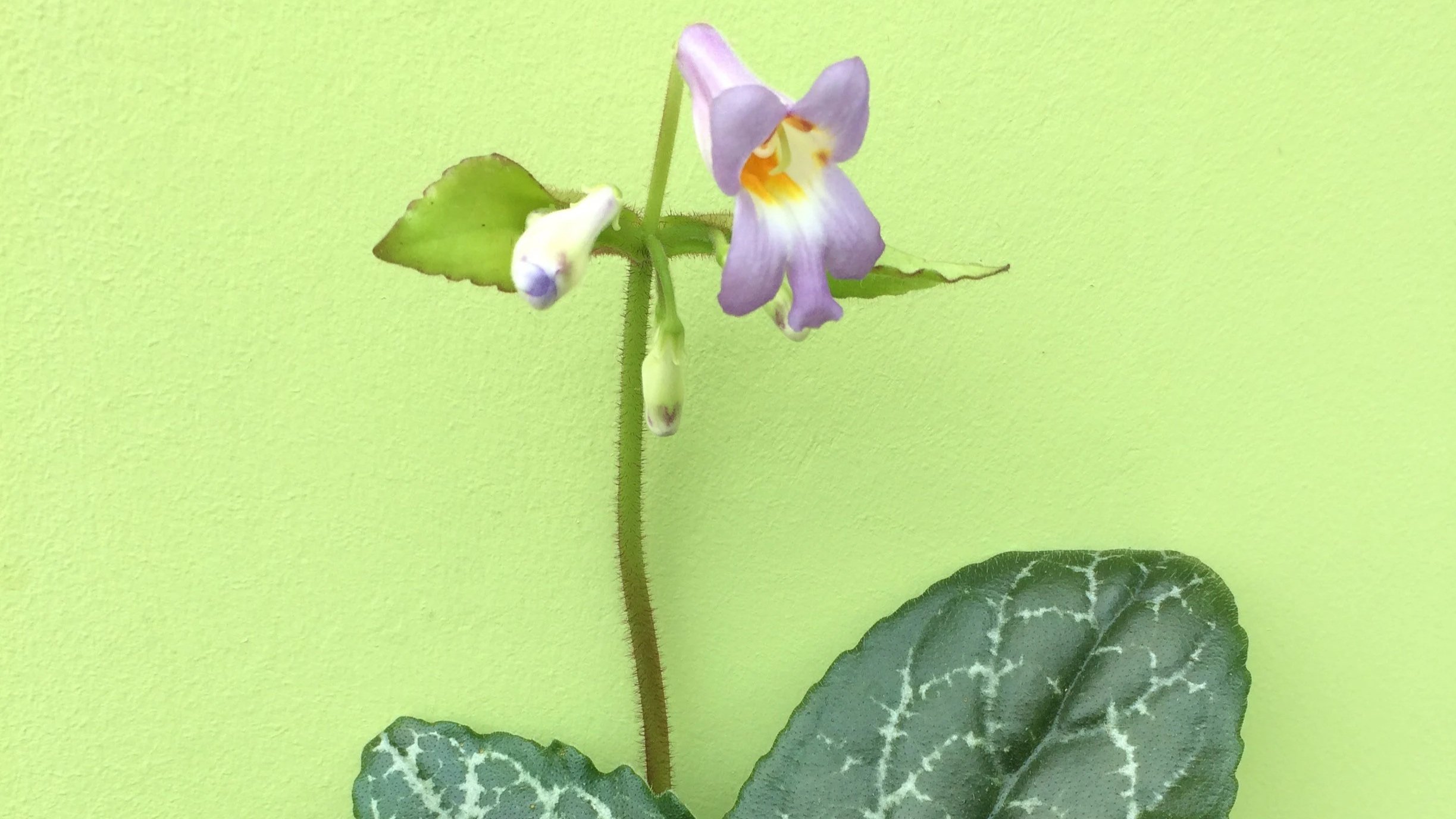
Primulinas have lilac and white flowers held on elegant stems. Photograph: Jane Perrone
Transcript
Transcript © Jane Perrone. Originally published at janeperrone.com. Please do not reproduce or republish without permission.
[0:16] This week and number three is I would say actually the house plant that I would most like, everyone to grow because I think everyone's sleeping on this particular plant, and it's such a good one it is primulina dryas.
[0:37] Yeah, I know, I know. It's another Gesneriad and, you know, guilty as charged. I bloody love the Gesneriads, so there's going to be more than one of them in this list. But I really do think that Primulina dryas deserves its place in this list. The trouble with this plant is that it's come to the sort of very broad houseplant market in the UK under the wrong name. So if you've seen this plant, you may have thought that it was a Streptocarpus because Primulina pretty turtle is being sold or has been sold widely as Streptocarpus pretty turtle.
[1:18] But we'll get into that. Let's talk first about where this species comes from. It comes from southeast China and it grows in a very specific landscape. It's a lithophyte so it grows on rocks specifically limestone cast so caves cliffs, rocky places that's where this plant loves to hang out, whereas it's gesneriad relative the streptocarpus well that comes from the continent of africa so it's important we get these things right but what do i love about primulina dryas well, i think this is an outstanding house plant because it has beautiful leaves plus beautiful flowers plus it's super easy to grow, provided that you follow a few simple rules i think this is way easier to grow than african violets and i think it looks better too quite frankly so you've got these gorgeous, furry oval leaves.
[2:24] With this white veining, and depending on which cultivar you get hold of, there are a few out there, the veining will vary in degree, but it's simply stunning. It's just got everything you need from a plant when you're looking for an interesting leaf. What's causing that variegation? Well, in this plant's case, it is blister or airspace variegation. So not caused by a pigment, but caused by air spaces between two layers of cells and that produces this sparkly look as the light bounces around. And the good thing about this kind of variegation is it's extremely stable. Your plant is not going to revert. It's not like chimeral variegation where suddenly things can really change and you get a plain green leaf. It's very, very reliably silvery, which is wonderful.
[3:20] The leaves just sparkle beautifully and then above them on quite long elegant stems the plant puts out these beautiful lilac colored flowers sort of a little bit foxglovey a little bit um penstemon like if you grow that garden plant, a beautiful bell and there's lots of them and they come very regularly if your plant is happy and to give it a final bonus it's also very easy to propagate so even a little section of leaf will produce a new plant given time.
[3:56] Primiolinas used to be one of those plants that really only were available from specialist growers but i do believe that you're going to see more of these plants coming to a house plant shop near you why i'm going to, Well, looking at the scientific literature, I can see there's quite a lot of papers in the last few years about tissue culturing these plants. And no wonder, because they do make very good houseplants, many of these primulina species, dryus in particular. And so I imagine there's going to be a lot of breeding going on of primulina dryus and other primulina species because flowering houseplants are on the rise. And that's why we're talking about them today.
[4:41] Now, this species is an edaphic species, which means that it's very specifically, evolved to cope with the kind of ground that it grows in, which is this limestone cast. So alkaline and very free draining. So what does that mean when we're growing this one in our homes? Well, the great thing about Primulina dryers and probably the reason why it's become popular as a houseplant is it can cope with a lot of different conditions. The main thing you want to avoid, though, is a soggy soil. So just make sure that the soil is free draining and it will cope with the pH that you give it. That said, given that it does grow in limestone cast conditions, that to me tells me that I'll probably be fine giving it my hard tap water rather than giving it rainwater like many of my other plants. Because, gosh, it comes from an environment where that's exactly the kind of.
[5:44] Conditions that it is actually dwelling in. So, yeah, it's a really easy plant. You just need to add some drainage material to your houseplant potting mix to make sure that it's free draining because if you're living on a limestone rock you, are not going to be enjoying sogginess however much it rains that water is just going to run straight away should you be adding amendments that will increase the alkalinity of the soil.
[6:11] I don't think it's necessary. I think if you start messing with that kind of thing, you're going to you're going to probably overdo it and make the soil too alkaline. And really, as I say, this plant is able to adapt to different soil conditions. So the main thing is that it just
[6:27] has that free draining soil rather than worrying too much about the pH. And in terms of what plants you might find out there at the moment i think probably pretty turtle is the main if not the only cultivar you're going to find, unless you go to a specialist as ever with gesnariads dibley's in north wales in the united kingdom has a really good range of primulinas including his arco which is another primulina dryas cultivar which has rather delicate white and purple flowers smaller than pretty turtle but very nice and there are some cultivars which are crosses between primulina dryus cultivars and other.
[7:14] Species of primulinas for example there's one called loki which i think has primulina brassicoides as a parent and then a primulina dryus cultivar so there's a few things to look out for and i think they're coming i think they're on their way to us and you can expect to see more of these plants hitting our shops and I do recommend that you give them a try, well that's all for today's pick of the flowering house plants I'd love to know what you think of primulina dryas have you grown it do you love it, or maybe you hate it and you want a fight well I'm up for that so drop me a line to on the ledge podcast at gmail.com and I'll be back tomorrow with flowering plant number four.
I take a look at this beautiful trailing plant from SE Asia, that’s as easy as can be to grow.
Want to hear this podcast ad-free? Sign up for my Patreon now to unlock ad-free episodes, bonus episodes and much more!
The lowdown on Primulina dryas
This species is a Gesneriad that’s native to SE China where it grows on rocks - specifically limestone karst cliffs. It is an edaphic species - evolved to cope with a very specific soil geology.
Unfortunately this plant has been widely sold in Europe under the name Streptocarpus ‘Pretty Turtle’ which is completely wrong - Streptocarpus grow in the continent of Africa!
This species is easy to propagate - remove a leaf at the base and place it whole, or cut into pieces, in damp perlite or moss and it will grow a new plant on each leaf or leaf section.
More cultivars may become available as interest in flowering houseplants grows.
As this is a lithophyte, it’s important to use a very free-draining potting mix to avoid soggy soil; adding drainage material such as grit, perlite, zeolite is a good idea. If you are overwaterer put it in a terracotta pot!
Hard tap water should generally be fine; rainwater is not essential for this plant.
This plant needs good light to flower: don’t put it in your darkest corner. Avoid south-facing strong sun though.
The cultivars ‘Pretty Turtle’ and ‘Hisako’ are the main cultivars available now in Europe although I predict that many more are on their way thanks to breeders in China tissue culturing these plants.
Have a look at this and other Primulina species on the Gesneriad Society website.
DAY FOUR - the bird of paradise plant
Transcript
Transcript © Jane Perrone. Originally published at janeperrone.com. Please do not reproduce or republish without permission.
[0:16] And today's plant is a humdinger, a corker, a crackerjack, a peach.
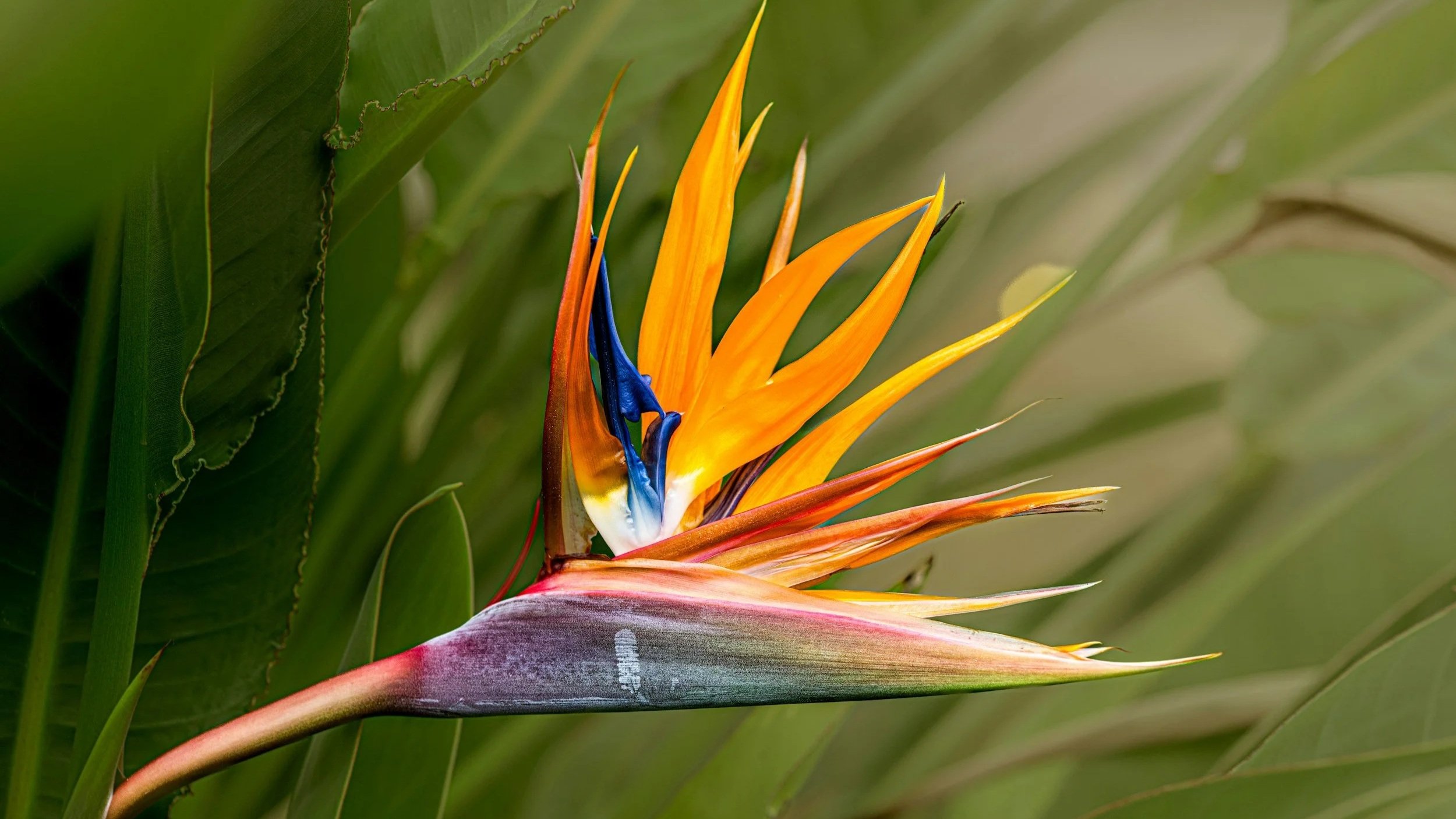
[0:24] It is the bird of paradise, Strelitzia reginae. This wonderfully meaty aroid is a brilliant statement plant that combines beautiful foliage with gorgeous, orange and purple blooms that certainly do resemble the bird after which they are named. Before we go any further though, I have to say the following. This is not a plant to grow in a dark corner. So if you have a big south-facing or at a push west-facing window, floor to ceiling doors this is the plant for you if you don't have that.
[1:12] Avert your ears because you cannot grow this plant successfully and the strelitzia path is for you unfortunately strewn with sadness but, let's assume that you do have the right conditions or indeed you can invest in a good grow light which as we know can solve all kinds of light deficiencies and if the plants that I've listed so far are all a little bit weeny for you then maybe this tall statuesque South African species is the one for you. I've seen some really tall specimens in nature this can grow up to about a meter and a half tall and in habitat you can see whole stands of the beautiful crested, flowers in bloom and its typical habitat well it tends to grow in full sun so you know you got to think about that south african full sun compared to your front room.
[2:20] It's, you know, you're going to need a decent amount of sunlight to get this plant to flower. And it tends to dwell on riverbanks and the margins of forests and places like that, where it gets good light without too much tree cover above. And it can clump up into quite a big plant. So you might be looking at, you know, a couple of meters across if you get a nice big clump of this plant. Growing from rhizomes underground and producing these sort of rather statuesque leaves which.
[2:53] Are said to look a bit like banana leaves which I guess I can see and then above those will come the beautiful flowers one thing to point out this is not going to flower until it's at least three years old so if you buy a small plant, it probably won't be in flower or what you think is a flower will probably be a plastic stake made to look like a flower that some some houseplant sellers do this they put in a fake strelitzia flower, I don't know whether it's to give you an idea of what's to come or to fool you into thinking the plant is flowering but anyway watch out for that but you've got to be in this for the long game with this plant it will take a few years to flower and it's only going to flower if it's getting drenched in sunlight day after day that's how it will flower for you, now when you look at the beautiful flowers it's one of those things you sometimes see memes about this but everyone sees the bird.
[3:54] Of paradise slightly differently so the brat from which the flower comes which is green, some people think that's the beak of the bird and the orange and purple bits above are its crest, other people see that green brat as the body of the bird with the.
[4:15] The actual flowering parts above as its wings. It's up to you and I don't think it really matters but one of the things I love about this plant is the fact that once it has been pollinated and sets seed the seeds are just as dramatic as the flowers.
[4:33] Deep blackish purple with this amazing bright orange top knot which is really really stunning but that orange hairy bit does actually serve a purpose. It's classed as an aerial and it's edible to birds and they will come in and see that and eat it and then pass on the seeds through their bodies and out the other end in the form of their poo. If you do have some of these seeds to grow they do need to be soaked in hot water to make sure that that seed coat will break open and the plant can germinate. And Strelitzia reginae is pollinated we think and I always caveat this slightly because pollination research is, a difficult thing to do and we're never quite sure but yes it seems to be pollinated by sunbirds in South Africa they're wanting to get hold of that nectar and in the process they get, down into the sexual parts of the plant, and the pollen ends up on the bird's feet and then it moves on to the next plant and so on and so forth the pollen gets passed around now the likelihood is that your plant if you're outside of South Africa is unlikely to, be pollinated and set seed.
[5:47] But I will link to a post from the wonderful Matt Kandeas friend of the show and on his In Defense of Plants website he talks about observations of this plant growing in California where some birds, there that are native to California, seem to be working out how to drink the nectar of this plant and potentially pollinate it.
[6:11] So if you want to have one of these in your home what do you need to do? Well I've talked already about light so let's make that clear. If your plant is not putting out new leaves and hasn't flowered and it's more than say three to five years old it needs more light. The other thing that will help is a good potting mix. If you can find one that's suitable for tropical house plants that's ideal, it'll be airy it will have extra stuff in it like bark and it will hold onto lots of nutrients for the plant you may find over the winter period however much light you give this plant that it starts to look a little bit rampity, I think that's just a Perone word I'm not sure that means anything to anyone else but a bit you know miserable slightly hang dog.
[7:00] Some leaves going brown at the tips you know this is, fairly standard in the winter when you've got the heating on I imagine that most birds of paradise are going to suffer a little bit but clean it up in spring cut back any really sort of sad looking leaves and make sure that the plant is in good light and it should recover, the thing that's going to kill this plant is standing in water in not enough light uh, a combination of those things will kill astralitzia pretty quickly spider mites will probably come along if your plant is already stressed and are a bit of a pain to treat uh you could also get scale on this plant um and my suggested treatment for that would be the, house plant journal daryl cheng trick of getting some tape wrapped around your hand and dabbing it on the plant keep doing it keep doing it keep doing it and that way you'll get rid of scale this plant's okay to do that on because it's got pretty leathery leaves which won't be bothered by the application of the tape.
[8:06] I think this is a plant that needs a really good pot not least because it's a specimen plant so you're probably going to be, seeing the whole thing it's not going to be sort of hidden by a group of other plants so it needs a good pot that carries off the stylishness of the flowers and the foliage and also is heavy enough that it doesn't topple over which is another consideration if you've got a really light pot and your plant hasn't been watered for a while and the compost becomes really light then.
[8:35] You might topple the whole lot over so yeah a decent sized heavy pot is advisable, its sister species Strelitzia nicolai is also grown which has got the sort of white and purple flowers otherwise pretty similar other than in nature I believe this one grows to 12 meters tall in nature, I don't think it's going to get that tall in your house but there's generally a bigger plant in nature so potentially could get even bigger, it just depends whether you prefer that color scheme to the orange and purple, temperature wise in summer they'll be happy in your normal room temperatures during the winter ideally they do like a cooler drier period it's not strict dormancy but it's certainly a slowdown so they're from south africa bear in mind they are not from you know tropical climes so they like to have that cooler period, and that will hopefully help them to flower once they've reached this the maturity to be able to flower as well so if you can put them in maybe a conservatory where they are going down to.
[9:46] A minimum of say you know 10 degrees that's 50 fahrenheit, or somewhere where they're well away from irradiators for sure in the winter then that will help them to flower better the following year, feeding wise when it's in active growth then a tropical houseplant feed will do it good but cut back on that again during that cool rest period by the way just during that cool rest period it doesn't want to get less light so don't just think oh well it's it needs less light no it still needs tons of light so in the summertime if it's getting about four or five or six hours of direct sun a day that's ideal and the same in the winter it just needs to be cooler so really a plant for very specific conditions don't bother if you don't have those because it will end in heartache and if you're wondering about cultivars well there aren't that many to choose from the one that immediately springs to mind is, one called Mandela's Gold named after the iconic Nelson Mandela of course which has beautiful golden flowers rather than orange very beautiful and, not super hard to get hold of I think I've seen this in I think I've seen this advertised in B&Q.
[11:04] So it can't be that hard to get hold of B&Q being a big box store here in the UK there are some smaller forms as well you can get dwarfing forms. Jungle seeds here in the UK does have the seeds of Strelitzia reginae dwarf available and these are.
[11:25] As the name suggests smaller plants they only grow up to 90 centimeters and they have the golden coloration rather than orange. So if you're in the UK and fancy growing some from seed that's a good place to go. I'll put a link in the show notes for that and toxicity wise for pets I should have said yesterday that the.
[11:48] Primulina is regarded as being non-toxic and safe for pets. It's worth saying on that note that, you know, any plant that even if it's described as non-toxic, if your cat or dog takes a big munch on it, it might still might make them a little bit ill. It's not going to kill them. Strelitzia is definitely a plant that is toxic to cats and dogs. So again, if you've got pets or indeed small children that like to take a plant as their dinner, make sure this one's out of their way.
[12:25] Well, that's plant number four. I hope you enjoyed that. We're really racing through now and I'll be back tomorrow with plant number five, six and seven to follow. And indeed, watch out for number seven because it's a bit of a curveball. You know me, I'm not going to go for something ordinary. So, yeah, number seven may have you shouting at your phone in horror at my choice for my last flowering house plant. But some of you are going to love it. Just just not all of you. But we'll get to that on Thursday when I'll also be putting out the whole series in one episode. If you prefer to listen that way and you want to stop now and catch up, that's cool with me. In the meantime, I am off to make mac and cheese and watch my new favourite show, The Reluctant Vampire. I hope you don't.
This flowering plant from South Africa is a real statement plant, but make sure you can give it tons of sun if you want it to thrive!
Want to hear this podcast ad-free? Sign up for my Patreon now to unlock ad-free episodes, bonus episodes and much more!
The lowdown on Strelitzia reginae — bird of paradise
This beauty of an architectural plant is a South African native with large, banana-like foliage. It grows to around 1.5m tall indoors and form large clumps. In habitat, it can form stands of flowering plants 2m across: its habitats include riverbanks and the edges of forests.
This is NOT a plant for a dark corner! It needs 4+ hours of sun a day to thrive - and flower. Keep it in a big south facing window or use a growlight.
It will only flower once 3+ years old. If an established plant (3–5+ years old) isn't producing new leaves or flowers, lack of light is the most likely issue.
The seeds are almost as dramatic as the flowers: black with a hairy orange topknot - the aril. This is edible to birds and helps to spread the seeds.
In South Africa, Strelitzia reginae appears to be pollinated by sunbirds: here’s a good piece on In Defense of Plants about bird of paradise pollination.
Use a good tropical houseplant potting mix for repotting. Make sure you use a heavyish pot so that your plant doesn’t become top heavy.
They benefit from a cooler, drier winter period rather than strict dormancy. Ideally, winter temperatures can fall to around 10°C / 50°F which will help to encourage flowering next year. A conservatory or position away from radiators can work well. Don't reduce the light during winter — it still needs lots of light.
One of the quickest ways to kill Strelitzia is leaving your plant’s rootball standing in water accompanied by insufficient light.
Feed with a tropical houseplant fertiliser during active growth and cease feeding during the cooler winter rest period.
Strelitzia nicolai is another bird of paradise species commonly grown as a houseplant - it can reach 12m in habitat! It has white and purple flowers.
There aren't huge numbers of cultivars but 'Mandela's Gold' with gold and purple flowers is nice. Jungle Seeds in the UK has dwarf Stelitizia seeds if you fancy trying to germinate them.
Strelitzia is toxic to cats and dogs so keep it away from pets that might want to make dinner out of it - and young children!
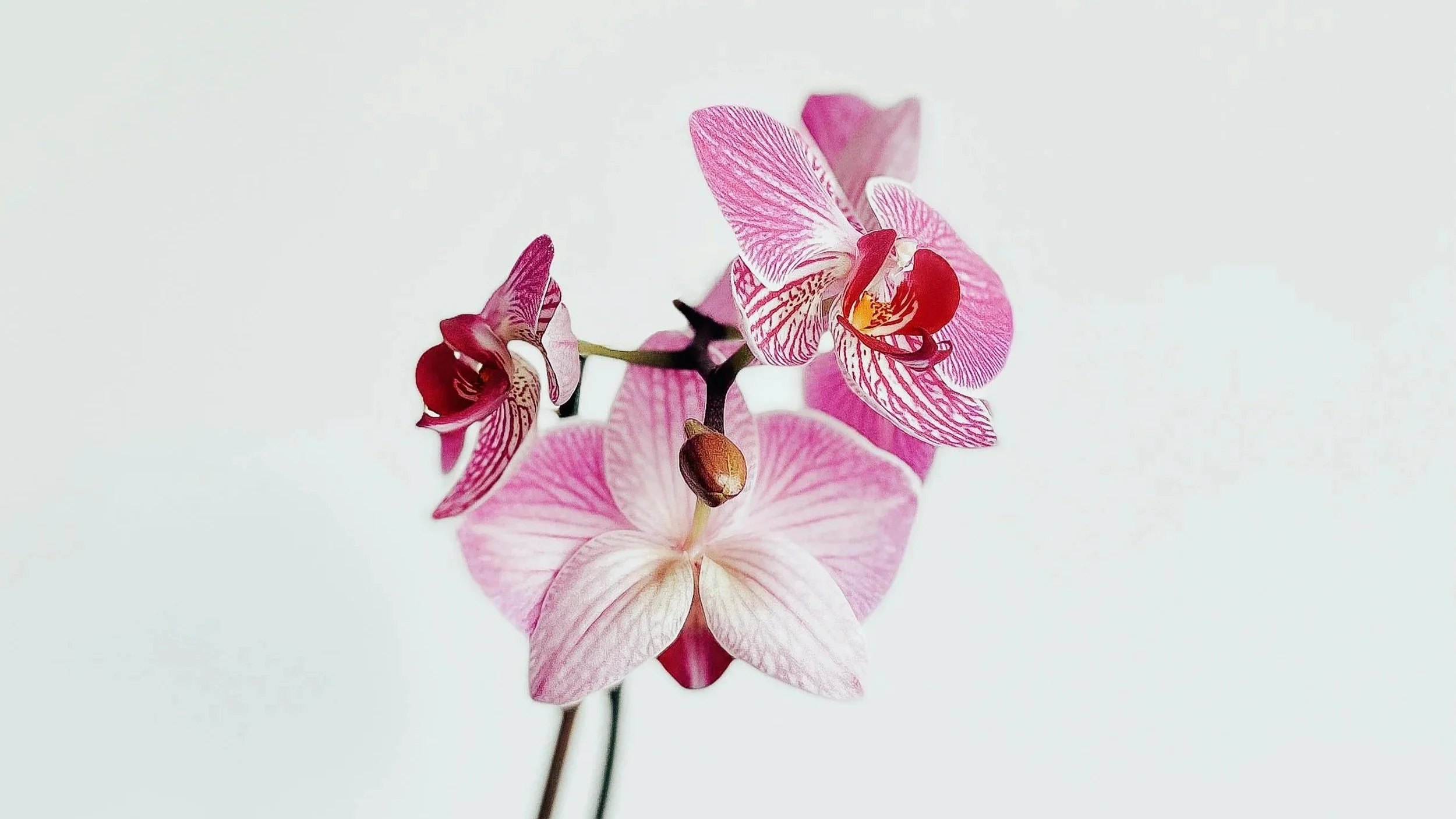
DAY FIVE - PHALAENOPSIS
Transcript
Transcript © Jane Perrone. Originally published at janeperrone.com. Please do not reproduce or republish without permission.
[0:16] Flower well it is the absolute floral behemoth that is the phalaenopsis orchid the moth orchid now i did some digging about how many phalaenopsis orchids are sold around the world every year and i was shocked i have to say i thought it would be millions but apparently it's actually, billions 4.8.
[0:42] Billion units which I'm guessing means plants, sold every year which is absolutely incredible, and we have to remember that that's not just for potted orchids that would also be for cut flowers as well because they are obviously popular for florists to use as well so you can't really argue with the stats there. This is an enormously popular plant and one which I think also earns its place in my top seven because it's very beautiful and very easy to grow.
[1:17] But it's worth noting that Phalaenopsis has not always been easy to grow, nor has it always been our favourite orchid. I love digging around in scientific papers, as you probably know if you're a
[1:32] regular listener to the show. And I found a really interesting paper from 2002 from the publication, Trends in New Crops and New Uses. and it was about the development of Phalaenopsis orchids for the mass market. And it reminded me of the fact that the Victorians found Phalaenopsis orchids actually quite difficult to grow. They didn't like the conditions in the average Victorian parlour, too cold and too polluted as well from the ethylene from the gas lights. And that meant that Phalaenopsis were largely confined to people who had the money to have a glass house, which was a stove house heated by a stove, where they obviously did a lot better. So that meant that they were really not plants that were in common circulation for the average person. Until I would say probably the 50s onwards.
[2:32] What the paper did say which I was floored by but does make sense is that until right up to the 1980s that the orchid genus Cattleya was actually more popular than Phalaenopsis.
[2:47] They were known as the corsage flower and were very popular for that purpose and it was only in the 1980s that the moth orchid came along and knocked cat layers off their perch.
[3:00] I thought that was fascinating. I'll link the paper in the show notes in case you want to have a look. It also goes into a lot of detail about the different species of Phalaenopsis orchid that were bred for different purposes so you need a different thing when you want to have a cut flower Phalaenopsis than you do when you want a potted Phalaenopsis. So different species bred together to create different hybrids that serve different purposes and that's how we've ended up with the absolute rainbow display of different phalaenopsis that are available today from the ones with absolutely enormous heavy flowers to tiny little delicate butterfly flowers and everything in between, and the breeding just goes on and on you know you can imagine if you're selling billions of a plant every year then there's going to be money in them there moth orchids and so breeders often in southeast asia where these plants come from are going to be absolutely continuing to innovate in this area and of course the other thing that happened, that has revolutionized the phalaenopsis market is tissue culture we talked about this on the show before as well so if you can create lots of plants, then you're going to be able to have a mass market plant that will.
[4:17] Be able to be produced in that kind of quantity.
[4:21] And the price has gone down. You know, if I go into my local big box store, I can probably pick up a decent orchid for under a £10 note these days. Not that anyone uses notes anymore. But I think the unfortunate corollary of this popularity of the moth orchid is just that familiarity breeds contempt, doesn't it? So we see these flowers everywhere and we become rather blasé because they're cheap to pick up and they might last a few months. But then when they start looking miserable and the flowers finally drop off, then we chuck them away. But it's important to remember these are toughies and they will rebloom quite easily. So if you see a reduced plant in the supermarket why not pick it up and give it a rescue and talking of rescues friend of the show sarah gerrard jones has a new book out and hey presto it's about orchids it's called love your orchid i'll put the details in the show notes but i've just been looking through it and feeling inspired about all the beautiful orchids she talks about.
[5:33] And Sarah is very, very committed to rescuing plants. So it's a really good message that I totally chime with. And I would recommend that you give it a go because there's nothing more satisfying
[5:46] than bringing an orchid back to life. So what do we know about the moth orchid? Well, we've said this word several times before in this series. It's another epiphyte. Yes, lots of houseplants are epiphytes and it comes from Southeast Asia. So we're talking about places like the Philippines and China and even parts of Australia as well. And the reason why it grows well in our homes, which tend to have that sort of steady heat, is that that's exactly what they like. It likes temperatures to remain about 21 degrees centigrade.
[6:24] Which is about 70 Fahrenheit. You know, the kind of conditions that we like.
[6:28] So in that sense, we have something in common with our moth orchids. And because they've got so much succulents, succulent leaves, succulent stems, and because they can employ a specialised method of photosynthesis called CAM, they are very resistant to neglect. Now, just talking about CAM, Crassulation Acid Metabolism. If you're an OG listener to the show, you'll have heard me go on about this before. It's a way that plants have adapted to cope with tough conditions by opening their breathing pores their stomata at night for gas exchange.
[7:08] Rather than daytime and we think of it mostly in association with desert cacti and succulents but, phalaenopsis do it too and to find out a bit more about cam i've written a free to access post on my patreon today patreon.com forward slash on the ledge which looks at a bio modder.
[7:30] Who has tried to lock himself in a sealed box containing 100 snake plants and it hasn't worked and if you know anything about cam you'll know why it's because, snake plants are a cam plant and so during the day when this guy had the lights on, the plant would not be giving out any oxygen it's a fascinating topic if you want to find out what, I think about this particular experiment then do go and have a look at my Patreon. It's free, you don't even have to be a member to look at it and I would love to know your thoughts so do check that out via the show notes.
[8:10] Anyway so yes it's a tough plant, the moth orchid, it can do cam which means that it'll survive without water for an extended period of time and it's also storing lots of water in its leaves. The fact that it's an epiphyte means that generally when you buy one of these you'll find it's planted into bark you'll sometimes find it sold in moss as well, although just be careful with the moss because it can become very waterlogged and make the plant's roots rot what you want to provide for those roots is a really free draining environment so you could also use something like expanded clay pebbles as well, that also provides really good drainage for the plant and in terms of watering super easy, chuck it in a sink for a few minutes once a week or run some water through the substrate for a minute or so again every few days have a look at the silvery roots when they turn very silvery rather than minty green then you know it's definitely time to water.
[9:15] Clear pots is the other thing that always comes up with moth orchids. Do they need clear pots? Well, yes and no. So the roots do photosynthesize. That's why they're a little bit green. But if you tuck them away into the pot, it's not going to make a massive difference to the plant. As we've already seen, moth orchids have been bred and bred and bred to be super adaptable. And so they will cope fine. You can get some really beautiful pottery and terracotta orchid pots to put your phalaenopsis in. You can even put them in a glass container with no drainage if you want to be brave. You just got to keep a really close eye on the amount of water in the bottom and make sure that it's not going to have a stagnant pool of water sitting there rotting the roots because those roots really will not like that. And if you are worried about fertilization well again lots of people will say I've never fertilized my orchids and they're fine but if you want your plant to be doing its best then I would say get some orchid feed and just follow the instructions orchid feeds tend to be lower in nutrients than regular house plant feed because orchids have again adapted to low nutrients so it's worth picking up some orchid feed to use on your plants if you have more than one or two.
[10:42] The other tricky issue with moth orchids is staking. So when you buy a plant, you'll find it's all trussed up with a little stake and maybe some butterfly clips. Now, personally, I really don't like the stakes and I'll immediately remove them. The only exception that I make to that is where you've got Phalaenopsis with very heavy, large flowers, which basically have been bred to be supported. So you just got to judge it as to whether they need to that stake needs to remain but if you've got one that's re-blooming and producing a new flower spike just leave it unstaked and the plant will sort itself out then you get this beautiful sort of trailing effect I think they look far better that way and I just don't want to see a stake that's the bottom line but if you like the look of a staked plant that's absolutely fine too. Light wise well good light is going to help this plant if you put them in a bright sunny south facing window in July they are going to go straw colored the leaves and they're going to be burnt but.
[11:52] Other than that, they will want as much light as you can give them, barring that sort of particular barbecue type experience. You want to give them good light. And it's coming up to winter now. So, you know, you can move orchids closer to a window in winter and autumn just to make sure they're getting enough light. You only need to start worrying if you start to see straw marks on the leaves
[12:17] and then that's the time to pull them back a bit and give them a bit less light. One other thing that may happen to your orchids is you may find that you get a keiki and that's a little baby plant growing on the top of the flower spike. And this is usually caused by a little bit of stress. So, you know, it's a surprise that I'm not totally covered in keikis right now, quite frankly.
[12:41] But that's my problem. Back to the moth orchid. yes so it produces a cakey so if if there's been uh really hot high temperatures or or some kind of other stress factor the plant may produce a baby plant from that flower spike, and once that baby's reached a decent size and it's got some decent roots on it and you know two or three leaves then you can get a sterilized pair of scissors or a knife and cut it off and make a new plant very handy now the number one question I get at talks when I talk about houseplants is how do I get my moth orchid to re-bloom and it's a bit of a mad science this one, most moth orchids now will come back into bloom provided they've got enough light that's really it that's really the only thing, there's advice about giving them a cooler temperature at night and a warmer temperature in the day and this may help a little bit. So if you've done the light thing and moved your orchid into greater light and it's still not flowering.
[13:43] Turn the heating off at night and let it get a bit cooler and you may find that helps.
[13:50] And if you're sitting there thinking, Jane, I am so beyond the moth orchid in my level of skill that I've become a houseplant guru. I have ascended to the next level. Well, in that case, my recommendation would be either to try an Oncidium or a Catlea or a Paphio Pedalum. Actually will probably be my first choice those are all other genera of orchids that are pretty easy to grow and won't make you cry, and won't break the bank either and some of them have beautiful scents as well and.
[14:29] That way you can expand your orchid universe quite painlessly, well that's my orchid law for today I hope you enjoyed that episode, I'd love to know if there's other weeks you'd like me to do maybe we need to cover I don't know what else could we cover carnivorous plant week would be nice wouldn't it well let me know and I'll see what I can do about that but in the meantime I'm off to, make some dinner and I think it's going to be kedgery.
Moth orchids sell in their BILLIONS around the world every year - and there's a reason why. Find out how to grow these easygoing, beautiful epiphytes in day five of flowering houseplant week.
Want to hear this podcast ad-free? Sign up for my Patreon now to unlock ad-free episodes, bonus episodes and much more!
The lowdown on moth orchids
The orchid sales stats I mention come from this report.
Here’s the academic paper on the history of Phalaenopsis breeding that I mention in this episode.
Sarah Gerrard-Jones’ book Love Your Orchid is out now, published by DK.
My free to read patreon post about Crassulacean Acid Metabolism and biomodding with snake plants is here.
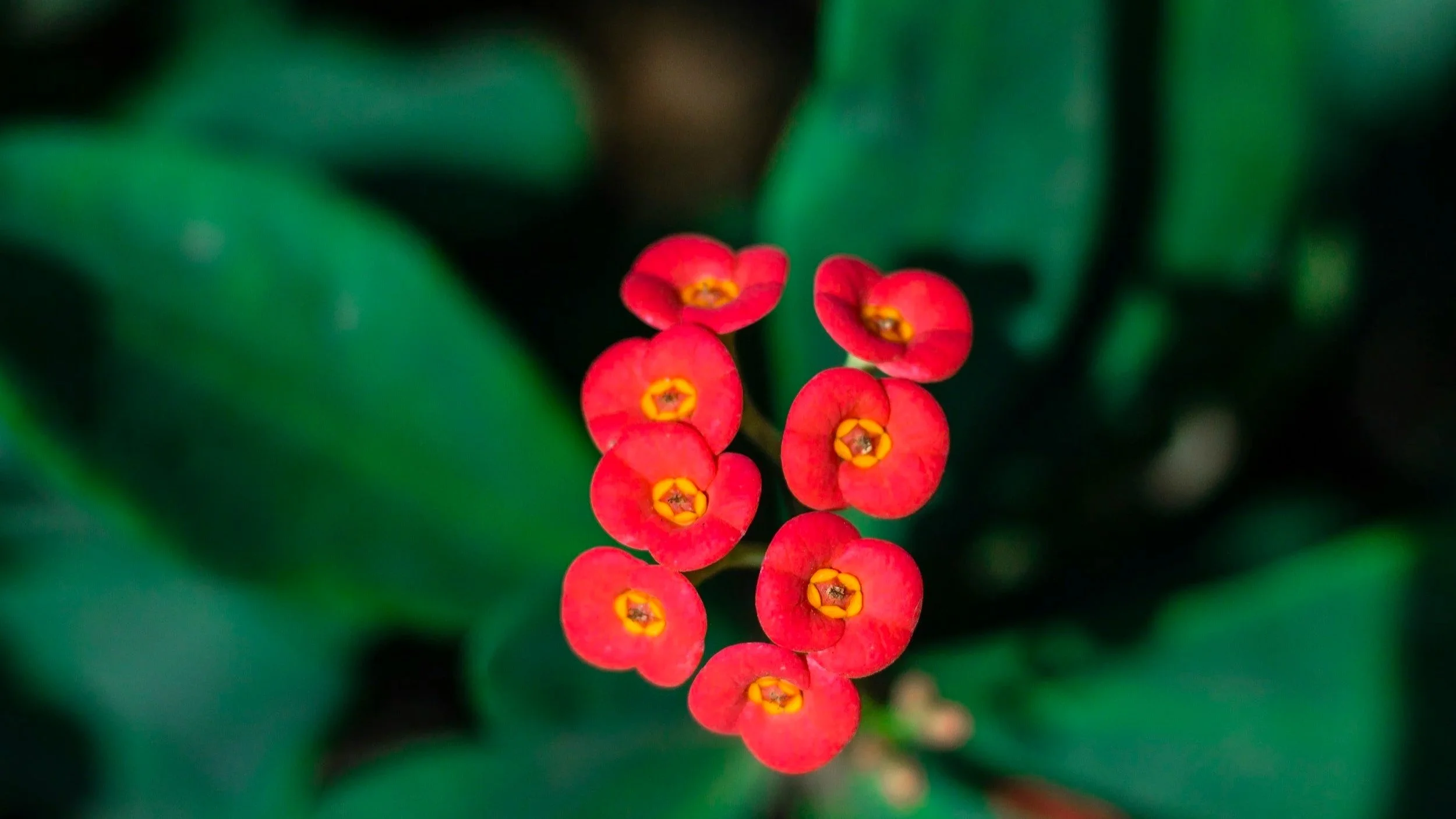
day 6 - euphorbia milii, aka crown of thorns
Transcript
** Transcript © Jane Perrone. Originally published at janeperrone.com. Please do not reproduce or republish without permission.**
[0:03] Hello and welcome to Flowering House Plants Week, the penultimate day. Yes, it's day six. And I just want to say, this has been a really hard week for me, folks. Trying to choose just seven plants to feature has been a deliciously difficult challenge. Among the things that I haven't included that maybe I should have done are things like begonia. I mean, I should have had a begonia in there. I was thinking about Lucerna or YTI, but I just don't have room. And I have mentioned those plants already in one of my special weeks, namely my begonia top 10, which I do recommend you go and have a look at. I was also wanting to big up my teeny tiny Schlumbergerers. I've got two forms of Schlumbergerer lutea, which is it looks like a doll's house, Schlumbergerer and produces these gorgeous golden yellow flowers in spring.
[1:08] I haven't gone for that one because it's apparently not the easiest plant to look after, although, it seems to do very well here in my office bathroom and weirdly seems completely immune to broad mites and flat mites or whichever of the two I've had on another plant from the same family. So yeah, I was going to mention that plant, but it's actually quite hard to get hold of. So I don't want you all shooting off and trying to buy that so I'm not, and I say it's meant to be quite hard to look after not that I found it that way so I'm not mentioning that one but I still want to go a little bit left field in these last two days of the, blooming house plants week and so I've gone for something that might shock you but I think this is a plant that's going to come roaring back into popularity i think it's great it's called crown of thorns aka euphorbia milii, why is it called crown of thorns well of course that's a reference to jesus uh these plant people love to love to give a religious reference to plants and it's also known as by various other names including the christ plant um and that's in in various languages the other name I found for it is Siamese Lucky Plant. No idea why it's lucky. I mean I guess it's lucky if you don't land on it and hurt yourself.
[2:37] But yeah, a range of names, but all often referring to the spines and often referring to Jesus.
[2:43] So take your pick. If you want to call it Euphorbia milii, that's cool with me. If you want to call it Crown of Thorns, great. Now, this one comes from Madagascar, that island that is jam packed full of incredible ecological niches and microclimates. And indeed, as a result, loads of really fascinating plants, in particular succulents. And this is a plant that is obviously very, prone or suited to breeding because if you go looking you'll find that there are hundreds and I mean hundreds of different cultivars out there. So what are you getting with Euphorbia milii? Well as the name suggests so this is a spiky plant it's going to try to kill you and that's okay with me. I like a plant that strikes back and I also think it makes it look really cool as well.
[3:41] If you don't like spiky plants this is not one for you but if you like the idea of a spiky non-cactus this is a member of the Euphorbia clan, the huge spurge family, the mega genus that includes so many, indeed houseplants and garden plants but this one as I say it's from Madagascar and it's growing in, rocky places in shrubby places in dry places and in nature it can grow, up to a meter tall and the same again across even if not more and obviously those thorns are serving a very important purpose stopping herbivores from munching on them because you don't want to lose a lot of plant tissue when you are in an environment where you just don't know where the next drink of water is coming from.
[4:30] So it's not a cactus. It does have leaves. Before the pedants come in, I should say there are cacti that have some leaves like Pareschias. But anyway, yeah, this one has leaves. And the interesting thing is that the flowers themselves are not much to write home about. They're these tiny little green things. But the thing that we love about this plant are the modified leaves, the bracts that surround these flowers. And that's where the colour comes in. So in nature, the flowers, I think, are almost always red. But breeders have gone to work on this plant and you can get the flowers in all kinds of sizes.
[5:11] Some of them have quite large bracts and colours from white, orange, red, pink, multicoloured, yellow.
[5:19] It's an absolute bonanza out there. It's like a bag of opal fruits. Now, as with some other plants in the succulent group, like, Adenium abesum, the desert rose being another one that springs to mind, the focus of the breeding work has been done in Southeast Asia. In Thailand in particular and you get some really really unusual looking plants from those breeders they may be a little bit harder to get hold of if you are in the west but they are certainly circulating in some parts of the world. One of the trends is for huge bracts on the flowers so they look a bit more like I don't know a rose or.
[6:04] I think they actually call them hydrangea blooms so that they look enormous, these are a bit of a thing of taste do you like these are they up your street if they are then those kind of plants are definitely worth looking at, There's a few that I like, most of them I don't like. There's one called Tie Giant, which has got these enormous pinky red bracts, which I think looks rather cool.
[6:29] The other thing, of course, is variegation of the leaves. Again, I can take that or leave that personally with cream markings on the leaves on the edges or in the center. I think the kind of forms that really interest me are the cristate ones so you get a cristate form where the, spiny stems become flattened and crested and that can produce some really really interesting plants, well it's not surprisingly you're going to pay more of a premium for those plants but I think they are very cool you'd be looking out for, and in that case it may well be that you're not that bothered about the flowers you really are just bothered about the form and the leaves and the final breeding trend that I should point out is is dwarfing so just making really really small plants, most of these are pretty obvious because they'll have dwarf in the name and they will stay much smaller than regular crown of thorns which can reach well up to up to a meter tall, if you look after them really well I don't know though I have to say my favorite would probably be just a bog standard red flowered euphorbia milii with really nice, stems and spines I think that's what would yeah do for me, you know if you want different flower colors also you can get.
[7:57] Green flowers as well I should mention the other thing to warn you about this plant is it's a euphobia so that means the milky sap that comes out when you damage the plant do not get this in your eyes or any of your, delicate tissues or your mouth, it's not good and wash your hands if the sap comes into contact with your skin immediately so just be careful with that and it's toxic to pets and humans so yeah you know I mean I like a plant that comes with a little bit of danger personally but if it's not right for you then this is one to give a swerve to and the information that I found about how this grows in habitat suggests that it is usually a plant associated with really rocky places so you can see how it's a tough customer now as we were talking about phalaenopsis yesterday I'll make the same point for this plant because there's been so much extensive breeding, you're going to find that the plants that are available for purchase are going to look very different to some of the ones in the wild so their leaves have been made bigger the bracts have been made bigger and more colorful and in different colors and that's been down to hybridization.
[9:07] Often with another species called Lophagona, apparently. When I was a kid back in the 70s and 80s, this was much more popular and easy to get hold of. And I'm hoping that that might be the case in the future because I am a Euphorbia milii champion. But for some reason, this plant has been out of popularity for a while.
[9:29] Even though cacti and succulents are definitely back in vogue, you really don't see this talked about very much.
[9:36] But all that breeding work is still out there and there still are some amazing plants to find. How do you care for it in your home? If you do see this plant, I think I like that. If you want this to grow well in your house, I'm going to say the same thing I did about the strillitzia. You're going to need really good light. This is a good candidate for going under a grow light because it's going to need full sun if it's growing in.
[9:59] Madagascan rocky lands or shrublands with full Madagascan sun on it then yes it's going to need a sunny spot in your house and in the spring and summer you can certainly give it a decent amount of water and that will encourage it to produce more flowers and blooms don't let it dry out provided that soil is nice and free draining then watering it during growth periods is going to do loads of good. In winter give it a cool resting period, don't let it go below about 10 degrees centigrade. During that rest it needs lots of light still, just lower temperatures and a lot less water. Cactus and succulent mix for the substrate is absolutely essential. It's very drought tolerant, you can see that from just looking at the plant and how it stores water in its stems and has those spines. If it gets super dry for a really long time it will drop all of its leaves, but worse than that it will rot if it's left with too much water so much better that you lose some leaves and they will grow back rather than the whole plant getting root rot and dying. You might get some pests like mealybugs like most succulents mealybugs could be an issue so watch out for those cottony masses and have a listen to my mealybug episode if you want to know how to fix mealybug problems.
[11:22] And how do you make more? If you fall in love with this plant and you want to spread it around to your friends, well, you've got to be a little bit careful because of the aforementioned latex that comes out of the stems when they are cut. And it can come out quite generously, shall we say. So make sure you've got your eyes covered and make sure you've got some gloves on so that the latex doesn't get you. And you want to just cut a stem off the plant in when the plant's growing so not in the depths of winter.
[11:55] You know get a section of stem let it callous over just like you would do for any other succulent cutting and then remove any lower leaves and put it into a really free draining mix to root and just make sure that the soil is is lightly moist and you'll get roots before long.
[12:17] Now strictly speaking botanically wise this is not actually so that's euphorbia milii uh, i would love to hear your thoughts because i think some of you are going to be screaming in horror at the idea this is one of my favorite plants i think it's maybe because i don't have one right now and I just want somebody to buy me one. So consider this a Christmas gift request, family, if you're listening. A euphorbia milii, a nice bright red one, would be lovely. And I should also say, if you're horrified by today's pick, just wait until tomorrow's because it's even more horrifying for day seven of Flowering Plants Week. Well, I'll leave you in suspense, but in the meantime, have a great day with your plants. See you tomorrow. Bye.
Let me try to convince you why this spint Madagascan succulent deserves a spot on your sunniest windowsill.
Want to hear this podcast ad-free? Sign up for my Patreon now to unlock ad-free episodes, bonus episodes and much more!
The lowdown on Euphorbia milii
Also known as Euphorbia milii, Christ plant, and Siamese Lucky Plant, this spiky succulent comes from Madagascar, where it grows on rocky ground as a subshrub up to 1m tall and the same or more across.
Its tiny flowers are surrounded by colorful bracts, which are red in the wild, but have been bred in shades including red, pink, orange, yellow, white, green, and multicolored forms.
Breeders - with a particular emphasis in Thailand - has produced many varieties, including plants with oversized bracts, variegated leaves, cristate stems, and dwarf growth.
Give E. milii a very bright, sunny spot and free-draining cactus or succulent mix. Water more regularly during spring and summer growth, then provide a cooler, drier rest in winter. Avoid temperatures below about 10°C.
The plant is drought-tolerant, but too much water can cause rot. M
Take care when handling or propagating it, and not just because of the spines: the milky sap can irritate skin and is toxic to people and pets. Use gloves and protect your eyes.
To propagate, take a stem cutting during active growth, let the cut end callous, then place it in a free-draining mix.
Day seven - the carrion flower
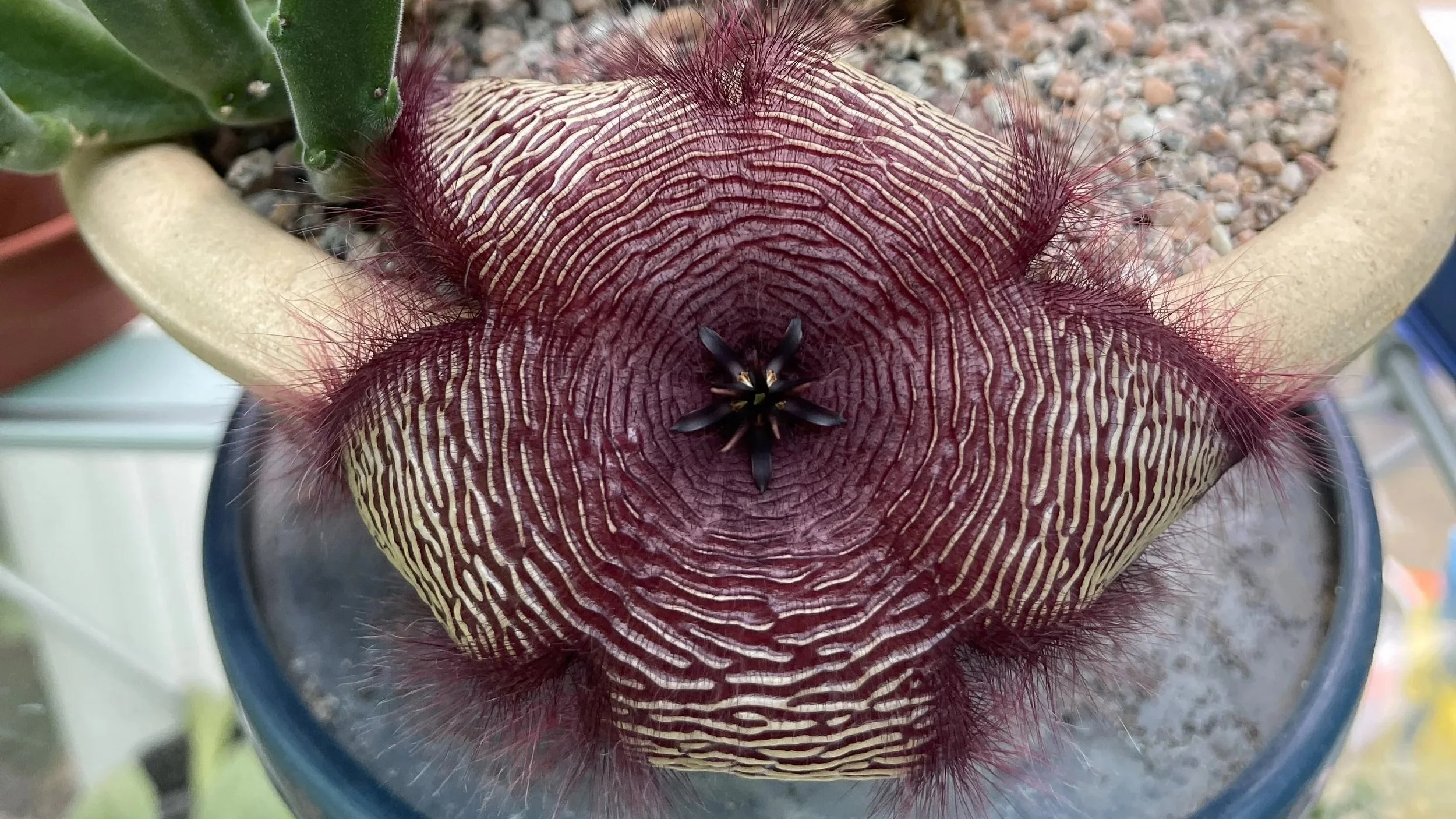
The beautiful darkness of the carrion flower. Photograph: Jane Perrone
Meet Stapelia hirsuta, the carrion flower: a striking South African succulent with spectacular flowers and a distinctly unpleasant smell. Perfect for Halloween!
Transcript
Transcript © Jane Perrone. Originally published at janeperrone.com. Please do not reproduce or republish without permission.
[0:04] Hello and welcome to the final day of Flowering House Plants Week here on On The Ledge Podcast.
[0:12] I'm your host, Jane Perrone. And if you prefer to listen to all seven plants together in one glorious episode, then pause this, go and check your pod out and you'll find the file available to download now. But if you're sticking around, having gone through all of the previous six episodes, then welcome to plant number seven. And the final plant I'm going to be talking about today is, well, I mean, I did try to warn you that it's maybe a bit of an odd choice. All I want to say before I tell you what it is.
[0:53] Is that I feel like this plant and the plant yesterday, Crown of Thorns, Euphorbia milii, perhaps are choices that, I don't know, reflect the stage of life that I'm in, aka perimenopause, a time when no F's are given and you recognise at last that you don't have to please everybody all the time. Now this is a lifelong struggle for me as a natural born and raised people pleaser, but what I like about yesterday's plant, Euphorbia millii and this plant from today is that these species just stick two fingers up at the idea that plants have to be comfortable.
[1:38] In particular, today's choice, which is the carrion flower, Stapelia hirsuta. Now, why on God's green earth would I pick such a plant? It has carrion in the name. If you've not come across Stapelia hirsuta before, the carrion plant, it's a beautiful succulent from South Africa with the most amazing flowers. Yes they smell absolutely revolting, but if you hold your nose and get up close and have a really good look at them you'll find they're incredibly beautiful intricate and alluring and they've got a really fascinating story to tell as well, and heck it's coming up to halloween folks and plants don't really come much more gothic than this so I'm embracing all of, the beautiful darkness at the center of this plant.
[2:39] Now the Stapelia genus of which Stapelia herciger is a part of is a member of the Apocynaceae family which also includes the Serapegias and the Hoyas we also call it the milkweed family, And the Stapelia species, they all come from southern Africa, although I think some of them have become naturalized in other parts of the world. I think India being one. Now, depending on who you ask taxonomy wise, let's try and say that right. There are 28 to 40 species of Stapelia and some of them you can find grown as houseplants. But I think Hirsuta is one of the best. Generally, Stapeliads are not super easy to pick up. They might not be in your local, you know, garden center. But if you go around to specialist cactus and succulent growers online or in person, you will find them. And it may lead you on to a fascination. If you're looking for other genera with beautiful stapeliads, look at Orbea and Huernia. Those genera are stuffed with plants with smelly but amazing flowers.
[3:52] I've picked Stapelia hirsuta here because A, I own a lovely one. Good reason. B, they're pretty representative of the genus. And C, they're reasonably easy to get hold of in stapeliad terms anyway. So what does it look like? Well, I'd recommend going and having a look at the show notes so you can see the plant in all its glory.
[4:16] But let me paint you a picture. It's a stem succulent, so it lacks leaves, but it makes up for it with its deliciously fuzzy four sided stems in darkest green. And these do have a red tinge if the sun is really strong and they get about 20 to 30 centimetres long and a centimetre or so across each of these individual stems. But they can grow into quite a large clump. I've seen them 30 centimetres across or maybe more. Do they look like dead fingers reaching up from the earth?
[4:52] Little bit but that's part of the joy uh, there are little bumpy bits running along each of the corners dotted along the the the sort of um corners of the stem if i can describe it that way and they are the tubercles which are just the places where.
[5:11] I guess they're the last vestiges of where there would have been a leaf in uh, evolutionary terms and in fact i think when they first develop there is a tiny tiny weenie leaf type protuberance there but it's so small you probably can't see it, and the name carrion flower well don't be deceived this plant is no joke when it comes to looking like something it isn't and it goes, and the name of this particular technique is called brood site pollination by deception. Now I know it sounds like the motive for a murder in an Agatha Christie novel, but no it just means that the plant tricks its pollinators into thinking that it's a piece of dead animal and the fly naturally thinks that's a great place to lay its eggs. Now these tend to flower in late summer in my house and the flower it's positioned at what would be ground level if the plant was in nature and I guess that's mimicking the location where you'd usually find a dead animal at ground level. Another little term for you to remember geoflory that's what we call it botany fans. So the fly comes along and thinks hurrah there's a dead animal well it looks like one anyway so I'm going to lay some eggs and my larvae are going to hatch and eat away and have a jolly old time.
[6:33] Of course, the fly is very much mistaken because the eggs get deposited, but there is no rotting meat for them to eat. Now, I did find a really interesting academic paper talking about observations of this plant and reporting that eggs and hatched eggs, the larva, were being picked up by ants and spiders from the surface of the leaf and taken away to be eaten, which is very fascinating. So it's not really doing the fly any good. The fly is doing the plant good though, because while it's in amongst the sexual parts of the plant laying its eggs, and the scent is concentrated in the center where the sexual parts are, the pistil and the anthers.
[7:20] It's picking up pollen from that plant and also depositing pollen from other plants onto the flower. So it's a really clever way of getting a plant pollinated. So it's a really clever way of pollination, unless you're a fly, of course, in which case you might feel a little bit chagrined if you had the capacity for that level of intellect.
[7:41] So how does the flower look like a piece of dead meat? Well, if you haven't seen a Stapelia hirsuta flower, know this. They can get huge, I think about up to 14, 15 centimetres across in some cases. Mine are smaller than that. They're about six to eight centimetres across, but they're still a really imposing flower. There's quite a lot of genetic diversity in this species, and you may find that your plant looks a bit different than mine, but the basics are the same. We've got this deep red colour you know maroon like the colour of dried blood and some of the plants have got sort of a stripy textured effect and that makes the rotting flesh effect even better it just really resembles a dead animal if you've ever had the misfortune to come across one.
[8:34] And the flowers are shaped like a five-pointed starfish which gives them their more palatable more common name starfish flower and as that flower opens and breaks open, you find that the petals reflex back further and further making itself absolutely exposed to all the local fly population.
[8:56] Now, I haven't mentioned the part of the flower that's earned it the name hirsuta. Hirsuta, hirsute, just means hairy. And indeed, these flowers are covered with shaggy, long trichomes, which is just a fancy pants way of saying hairs. And of course, these are mimicking animal fur. Now, I did come across another word that I wanted to share with you. I've never heard this before, but I read it in an academic paper. And the academic paper actually has a great name too it was called hairy hairy quite contrary pollination and functional floral traits in a hirsute carrion scented to peliad love it, the academics had fun with that one anyway what's the word.
[9:41] Um i've lost it now hang on i have it written down okay it's pelage p-e-l-a-g-e, and it just means the hairy, the fur of an animal pelage pelage i'm not sure anyway use that when you're going to order your flat white at the coffee shop if you can because i think it's a word we need to bring back into common usage, anyway the hairs make the flower look like a dead animal as established and the red coloration that flags to the fly is that there's a wound which they can then use to lay their eggs, coming on to the smell, well that's a whole nother level of complexity.
[10:19] If you've read my book Legends of the Leaf where I have a chapter on fellow, member of the Apocynaceae, the String of Hearts plant, another popular house plant, Cerapegia woodyi, I talk about the complexities of that plant's pollination and how it traps flies inside the flowers.
[10:41] It's similarly complex with Stapelia hirsuta, and we're still trying to understand all the different processes that go in dreaming up this amazing smell, how the insects are attracted and so on. But what we do know is that it's definitely trying to mimic dead animals or something rotting that the fly is going to be attracted to for egg laying. Now I have smelt the flowers of Maestopelia hirsuta and there's lots of different views out there from people who've smelt them some people say oh it's not that bad some people say they smell of rotting cabbage some people say they smell of rotting meat.
[11:20] I would agree that the smell is not that strong until you get up close you need to be a good 10 centimeters away and then it really hits you, maybe that's because I don't have a very good sense of smell but all I can say is when you do get up close and I think there is a reel of me smelling my plant on TikTok, what I got the take the smell notes that I would say I got were that it smells of dog poo, now why on earth am I recommending a plant that smells of dog poo so why on earth am I recommending a plant that smells like dog poo. Well I think it's a very simplistic interpretation of flowering house plant week to expect everything to just be delicious smelling and looking beautiful because well life's a bit more complicated than that, and I like things that have got a bit of an edge, a bit of an attitude and Stapelia hirsuta certainly has that in spades. And anyway it's my show so you know if you've got a different selection of seven houseplants do tell me what they are or indeed spend time setting up your own houseplant podcast so you can talk about them.
[12:33] Anyway, let's not argue about it. Just accept that now you've fallen for my, Stapelia hirsuta hard sell and you need to know how to grow one. Well, the good news is if you can grow succulents, this won't be too much of a challenge. You need loads of sun, a really drainage-tastic substrate that doesn't hold onto a lot of water and a cooler, drier winter rest period. And they're the main keys to success. Mine had some mealybug when I first got it. But on this plant, it's quite easy to remove as there aren't loads of nooks and crannies for the mealies to hide it. So I just used a bit of alcohol on a paintbrush or a cotton bud. That's a Q-tip if you prefer. And just repeat regularly. And propagation is really easy to just cut off a stem, leave it on the side and let it callous over for a few days. Then put it up in gritty, damp substrate until it roots. So that is Stapelia hirsuta. I love it and I hope you love it too. Whatever your views on this plant, I do hope you've enjoyed listening to me ramble on about these seven fantastic flowering houseplants this week. And yeah, I want to hear from you. So please do tell me why I'm mad to choose.
[13:52] A dog poo plant as one of my picks. Why you would never have one of these in your house. or maybe you think that I'm absolutely inspired, I would love to just hear from you. You can drop me a line at ontheledgepodcast@gmail.com, find me on the old socials or put a comment at janeperrone.com and I'll be back tomorrow with another episode. It's coming thick and fast at the moment, isn't it? But yes, we'll be back to the normal regime next week. So yeah, back to Friday releases from tomorrow. But I'd love to know if you've got ideas for future weeks but for now I must say goodbye because my cup of tea's run out and it's time to move on to a gin and tonic have a great day.
The lowdown on the carrion flower
This plant grows in South Africa and belongs to the Stapelia genus, and along with its fellow stapeliad relatives Orbea and Huernia, is part of the Apocynaceae (milkweed) family.
Stapelia hirsuta has: fuzzy, four-sided green stems that can reach 20–30cm long, with reddish tinges in strong sunlight.
The carrion flower tricks flies into pollinating it through brood-site pollination by deception - attracting flies which think they are finding a great spot to lay their eggs - a rotting carcass. They do this by putting out an incredibly offensive (to human noses anyway) smell that attracts the flies, teamed with flowers that are covered with hairs that are thick and shaggy enough to resemble pelage (animal fur).
Despite its gothic flowers, Stapelia hirsuta is pretty straightforward to grow if you are used to succulent: give it plenty of sun, very free-draining soil and a cool, dry winter rest.
Propagate by cutting off a stem, letting it callus over and then poppy into some damp gritty potting mix.
The papers I refer to in this episode are:
CREDITS
This week's show featured Whistle by BenJamin Banger (@benjaminbanger on Insta; website benjaminbanger.com).