Episode 314: Becoming a fulfilled plant person with Sydney Plant Guy
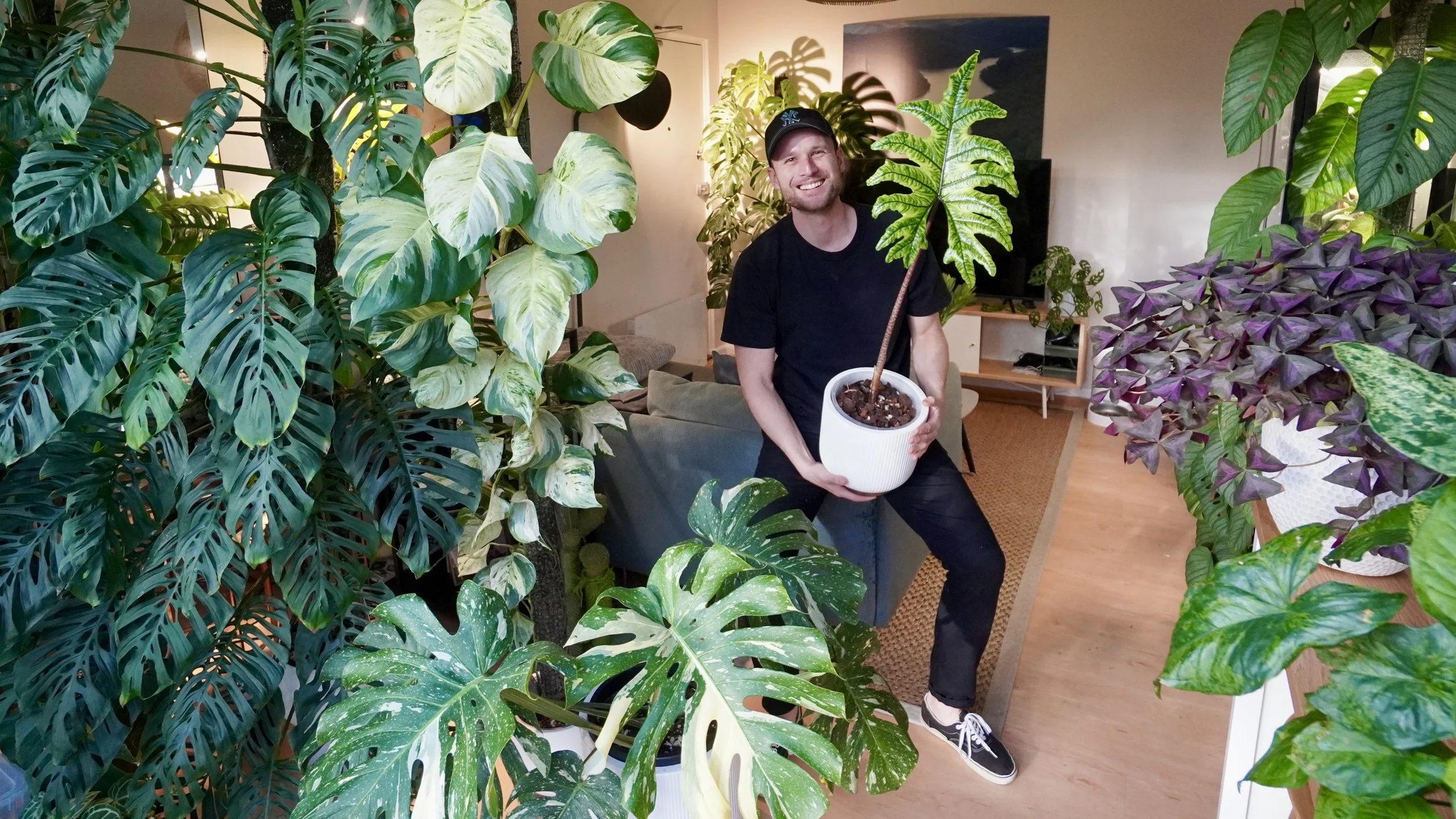
transcript
Transcript © Jane Perrone. Originally published at janeperrone.com. Please do not reproduce or republish without permission.
Jane Perrone (00:09) Hello and welcome to On The Ledge podcast. How the devil are you? I hope you're having a great week and it's about to get even better because my guest in today's show is the wonderful Sydney plant Guy AKA King of the Moss Poles. Jan is a wonderful houseplant expert and creator.
who's going to be telling me all about his big boy plants, the big leaves that he really enjoys and about moss poles, but most of all about how to become a fulfilled plant parent. How to make sure that you're not just filling your life with temporary dopamine hits and that you're really enjoying and relishing the plants you've got. That's going to be an enjoyable episode I believe but just before we get into that thank you to those who've joined my patreon this week we've got Stacey and Daniluv and Michelle who became free members and Gonzalo and Tiora both became legends on the free trial so if you want ad free podcast episodes from on the ledge or extra content like the extra chat that I did with Sydney Plant Guy then you need to check out my Patreon, it's patreon.com/ontheledge Right, that's enough chatting from me. Let's get into my chat with Sydney Plant Guy.
Jane Perrone (01:46) Jan, thank you so much for joining me on On The Ledge today. Glad to finally have you on the show. I don't know what I've been doing the last, you know, five years not having you on, but here you are.
tell me first what is the... I'm making you sound like a superhero here but what is the Sydney Plant Guy origin story? yeah like were you bitten by an aroid at a young age? how did this all start? because as we can see from the view behind you for those watching it's kind of gone nuclear a little bit
Jan (02:02) Yeah, I was about to say, like, thank you.
Yes, well thanks for the introduction. I feel very honored and honestly thanks for having me. Yeah, look, origin story. think ⁓ it's not as crazy or impressive as you might think. I was just scrolling Instagram and I found some plant content and I was really excited about plants suddenly and I was like,
Maybe I could do that. So, yeah, and then you know how the algorithm works. Once they know you like something, they give you more of that, and then it kind of just snowballed from there. And it was all relatively recently, 2018.
So about eight years ago, just before COVID, I suppose. And then I think during COVID, everything went crazy, right? And you spent a lot of time at home doing the lockdown and so on. So I think I just got into the hobby at the right time where I had a decent collection. I made some connections and then COVID really kind of just turned it into a this escalation behind me.
Jane Perrone (03:28) Well we're here to talk about about how to become a fulfilled houseplant person because I think this is a really important topic and something that we both feel strongly about - you I mean compared to some some people in the houseplant world you're you're an elder an elder of the houseplant world having come into it in 2018 God knows what they call me the old granny because I've been growing plants for a really long time but I think
Jan (03:53) You don't want to know, ignorance is bliss!
Jane Perrone (03:56) But I think what we would like to get across to people is some of our wisdom of having been in the plant world for that little bit longer and thinking about how we can create a sustainable house plant hobby in every sense of that word. what are our parameters here? What do we think that's going to look like?
Jan (04:21) Yeah, I mean, I just like to be authentic and I just really talk about my own experience, suppose. That's what I do on social media as well. And I think there's definitely a distinct difference between the plant person in year one, two, three, and in year, you know, six, seven, eight.
Probably, like I mean, everybody starts off with, I call it the accumulation phase. So when you first get into this hobby, you obviously don't know that much about plants yet and every plant is new to you. So it's very easy to kind of get swept up in this whole like, I need to get this plant and this plant and this plant. And I used to go to the nursery every weekend. Every weekend I would go to the nursery and I would look for.
something new or online, you know, there was crazy online sales and so on. And I would just constantly like chase the next plant. Now, I think I'm quite fortunate that I live in Australia and we have a very limited selection of plants available in the first place. So my accumulation phase never went like super crazy due to lack of availability ⁓ in the first place. But I was definitely, you know, accumulating plants rather than actually growing plants. And then the plant dies and then you just, yeah.
Jane Perrone (05:38) Tell me more about that Australian thing because I think a lot of people outside Australia and New Zealand don't realise this. Just tell people what the difference is growing where you are in terms of restrictions on plant imports.
Jan (05:54) Yeah, sure. We have really strict biosecurity laws, so it's very hard to bring anything organic into the country. Even a piece of wood you wouldn't be able to bring into the country as a normal person, let's say.
regular traveler. There are obviously ways for us to import plants, but it needs to follow really strict biosecurity guidelines. So you have to quarantine plants. You can't do that yourself. You need to do that with an official agency. ⁓ That's obviously really costly and the chances of your plant surviving that isn't necessarily super high. You can do it on a larger scale. If you're like a bigger... importer or grower then you can do it on a larger scale. I visited a grower in Melbourne for example who has one dedicated greenhouse for imports. It's sterilized, double walled, insulated, you know the government needs to like sign off on that and then he's allowed to import and quarantine plants in his own greenhouse over there.
But let's say for the average person, that is just way too much trouble. You know what mean? You have to be really, really hardcore to want to go through this sort of process. And then obviously it's also very costly and quite risky. So, suppose when you first start off with plants, you have so many skills to learn, importing them is not necessarily your priority. for the average Joe, like me, yeah.
Jane Perrone (07:19) yeah during covid i used to i used to get contacted by people during covid being like ⁓ i've just started growing hoyas and i found this like hoya supplier in Thailand and i want to import and i'm just like NOOOOO! you've only been collecting plants for five minutes they're gonna turn up dead or even if they don't like you don't I mean I don't, I would never import plants and I've been doing it a very, you know, growing plants a really long time just because it's a lot of, there's a lot to it, right? A lot to learn. It's tough. And I think lots of people have lost lots of money that way, but ⁓ yeah.
Jan (07:56) For sure. I even if I was able to legally import plants and easily and cost-effectively import plants would never be my preference because you're taking plants from literally like a completely different continent. Like the shock that these plants go through, accumulate, you know, getting used to your conditions over here, it's gonna be quite drastic. So I would much rather get a plant that was already grown here.
Jan (08:25) because I feel like I'll have much better chances of it actually surviving and looking good as well. And it's not always about more, you know, in my opinion. I just feel like...
Jane Perrone (08:36) Well, this is another key point, isn't it? This is a key point. We'll get on to that. But going on to just talking about that difference between the first few years and the years after, I think that's a key thing that you think that
the plant world is like other obsessions that you might have. So I don't know, maybe you're into Pokemon cards or maybe you're into, I don't know, particular kind of fashion or, you know, like with that, with those kind of things, you can go online and you can find stuff and you can buy it and you can import it from another country. But that element of plants actually being alive is really serious, right? It's, and it doesn't always go according to plan. The Pokemon card is going to turn up.
Jane Perrone (09:18) most likely it's going to be fine even if it's stuck in customs for two months but you know the beautiful aroid that you've ordered or the Hoya not so much not so much
Jan (09:21) Yeah.
Definitely. I have so many thoughts on this one actually. I don't even know where to start. I mean, first of all, you said that, know, plants are growing, they can obviously also die, but that in itself is very much what changed from being an accumulator to being, I would not consider myself a plant grower, right? .
Jane Perrone (09:35) Go on, hit me with it.
Jan (09:48) Because a lot of these plants that you see behind me, in case you are not watching it, they're big. ⁓ Those are plants that I accumulated in that first year or the maybe the second year or so of growing, accumulating plants. And they're still with me. And this is obviously just whatever grew within the last maybe year or so, right? The other five years of growth were cut off.
Jane Perrone (09:50) Mm-hmm.
Jan (10:16) propagated, passed on, sold and so on. So in itself, the challenge that plants are growing and then also can die is also the thing that actually turned me from an accumulator into a grower because where would I put all of these plants? Just a few plants that I accumulated in the first year are filling my entire house. I have all planned rooms.
Jane Perrone (10:34) Yeah.
Mm-hmm.
Mm-hmm.
Jan (10:43) If I would have continuously accumulated plants like I did, there's only one way for me to actually fit them into my collection, which is by killing most of them.
Jane Perrone (10:53) mm-hmm yeah that's very true and as you say especially when your your your passion is for the big-leaved aroids I mean if you're growing tiny like I don't know some kind of tiny whatever you might have more room but with those guys it's no joke is it and
Jan (11:08) Yes.
Jane Perrone (11:12) I mean, we'll get onto moss poles at some point, but obviously that is how you make them good and everything. But again, you've got to be able to extend those moss poles, you've got to be able to understand how to propagate so that you can remove growth that is too much, because nobody's got endless space, right? I mean, I'm sure you've seen that meme where it's like a little house surrounded by a massive greenhouse, and it's like,
is what I want for my retirement it's like yeah that's accurate but in your retirement you'll have endless time and right now most of us don't have endless time I guess this is part of the problem with the COVID kind of era people who started then in that
Jan (11:44) Yes.
Jane Perrone (11:58) during furlough a lot of those people did have endless time and I'm sure you've seen this as well on like Facebook and other platforms where people are like I'm selling all my IKEA cabinets because ⁓ you know I'm getting rid of a lot of my plants and you're thinking well yeah that's okay that's you're maturing as a plant person I guess ⁓ but
Jan (12:02) Mmm.
That's why I care.
Yeah, there's
no judgment here. You know what mean? I'm just talking from my own experience. I've already gone through it. So if there's somebody new entering this hobby and they feel like, I sound exactly like he did in year one, maybe I can just give them a little heads up and be like, hey, like in this accumulation phase is not going to be sustainable. If you only focus on buying plants.
you'll run out of space, money or joy at some stage, right? Because if you constantly buy plants, but your collection isn't growing, it also means that you're killing equal amounts of plants as you're buying, which is not necessarily very rewarding, you know? So I feel like...
at beginning of the plant hobby, instead of focusing on accumulating plants, which I did, I should have really focused on growing plants and learning skills, right? So maybe get one or two plants and learn instead of getting 20 plants and then make the same mistake with 20 plants and then learn your lesson. I suppose maybe it sticks a little bit harder and deeper, you know, if you suddenly lose 20 plants at once because you don't know how to deal with moss poles.
But ideally you would make that learning with one and then scale up from there. So I see that happening a lot. People just got into the hobby. People just discovered moss poles and they're like, my God, I made 20 moss poles today. Look at them. And then they have like 20 little plants on moss poles, which is obviously great, but.
if you don't know how to deal with them yet, you now have to make 20 lessons instead of just one or like 20 plants will be impacted by the lesson learned and so on. I think, you know, if you want this to be a long term thing, if you want this hobby to be sustainable.
you have got to learn the skills of growing plants. You have got to learn the skills of troubleshooting, bringing back a plant from the brink of death, right? Like that's the most rewarding thing you can do as a grower. The earlier you focus on those skills, the more likely you'll have success, right? And then once you do have these skills, you can go and like splurge on that wishlist plant that's a little bit more expensive because you have the skills to keep it alive or even if things hit the fan because...
things will go wrong, you have the skills to bring it back. you don't go into it with like, I'm so nervous. It's like if the plant purchase makes you equally happy and nervous at the same time, it's probably not the smartest choice because you probably don't have the confidence to keep it alive just yet. yeah, suppose I learned that in year three or so. It's like, ah!
Jane Perrone (14:57) And can I just
say a word here? Can I say the word thrips here? Like the first time you get thrips for some people that is an absolute horror story in that if you don't know if you don't know what they are therefore you've left it until they've got really bad before you realize they're a problem
Jan (15:05) And you're like, my God.
Jane Perrone (15:17) I mean it's just a horror show and I can understand how people could, you know, again get rid of their whole collection and then just start again but if you haven't then learned how to deal with drips it's gonna happen again, it's gonna keep happening right because they're gonna keep getting into your house and keep coming... yeah.
Jan (15:37) Exactly,
100%. I mean, I was waiting for my first pest infestation. Maybe I got lucky the first year or so. Maybe I...
didn't spot them, you know what mean? Maybe they were there. I was just unaware of their existence or how their damage manifests in my plants and so on. So I was just like, ⁓ spider mites never heard of them. It was like a non-concern for me until you realized that you've had spider mites the whole time. And you just don't have the skills yet to deal with it. And I mean, hopefully there's plenty of resources online now. Hopefully I contribute to that a little bit.
Jane Perrone (16:01) You
Mm-hmm.
Mm-hmm.
Jan (16:16) where people can maybe speed up the learning curve a little bit, but there are still elements of uncertainty. know, there's still like just because I do something doesn't mean that you can just copy it and do the exact same in your collection. Troubleshooting is a skill that everybody needs to learn for themselves, right? Like you need to know what your plant looks like when it's happy. You need to know. So you can, so you, if you know what it looks like when it's happy, you know when it's unhappy, you know what mean? And then process of elimination and so on. There's still things I learned.
Jane Perrone (16:44) Yeah.
Jan (16:47) all the time. And I think this will be like forever. I don't think I'll ever run out of learnings with this hobby. So it's really important to kind of like go slow and steady, right? Slow and steady wins the race because plants don't grow fast. Plants don't work on command. You you got to have patience. So I would love for everybody to just apply that same patience with the speed in which they accumulate plants as well, rather than just
Jane Perrone (16:55) Mmm.
So what are we asking ourselves in the plant shop or when we're online clicking? What are the questions that you wish people would ask themselves before they go, yeah, I really want that. mean, it's hard because it is such a, it's so easy to be drawn in by this new hybrid or this - something you've not seen before or you think you're kind of completing your collection or the leaf is particularly stunning so what are we how do we avoid that what are we asking ourselves when we're buying a plant because i'm not sure i still know the answer to this
Jan (17:43) Yeah, mean, first of all, super guilty of completing the collection, right? Like, I love my velvets so I was always looking for, I need to collect all my velvets, I need to, you know, complete the collection. And as such, I bought every single crawling velvet heart shape, philodendron before I realized that I can't deal with crawling philodendron. They don't really fit in my space. I don't really appreciate...
Jan (18:14) the way that they display themselves, the growth pattern just doesn't necessarily always work for me, maturity doesn't really suit them either, and crazy spider-mite magnets. So, but obviously bought every single one instead of just buying one because I wanted to take a group photo of like the whole family, you know what I mean? Which is so stupid because obviously here, the intention behind every purchase was I wanna upload it to Instagram, which is definitely what nobody should ever go through when you go to any, you know, when you go to any nursery and you buy any plant.
Jan (18:44) If your first thought is I'm going to upload this to Instagram, then you're already losing, you know, and it's coming from somebody who does social media for a living. I think really important to think about two things, yourself and the plant. I think sometimes we only think about ourselves, you know, which is also important because this hobby is supposed to be fun, you know, so if that plant purchase is fun and you like it and it brings you joy,
Jan (19:13) Go for it, right? I think it's still better than buying a Labubu or whatever you can buy out there these days. know what mean? mean, sorry, no offense to all the crazy, crazy Labubu collectors out there.
Jane Perrone (19:17) What about my 24 karat gold Labubu? I mean, my god!
I mean, I don't know any Labubu owners. I think they're all a lot younger than me, but I mean, I'm just imagining somebody now who's both a houseplant collector and a Labubu collector is going to be offended on both fronts.
Jan (19:35) Yeah, Imean look, ruffle a few feathers, you know, if your opinion doesn't ruffle any feathers, it's probably not that important. But yeah, obviously think about is it bringing you joy and is it bringing you just joy in this moment? Like is it literally about the act of getting the plant or would you actually like to grow the plant? Because I reckon in 80%, maybe 75 % of instances, you just enjoy the act of getting a plant. There are many, many plants that I got where I enjoyed the purchase. I enjoyed the shopping experience. I enjoyed the trip to the nursery with a friend. I enjoyed the, my God, I have it in my collection, that moment. And as soon as I got home and I put it in my collection, I'm like, okay, next. So are you really, are you buying it for the sake of the...
Jane Perrone (19:51) Absolutely!
Jan (20:35) getting or are you buying it for the sake of having it, right? So I think that already eliminates the majority of the really bad plant purchases. Instant gratification. If you're after instant gratification, this is not the hobby. This requires patience, consistency and so on. So apply that to the same journey when you go shopping. And then secondly, think about the plant. Do you have the environment to...
Jane Perrone (20:49) Yeah, yeah.
Jan (21:02) offer this plant that it really wants. What are the chances of this plant actually having a good time in your place? Just because you visually enjoy this plant or because you've been told that this plant is the new trendy thing or whatever, I'm sure we're gonna touch on that in a sec as well. Just because the plant might in theory.
Jane Perrone (21:21) Yeah.
Jan (21:24) be good, is it actually gonna have a good time in your place? Do you have the humidity to offer? Do you have the light? I mean, light is the main thing that most people struggle with. Do you have the conditions to offer this plant that the plant would actually enjoy? Because why would you buy a plant that is just barely holding on for dear life if you can buy a plant that could be thriving in your environment? And so I think we often forget to think about the plant. We're so focused on ourselves and what we like that we don't really think about if the plant likes us back.
Jane Perrone (21:58) Absolutely, yeah, and you know some of the plants that are really really popular are not that easy and that's the reality isn't it that we have to we have to say to ourselves like okay I'm in a you know a place with ⁓ tiny windows ⁓ low humidity and then I've got to try to work around that because there's no changing that environment is there right and other than obviously you can introduce lots of grow lights but can you afford that does it work with your surroundings? I mean there's so many different factors.
Jan (22:34) There's also a really steep learning curve to go into. As much as I was accumulating a lot in the first two years, I actually only got my first Groilite, I think in year three. I only got my first Anthurium, I think in year three as well. So I was very much like...
I was accumulating, but I was still kind of slowly building skills. I definitely had more casualties than I had to. It could have gone even slower, but not to the extent that I regret anything that I've ever done in my hobby, right? So I think that's why I'm so happy.
Jane Perrone (23:04) did you start off like so many people with buying like really beautiful Calatheas from big box stores like 'my gosh look at this beautiful peacock plant this is so amazing' and then it's just like it really doesn't like me or it really doesn't like my house and then ⁓ the tragedy of that how many millions of those plants have just gone to die like i always look at those plants and just think they're going to die especially sold from a big box store where you're not going to get any kind of advice or help or guidance in terms of right look out for these things at least if you're going into a specialist house plant shop hopefully they're going to give you some solid guidance but yeah
Jane Perrone (23:51) Yeah, I think that's such a common pattern, although maybe slightly short circuited by Instagram because people are probably looking at all kinds of accounts, not just you, and seeing plants on there and going, ⁓ right, well I'm not buying those big box Calatheas anymore, I'm going...
Jan (24:10) going straight to the
Jane Perrone (24:10) I'm going to buy a Melanochrysum or something, you know, something that they've seen online and just think, this looks amazing and probably does look amazing. But yeah, yeah, it's.
Jan (24:22) In theory, is it really gonna have a good time in your house? Are you gonna have the skills to make it thrive? I have to say I was pretty brave. I think in my second year, I went straight to very close to Melanochrysum. Kind of like the species that are unaware to my existence at that stage, apparently quite hard to grow. And they are still hard to grow for me, like seven years later. They look okay, I suppose, but it is seven years of growing them. You know what mean? Like that did not happen.
Jane Perrone (24:26) Yeah.
Yeah.
Jan (24:52) the night that is not instant gratification and so on but yeah in the first year definitely the big big box store caletheia's so many Alocasias i was really into Alocasias and then yeah it really ruined Alocasias for me and it's only recently only within the last maybe a year and a half or so i started giving Alocasias a chance again and i'm like why did i think there was so
Jane Perrone (25:02) Alocasias
Mm.
Well, you've levelled up right. You've got more skills now. You probably understand a lot more than you did in year one and two, so you can cope with them. But year one you, Alocasias was not a good story. I mean...
Jan (25:19) Yeah, Aaron!
Nah, and I think I went too
hard, you know what mean? Like I had every single type at once. Like, I'm like, ooh, they come in different types. Like I need all of them, right? Complete the family photo. Like that will look good on Instagram, right? And now I'm just like really slowly introducing.
Jane Perrone (25:32) Yeah.
Jan (25:43) some of the plants back and I actually really enjoy getting the same plants that I got back then again like Marantas. I got a Pothos the other day you know like a traditional Devil's Ivy because I was like you know what I don't actually have one I don't why not let me grow a Devil's Ivy you know I haven't gone any Calatheas yet I'm not that I'm not that adventurous but I'm slowly getting some alacrages back Marantas you know I like some real classics
Jane Perrone (25:59) Yeah, yeah, why not?
Mm-hmm.
Jan (26:13) a philodendron micans I bought the other day. just like, I actually just want to see how these plants that I initially killed, how I could grow them now that I have a few more skills. So I think for me, it's way more about, you know, perfecting my craft.
Jane Perrone (26:23) Yeah.
Jan (26:32) as a grower than accumulating the rarest most expensive plant that nobody else has that holds on for like one leaf in this grow tent that's in your garage.
Jane Perrone (26:33) Yeah.
the sad one leafer,
the sad one leafer where you're just like - god like I've been through that so many times with plants and you just think the final and then the final one day you come in the final leafs just gone yeah
Jan (26:47) Yeah.
I have one leafers, I do have them, but the intention is to get them out of that stage. Yes, the intention is not to perpetuate that one leaf scenario. If it continuously holds onto one leaf only, I'm doing something wrong and I'll switch it up and I'll play with that and I enjoy that. Instead of just getting a different plant to satisfy my craving for success, I'll actually just put in the work.
Jane Perrone (27:03) yeah it's going in the right direction hopefully.
you
Jan (27:25) and try and make it work with the plants that I already have.
Jane Perrone (27:29) because this is the trouble
I think some people get through that instant gratification and then they've got to the point where they've got 200, 300 houseplants and they actually don't enjoy that houseplant care for those 200, 300 houseplants like how do we if we're in that stage where we've got what realistically may be too many houseplants and we're just finding that the job of looking after them too much, where do we go from there because I think that's such a common scenario how do you reset yourself when you've got
to that kind of issue. It's tricky.
Jan (27:59) Wow.
I feel really sad when I hear people online talk about, I have plant chores to do. Chores? You chose this. Nobody's forcing you to grow plants. You chose this. So why are you considering it chores? ⁓ I do love to refer back to like sporty references, right? And I'm assuming we're not all professional athletes that do sports for a living, right? But if you have a hobby, let's say,
Jane Perrone (28:12) you
Jan (28:28) I tennis, I play tennis my whole life. When I go and practice, when I go have like a practice match with a friend or you I wouldn't consider that a chore. That is precisely my hobby.
My hobby is to practice my skill so I become better at what I enjoy doing. So I need to practice tennis so I get better at playing tennis. I wouldn't consider it a chore. Nobody's forcing me, right? And the same goes for plants. You choose to have plants. If you find looking after them is a chore and an inconvenience to you, then you actually just like owning things. You don't like growing things. And then maybe plants isn't the right hobby for you because
Plants require continuous effort and there's a level of uncertainty. You can grow a plant for six years and it dies. You know what mean? For six years you didn't miss a single watering, nothing. You went on a holiday and the bloody spider mites, just that's it, you know? So all of your work can be ruined in...
Jane Perrone (29:28) Yeah.
Jan (29:32) A quick second, know, a plant can just fall and snap. Easy, like things can happen. We're dealing with nature. So if you're not prepared to lose your plants because you're not enjoying the journey, you're just enjoying the end result, then you probably also consider looking after them at shore. I am.
I see plant care as like my hobby. I find it very therapeutic. I love to walk around and water my plants and spend a bit of time with them. They don't talk back. It's brilliant. know, like so beautiful. Just in silence. Imagine you listen to something, you listen to music or you listen to nothing. You listen to the silence and you just walk around. You check in with your plants. You have your morning coffee before you go about your day. That is beautiful. Right. You get excited about these new leaves that unfurl and you get that
satisfaction of like I did that. That is what the plant hobby is like to me. If you walk around and you consider it a chore then I feel like you're missing out on the best part of the hobby ⁓ in hopes that you're going to get the same result.
Jane Perrone (30:32) Or maybe you've just got... maybe you've just got too many plants, like maybe that's the thing is you you might just need to cut back and and and if you've got five plants then those chores will suddenly feel manageable and will feel enjoyable rather than feeling like overwhelmed of I can't cope I've got too many things too many things to reap hot and yeah it's just it's miserable when you feel like that it really is it takes all the joy it sucks all the joy out of it I find but I guess that
Jan (30:38) Yeah, honestly, for sure.
That's sure.
100%.
Jane Perrone (31:06) There's a lot of pressure though to have a jungle and I don't think a jungle is right for everybody.
Jan (31:13) I'm gonna... I don't know, I can't...
Jane Perrone (31:15) Go on.
Jan (31:16) I don't want to, I'm not going to call anybody out, but I was just in the US, right? And actually one of the questions I was asked by somebody is like, what's your most expensive plant? And I said, I once spent $400 on my Queen Anthurium, ⁓ Aussie dollars, right? So that's maybe 300 USD. And honestly, I would never do that again. I would just wait for the price to drop. I'd rather stay patient for year or two and then get the plant at an inexpensive price and
Jane Perrone (31:39) Mm.
Jan (31:45) It will bring me equal amounts of joy. It's not about getting this plant the fastest or the first and so on. When I told them that my most expensive plant was basically 300 US, they laughed at me. They're like, 'really? Oh my God!' And I was like, well.
Are you laughing because it's a lot or because it's little? And they thought it was very little. When that was my one and only expensive plant purchase. I think the average plant, would have probably, mean, most of them I actually got through trading because I also at some stage learned that if you're at growing plants, you can multiply them and then you can trade with friends, right? The majority of my plants were actually a result of trades. ⁓
Jane Perrone (32:08) Yeah.
Mm-hmm.
Yeah absolutely!
Jan (32:26) So as such, I never really made expensive plant purchases. Most of them would literally be like 50 bucks, 75 bucks. And I still think that's a lot of money for plant, but I think the internet, that's a lot, right?
Jane Perrone (32:37) me too i mean i i don't understand this - is it a US thing particularly? I'm not sure it is i think i see it here in the UK as well where you where it's there's some kind of like the value the the monetary value of the plant is a reflection of the worth of the plant which sounds like a stupid thing to say because of course it is it's the market value but it's kind of like well i
Jan (32:46) Excellent.
Jane Perrone (33:03) believe that your 25 pound or dollar plant could be just as interesting. Like there are some really rare plants that I've bought very, very cheaply because they're not desirable in the market. But they're very rare and interesting to me. So this idea that, as you say, like, I don't know, I just find it really strange. I can't get my head around that. mean, like you, all my plants have come more or less from swaps. Like if I've got anything rare, it's almost always because I've swapped with somebody like Hoya-wise back when
Jane Perrone (33:37) Hoyas were slightly more like less available than they are now some of my rarer Hoyas were just swaps I would never I mean I don't I'm trying to think how much I've spent on a plant maybe like you about 75 bucks for something no more than that
Jan (33:53) Honestly, I think that is totally reasonable. I think 75 bucks is one of the more expensive purchases I would make these days. These days? Not sure.
Jane Perrone (34:01) Yeah, I think that sounds a lot to me. That sounds like a lot of money. Although in this cost
of living crisis now where you can't go out for a meal for less than three figures, it's yeah. But I agree. just I.
I think that worries me, the obsession with the dollar slash pound value of things, because again, you're sort putting a different emphasis on it, whereas you're not really looking at the plant, you're just looking at something that's been ascribed to it. And well, why is this? And I guess that would be my question to those people is, can you tell me, can you tell me what is it about that $5,000 plant that is intrinsically...
Jan (34:22) Yeah
Fakers, no?
Jane Perrone (34:43) $5,000 ish you know what I mean like what is it they're in there they can't tell you that other than it's gone
Jan (34:48) Well, I can tell you, it's
status. It's the same as with handbags, right? Like is that, yeah, okay, maybe there's a little bit more craftsmanship in like a designer handbag over the Timmy version. I mean, I need to compare with Timmy, like a normal, like a normal handbag, let's say, you know? But mainly, you're paying for the name. You're paying, this is an MS, you know?
Jane Perrone (34:53) Yeah.
yeah a high street handbag yeah
Jan (35:14) So it's like, ⁓ this person did this hybrid, so it's worth more. And it's like, it's just status. like, ⁓ I have the one and only one of these, so these are very rare. So you're showing off status that you access to that plant that a lot of people don't even have access to.
I think because I'm so far removed from ever having access to these plants anyway, it was never really something that even popped into my mind. I honestly, I wonder if I would live in the US and I would have access to all of these plants, maybe I would be a little consume monster as well. I think honestly, living in Australia really saved me in that sense where I just had to learn to make use of the plants that I already have ⁓ or the ones that are available and just...
be resourceful by swapping plants and so on. And then obviously when they come into the country first, they're really expensive. And I just learned that, you know, if you wait two years, the plant that was 3,500 is now 35. That's worth waiting for two years. But if you're in the first year of your hobby, you don't know that yet. You know, so, and also just for the disclaimer, if...
Jane Perrone (36:15) Yeah.
Yeah.
Jan (36:24) buying expensive plants makes you happy, go for it. And if you feel like you have the skill to make the expensive plant grow, go for it. Maybe you can even make your money back, right? Because you can probably propagate the plant and then sell two expensive plants. And some people treat the whole plant that way.
Jane Perrone (36:38) but I think that's the biggest thing
people are telling themselves when they're buying those high value plants they are saying to themselves, to some people anyway, I'm going to be able to propagate, I'm going to grow it really big and I'm going to propagate it and I'm going to sell it I'm make so much money and again, like my rule is I have never
sold a plant for profit. The only time I ever sold a plant the money all went to a charity because I, to me, introduce, and I'm just sounding like some kind of monk here, but to introduce like monetary exchange into my house plant hobby, like I make money out of house plants by making podcasts about house plants, right? That's how I make money out of them.
but I don't make money out of them by selling them because for me that would introduce an element that I just don't desire to get into but I think a lot of people are fooling themselves I mean it's a bit like me with brooches right I love brooches that's my thing I wear a brooch every day and oftentimes I'll buy a brooch and I'll fool myself and go oh yeah I'm gonna give this as a gift to x y or z person I'm not I'm not gonna give that as a gift I'm gonna
Jane Perrone (37:47) I'm gonna keep it for myself, that's the reality, but I fool myself. So sad.
Jan (37:52) Yeah, no, but you're laughing about it now. You're sitting there, you're laughing about it. It brings you joy. Go for it, right? I'm just saying, it's just a word of caution. like...
Maybe if you're in your first year and you feel like there's a bit of pressure to belong to the community, there's a bit of pressure to maybe stand out, you know. I think getting that expensive plant is not the way to stand out. And it's not the way to make this fun sustainable. It's not the way to make this hobby fun and sustainable for you, you know.
In my opinion, obviously opinions can also vary, but I like to authentically speak about my experience and the way that I grew as a person through this hobby. And that's what I went through. went through my accumulation phase. I went through my splurge phase, even though in hindsight, the splurge phase isn't quite as crazy as other people's splurge phases, but that's okay. Relatively for me, there was a splurge, you know, and...
Jane Perrone (38:29) Yeah.
Jan (38:53) I learned my lesson that I could have just stayed patient. And if I don't have patience, then this is again, not the right hobby for me in the first place. So if I can't be patient with my purchases. then I won't be patient with my plants. And if you're not patient with your plants, you will never grow them. So why are you buying them in the first place? you just rotating them? know, mean, is it like fast fashion now and so on? I think we're losing the nature. We're losing the thing that makes this hobby so special. The plants grow. You know, what other hobby can you invest money into and it literally grows? Usually you put money into a hobby and you're
Jane Perrone (39:17) Hmm.
Yep.
Jan (39:33) equipment deteriorates, right? Let's take it back to sport. You buy a record, you buy shoes, you buy these things, and then half a year later, you need to redo it. Things like that, you know? So this is a unique hobby where the hobby actually can grow. You don't need to spend that much money on it if you don't want to. If you want to, go for it.
Jane Perrone (39:55) Well let's talk about growing, let's talk about moss poles because this is obviously another aspect with your collection that when you're dealing with the kind of plants you grow, they are going to grow bigger and you need to have the right amount of support for them. Now I am a moss pole refusenik. I don't have a single moss pole in my house. My policy, the only big aroid I have is a Thai constellation, which I've had since 2018.
Jan (40:15) Hmm.
Jane Perrone (40:25) it just gets chopped when it gets too big because I don't want it to be any bigger but I want to know that said I mean I know a bit of a weirdo about that and I know lots of people love their moss poles and I've been doing some, I did a weird episode where I went in the time machine and looked back to the 1820s and realised that moss poles are not a new thing. Anyway, I'm really interested in moss poles from a kind of a technical point of view, right? So I would love to know, get some of your moss pole wisdom for listeners, because there's lots of reasons to do this for this particular group of plants. This is the key to unlocking.
good plant I would say. So tell us everything about Moss Poles. Where do we begin? Where do we begin? What's the opening principle here?
Jan (41:12) and we think my god, careful what you wish for. I could talk about it for ages, like a long time. I try and keep it short. First of all, I would like to acknowledge that growing on moss poles is not for everybody and it's also not for every plant. And also, if we're taking back to nature as our ultimate inspiration, there isn't a moss pole as such in nature. So definitely I'm not like I acknowledge
Jane Perrone (41:23) Well, that's good.
What you're telling me if I go into the jungle there's not going to be like a plastic netting with some sphagnum moss inside?
Jan (41:50) No, no, no, no. It's so weird. I know. They don't even have grow lights in the jungle. None of this stuff. So look, think most polls are the most controversial thing that I do online. Like I get a lot of height for most polls.
Jane Perrone (41:59) I know it's crazy!
Why do people find it controversial?
Why is it? I mean, I...
Jan (42:10) Oh, because it's 2026 and it's the internet. Everything is controversial. A cable tie is controversial. A plastic pot is controversial. Everything is controversial, you know.
Jane Perrone (42:19) So what do you get the controversy about what are people calling you out on for using a cable tie?
Jan (42:25) Yeah, yeah, I get in trouble for using cable ties that single use plastic and I'm very ashamed every night I go to sleep very, very sad about my life.
Jane Perrone (42:29) Right.
Well, can you not? I have these Velcro cable ties now, these reusable Velcro ones. Have you tried those? Are they not as good?
Jan (42:40) That's why I'm getting tired because there are alternatives which I'm not making use of. I'm sorry. I am crying. I'm acknowledging my shortcomings.
Jane Perrone (42:45) Right, okay, well I mean you're evolving and growing, I mean I imagine that you will switch over to...
But mean, if you've got a supply of cable ties, surely maybe you should use those up before you buy any more. I mean, this is, it's not simple any of this stuff, is it? We can all be judgy, but actually it's like I had a big container of perlite and I was like, well, do I use this? Cause actually perlite's not very, you know, supposedly. And I'm like, well, I've got it. I've had it for about five years. So I just use, I'm just going to use it because otherwise it's just going to sit there. I don't know. It's not straightforward any of this stuff.
Jan (43:04) It is.
It feels bad as well.
Look, each to their own, you know, I think it's very easy to shame people online for a specific thing or not without seeing the bigger picture. I acknowledge operate on the internet. So I'm subject to everybody's opinions as well. it's not gonna make me stop using cable ties. So sorry guys. But I think that's not really the controversial part. I think there's just a lot of people that really hate mosque calls and they have the desire to tell me their opinion. And it's like, thank you.
I feel pretty strongly about my moss poles, so their opinion isn't necessarily going to sway me, but also that means that I need to acknowledge that my strong opinions about moss poles doesn't need to convince everybody else that also moss poles is the right approach. So I acknowledge that as two different people, we can have two different thoughts on moss poles, and I'm obviously for them. Now, why? Yeah.
Jane Perrone (44:15) So I want to... I'm just interested,
why... so if somebody was growing the same kind of plants as you and they didn't want to do moss poles, how would they be growing them? Because, I mean, I don't have them because I don't have that kind of plant, but why would... how would you be growing the kind of things you're growing without a moss pole? Is there... would it be other kinds of supports that they'd be using?
Jan (44:22) Mm. Mm.
Yeah, I mean any support really. What I like to grow is like to grow climbing, mainly philodendron to be honest, but also monstera's, lot of them are climbing.
Hothos, epipremnums, you know, so that's really my kind of thing. I like them vertical. Anything that grows vertically, anything that would in nature would kind of climb up a tree. That's what I would like to grow at home because I have way more vertical space available than I have horizontal space. I'm a renter, I can't.
based on my contract technically not even put bluetack on my walls, right? So it would be kind of boring to live here if the plants wouldn't feel this vertical space. So I think aesthetically from an interior design perspective, it's actually very interesting to have vertical exposure in your house, all your furniture is horizontal, right? So it doesn't give your eye any interest to bounce around the room. Once you put something vertical in the room, it really changes the whole aesthetic of the room. So I very early on,
learned that I like vertical growing for the aesthetics but also because it enables me to actually get the moist out of the plant. I'm a relatively ambitious person I'd say. I grew up playing sports my whole life so I feel like with that you naturally kind of become quite ambitious. Maybe I was just born that way.
So I like to see how far I can take it. So I really, once I discovered moss poles, I stopped just accumulating plants and I really focused on plants that truly bring me joy because they are exciting to grow. I love getting a really small plant, inexpensive. I put it on a moss pole and then I let it climb vertically.
until it matures. And as part of that, could be take three years, four years, sometimes it's a bit faster and so on. And as part of that, I see the plant going through changes in color, leaf shape, fenestrations, size, obviously, and so on. And that's interesting to me. Once the plant is actually mature, and now I'm just perpetuating the same leaf over and over again for years to come, it's kind of less exciting. So moss poles really enable me to do this whole journey of a plant that would climb up the tree in nature, but obviously I don't have the conditions to offer.
that the plants would have in nature. And I definitely don't have the space available. These plants still need to fit through the doorway so I can take them on my balcony or my shower, clean them and so on. So I need them to stay manageable. And also leaves don't look pretty forever. So if you would have a five meter moss pole, the bottom three meters will probably be bare and everything is just happening up there. So that's not necessarily gonna give me that sort of living artwork fantasy I live for. I noticed that, okay, support is great because it mimics the tree in nature. So you could do that with anything. You could do a piece of wood. That's, be honest, the truth to nature, piece of bark. Right? That's what they would grow up in nature. obviously that would make sense. You can have a trellis. can have, I see people use felt. You can have the coco coir poles Any sort of support that mimics the growth pattern or like that signalizes that vertical growing to the plant, you're going to grow it in line with nature, happy days, your plant has the potential to now mature and it will size up. But what do you do when it reaches the top of its support? What do you do when it physically outgrows your space, your ceilings? Now what? So if you grow it on, let's say a piece of wood,
You now need to propagate your plant. To propagate the plant, need to get it off that bloody piece of wood in the first place. You'll probably rip all of the aerial roots in the process of ripping it off the wood. Then you need to propagate it while you propagate it and the plant focuses on root health. The plant will probably abort a few leaves, so it won't really look that good in the meantime. And then once it has reestablished a root system and it's finally ready to grow leaves again, the leaf size will be significantly set back. You grow it back up as support, so you just perpetuate
same issue you will only ever get the plant to grow that nice and that big because you're constantly setting back the plant when it reaches the top. Obviously depends on how fast the plant reaches the top. Your Thai Con for example grows very with very small internoidal spacing so even I have one that is five years old and it's only really climbed 30, 40 centimeters or something like that so that's not
Jane Perrone (49:13) Hmm.
Jan (49:13) fast outgrowing my vertical space. But with some of the plants behind me, I would have probably cut these back five to six times, probably an average once a year, I would cut them back. So these moss poles, if I wouldn't cut them,
would actually be five meters tall, which is obviously unreasonable. So I need to find a way to keep the plant at a manageable height so that I can always maneuver it around, so that also I only ever have fresh leaves, know, nice leaves, while reducing the setback of propagation, basically. So when I cut the plant, because it's too tall, I want to use the top part of the plant, because that's the new part.
That's the newest leaf that still have the longest to live. Those are the most mature leaves that I want to continuously see mature. So I need to take a propagation of that top part without setting the plant back.
air layering comes to mind, right? If you air layer the plant before you chop it, then the plant has already established a root system before you introduce shock. A moss pole is basically perpetually air layering the plant as it grows up. Every night as it makes contact with your moss pole, grows roots into the moss pole, the aerial roots turn into proper water roots that contribute to water absorption, nutrient absorption as well. I treat the moss pole like a pot.
Jane Perrone (50:26) Mmm.
Jan (50:40) I call it the extension of the pot. It's a vertical extension of the pot basically, right? So by the time it reaches the top, every single node has rooted into that moss pole. So I can just make a generous cut. I usually go about half, you know, half the moss pole. And that cutting already has a root system in proportion to the size of the cutting. So I can just pop that back up, chuck another moss pole on top and the plant pretty much.
grows as if nothing ever happened. There's maybe like a setback for one or two leaves, also depends on the season, obviously in winter a little bit more challenged than in summer. But overall, I'm not really setting back the plant in maturity, so I can continuously mature the plant while only continuously looking after the nicest part of the plant. So I have a lot of bottom parts of poles throughout the years, because they are the old ones.
They are the ugly leaves, you know, they're the old leaves, like they're the juvenile stem, the skinny stem, right? I want the thicker, the thicker the stem, the thicker your leaf is going to be. So I constantly grow at the top and these bottom parts make great presents for friends, you know, I have like, I have like satellite collection everywhere.
Jane Perrone (51:46) yeah absolutely you can prop though yeah absolutely well yeah but i'm gonna
this i mean you're right about the air layering so i'm gonna have to i'm gonna air layer this Thai constellation and it's gonna be a bit messy because i'm gonna have to i mean it has always got lots of aerial roots anyway because that's what they do but i will i will still air layer it before i cut it and yeah it's gonna be a bit of a mess and then i'm gonna have this bottom part which i think i'm just as you say that's just gonna be chopped up into nodes
and - given away to people - I mean Thai constellations are like 10 bucks or something now so it's not but I guess I guess people maybe I don't know I'll I'll give them away anyway but I'm quite excited I've got a new leaf coming that actually looks quite nice so I'm glad that the top sections looking good and ⁓ yeah but you're right if it was on a moss pole it would be I could just go ahead straight away and do it without worrying
Jan (52:42) Yeah, just chop.
Once the plant is growing up the moss pole, I don't differentiate between the plant and the moss pole. To me, they are one unit. When I say I cut the plant, I also cut the moss pole. I cut the whole thing. My intention is never to remove the plant from the moss pole. My intention is always for the... ⁓
Jane Perrone (52:50) Mmm.
Yeah.
That's a nightmare, isn't it? Yeah, you just make, I mean,
I do love looking at those, those, I mean, I know about you, I love a bit of root porn, like those really juicy roots in there is really fun. And I like cutting through, I don't know what you cut, what do you cut the stem with? I really like that sort of meaty sound of like going through the stem. It's very satisfying.
Jan (53:09) Yeah.
Yeah, honestly,
some of them I had to get like the bread knife out like they are so thick by now some of these. It's a whole workout when I do these chop and extends but I had time to train right? Like I mean I call it chop and extend where literally take the pole I chop it in half, I put it back up and I re-extend it and
Jane Perrone (53:24) Yeah.
Yeah.
Mm-hmm.
Jan (53:40) Obviously the first time I did a job in extent I was nervous. I wasn't just sure if this is gonna work, but I heard about it online and I feel like people were kind of like teasing the concept, but I've never really seen anybody like execute on it and then show me the result. You know, I was a bit nervous and I did it and it worked brilliantly. And I was just like, oh my God, why is not everybody talking about this? This is genius. You know, it's like.
Jane Perrone (53:59) Hmm.
some people are
really terrified of I get a lot of emails from people who are like my plants reached the ceiling what do do now and it's like just just drop it but they're terrified of it but also the other thing that I think is like this is the reason why this works and why this is right is because this is what happens in nature if you go to where these plants live in the wild they are getting like hurricane comes along half the plants gone you know but branch falls down half the plants gone and yet they survive and they're
Jan (54:14) Yes!
Yeah.
The bloody monkey jumps
Jane Perrone (54:34) just,
Jan (54:34) on it.
Jane Perrone (54:35) they're ready for it. They were actually up for this. So that's the thing. We're not doing anything like that different from what they would experience in nature. So they've evolved to cope with it all.
Jan (54:48) Yeah, I mean, we need to keep in mind that plants inherently have the desire to survive. That's literally the whole purpose. We look at them because they look good and so on, but plants, like designed by nature, are designed to survive, right? Every feature is designed to survive, to attract something beneficial or deter something, whatever is the opposite of beneficial, danger. You know, like that is literally how they're designed, like form and function. Every plant.
Jane Perrone (55:12) Yeah.
Jan (55:16) It looks a certain way because it evolved to be like that. And it evolved because it manages to survive, right? Now we're taking it completely out of context, putting it in our living room and we're like, I like veining, you know? But we forget that the plant actually has a very strong desire to live. It is actually much harder to fully kill a plant than it is to bring it back. It is hard to bring it back and make it look really good continuously. I understand that.
Jane Perrone (55:41) Mm-hmm. Mm-hmm.
Jan (55:46) But when we talk about just survival, plants are so much harder than we give them credit for, right? I think a lot of times, especially because we start attaching these hefty price tags to plants, we treat them.
like they're little babies. And yeah, when they're baby plants, maybe then, you know, you got to be a little bit more careful. But once they reach a certain maturity and have grown in your environment for five, six years, it's not going to be like, you know, like they will come back. They might not look good for a year. It might take a little while for them to really thrive again and look like an artwork, but they're going to come back. And so you got to enjoy that journey of growing.
Jane Perrone (56:02) Hmm
Yeah.
Jan (56:28) Otherwise it's going to be really miserable.
Jane Perrone (56:31) Well that is a really
great note to end on Jan, that is very wise advice. We've been chatting... I know you've hardly started, well that's why Patreon subscribers can go and listen to the next bit of our chat in an Extra Leaf, but this bit has been very educational. ⁓ I'm very jealous of your beautiful velvety leaves, but I'm not going to be growing any. I'll just look at yours.
Jan (56:35) Over the ending, I've hardly started on moss poles. What?
That's okay, you can just
watch my YouTube videos, you know, and then everybody will
Jane Perrone (57:01) I know, absolutely. Well, on that note, tell us where people can find you if they're not
already in the Sydney Plant Guy world. Where can we find you?
Jan (57:10) That's it, know, Sydney plant Guy everywhere. Nobody else wanted that name. So I took it. So yeah, Instagram, TikTok, YouTube, Facebook, mainly YouTube though. think YouTube is really like, if you have to choose, obviously follow me on all of them. But if you really have to choose one, I suppose Instagram, I'm really good with like, you know, like some shorts and like some funny content or whatever. But YouTube is really like my heart and soul. Like where I spend a lot of time with my
audience on YouTube, I take you on realistic journeys of a plant. I have a thing called Plant Spotlight where I actually film a plant over the course of two, three, four years. And I show you like, look how tiny it was when I got it. And then I give you monthly quarterly updates to actually see the progression, right? I'm trying to visualize the journey of growing rather than just look at the plants that I bought yesterday that I have no idea about.
Jane Perrone (58:06) Ha!
Jan (58:08) I'm gonna give you tips anyway. kind of that's really what I wanna stand for online. And I think on YouTube, it comes across the best, hopefully. At least that's the intention. Let me know if that's not the case. But yeah.
Jane Perrone (58:19) that's brilliant. Well, that sounds really good. As you say, I do not need tips from somebody who's just bought a plant, that's for sure. But it's great to have you on the show. And ⁓ I put all those those details in the show notes for everyone to look at. But thank you so much for joining me today, Jan.
Jan (58:28) with the light, you know.
Thank you
so much. really appreciate it. It was a great chat.
Sydney Plant Guy aka Jan Gettmann joins me to talk about how to get the most out of houseplants - without the overwhelm, the excessive plant hauls and the pest infestation crashouts.
Want more? Join my Patreon! You can join for free or choose one of my paid tiers. There’s an article for all members - including free ones - about repotting houseplants and what substrates to use to read right now! Members at the Ledge End and Superfan tiers can watch an extra chat with Sydney Plant Guy on moss poles now!
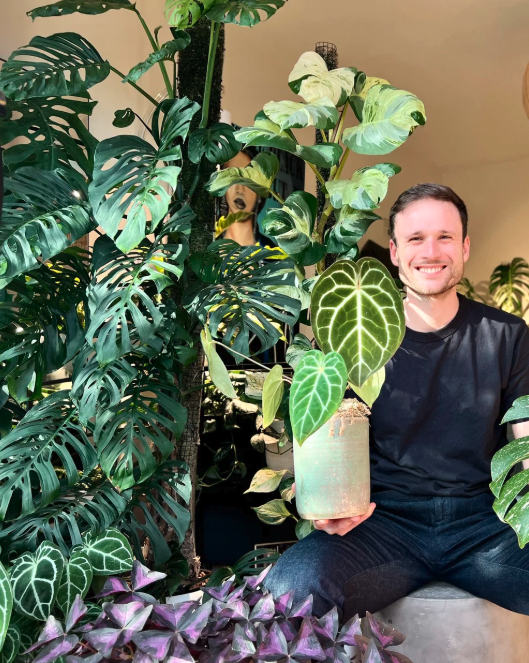
This week’s guest
Sydney Plant Guy is an Australian houseplant grower with a passion for climbing Philodendrons in particular. His plant obsession started in 2018 and he hasn’t look back since, growing all kinds of tropical plants - many on moss poles. Check out his YouTube, Instagram, Facebook and website.
OTL housekeeping
Want to buy a copy of my books Legends of the Leaf and The Atlas of Deadly Plants? All the details are here. Don’t delay if you’d like a copy of Legends of the Leaf, the hardback edition - I only have a very few copies left and there won’t be any more, ever!
Want to get ahead on the OTL Sowalong? Check out these episodes.
CREDITS
This week's show featured Whistle by BenJamin Banger (@benjaminbanger on Insta; website benjaminbanger.com) and The Road We Used to Travel When We Were Kids by Komiku.