Episode 308: A sowalong quick-start, hairy Philodendrons and why your Calathea is miserable
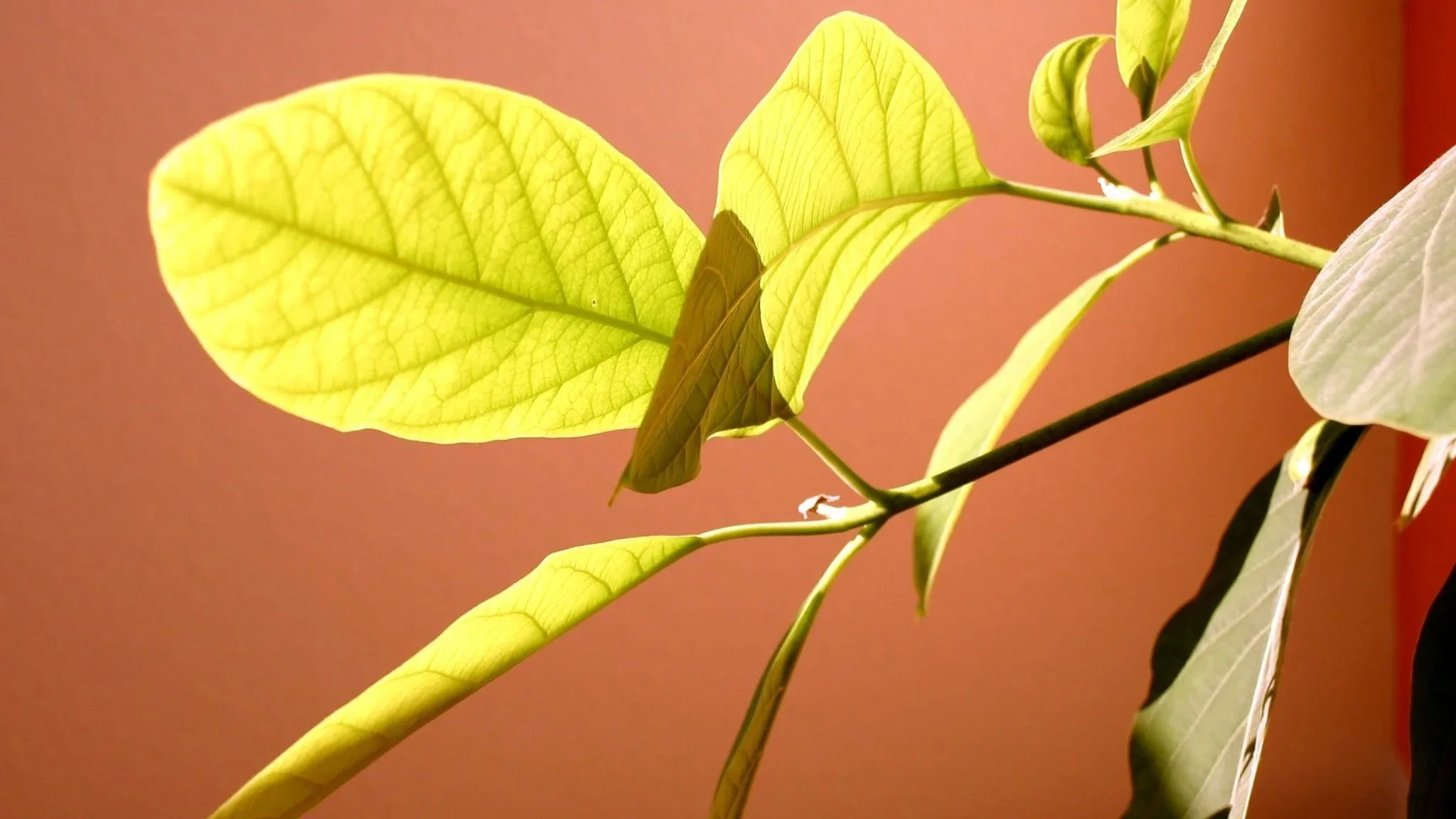
Avocado plants are easy to grow from seed. Photograph: Till Westermayer on Flickr
Subscribe to On The Ledge via Spotify, Apple Podcasts, Player FM, Podchaser and YouTube.
Transcript
[0:12] It's time to get your sow on. Yes, the on the ledge sew along is back and I'll be taking a first nervous dip into a very full on the ledge post bag.
[0:33] Growing houseplants from seed have you ever given it a try and why should you bother well I have been trying to convince my listeners to give this a go since the very start of on the Edge podcast. The first sowalong happened in 2018 I believe and if you want to go back and listen to those old episodes they're all in the show notes for you to enjoy. And I'm glad to say in the period since then sowing houseplants from seed has become a bit more popular. Here in the UK the seed company Unwinds has recently launched a houseplant seed range which is great news making houseplant seeds more accessible to people buying seed catalogs and looking online to buy their seeds. Because until quite recently, it wasn't that easy to find a good range of house plants to grow from seed. But this is something you really should try. It has a number of advantages. It's very cheap. A packet of seeds does not set you back a lot of money. So if it all goes wrong you've only lost a few quid and also it is the number one way to really learn about your plants.
[1:58] What are the rules? Well, the good news is, folks, there are no rules. I am not a stickler in this regard. So if you decide that you don't want to grow houseplants from seed, that's cool by me. If you decide you want to do vegetative propagation instead, that's taking cuttings, I'd still love to hear about it. There really are no restrictions on this. So you could sow 50 different types of seed or just one or none. It's really up to you because you are a responsible adult or maybe you're not. Maybe you're a responsible child like I was as a child and you can just sow some seed and have some fun with it. I'd love to see what you grow. So the main thing to remember is you can drop me an email at ontheledgepodcast.gmail.com or you can use the hashtag OTL Sew Along to share your activities on social media. Love to see it. I'm on Instagram as at j.l.perone. There's the Houseplant Fans of On the Ledge Facebook group, or I'm on TikTok with the same handle at j.l.perone. So yeah, tag me and I will be delighted to see and share what you're up to.
[3:21] Now, if you're like me and you can be a tad impatient and you're thinking, I don't have a single packet of houseplant seeds in my house,
[3:30] but I want to start right now. Well, I've got you. If you...
[3:42] Way back in episode 16 of On the Ledge, which is no longer publicly available, it's just available behind my paywall on my Patreon, I explained how to grow an avocado from seed and it's still a fantastic way of growing your own houseplant for zero pounds and zero pence. So if you've got an avocado seed, here is a little potted summary of how to get started with that. Grab your avocado and enjoy the tasty flesh clean up that stone by running it under a tap and giving it a little rinse off with a cloth and then you can place it inside a clear plastic bag one of those zipped plastic bags or a plastic container and place it in a nest of damp tissue paper kitchen roll, paper towels, whatever you like to call it. If you remember back to that episode, if you're an OG listener, you'll know that we're trying here to mimic the poo of the giant sloth, which was the creature, the giant creature now extinct that actually helped the avocado to spread around back in the day.
[5:00] So we want to make like giant sloth poo without the smell. So yes, Let's wrap that stone in damp tissue paper, put it in a clear plastic bag, put it somewhere warm, and you will find that if you check it every few days, it should sprout quite quickly. The other place I found that these stones sprout very well is inside the compost heap, but that might get a little bit messy. Not great if you don't have a compost heap. I can understand. Not ideal for the flat dwellers. So the plastic bag trick is probably the best. Get that plant to the point where you've got a nice shoot on it and then you can pod it up into soil and hey presto you have your own tropical house plant for absolutely nothing.
[5:48] Are you going to get a harvest of avocados in the short to medium term? No, no, no, you're not. But you are going to get a lovely houseplant. So that's something you can do right now today with probably stuff you've got in your kitchen. If you really want to get going, I would make sure you get a permanent marker pen and just mark on that plastic bag when you started, what date you started sprouting it so that you've got a reference point, because you'll be amazed how quickly you forget the details and then just check on it every couple of days occasionally they do go moldy but most of the time they just want to sprout and you should find you get going in a few weeks and as I say once that sprouts really going for it is a few centimeters long pod it up and keep the pot in a plastic bag wrapping the plastic bag around the outside of the pot just to create a mini greenhouse environment and as I say away you go with a wonderful house plant for free.
[6:49] Second tip - if you are the impatient type and you want to get started now if you have the house plant Ripsalis and many of you will have this plant this is a lovely South American succulent that grows in the trees an epiphyte as we know them you'll often find that if you look at your plant it will have little mistletoe like translucent berries growing on the plant and if you take the plant down from wherever you've got it hung up and feel those berries if they come away easily from the plant you can sow them now I posted on social media about this last week because I've never actually sown ripsalis berries before and I got some great It's Intel from my listeners.
[7:40] Which I'm going to share with you now. The one thing you do need to know about sowing seeds is oftentimes there's more than one way to do things. So I've just described one way of sowing an avocado seed, but you know, lots of people will tell you to start it off in water. Other people will tell you to put it in soil. All of these methods can work because seeds just want to germinate. It's what they do. So it's worth experimenting. But anyway, going back to these Rhipsalis berries if you give them a gentle squeeze as i do in my instagram post which i'll post onto the show notes you'll see outcome maybe a dozen or so of these little black seeds covered in this i can only describe it as mucilage i love that word so they come out covered in this sticky stuff and my question to Instagram readers was well how do I sow these knowing that other seeds that have that mucilage like tomatoes generally you're recommended to put stick them in a glass of water to get rid of that mucilage that gut that goo before you sow so I was asking people well do I need to do that with these and I got some great answers.
[9:02] Green Minded shared that they squish the berries into a glass of water and swirl to clean some of the juice off the seeds and then sows into sphagnum or potting soil in a plastic bag or prop box until they germinate and reports good germination rates from ripsalus seed. The Viking Potter echoes that, soaking the seeds in water overnight to remove the gel. That's a nicer word, isn't it? Gel than mucilage. maybe I should change my wording and then the Viking potter suggests pouring water with seeds through a paper towel to extract the seeds that technique is a good one I like that and then taking tweezers to grab the seeds and place on top of moistened soil placing under a grow light, this seems to be the basic solution that lots of people did naturally macky squishes the seeds out then lets them dry for a day or so and then sows them on the top of soil and I have to say I've tried all of these methods so I basically I had quite a few of these berries from one of my ripsalis plants, I think from memory, it's a Ripsalis ramulosa red coral, one of those strappy ones that is very popular and tends to go very red and sun stressed.
[10:23] It had been a bit unhappy, I did go through a phase where I did not water that plant enough and it got very frazzled.
[10:31] But I've been back on the case watering it much better this spring and it's come right back to life and the berries seem fine so just shows you how tough these plants are so I've sown the berries just with the gel slash mucilage on some sphagnum moss I've also sown some onto pond and I've also tried placing them on some kitchen paper and then uh laying them on soil in a propagator so if you've got any of these Rhipsalis seeds hanging around in that perfect vessel the little berry that they come in then it's worth giving this a go you can do this without leaving your house if you happen to have a drop of sphagnum moss around or a bit of soil you can get sowing and as we've already said the thing that you really need to know when you're thinking about sowing seeds is how are they distributed in nature and how is that going to affect how they are sown so if you remember in last week's episode i was talking about hydrochastic seed capsules - these are the seed capsules that only open when rain hits them so that that seed gets washed out of the seed capsule and is able to germinate in a moist place so that's telling you that you.
[11:58] The Della Sperma Echinatum pickle plant we were talking about needs a moist spot for germination. We're not just going to assume that because it's a succulent, the seeds need to be bone dry because that's not the truth. Oh, and an update on the pickle plant propagation that I was talking about. I was saying how some people have a hit and miss process with vegetative propagation of that Della sperma, the pickle plant. Well, here's the reality on the latest cutting that I took.
[12:35] I took one little cutting off my plant and I put it on some damp pond and it's already rooted. So maybe if you haven't had any success with rooting those cuttings in the past, try a bit of PON because it worked for me this time.
[13:05] Thank you so much to everyone who's welcomed me back with open arms over the past week. It's been a flurry of messages, which has been super nice. Thank you so much to everyone who has sent me a message after episode 307, where I revealed that I had been made redundant. Gosh, those are not the words one wants to hear at the age of 52. But anyway, onwards and upwards, the podcast will benefit.
[13:35] And my Patreon is now wide open to members. I'd love you to join. And this week, all of these people decided to do just that. We've got Ange and Ezra becoming legends. Dean, Nancy and Crawford also becoming legends. Bryony becoming a crazy plant person. Stephanie and Andrew joining legends. Chrissa became a crazy plant person. chelsea and ernestina and casey all became free members and brian b and kyleen all became legends and thank you also to the aforementioned andrew who commented about my book the atlas of deadly plants saying i read my copy cover to cover listen to the audiobook version and recommended it to many friends and co-workers. Andrew, you get a gold star because that is just the kind of behavior that I fully approve of. So if you have been teetering.
[14:42] On the brink of becoming a Patreon member, but you haven't taken the step, now is a really, really good time to go ahead. Why? Because from today, April the 3rd to the 10th, you can use code, OTLBACK, O-T-L-B-A-C-K, to get 20% off an on-the-ledge Patreon membership of any tier. This is annual not monthly so you do need to commit for the whole year if you want to get that 20% discount so just a week to get that 20% off so do go and check out my Patreon now there's a link in the show notes it's just patreon.com forward slash on the ledge and you can become part of our wonderful gang what do you get as a Patreon subscriber well depends on the tier if you're on the free tier then you just get to hear from me fairly often saying this is what I'm up to if you are a crazy plant person you get access to my planty posts which are regular house plant missives about interesting stuff about plants of all kinds and the warm fuzzy feeling of supporting me with just a dollar or a pound every month.
[16:03] If you're a legend, you get ad-free episodes of the podcast. Once a month, you get my Extra Leaf bonus podcast. You also get an audiobook of the Atlas of Deadly Plants. If you submit your postal address, you can be part of my festive mail-out every December. And you also get access to the first 50 ever episodes of On the Ledge. Super fan tier, well, that's for the real enthusiasts. And that's everything i've just mentioned plus you get an exclusive card at the sign up if you hang around for six months then you get a physical copy of my book the atlas of deadly plants and you get an enhanced festive mail out so do go and check it out if you've got any patreon questions i'd be more than happy to answer drop me a line at on the ledge podcast at gmail.com, you.
[17:07] Let's just say it's a good thing that we don't have physical post bags anymore.
[17:14] The vast, vast majority of my messages are virtual and that means I don't have a big pile of unanswered letters to look at. Instead, I have a folder in my email which is just bulging with your messages which went unanswered while the show was on pause much as I would love to have got back to everyone with an individual answer there wasn't time but I'm gonna try and answer a few of those questions over the coming weeks and catch up a little bit and if you've got a new question for me about your houseplants well hey drop me a line I love to hear from you this question comes from Ian who has an ictus philodendron that's grown above the cork support stem it came with. Ian is wondering how best to support it. Now ictus philodendron. I did some digging around and I'm not quite sure which philodendron this is Ian but I have a suspicion, a creeping suspicion, that it's the philodendron that I would know as philodendron squirmiferum. Now if you don't know that name you may well know this philodendron because it has an unusual feature which is a scaly petiole.
[18:39] Oh my gosh. The petiole being the leaf stem and the scales to our layperson, non-botanist eyes, we'd probably describe them as bristles or hairs because they don't really look like scales. But for some reason, botanists like to describe them that way. They're covered in these red hairy bits, which makes them quite distinctive and quite popular. Now, this plant comes from parts of Brazil, French Guiana and Suriname, according to the Plants of the World online website, which is the one I use generally to understand where plants come from. And this is a plant that's been around for a good amount of time. I did some digging and I found references to this plant as the anchor leaf philodendron in the 1950s in the home and garden bulletin number 82 from the U.S. Department of Agriculture. So yeah like most things in the house plant world we think everything's new and really it's not. It's been around for a really long time. So yes people were growing this plant in the 50s. If you're from Scandinavia you might know it as moss vine aka moss rank and interestingly this guide from the 1950s.
[19:58] Does talk about this very issue, Ian. How pertinent. So the text tells us that when the plant gets to the end of its moss-covered pole, its stems sometimes begin to grow rapidly and the plant produces widely spaced small leaves.
[20:17] Now, first off, obviously in this case it's talking about a moss-covered pole. Ian, when you talk about a cork support stem, I'm thinking that you might have made a typo there and you mean a coir support stem, as in a coir pole, a piece of wood with some coir coconut husk surrounding it, which is a very popular form of plant support for plants that are sold in houseplant shops.
[20:46] So it's a valid question. What do you do when that plant gets to the top of the pole? Because as the 1950s publication points out, When those stems don't have support anymore, they tend to become long and spindly and the leaves tend to change shape. Why is that? Well, we have to think about how this plant grows in the wild in South America. And World Flora Online, I just looked at this just to double check my facts. And World Flora Online tells us that this plant is an oppressed, appressed, not oppressed, appressed, hemiepiphytic climber. What in the name of all that is holy does that mean? Well, hemiepiphytic means that it either starts out growing in the ground and then grows up trees or starts in a tree and grows onto the ground.
[21:43] Oppressed that just means that the leaves and the stems grow up close to their support so yes you do generally need a support for this plant if you buy a small specimen you may well find it comes with no support but if it's growing well yes it will definitely need a support over time so it's a very good question and a good problem to have Ian that your plant has reached the top of its pole you've obviously bought a slightly larger plant that did come with some kind of support but what now.
[22:18] And it can be tricky, particularly if your plant has decided to really get attached to that pole. It doesn't tend to happen quite as much with coir, which tends to be very dry. And the aerial roots don't always penetrate onto that pole. But you may still find that it's hard to un-entangle your plant from that pole. Because the most obvious solution would be to take the plant out of its pot. You'll probably find that the roots have started to mass in the bottom of the pot. And it needs a slightly larger container then you can swap out that pole give it a slightly larger one and set it back up as it was before but just with a bigger pole and a bigger pot however you're going to have to do some untangling possibly to make that happen one other thing you can do is that you can just give your plant a good prune it's springtime in the northern hemisphere so a good time of year for pruning. And you could just keep pruning that plant back, removing the growth that goes out of bounds and above the moss pole. And that will hold it back for a good amount of time.
[23:29] Going back to the description from the US publication, why do the stems start to grow rapidly and produce widely spaced small leaves as soon as the plant comes off its support? Well if you think about that plant it's an oppressed hemi-epiphyte so it's looking for things to grab onto so as soon as it doesn't have something to grab onto those stems are going to go nuclear and just search out new support but the plant probably won't commit to making huge leaves on that stem unless it's actually attached to something so that's why you get these long stems going all over the shop before you actually get them onto a fresh support so but you could just cut that stuff back all the time and you know in nature that's what's happening to these plants they might be getting knocked in hurricanes they might be eaten by herbivores knocked back in different ways or covered with other plants so that they are used to this experience of pruning it emulates what happens in the wild and it's not a problem your only problem might be that eventually the roots become terribly root bound and you need to pot it up anyway so at that point you might want to give it new support there are probably some ways that you could add extra support onto that coir poll you could.
[24:55] Depends how it's set up is it against a wall you if it's against a wall you could possibly add some trellis to the wall to enable that plant to stay where it is and then train the new growth onto another support that could work but I would generally advise if you can swapping out that coir pole and using something else that gives the roots a bit more support there are so many different moss pole variants out there involving plastic, sphagnum moss, all kinds of things. I would look into something that works for you and see if you can find a good support mechanism that you'll then be able to add to if you don't want to keep cutting this plant back.
[25:45] Two little asides while we're here. I did look up philodendrum squamiferum in the CRC World Dictionary of Medicinal and Poisonous Plants because as you know having written a book about poisonous plants I'm always interested and it told me that the berries have a sharp and peppery taste, apparently but I just wouldn't advise on eating them. They're not going to be particularly nutritious or worthwhile so just keep that as a piece of information in your back pocket that you can bring out and use to impress your friends at a party and the other thing that was fascinating in this 50s book from the US Department of Ag was it talked about a term I've never heard before.
[26:32] We've all heard of indirect light, that well-worn phrase that houseplant people tend to use. Well, have you ever heard of subdued daylight, which is apparently daylight with no direct sun, light from a north window, subdued daylight? I'm not sure that's any more useful than indirect light, but I thought I'd just
[26:54] mention it because I've never heard that term before. So I'm hoping Ian that this will help with your ictus philodendron possibly philodendron squamiferum but if it's a different philodendron it's probably pretty much the same advice and you can get your plant growing well and keep doing what you're doing because it sounds like it's doing well the second question I'm going to tackle today comes from Kylee and Kylee has a princess jessica lathea that is drooping it's a few feet from a west-facing window says kylie i've tried to keep it moist and aerate the soil every now and then i bought the plant several weeks ago and it was thriving for a while and grew two new leaves now every few days a lower leaf turns brown and dry and the plant is constantly drooping but perks up at night I figured that this was regular Calatheia behavior. I tried moving it to a less bright area, but the problem hasn't gone away.
[28:00] So let's talk about Calathea.
[28:04] I would say that Calathea is one of those plants that people think need shady conditions.
[28:12] Generally, that's a no from me. I would be very surprised if this problem is not just that the calathea is not getting enough light. If you're keeping the soil moist and light levels are too low, then the plant is photosynthesizing incredibly slowly. And those roots are surrounded by too much moisture. Root rot sets in and hey, presto, you have a droopy, miserable plant. This is such a common fate for the calathea it happens to i would say almost every calathea that's bought um they do really well in good light surprisingly you've just got to move them gradually into that good light though because they won't like being suddenly plunged from darkness to bright light sunlight in one go that might burn their leaves but they will adapt so just get a little calathea journey going every day move them closer to that west facing window kylie and i think your plant will perk up at this point it's also worth having a look at those roots, if they're brown and stringy cut away anything that looks like that because it's rotted and just leave the white firm roots behind you might want to repot as well um.
[29:36] But the good thing about these calatheas is even if they've lost all their leaves they will often come back from nothing so don't give up get that soil to a greater light levels and see how it goes.
[29:51] Water when the substrate is dry-ish at root level and you'll find that your plant will be happier give it a really good soak and then allow those roots to do their work and only water again when it starts to feel dry down by those roots and that should work princess jesse calathea is quite a nice plant actually if you like pink things it's a cultivar of the calathea roseopicta which is if we want to satisfy our inner taxonomy nerds actually now a Goeppertia according to the powers that be so Goeppertia roseopicta I'm not sure it's going to catch on that name gupertia because it's a bit of a mouthful but yeah this is a beautiful plant with lovely pink highlights that comes from northern South America so it's still getting higher light levels than we might experience in our homes especially in winter so yeah in the height of summer you probably are going to move it need to move it a little bit away from a south facing window but the rest of the year it just wants lots on lots of lights and that's the way to keep these plants happy.
[31:13] I hope that's helped, Kylie, and I'd love to hear your houseplant horror stories, success stories, questions, queries, maybe even the criticisms. Yeah, I can take criticism. Bring it on. So please do get in touch. You can drop me a line at ontheledgepodcast.gmail.com. And if you do have a planty question, please, please, please make sure you give as much info as possible. Where is your plant situated? What's it doing? How long have you had it? Send pictures. I love to hear from you. And I'll be dipping further into my post bag in the next few weeks. So you might even hear your own name on the show.
[31:59] That's all for this week. Do have fun sowing houseplant seeds and I'll be back very soon with more OTL sowalong intel. But for now, have a great week with your plants. Bye!
Get started sowing houseplants without buying a single thing! Plus I answer Calathea and Philodendron questions.
OTL housekeeping
Want to buy a copy of my books Legends of the Leaf and The Atlas of Deadly Plants? All the details are here. Don’t delay if you’d like a copy of Legends of the Leaf, the hardback edition - I only have a very few copies left and there won’t be any more, ever!
Want more? Join my Patreon! USE CODE OTLBACK to get 20% off an annual membership - offer applies April 3 to 10 2026. You can join for free or choose one of my paid tiers. There’s a fre-to-access article about Trump and the missing White House plant to read right now!
Want to get ahead on the OTL Sowalong? Check out these episodes.
If you are a Patreon subscriber at the Ledge End or Superfan level, you can listen to the avocado sowing episode here. Not a patron? You can buy the first 50 episodes here.
Q&A - QUESTION 1
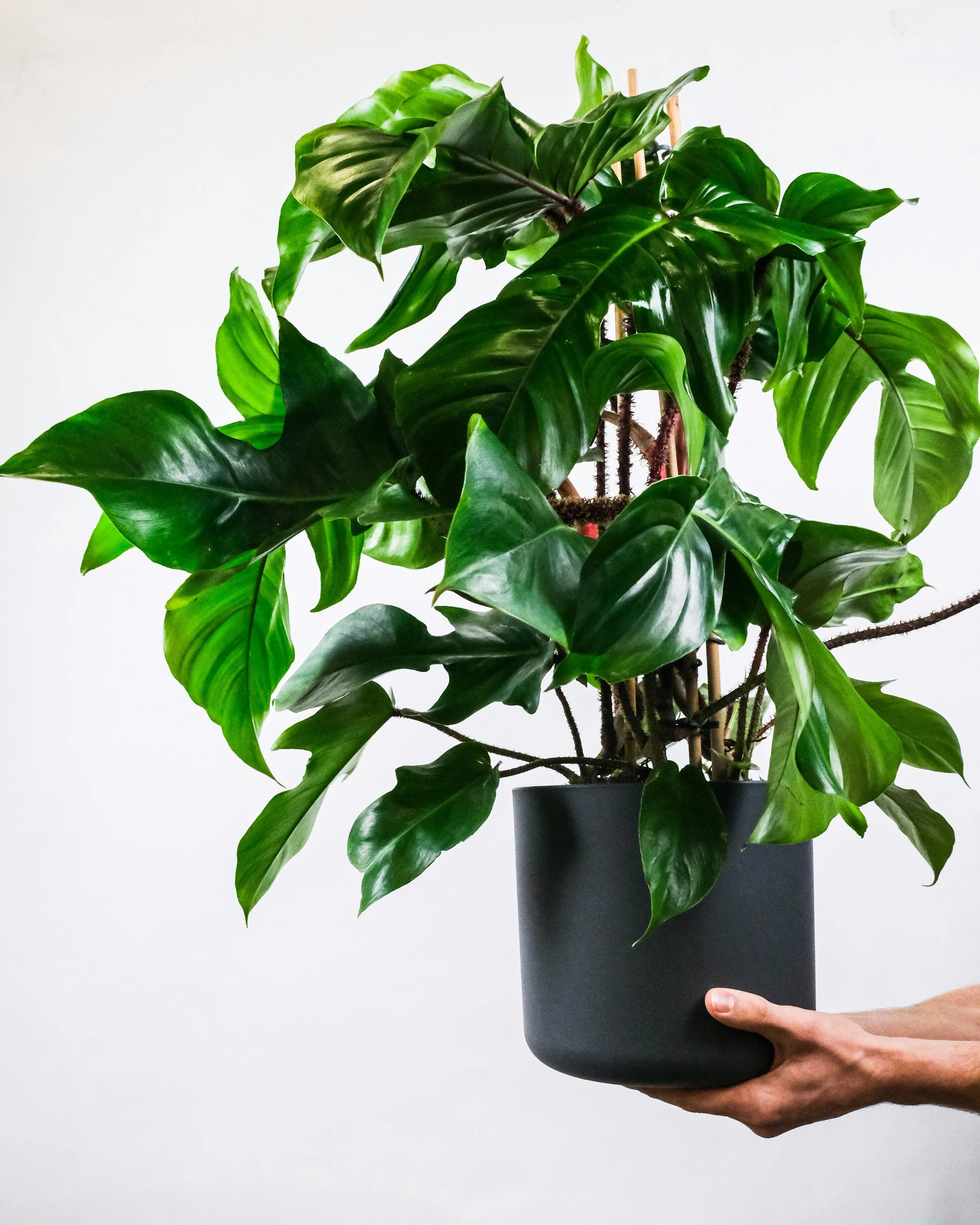
Ian’s plant - which I suspect is a Philodendron squamiferum - is an appressed hemiepiphyte meaning that it grows in the ground and climbs trees, or sometimes vice versa - and it grows tight to the trunks it is growing along or up.
Ian’s plant has reached the top of its support so Ian can either keep trimming it back, repot and replace the support, or add new support at the top.
If you want to read the 1950s pamphlet I mention that covers this plant, it’s here.
This plant has many common names including the anchorleaf and bristle leaf philodron.
Q&A QUESTION 2
Kylee wanted to know about her Calathea - now known by taxonomists as Goeppertia roseopicta - ‘Princess Jessie’.
Problems with plants from the prayer plant family are almost always to do with a lack of light. These are NOT low light plants! I suggest Kylee checks the roots and removes any brown stringy roots that are rotting, and gradually moves the plant closer to a window.
Want to ask me a question? Email ontheledgepodcast@gmail.com and please provide me with as much info as possible including images!
CREDITS
This week's show featured Whistle by BenJamin Banger (@benjaminbanger on Insta; website benjaminbanger.com) and The Road We Used to Travel When We Were Kids by Komiku.