The houseplant pest no one ever talks about... tortrix moths
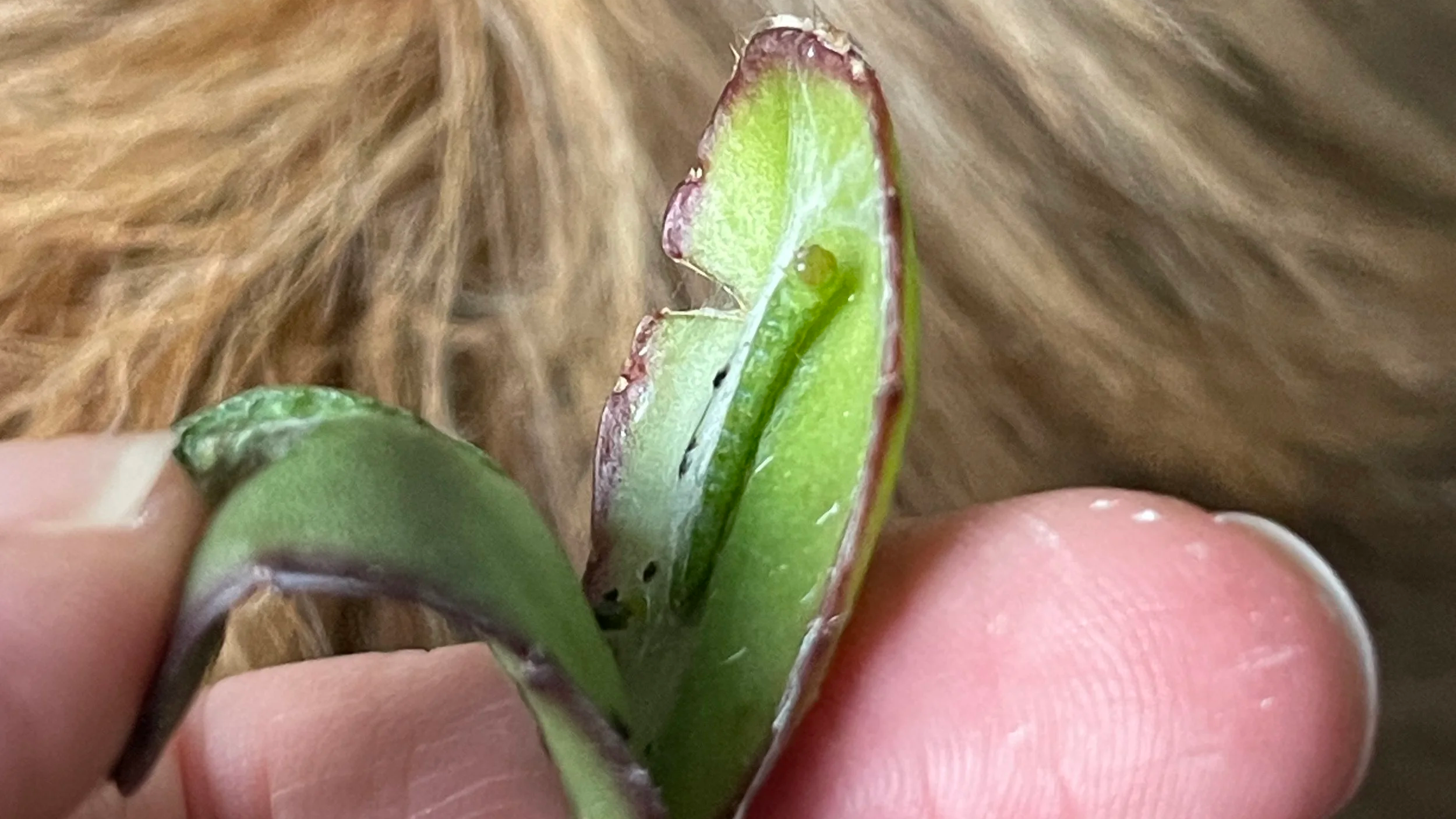
Tortrix moth caterpillars on an Easter cactus. Photograph: Jane Perrone
Transcript
Transcript © Jane Perrone. Originally published at janeperrone.com. Please do not reproduce or republish without permission.
[0:00] Hello, and welcome to On The Ledge Podcast, the podcast that keeps your houseplants from killing you.
[0:09] No, hang on a minute, that came out wrong.
[0:29] To the houseplant pest that no one ever talks about. Can you guess what I'm referring to? Now in all my years of looking at houseplants, reading about houseplants, hearing about houseplants, I don't think I've ever heard anyone talking about this particular pest. But I find that this time of year in particular it is a bit of a nuisance on my plants and if I'm having a problem with it then I'm sure some of you are too. Why isn't it talked about? Well maybe I'm the only person having this problem but I don't think that's the case. I think it's more likely that this is a bit of a transitory pest that turns up, does some damage and then disappears off without necessarily needing treatment and people don't, know how to deal with it or what to do with it. The first sign you're going to get that your plant is affected by this mystery pest is a light dusting of black grains around the base of your plant pot.
[1:47] And this stuff, let's not beat around the bush is poo. Its official name is frass, F-R-A-S-S, and that just means insect poo, and this is produced by the pest in question. So you can guess from that that the pest in question is on the larger side, because the frass is usually about the size of a poppy seed. So, you know a decent sized poo for a creature that can live on your plants.
[2:25] This pest can strike at any time of year, but it tends to, in my house anyway, strike at its most virulently in the spring and the autumn.
[2:38] Well, let's drop the mystery now. Let's tell you what this pest is. It's caused by the caterpillars of a small brown moth. Well, I say a moth, I mean multiple moth species from the family tortricidii. In other words, the tortrix moths. And I say moths because there are hundreds of tortrix moth species in the UK. And if you are not in the UK, you will have your own tortrix moth species that can affect your house plants. So think the very hungry caterpillar, because we're talking munch, munch, munch, a caterpillar taking out huge chunks of your plant if it gets the chance.
[3:28] But you might not see them. And that may sound incredible because, gosh, a caterpillar a centimetre or bigger tackling your houseplant leaves. You think you'd be able to see that. I go on a lot in this show about hand lenses. We certainly don't need a hand lens to see this particular pest. But here's the kicker. These caterpillars like to get themselves cosy. So they create silky threads and bind up the foliage together. So you might not see the caterpillar, but you will see your plant suddenly having these kind of pockets of leaves where they're folded over on each other.
[4:11] Tied together with silk. And you may think, oh, it's spiders. But no, it's a Tortrix moth caterpillar making a delicious, cozy corner to munch your way in. I mean it sounds great doesn't it don't you want to be a talk tricks moth caterpillar right now I certainly do.
[4:28] What do the caterpillars look like themselves? Well, they are usually small-ish and green. It will depend on the exact species you're dealing with. Here in the UK, they're most likely to be either the carnation tortrix moth or the light brown apple moth. And these both have green bodies. the light brown apple moth has a yellowish head and the carnation tortrix moth has a darker brown head, but as i say if you are in other parts of europe or, north america or australia you probably have different species so it's worth having a look and seeing which are the prominent species where you live but the damage is the same they're going to eat leaves and poo, and eat leaves and poo and you can lose quite a lot of foliage in a short amount of time if you've got a decent infestation, now a really important thing to say here is that caterpillars are an incredibly important part of our biodiversity and if you get tortrix moth caterpillars outside I would always leave them be because they're valuable food for birds and other creatures.
[5:50] I know wasps are not very popular but wasps are incredible predators of these kind of caterpillars so yes we've got to leave these be in the garden.
[6:00] I understand though in the house they are more problematic because we don't have any of that biodiversity to balance out the predators against the prey. So unless your infestation outside is absolutely destroying everything which it probably isn't to be fair then I would leave it be. Inside though you do want to stop the munching because you're going to lose quite a lot of foliage this way, and of course inside the caterpillars can survive at any time of year so, whereas in the garden if you are in a temperate climate you'll find this problem eases off in the winter inside it can still keep happening and right now I have just had an infestation on one of my plants and I'm sure that's come from moths flying in and laying eggs and damaging my plant. Now unfortunately the plant that the Tortrix moths have decided to target is my long-suffering Easter cactus and this plant oh my gosh, I've kind of brought this back from the brink of destruction it had a really bad case of I think flat mites.
[7:17] I didn't actually get to the point of identifying whether it was flat mites or broad mites but, the plant was absolutely being sucked dry and it took me a while with my slow brain to figure out that that was the particular pest and I nearly lost this plant and it's had quite a lot of damage which won't go away so, to find the tortrix moth caterpillars turning up and deciding to munch it just as it was getting back into health after being treated for flat mites was a bit of a blow.
[7:48] And as I say, the first I knew about it was that frass, those little poppy seed black deposits around the base. And then it's a question of detective work going around the leaves of the plant and looking for the caterpillars in their little silky pouches that they make. I will put in the show notes and on social media some pictures so you can see what I'm talking about. If you're worried about which plants these might appear on, in my experience they seem to be most attracted to things like begonias and also the schlumbergeras but I think they can pretty much appear on any plant they choose they are not specialists they are generalists so they will just, find a leaf they like the look of and lay some eggs and caterpillars will hatch out there I think they also particularly like saracenias, the temperate pitcher plants.
[8:51] But they'll go for anything. They really will. And if you do find that frass, even if you can't find the source, I would spend some time going around and looking for the caterpillar because there's probably going to be one.
[9:04] And as always with dealing with a pest infestation on your houseplants, it's really important to understand the life cycle so you can get a grip on treatment. If you're wondering what the adult moths look like, well, the carnation tortrix, which has the mouthful of a scientific name, Cacoecimorpha pronubana.
[9:30] Why, is actually rather pretty. I love moths. I think they're really cool. I know some people have a real moth phobia, but I think moths are the cooler relations of the butterflies. And this one is very pretty in its own way. It looks like a piece of mid-century teak furniture with beautiful striations of lighter and darker areas and also some orange patches. Like so many of our houseplant pests this is not a native species to the UK.
[10:09] It first arrived in about 1905 and to be honest this is the one you're most likely to find on your houseplants because it does have a breeding cycle that means it can get to work at any time of year outside you're likely to find it in the summertime and the eggs on both these species are laid and the caterpillars emerge sort of seven to ten days later and then you've got a period where they're eating for their as if their life depends on it which it does before pupating, and emerging as a moth and the length of the life cycle really depends on the temperature so.
[10:47] If the temperature is 30 degrees it might take 40 days in total the whole life cycle whereas at 15 degrees it might take it might take 120 days or more so that will affect the life cycle but there can be several life cycles in a year, now let's be honest here for most of us this pest is not going to be one that completely destroys our house plant collections we're going to spot it we're going to deal with it and it's fairly easy to deal with.
[11:19] They're very easy to spot, the damage is clear, and you can remove them quite quickly. And if you do remove them, you're unlikely to have an ongoing problem, unlike something like thrips, which obviously are hard to see, hard to remove, and the life cycle is so quick that you're going to have numerous generations. That's not this kind of pest. However, it's worth mentioning because perhaps you've had this on your plants and had no idea what it was. And want to know what to do about it so it's still important that we know about all these different things that can affect our plants so what do we do about it well it's pretty simple all i do when i see tortrix moth caterpillars on my plants is i remove that little pouch with its accompanying leaves and put it outside it probably won't survive outside at this time of year in november because it's too cold however it might make food for a bird or a caterpillar or it'll break down and join the soil so, I just put them outside and that immediately stops the damage if you spot the eggs then again remove the leaf stick it outside problem solved so in a way it's a.
[12:37] Problem that we can deal with quite easily and I find that quite comforting in a time when I am riven with flat mites and spthrips and root mealybugs and other much more and, other more intransigent.
[12:54] Pests than the tortrix moth that said in a big production greenhouse this could cause problems of quite a substantial nature bear in mind that one female can lay up to 700 eggs, and that means that if this goes untreated in a production greenhouse it can cause quite a lot of damage there are biocontrols that can be used with this and the main one is a nematode a member of the steinonema genus which is the same genus as we use for, fungus gnats control, that's steinonema feltii but in the case of the tortrix moth the steinonema we need is carpocapsi and you can get this, as a biological control and it deals with various other moth pests as well as tortrix moths, so this may well be needed in a greenhouse setting or if you have a lot of plants and you're finding that tortrix moths are causing a lot of damage, you can also get pheromone traps which trap the male moths plus parasitic wasps are another option and outside nature will just take its course birds wasps beetles will go ahead and keep populations at a reasonable level particularly if you're encouraging those kind of creatures in your garden in your outside spaces.
[14:20] Unless you keep all your windows and doors permanently shut, these moths are going to occasionally get indoors and lay their eggs. So it's something you may see periodically. And as I say, I tend to find that they turn up most often in spring and autumn. But, and what do you do with the frass? Well, I reckon you could probably sweep that up and pop that on the top of your houseplant pot because of course insect frass is a form of fertilizer so why let it go to waste?
[15:04] Have you had some tortrix troubles or is this a pest that you've never come across? I was looking back over questions I've been sent via email over the years and I do remember one listener who said, until I listened to your podcast I didn't have any houseplant pests and what they meant by that was it was only when they listened to the show that they realized how many pests they had because for the first time they could spot them. So I'd love to know if you have discovered that you have a tall tricks problem as a result of listening to this show or maybe something you've never come across do let me know, if you haven't checked out my patreon then do go and take a look free members this week get access to my new article about a mysterious and viral, ancient tree that's been supposedly popping up everywhere and i explain what this tree is why, you may not have seen one and lots more so if you have seen those viral internet posts with the scary music about the scale tree do check that out you just need to be a free or paid member to read that, and I'm very glad to say that.
[16:21] And you can also access all my other free content.
[16:25] Also, I have to say that we are coming up on the 10 year anniversary of On The Ledge. And I'm making plans for that anniversary, which hits at the end of February 2027. And I want to involve you. So if you've ever had some advice from me, either in a Q&A or via email or chatting to me at a planned event, and it's helped you, I would love to know what's happened to your plant. If you have listened to something on On The Ledge that has changed your life, maybe made you change career, I would love to know. You can drop me a voice note. You can write me an email. You can send all of that to ontheledgepodcast.gmail.com. I'd like to know how On The Ledge has impacted you. So please do get in touch.
[17:17] It doesn't have to be something earth shattering. It could be as simple as, well, now my maranta is thriving because I put in practice what I've learned from on the ledge. Or maybe your plant died because you followed my advice. Even that I would love to know. And also, I would love to hear from anyone who has been listening from the very first episode. I'd love to know how your plant collection has changed in the past 10 years. Has it grown, shrunk, turned from cacti to aroids or the other way? All of this I would love to include in my anniversary episode. So please do get in touch. Also, tell me about your favourite on the ledge moment. Which episode is your absolute favourite that you've listened to 10 times? All of that and more I want to know. So please do get in touch. I will also be doing some other things around the anniversary. I've got lots of plans in the pipeline but if you've got suggestions then please do let me know because you are what makes On The Ledge great. So thank you to everyone who's ever contributed in any way to the show.
[18:30] Also, I'm planning an upcoming episode on... This sounds like the most boring subject on earth but actually I think it's gonna... I'm not selling it very well, am I? I think it's gonna be really interesting. I'm gonna be talking about...
[18:45] The nitty gritty of substrates, and I don't just mean what different substrates for you to use for different plants. I mean things like storage and organization, how long substrates last for how to keep yourself safe around substrates. So the risks of things like perlite dust and also should we be worried about the risk of fungal infections coming from our substrates. So a sort of a substrate health and well-being episode. If you've got any questions related to substrate, please drop me a line so I can include them in the show. That would be great to know what your substrate problems are. Is it how to store them, how to buy the right quantities, how to know volumes when mixing?
[19:40] Let me know your composty dilemmas and I'd love to help.
If you find your houseplant leaves are folded over with silky threads, you may have a pest you have never heard of: the tortrix moth caterpillar.
Want to hear this podcast ad-free? Sign up for my Patreon now to unlock ad-free episodes, bonus episodes and much more!
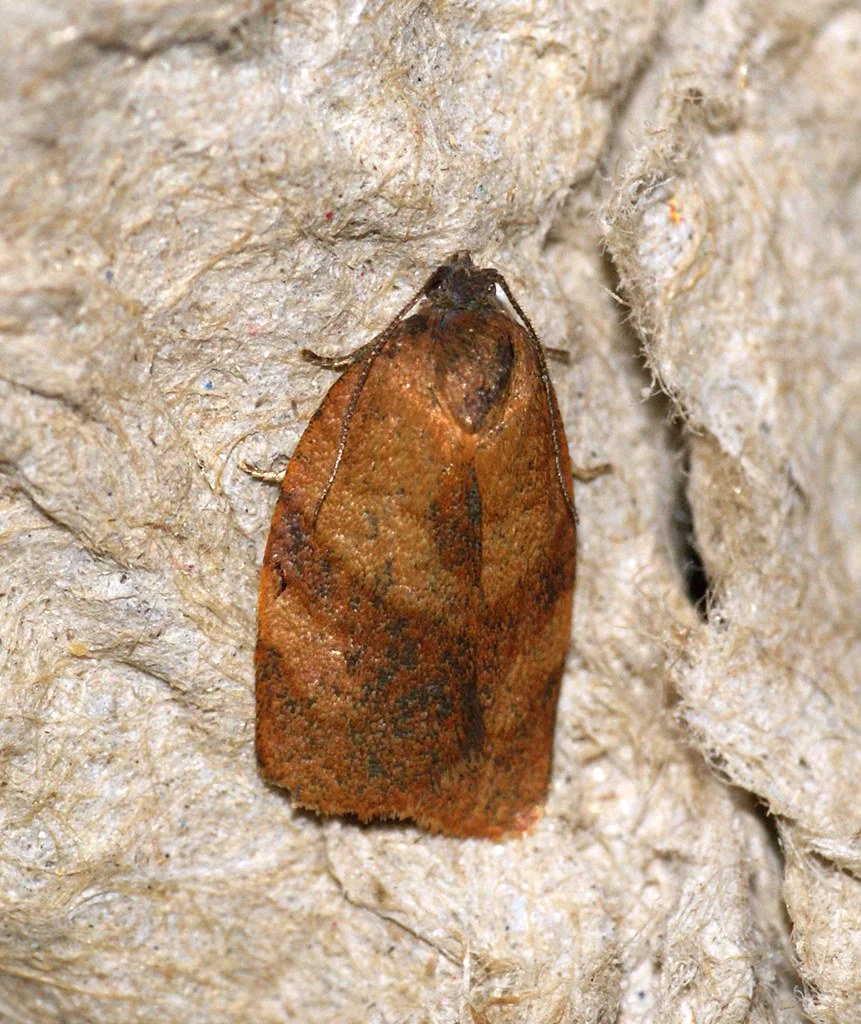
The carnation tortrix moth. Photograph: Ben Sale on Flickr.
Tortrix moth facts
In the UK, you are most likely to find houseplants affected by two species in the tortrix moth family: the light brown apple moth and the carnation tortrix moth.
They often turn up on my Begonias and some forest cacti as well as Sarracenias, but these are generalist pests that could appear on any of your houseplants.
The adult moths fly in through windows and doors and lay eggs on your plants. The eggs hatch out in about ten days and the entire life cycle will vary according to the temperature from as little as 40 days up to more than 100 days.
The caterpillars fold the leaves over themselves to create a silken pouch - the only sign you may see is the caterpillar poo - aka frass - that looks like poppy seeds lying around the base of the pot.
How to treat tortrix moths
In the home setting, the best thing to do is snip off affected leaves if you find eggs or caterpillars and take them outside.
If you find tortrix moth caterpillars on plants outside, leave them alone as they are an important part of our ecosystem.
There are biological controls available for serious infestations eg in greenhouses - the nematode Steinernema carpocapsae, as well as predatory wasps. Pheromone traps and lures can also be used.
On The Ledge tenth anniversary callout

It’s nearly ten years since On The Ledge began, and I am planning a special anniversary ep! I would love to know the following:
How your collection has changed in the past ten years.
How having your question answered on the show has changed you or your plants.
Did OTL inspire you to change career or start your own plant podcast?
Your favourite OTL moments - which episode have you listened to more than once, or really stuck in your mind?
Drop a line to me at ontheledgepodcast@gmail.com with a voice note or your email.
CREDITS
This week's show featured Whistle by BenJamin Banger (@benjaminbanger on Insta; website benjaminbanger.com).