Episode 316: Growing poisonous plants indoors
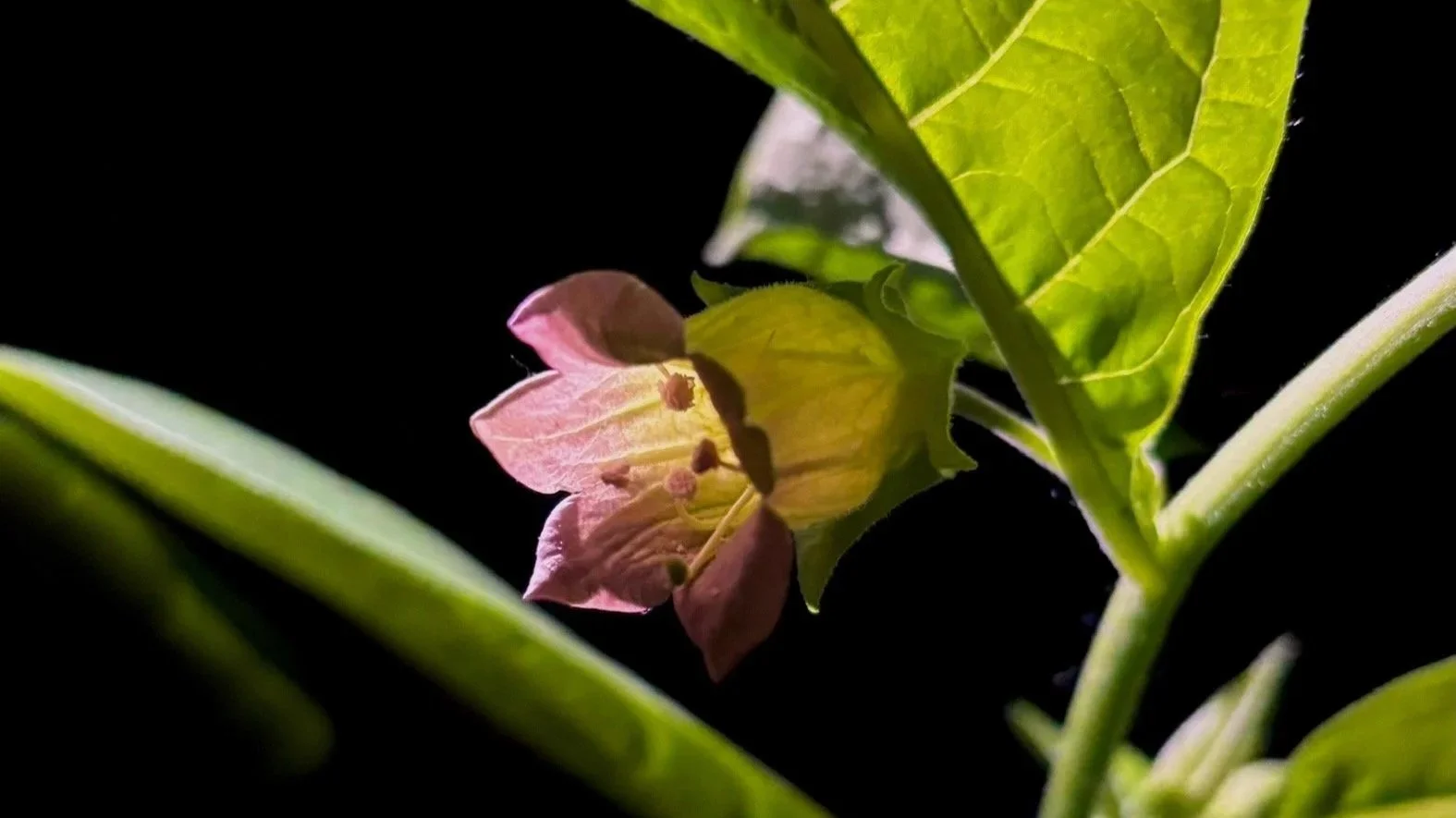
A deadly nightshade flower. Photograph: Kenneth Moiane
Transcript
Jane Perrone (00:09) Hello and welcome to On the Ledge Podcast. I'm your host, Jane Perrone and this week we are treading very carefully into the world of poisonous plants, specifically the nightshade family, to find out how you can grow these fascinating plants indoors. With this week's guest, Ambient Flora, aka Kenny.
Thanks to all my new Patreon subscribers this week, including Neil, Ryan, Theo, Don Hang, Michelle, Sarah, Jazzy, Sean, and another Sarah. There's been a lot of new members this week, and I've just been working on my Patreon a little bit. So there's a new post - coming up soon about plant maintenance and there's also right now the chance to interact with other members of my Patreon clan via the lounges. There's two new lounges. One is for the sowalong where you can discuss your progress on sowing seeds of houseplants and the other one is the On the Ledge Planty Book Club where you can come and talk about the planty books that you're reading right now.
So, if you'd like to find a safe space to meet other planty people, do check out my Patreon at patreon.com forward slash on the ledge. Before we go any further, though, on this episode, a warning. The information and medical uses of the plants that we're talking about in this episode are purely for entertainment and information. So please, please don't go
Trying to do anything other than look at the plants that we're talking about in this episode in any way, shape, or form. It's fine to grow poisonous plants in your home, but you do have a duty of care to those around you to make sure that everyone stays safe. So keep them well away from children and pets and anyone who may not know the risk they pose if ingested.
So with that warning complete it's time to get on with my interview. Kenneth Moiane, aka ambient flora, joins me to talk all things nightshade.
Jane Perrone (02:38) Kenneth, thank you for joining me on On The Ledge. I was captivated by your Instagram, I have to say, - immediate follow because we share a passion for a very particular group of plants that - maybe other people haven't thought so much about growing - in their homes. Let's just start off with the very basics.
Kenneth Moiane (02:42) It's my pleasure, thank you.
Jane Perrone (03:06) poisonous plants, what was it that drew you to this eclectic group of different species?
Kenneth Moiane (03:07) Yes.
Well, basically I'm just interested in things that are not so beautiful on the first view. think that was the main approach I had to just encounter that beautiful group of plants. I just really wanted to learn more about their bioactive chemistry, about how people and humanity just approaches them throughout history. I mean, they are so significant when it comes to ethnobotany and it's just an interesting group of plants and they are so interwoven with our human history. And I think that's the main reason why I just wanted to learn more about poisonous plants in general and specifically nightshades, which are like a big passion of mine meanwhile.
Jane Perrone (04:02) Yes, I mean, we're going to get into the nightshades. I too am fascinated by poisonous plants. mean, mine was totally given a rocket boost by being asked to write a book about poisonous plants and then obviously going down the rabbit hole with 50 different poisonous plants and a couple of fungi and just discovering this incredible world. I mean, I just ... it made it.
Kenneth Moiane (04:17) Mm-hmm.
Jane Perrone (04:29) Two things, first of all, made me really - realise how many of the plants we grow indoors already are considered to be poisonous. There's not many that, there's not that many that one would wish to be consuming, certainly, safely, but also just, as you say, how entwined with human history these plants are, not just as a murder weapon, but also as medicine, as food in different contexts. -
as building materials and all sorts. They really are just - wonderfully diverse and interesting, this group. I want to know first of all though, how you, your collection, what's your setup? You live in Germany, you've got some semi-outdoor space. Can you just explain a bit about your collection and how it's structured and how you grow?
Kenneth Moiane (05:08) Yeah, absolutely.
Yes.
Yeah, for sure. So as you said, I live in Germany, I live in Berlin. So like, know, yeah, little studio flat basically in the middle of Berlin. So gardening is not that easy here. I would love to have a big outdoor space, but I'm limited - towards - my balcony garden, which is like five square meters. That's one of my main growing spaces and the other - main space is basically indoor on my windowsills. And yeah, I just try to find every nooks and cranny to
get more pots in basically and to have more plants in my collection. And the great thing about my balcony is it's southwest facing. So it's a great afternoon sunny situation there. And it's quite warm because I'm in the middle of the city. So I don't get that much frost like in the outer parts of Berlin or in the rest of Germany, which is great for overwintering most of my plants.
And yeah, they are really appreciating the high sunny situation, the high temperature in summer and grow nicely basically on my balcony. And I found it so interesting to just try new setups as well. And I just brought some plants in by experience more or less, and I just tried to grow some of them indoors and some work really well. So for example, Bella Donna, Atropa Bella Donna.
which is not your usual indoor house plant. But I just said, let's try it. Let's see how it works. And it worked well, basically. And it's a great ornamental plant if you have the space on your windowsill. And it seems to appreciate being in those controlled indoor conditions.
Jane Perrone (07:10) Yeah, I mean, I never thought that was one of the things that just stopped me in my tracks when I looked at your account and I thought saw a tropa belladonna, deadly nightshade, growing in a pot indoors, mind blown. I just had no thought that that was possible. But when you say when you talk about it, does make sense. - I guess.
It just illustrates how those lines that we draw between indoor and outdoor species are really quite blurry or more blurry than we think they are. For those who are uninitiated, can you just describe a deadly nightshade as a plant? What are its sort of characteristics, would you say?
Kenneth Moiane (07:36) Mm-hmm.
I would describe it as a really nice and beautiful big ornamental plant. It's an attractive plant. has very nice broad leaves. It's a bright green. has - somewhat smooth or slightly hairy stems. It gets quite tall. It could be like around one to one and a half meters tall. And it's an impressive perennial, which can grow in a large pot basically when you encounter them.
In the wild, they can get up to two meters. I just saw wild specimens, around two meters. It's really impressive to see them. And they basically form somewhat small purplish, brownish, bell-shaped flowers from late spring to midsummer. And then black berries follow, black shiny berries that remind me a lot of, I don't know, like prunus species, for example. It could look like a cherry, basically. That's why they are called
- Deadly nightshade or devil's cherry is another synonym because they remind us a lot of cherries and it's the tempting danger basically when you just encounter them in the wild, you just really have to be aware of what it is. It's not a cherry, it could be fatal if you ingest too many of the berries. So it's kind of a dangerous plant when you're not aware of what it is, but it's very beautiful and attractive.
Jane Perrone (08:51) Yes, Devil's Cherry.
Yeah, I mean, let's be clear, unless you eat this thing, it's not going to cause you any harm whatsoever. It's not it doesn't have some kind of mysterious, you know, it's not giving off poison. You can touch it safely. It's just not something to put in your mouth - is the main thing. -
Kenneth Moiane (09:21) Yes.
It doesn't jump straight into your face and kill you. And that's the
interesting part, or that is what makes it safe, in air quotes, for me to grow poisonous plants. They are plants at the end of the day. None of them will jump right at you and kill you. It's not a poisonous snake that attacks you. As long as you don't approach it without disrespect, or when you just approach it with respect, it's safe to handle that plant and safe to encounter it.
And yeah, it's just dangerous when you are not aware of what it is and when you just consume plant material, for example, that's something you should never do. But for anyone who doesn't - have - the possibility to encounter those plants, it's really important to stress. I mean, they are dangerous and they can be fatal when not approached with the right amount of respect. But as I said, as long as you don't... -
break plant material, break stems or leaves or something like that, or eat berries you don't know, you are on the safe side. And that's great about plants.
Jane Perrone (10:38) Absolutely and you know that's one of things that really dawned on me writing the book was that the people who get poisoned by plants are usually those who have a sort of a devil may care attitude to identification or children who don't know any better and these days you know we're much more likely to be poisoned I think five percent of modern poisonings now are plants and the other 95 percent is you know
Kenneth Moiane (10:44) Mm-hmm.
Jane Perrone (11:08) prescription or illegal drugs, know, carbon monoxide, you are way more likely to be poisoned by something other than a plant. But obviously people still are. And I have to say the one thing that I do, I don't know if this is the same in Germany, but the one thing that people frequently end up in the hospital for is thinking they're harvesting wild garlic, which is such a popular foragers'
Kenneth Moiane (11:30) Heh.
Yes, yeah.
Jane Perrone (11:34) Food. So, I mean, I run a foraging, - local foraging Facebook group, and that's the number one question was, where do we find wild garlic? I mean, it's not actually around in my local area, so the answer is we can't. But everyone wants to grow, to find wild garlic. And then everyone gets it mixed up with all these other plants, which are not it.
Kenneth Moiane (11:57) And there
are multiple different plants - you think it is, but here in my region, for example, yeah, it's really hard to identify when you're not trained on this. here in my region, it's abundant. You can find wild garlic a lot in the forest or in the woods, but you also find all the other lookalikes like Lily of the Valley, for example. And you really have to get down on your knees and train your eye to just
Jane Perrone (12:00) yeah absolutely absolutely especially the young leaves it's yeah
Mm-hmm.
Kenneth Moiane (12:24) find the differences. I mean, as long as you are not sure, you should never consume something you just found in the woods. So I think that's important, no matter what plant is in front of you. So really make sure that you can 100 % safely identify it.
Jane Perrone (12:36) Yeah.
Yes, absolutely. Lots of books, of, you know, time spent studying is vital if you're going to understand these plants. And, you know, that way you'll stay absolutely safe. It won't be any risk at all, despite the fact that the plant has, you know, deadly nightshade is deadly. Well, yes, only if you eat it. I mean, I fell in love with this plant researching it because I loved all the stories about, - you know, the different ways it's been used in history, that idea that
the name Belladonna in the - scientific name came from women dropping the juice into their eyes to make their pupils dilate - to make them look more beautiful.
Kenneth Moiane (13:15) Mm-hmm.
Isn't it funny what humans
do to be more beautiful? It's crazy, but yeah, as I said.
Jane Perrone (13:29) Yeah, I mean, don't try,
please don't try that at home. Obviously this is - has many substances in this plant that do various things to you, including that. But really it's - yeah, it's not to be recommended, but there is all these fascinating historical things. I think it's also one of those plants that's associated a lot with witchcraft, which is really, really fascinating. - What is it specifically about Deadly Nightshade that drew you in?
Kenneth Moiane (13:50) Mm-hmm.
think it's that dark, alluring presence it has in a way. It's a very beautiful plant. has that, as I said, those big, broad green leaves when you encounter it in the wild. has those tempting dark berries. has those, I don't know, differently colored bell-shaped flowers. It's very attractive and yeah, just...
very tempting to get closer and to just get a closer look. And I think that's the whole magic for me. And I think it's very interesting. As you said, it has so many different, - yeah, historical backgrounds. It was used in the medieval times. was, - many women were accused for witchcraft and using the plant for a spirit flight and stuff like that. So there's so much lore around it. And it's so interesting to delve deeper into its history. And I think that was the whole, -
Jane Perrone (14:24) Hmm.
Kenneth Moiane (14:50) point for me to grow it and to get closer to it and to get to know it more. yeah, building my own literacy. I mean, as you said, you can read so much in the literature about its potent toxicology or how to approach it, how not to approach it. And it all comes down to yourself understanding the plant better, getting to know it better and building your own literacy when you just handle it. And I was also quite, yeah.
aware of its toxicology, but I was also a bit scared to be honest, in the beginning when I grew my first plant from seed, because I didn't know, okay, how can I handle it? Is it dangerous to touch its leaf or, you know, all kinds of unknown variables for me. And now a few years after I grow it every year, basically from seed and I have old plants now they are four years old. And now I'm pretty sure that I can touch it safely. And it's, as I said, it doesn't jump at me and doesn't try to kill me right away.
I just found my way to respectfully communicate with it and that's the whole point for me to just get to know something unknown better and build my own literacy.
Jane Perrone (16:00) And how did you start growing this indoors? Where did you get hold of your seeds? Or did you grew from seeds?
Kenneth Moiane (16:06) So I
I grew it from seed because you don't, or in Germany it's not so easy to find adult plants or seedlings even. So I just encountered a few wild plants because it grows here in the German habitat. So it's easy to find it in the woods. And yeah, I just collected a few seeds. Like I think five years ago, I found it the first time and I just extracted them from the dried berries.
and I just tried to sort them out and it worked really well. I just sort them on the surface of some seedling trays and left them out throughout winter and in the spring there were some little seedlings and I was so excited because I didn't know what to do with them and how to handle. And yeah, I just experimented and grew some outdoors and they grow very fast. And I also, as I said, tried to grow it indoors and it worked really well. And yeah, I just got
closer to it and got to know it better that way. And yeah, that's the whole point for me.
Jane Perrone (17:09) Yeah, and members of the Solanaceae, the sort of tomato and chilli family, so in a way I imagine it might not be that much more difficult than a tomato plant, you know, tomato seeds, similar care?
Kenneth Moiane (17:14) Yeah.
It's surprisingly
easy. Yes, somewhat similar in care. As you said, it looks basically similar to a tomato when you have young plants. It's very hard to distinguish. Is it a tomato? Is it a bell pepper? Is it belladonna? So you really need to be careful and you really need to label your plant trays. I I grow also edible nitrates as tomatoes or bell peppers. So it's very important to label, right?
Jane Perrone (17:38) you
Kenneth Moiane (17:49) But yeah, they are somewhat similar in care. They enjoy bright light. They enjoy lots of moisture. They grow very fast. They have a very fast plant metabolism. And they also benefit from nitrogen rich soils basically, like a lot of other nitrates do as well. They need a lot of fertilizer and yeah, you can grow them in a similar setup basically.
Jane Perrone (18:15) Yeah interesting, I mean such an amazing plant family, so many really poisonous plants in that family and yet so many things that are absolute staples of our diet like the potato and in fact I remember somebody describing the deadly nightshade as looking like a feral potato plant which I thought was a little bit unfair but...
Kenneth Moiane (18:34) In a way, but in a way
I'm yeah, I would agree in a way because you have that typical Y shape branching, which most of the nightshades basically do when they approach their flowering stage, the main stem, yeah, just splits into a Y shape. And you can see that in bell peppers very impressively. And you can also see it in atropa belladonna. So if you just look at it with that, yeah.
Yeah, of looking at a nightshade, you can really see the similarity in their growth pattern.
Jane Perrone (19:07) I love the flowers also, we haven't really gone into much about the flowers, but the flowers are these kind of, - I guess, what would we describe them? Funnel shaped flowers, they're a beautiful sort of nice shade, sort of interesting shade of mauve, I guess I would say. I think the flowers are fascinating as well. And then those berries that follow, as you say, are just amazing to look at. The Devil's Cherries is actually a really good description.
Kenneth Moiane (19:29) Mm-hmm.
Jane Perrone (19:34) And the thing that I read was that parents would tell their children that this was the plant that the devil used to tend in between his other duties of satanic duties, - so that the children wouldn't go and eat them. Now that...
Kenneth Moiane (19:46) Yes?
And there's just
one night where you can harvest it safely and it's Walpurgis night so it's the only time when the devil is - busy with other duties so you can safely harvest it.
Jane Perrone (19:54) Right.
I love that. I love all that folklore. It's really amazing. But you can understand why in the past when children were allowed to roam so much more than they are today, that parents had to be pretty like lay down the law with children about don't eat things that you things like this that are going to poison you because yeah, the risk I mean those when I'm looking back in the records, you know, Victorian times and earlier.
Kenneth Moiane (20:14) Mm-hmm.
Jane Perrone (20:30) often it was like there were mass poisonings of two, three, four-year-olds where children had gone out and were foraging around and found something poisonous and you're just thinking a two-year-old my gosh what was a two-year-old doing but obviously just different times so I can imagine as a parent letting your little kids go wandering off you would be giving them some strict instructions to avoid the devil's plants was probably quite quite canny on their part.
Kenneth Moiane (20:58) And I remember that saying from my own childhood. mean, I grew up in the countryside of Germany, basically, like a lot of woods around us. It's like mountainous areas. And, you know, when you get that altitude, you find that plant in nature. And I also remember my grandparents saying to me, yeah, just be aware of those black shiny berries in the forest. Don't eat them. Don't eat any black cherries because there was a real danger that you could encounter that plant. And when you're not aware of what it is and you consume it, it
Jane Perrone (21:22) Hmm.
Kenneth Moiane (21:28) could be fatal and the dose very much - varies a lot. think it's like two berries or three berries for children up to 10 or 12 berries for an adult person, the lethal dose. But it very much depends on where does the plant grow, how is the soil set up and stuff like that. But it's not advisable to consume any part of that plant.
Jane Perrone (21:30) you
Yeah, exactly. I mean, the flip side of this obviously being that this is the source of atropine, which has been a you know, - a substance that's been used in many different contexts in medicines and has had many applications. - And, you know, not least when you have eye treatments and things having dropped, very small amounts dropped in your eye - and lots more, you know, such a valuable plant.
I think this was one of the plants I remember reading that the UK - grew sort of en masse during the First and Second World Wars as a source of atropine. - So obviously, an important plant, which has probably somewhat been - now been sort of outdone by other more synthetic forms, but at the same time, just what an amazing history. Yeah.
Kenneth Moiane (22:21) It is.
Mm-hmm.
Jane Perrone (22:49) I think this is, mean, I'm fascinated by this idea of growing it indoors. Presumably you've got to give it a nice sunny spot if you are, or grow lights if you want to get it to flower and fruit.
Kenneth Moiane (23:00) Yes,
that's my advice. mean, find the brightest spot indoors. You should always - be aware of the windows filtering out a lot of UV light, basically. So you need a lot more light indoors compared to outdoor spaces. So I try to find the brightest and most sunniest spot in my south-facing grow room.
and I just place it right in front of the window, you have to make sure you have enough space because that plant gets big. So it's really large in height, but it also gets wide and it really needs a lot of space to grow nicely. But - yeah, as long as you have the right conditions and a good humidity, you don't need a humidifier or something like that. I mean, I have like 50 plus percent humidity in my grow rooms and that's enough for it to keep it happy.
Jane Perrone (23:50) Mm-hmm.
Kenneth Moiane (23:54) And as you said, you can really see the nice flowers indoors and it also fruits indoors. So it's a great houseplant to try. mean, you really make sure that you don't have pets or children approaching the plant. That's the only reason I grow it indoors because I don't have kids or just pets nibbling on any kind of plants. And as long as you can, yeah, make sure that's not a case, it's fine to grow it. Yeah.
Jane Perrone (24:14) That's a really good point.
Yeah,
Jane Perrone (24:29) We'll be back for more from Kenneth Moiane on Nightshades shortly, but I interrupt this poisonous plant programming to tell you about more poisonous plant stuff. I wanted to just talk about my books that I've written because on YouTube I know there's a lot of people coming across me for the first time. So I've written three books. Two of them are probably - things that you might want to read if you are a houseplant.
Enthusiasts and the book that I wrote about poisonous plants is called The Atlas of Deadly Plants, and I've got a copy here. - this is my atlas of 50 plants from around the world that are interesting, toxic, deadly in different ways. - there's an audiobook version of this, and you can buy the print copy from all the usual places. -
So, if you're interested in the topic of this podcast, I'd recommend giving my book, The Atlas of Deadly Plants, published by Green Fringe Books, a try. - Secondly, my houseplant book, Legends of the Leaf. This is a book that is my real passion project. So 25 iconic houseplants profile, but we're not just talking about bright indirect light, we're talking about
The stories behind them, the cultural, historical, religious, everything you can think of, references to the plant. So plus care tips, plus really great informative care tips that actually tell you how to look after your plant proper properly, all based in how the plant grows in the wild. So this is available everywhere. You can find out about all my books at janeperrone.com/books
And they're available as audiobooks too. Okay, plug over. Back to Kenneth Moiane.
Jane Perrone (26:25) So tell me about the other plants that you like to grow.
We don't just stop with Deadly Nightshade, I know you have plenty more. So what other poisonous plants have you got in your collection?
Kenneth Moiane (26:37) So deadly Nightshade is just the tip of the iceberg basically and that's where everything started. yeah, from there I just explored the world of poisonous plants and there are so many more beautiful nightshades to grow. And I just experimented a bit. As I said, Deadly Nightshade gets quite tall in height. So yeah, I just wanted some other species that are not as impressive in their stature.
So yeah, I just explored the Datura genus, for example. I tried to grow - three different Datura species. The most - successful and for me the most beautiful is Datura innoxia or in its indigenous name, Toloache. It's a North American species. It's very pretty. It has somewhat hairy stems and leaves.
large white flowers, - which are nocturnal. So it's a very beautiful dittora species. It's perennial, so you can also overwinter it - with a cooler period and grow it again in the next year. It forms a big tuberous root. And yeah, also some broader leaf dittora species like - stromonium, which is like a Jimson weed, I think it's the American name. It's very prevalent also in Europe. I think also in the UK, you find it everywhere as a weed.
and Datura metel is the Indian thorn apple. And that's also a very beautiful, bigger one with purplish flowers. those are ornamental plants I can highly recommend to try indoors and outdoors as well. What else did I grow? I've tried Mandrake, Mandragora officinarum. And this is one of the more challenging species for me. just...
find it's harder to grow because it's a Mediterranean plant. So it needs that cool, bright winter. So it needs a lot of light in winter, but cool temperatures. It grows in the winter and that's not so easy to replicate indoors or outdoors. So that's one of the harder ones. But I also tried handbane species, for example, and they are beautiful. Oh, it is, okay.
Jane Perrone (28:47) I love henbane. This is one of my favourite plants. I just think it's so
cool. The one thing I want you to try, which I've not been able to experiment with, I've heard that black henbane leaves sparkle when burnt. Now, I mean, I don't want to put you through this because it might be releasing, that's what I've read and I'm just like, I really need to know if that's true.
Kenneth Moiane (28:57) Tell me.
Mmm.
I've never heard of that, that's interesting. Okay.
Jane Perrone (29:14) I just think the flowers, I think they're sometimes called the corpse flower because they're quite gothic. If you're if you've got a bit of a goth tendency about you, which the way I'm dressed today, you probably wouldn't think I have. But I do have a bit of a goth soul. And I just it's so it's what it's not a plant that's pretending to be all pretty and nice, isn't it? It's a plant that like every aspect of it is just saying, don't f with me. Right. It's really
Kenneth Moiane (29:18) Yeah.
Hahaha
Yes.
Yes, yes it does,
it really does as you say.
Jane Perrone (29:44) And how is that grown? How is that to grow?
Kenneth Moiane (29:47)
- It's also pretty easy. It's an adaptable plant. It grows in various different conditions. You can try it in lower light conditions. It doesn't have really much - soil preference, so it grows in every kind of soil for me at least. It can get quite large, but it's adaptable in size. As long as you don't give it too much of a big pot, it stays smaller and more compact and still flowers.
It's an annual, so it's quite fun to grow it every year again from seed. yeah, it's somewhat sticky and stinking. It has some kind of stinking, sticky leaves. So that's the fun part about it. You really have to wash your hands after touching it. I mean, it's not dangerous just from touching it. You shouldn't touch your mucus membranes right after having plant contact, but as long as you wash your hands, it's fine. And yeah, as you said, it has...
Jane Perrone (30:25) Yes! It does smell!
Mm-hmm.
Kenneth Moiane (30:42) those kind of morbid flowers. yeah, I think they are pretty basically. They have somewhat of a light, - yeah, ground color and then they have a really dark center. So it's quite interesting to look at them closely and it's loved highly by bees and bumblebees. So they are buzzing around the plant all the time in summer. It's very valuable for our ecosystem as well. -
Jane Perrone (31:01) Mmm.
Yeah, it's such a good plant. When I was researching the book, one thing that fascinated me, I found some academic papers about some archaeological research in the Netherlands, where they found, and this is going really far back, I can't remember the exact century they believe this came from, but really, really old human history, where they found this bone storage container.
Kenneth Moiane (31:18) Yeah.
A hollow bone, right?
Yeah.
Jane Perrone (31:34) Yeah, the bone
storage container filled with the black henbane seed and it was stoppered with birch bark tar. And I wrote in the book that whatever these seeds were used for, which we obviously can't really know, we can't put ourselves back in the minds of ancient peoples. But what we can say is these were valuable because you wouldn't bother making a special container for this without there being a good reason for it.
I found that really fascinating that we've had such a long relationship with this plant.
Kenneth Moiane (32:06) I think it's one of the most ethnobotanical significant plants in Europe because it's, yeah, as most of the other toxic nitrates, it's a delirium. And yeah, I think our ancestors used it for prophetic dreaming or for all kind of shamanistic workings. And I think that's probably what you read about. And I think that's so interesting. And it's, as you said, also, it's so connected to our human history.
Yeah, it's quite interesting to read more and get to know more - from those plants. you know, it's just like a rabbit hole. When you start with one species, you just can't stop and you find ways to the other species. And it's so interesting to just get to know them better. Yeah.
Jane Perrone (32:43) Yes, yeah.
Was it henbane that was used a lot in - German medieval brewing, beer brewing?
Kenneth Moiane (32:58) In beer,
yes. That's - one theory is that Pilsener, which is like a typical name for beer, it's derived from Pilsen from that city in the Czech Republic nowadays. And yeah, they are said to - put hand-baked seeds into their beer brew. So it's more psychoactive than the beer alone. yeah, and then - came the, - what did it called?
the purifi, what's the name of that law, you know, where you can just put three ingredients into beer, which is hops, think, barley and water are the three ingredients. In German, it's called the Reinheitsgebot [German beer purity law]. So it's just like a law that you can only put those three ingredients in. So it was banned to use handbane anymore. But before that, it was common, - as the record said, that you could put all kind of other
Jane Perrone (33:34)
- yeah.
Mm-hmm.
Right.
Kenneth Moiane (33:55) herbs into the beer as also handbane. It's quite funny.
Jane Perrone (34:00) Yeah, I mean, back in the day, kinds of things are happening. mean, life was tough back then. Another of the plants I one of the fungi that I studied was ergot, which obviously caused - massive amounts of deaths and - unwell people across Europe due to - eating ergot-infected bread. And you can imagine that back then, you, particularly maybe as - lots of women who domestically were
Kenneth Moiane (34:07) Yeah.
Mm-hmm.
Jane Perrone (34:29) were trained by their mothers and grandmothers to use herbs and various things. You can imagine if you knew that something was a delirium and was going to give you a break from - your very tough life, or if somebody was coming back injured from a battle or had some mysterious disease, how much would you be, of course, using these things to make life a little bit more bearable, right? Even if you weren't a witch. mean, obviously, the patriarchy has written the history of
Kenneth Moiane (34:51) Mm-hmm.
Yeah, unfortunately. Yeah.
Jane Perrone (34:58) Europe and witchcraft in a particular way. -
But of course, I can totally understand how these plants were vital for life at a very difficult time when getting out of your head might be a very necessary thing to do. - Fascinating, absolutely fascinating. And I just there's something about black henbane. As I say, whenever I talk about one of the plants from this book, I'm always like, no, that's my favorite. But black henbane generally is in my top.
my top list just because.
Kenneth Moiane (35:27) Then you should also have a
look at white henbane because it's also a very pretty species. I don't know if you encountered it already or not.
Jane Perrone (35:35) No, tell me about white henbane... Is it one of these things where it's - not related but just has a similar common name or is it actually related to black henbane? Oh they're closely related.
Kenneth Moiane (35:37) White and bang.
They are closely related. It's the same genus. It's
Hyoscyamus is the genus name and Niger is the black handbane and Albus is the white handbane. And it's more prevalent in Mediterranean - areas. most of Italian cities, I found it when I'm there for vacation, for example, you find it on warm house walls or like basically all around cities everywhere.
Jane Perrone (35:49) Mm-hmm. Uh-huh.
- okay.
Kenneth Moiane (36:10) And it's more drought tolerant. It's a little bit - more hairy, I would say. It has rounder leaves and it has - somewhat lighter flowers. It's a bit differently looking, but quite similar when it comes to their chemical constituents. And it's quite easy to grow as well. So I grow it every year from seed, as I said, and that's one of the species that work very well on a windowsill indoors. I actually have one here, one of my seedlings, which I...
Jane Perrone (36:37) Okay, -
Kenneth Moiane (36:41) just saw it a few weeks ago, they are growing now. We are mid-May, so I think
Jane Perrone (36:42) look at that. Fascinating.
Kenneth Moiane (36:47) in June they are five times that size. They grow very fast. -
Jane Perrone (36:51) hmm
interesting the reason why i asked whether it was related is because there's so many plants that have common names that are similar like for example in the uk and another plant in the book is white bryony and in the uk there's another plant called black bryony and they're completely unrelated so white bryony bryonia dioca and funny enough going back to your point about mandrake
Kenneth Moiane (37:00) Mm-hmm.
Yes.
Jane Perrone (37:16) that was also called false mandrake, the English mandrake. I mean, I love that plant. I don't know if you could grow this as a house plant because the one characteristic of white bryony is this, they say that the root of it is the size of a baby when it's mature. It's a massive, massive root. It's absolutely enormous. Have you?
Kenneth Moiane (37:17) The English mandrake.
It gets huge. It gets huge. I've tried it in a pot. I've tried it, it's
yeah, yeah. As a balcony plant, a young plant, I tried it, but it gets so massive. So it's not possible to handle it in a pot in my experience. And yeah, it creeps all over the place and all over other plants. it's not easy to grow as a potted plant in my experience.
Jane Perrone (37:44) Mmm.
Right.
Yeah I can imagine.
it's interesting you've tried. mean that again that one I love the fact that you know back in medieval times there were you know English scam artists who were you know pretending that they had mandrake and they'd take these big white bryony roots and carve them up and make them look like mandrake roots which obviously mandrake is not a wasn't widely available in in the UK or in England - because it's not a native plant in that region and I don't think
Kenneth Moiane (38:06) Mm-hmm. Yep.
Jane Perrone (38:25) it's not something that I've ever seen or heard of even growing here as an invasive plant. So obviously, you know, I imagine it'd be very expensive to get your mandrake from Europe. So people, of course, were like, I can make a mandrake. But yeah, not really closely related to the black bryony which is a member of the yam family, I think. yeah. is it the cucumber? Yeah, so that's...
Kenneth Moiane (38:46) I think it's the cucumber family. Isn't it a squash or something like, yeah, related to cucumbers.
Jane Perrone (38:54) Yes, I think these are the white bryony's cucumber and I think the black bryony I'm going to have to just look this up now is Diascoria is Diascoria. Yeah, Diascoria communis is the black bryony. So that's a yam. Whereas the Bryonia the white bryony is a cucumber. So I mean, plant families. This is why we need to know the scientific names, isn't it? Because otherwise we get very mixed up. But
Kenneth Moiane (38:59) the black one is...
okay, interesting.
Yeah.
Jane Perrone (39:24) I love the fact that you've tried to grow that as a plant. I mean, I don't know how big a size of container you'd need to have a mature one, but I think it's far better off in the ground, ultimately. But it's a really, it's a beautiful, like the leaves are lovely and it does, it's an interesting plant to grow. And you see it a lot in the UK. Just if you go walk down alleyways and things, you'll see it climbing over things. And I always think, gosh, down there, there's a massive root.
Kenneth Moiane (39:52) Yeah,
it's the same here. It's so abundant around Berlin. Also in the middle of the city, you find it creeping along hedges or over fences. It's a very attractive plant, as you said. And it has also quite - shiny, or not shiny, but they are brightly colored, those little flowers in between the leaves. So you can really spot them nicely. They are tiny, white, creamish, I would say. And yeah, very pretty and attractive.
Jane Perrone (39:53) I'm looking at.
Hmm.
Hmm.
Yeah, it's a really nice plant, as I say, and again, you're probably like me when you're walking around or, you know, visiting different cities, like constantly eyes darting around looking at interesting plants. And I always have a sort of a smile to myself when I see something that I know, which is most plants, to be fair, but all of these plants with these fascinating histories. And I sort of smile to myself to think.
I mean, it turns you into an an awfully, - voluble person, because if I'm walking with somebody and I see an interesting plant, I almost can't help myself in saying, - yes, that's Arum maculatum over there. And did you know that those tubers were used to make starch for stiffening Elizabethan ruffs? You know, I just can't stop myself. I'm such a plant bore, but there's so many cool plants out there, right?
Kenneth Moiane (41:13) Yes,
and that's the fun about I think educating yourself in a way, just learning more about plants and also educating people around you because we just have so many of us don't have that view on plants. It's just like the green background noise. And I think it's so important to just build your own literacy and get closer to that green background and get your connection to nature.
And if that's the approach through toxic plants, why not? mean, they have an interesting lore to share or they are significant when it comes to their medical compounds or whatever. It's so nice to just read more about natural things and plants in general and get closer to that natural world around us. It's important.
Jane Perrone (41:41) Yeah.
I totally agree. that's a good point to end, but I must ask you, Kenneth, before you go, do you have any plants that aren't going to kill you in your apartment? Have you got anything that's completely...
Kenneth Moiane (42:09) For sure, for sure. This interview
sounds like I just grow toxic plants, but it's not the case. I'm just a plant nerd in general, I would say. It all started with orchids. I'm basically one of those plant people, probably, who started their collections during the pandemic, because that was the first time I really got the chance to spend more time home and, you know, just make my home more beautiful and more interesting and to add some
Jane Perrone (42:14) You
Kenneth Moiane (42:38) color to it and that's how it all started for me. So I started with orchids basically, then I went down the succulent route with cacti and other flowering plants. I also grow a lot of bulbs, so it's basically all connected through flowers I would say, hence the Instagram name AmbientFlora, because I'm attracted to flowers and yeah I think that's the most interesting part of a plant when they
Jane Perrone (43:00) Yes.
Kenneth Moiane (43:07) and show their beauty and just really connect with us through that. Yeah...
Jane Perrone (43:13) Well, I recommend everyone go and look at your wonderful Ambient Flora Instagram because it is - both sort of eye opening and mind expanding. And I've been delighted to have you on the show. So thank you very much for joining me today.
Kenneth Moiane (43:26) Thank you so much for having me. Thank you.
Have you ever thought about growing deadly nightshade indoors? Me neither! But Kenny Moiane aka @ambientflora on Instagram is here to tell us all how it’s done - and why we should be captivated by these incredible plants.
WARNING
Poisonous plants deserve our respect and understanding. The information in this podcast is for entertainment only - please keep poisonous plants well away from children, pets and anyone who may not know the dangers of ingesting them. Seek professional medical help before using any plant medicinally.
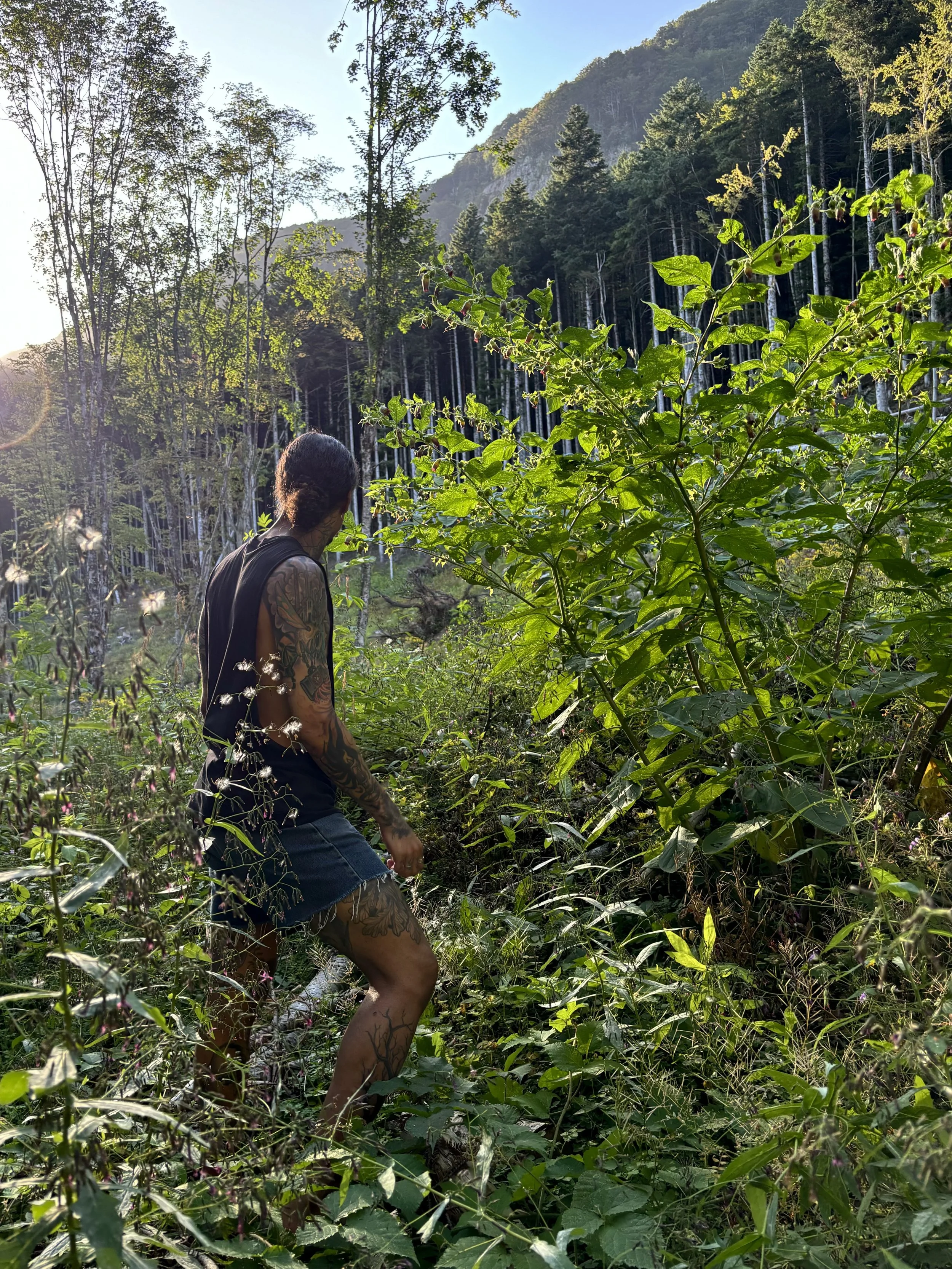
Kenny with a wild deadly nightshade plant. Photograph: Kenneth Moiane
This week’s guest
Kenny aka @ambientflora on Instagram lives in Berlin, Germany and has been an avid collector of poisonous plants for the last few years, although he collects orchids and grows edibles such as peppers and tomatoes.
Interested in poisonous plants? Buy my book!
The Atlas of Deadly Plants is out now, published by Greenfinch. It’s my guide to 50 poisonous plants and fungi from around the world. It’s available on Kindle, as an audiobook and as a heardback. Full details here!
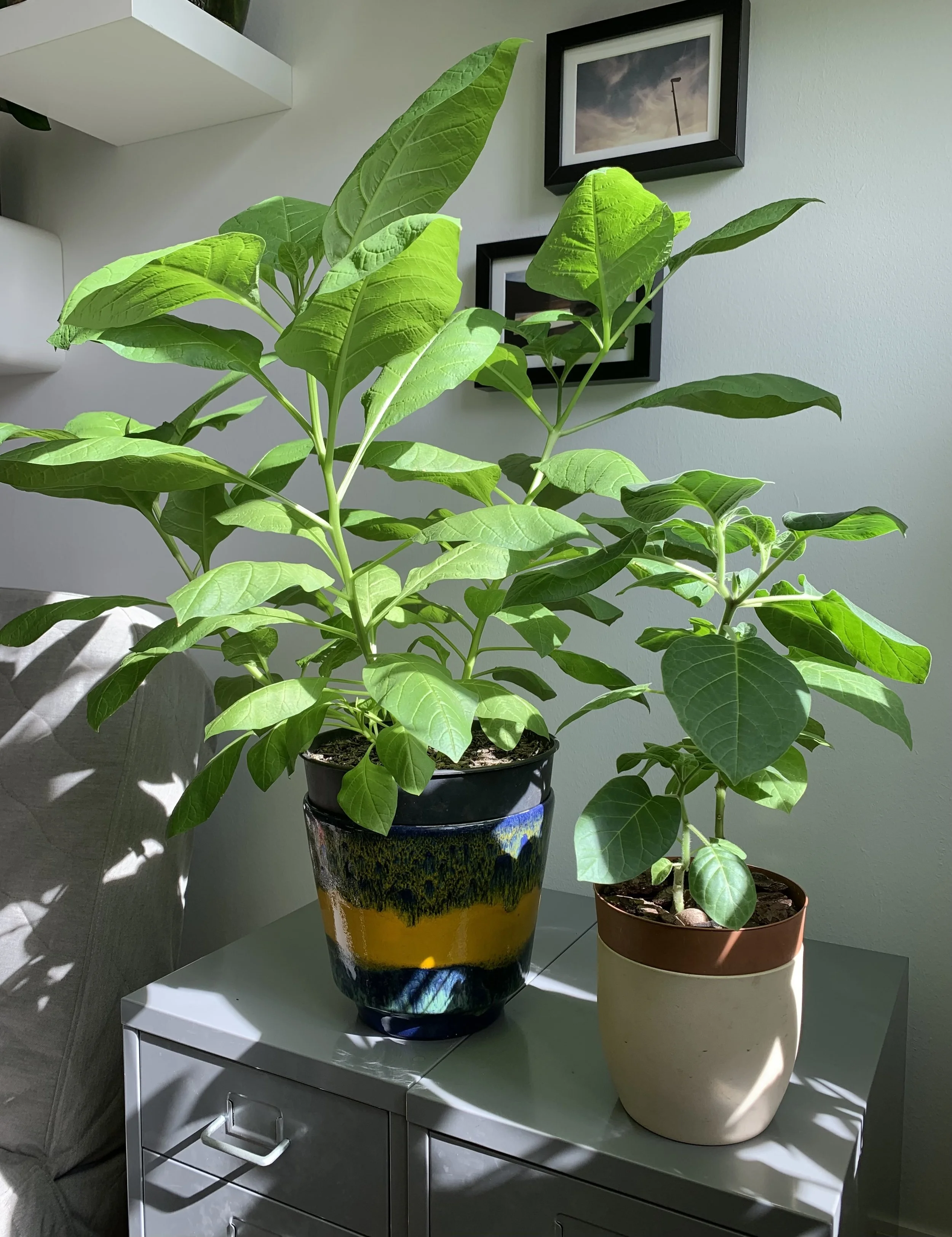
Atropa belladonna (left) and Datura innoxia growing indoors. Photograph: Kenneth Moiane
Chapters
0:11 Nightshades Indoors
4:52 Growing Poisonous Plants
7:40 Deadly Nightshade Guide
15:59 Starting From Seed
19:06 Folklore and Warnings
24:28 Poisonous Plant Break
26:36 More Nightshade Species
31:08 Henbane and History
35:20 White Henbane Explained
39:15 Why Plant Names Matter
41:59 Plant Literacy Matters
42:03 Beyond Toxic Plants
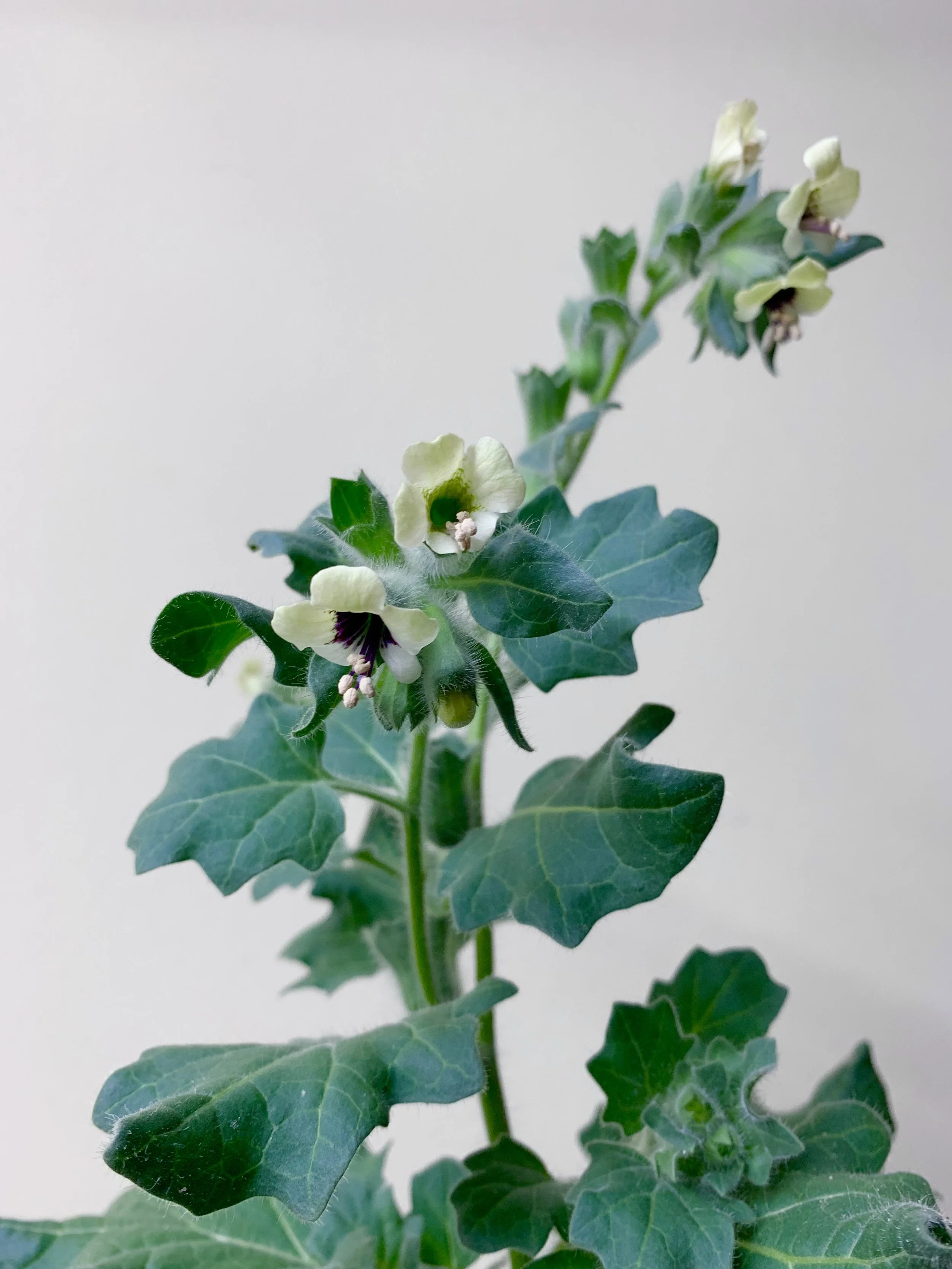
White henbane flowers (Hyoscyamus albus). Photogaph: Kenneth Moiane
CREDITS
This week's show featured Whistle by BenJamin Banger (@benjaminbanger on Insta; website benjaminbanger.com) and The Road We Used to Travel When We Were Kids by Komiku.