Are ferns the Gen X of plants? Ben Dark on Green Kingdom
Transcript
Transcript © Jane Perrone. Originally published at janeperrone.com. Please do not reproduce or republish without permission.
Jane Perrone: [0:00] Hello and welcome to On The Ledge Podcast. I'm your host, Jane Perrone, and this week I am joined by garden writer Ben Dark, who's here to talk about his wonderful new book, Green Kingdom.
Jane Perrone: [0:15] Ben, I'm going to call it right now, you may hate me for this, but I think you are the Bill Bryson of botany. Can I say, am I allowed to say that? As a writer, is that a horrible sort of anointing that then puts expectations on you? I don't know, but It doesn't.
Ben Dark: [0:30] Well, it's a lovely thing to say. I mean, I'll take it. I'll absolutely take it. The problem is that once it's said, it's out there and then everyone will say it. And you journalists love your alliteration. But you know what, if that's the headline that follows me around when this book comes out, if they're saying anything about it, the Bill Bryson of Botany, I'll take that 100%.
Jane Perrone: [0:50] I mean, yeah, just be glad. If this book hits the bestsellers because you've been described as the Bill Bryson of Botany, then that is great. Because I think this book tries to place itself somewhere where gardening slash plant books don't usually go, which is the main, main, mainstream. I mean, there's not that many books that have broken through from our niche into the mainstream. And this is what you're trying to do here.
Ben Dark: [1:17] Absolutely, I am. Yes. And it was very conscious, as you say, trying to do it. From the moment this was conceived of, I wanted it out of the garden shelves in the bookshop. Lovely place to be, an absolutely fantastic place to be. But I wanted it on those sort of popular science tables that you get. And I wanted it in airports and train stations. And as the one book you buy for Uncle Alan this year, because he vaguely likes the real world, as opposed to fiddling around in his garden. So it's a very, very conscious effort, as you say, to break the confinement of our little garden writery bonds.
Jane Perrone: [1:50] And give us the potted summary. When you were conceiving this book, what were you trying to achieve? Green Kingdom, it's a story of plants, but give us a bit more meat on those bones.
Ben Dark: [2:03] Well, it's a story for... You and I both are obsessed with plants. We don't need to be told how interesting and wonderful they are. But I think there is sometimes a tendency among people to see a sort of green, blurry backdrop. And I wanted to take that backdrop forward and show people that they live out their lives in front of the most amazing, fantastical backdrop. The most important thing for life on earth is the plants. They are what gives all energy to it. But also, they are they weren't assured there was a time there was a long long time in the earth before we had plants which meant that we lived on a world with this teeming sea full of fishes and sharks and actual things we'd recognize with land just bare and it was the plants that led us out of the waters and made possible things like, us talking today and on the ledger podcast and i want to get something of that sort of, magisterial story out in front of the readers. And I think it's possible to do. I think that the people writing about fungi have paved the way for showing people that they live in this world of complete hidden richness. And I kind of want to do the same for plants.
Jane Perrone: [3:24] Should it be the Merlin Sheldrake of Botany then? Is that what we're going for?
Ben Dark: [3:27] That would be great, isn't it? My publisher, Bodley Head, and my editor, Will, put out The Entangled Life. So I don't know if they were shopping for the plant Merlin.
Jane Perrone: [3:37] See what they were doing there. I see. Now you've got fairly young children and reading the book, I felt that came through not only because you included them in the narrative, but also because there's quite a lot of dinosaur stuff in here, which, I remember those times with my children where, you know, like, I don't know why dinosaurs are so big with young children, but they really are. But you really brought that period to life in a way that I don't think I've ever seen it done before. And your introduction and those opening chapters, I found really thrilling. I went down so many rabbit holes though.
Jane Perrone: [4:16] Being me, I immediately had to go and look up the scientific papers about the radiation experiments that you described that took place in Puerto Rico, where all of the plant life was killed, more or less, apart from these very amazing ferns. Tell me about that.
Ben Dark: [4:33] This was the most incredible experiment done by the, Atomic Agency over in the States. And they basically took their little bit of rainforest they owned in the...
Ben Dark: [4:48] In the Luquia Mountains, the Luquia Forest in Puerto Rico, and hoisted this canister of cesium, this incredibly radioactive substance that sprays out gamma rays in the middle of the forest to see what would happen. And then they invited this incredibly large and diverse group of scientists, because they had almost unlimited funding at that time, to come and just study. So what does happen if you blast a rainforest with radiation? And it turns out a lot of interesting things happen. it's.
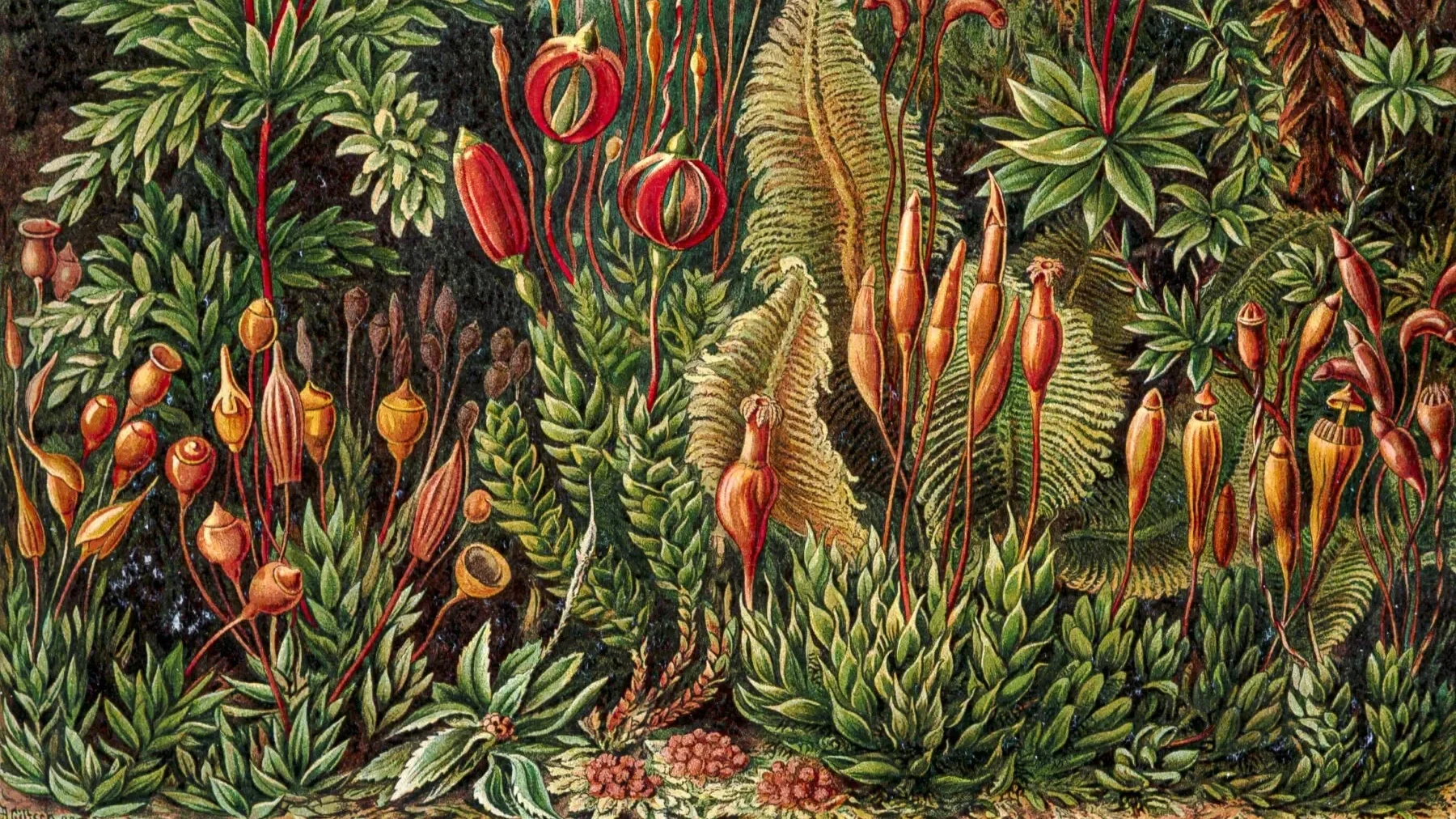
Ben Dark: [5:19] A lot of cellular death because gamma rays slice through dna but different species take it in different ways and some trees end up streaming from all of these holes you feel really sorry for them some trees end up putting out these weird formed leaves so you get trees that, produce classic laurel foliage suddenly with the silhouette of a of a snowman with that pinched waste and bobbly bobbly form, and some of the plants seem to just grow on impervious chief among them were the ferns, which is actually surprising because they have a really, really large amount of cellular DNA. It's not like they're hiding their stuff from the rays. They got chopped up just as much as anything else. They just seem to have this ability to survive, as they did after the asteroid strike that took out the dinosaurs. It was the ferns that came back first and gave sustenance to those little tiny scurrying things that became you and I and all your listeners. So we have a lot to thank them for. And they're still doing their job of surviving. They're great.
Jane Perrone: [6:21] I kind of feel like the ferns are like the Gen X of plants in that they've been through a lot of trauma historically. And therefore, when more trauma comes along, they're just like, come at me, come at me. I can survive anything.
Ben Dark: [6:34] I won't make any guesses.
Jane Perrone: [6:36] I'm speaking as a Gen X there, just in case you didn't guess.
Ben Dark: [6:39] I guessed, I guessed. So you see yourself as a fern. No, I can definitely see that. And they grow on sort of impervious. Well, we'll let all of those flowering plants that came afterwards do their strange thing and we'll just do what we do. keep on tracking.
Jane Perrone: [6:53] Yeah it's i mean that that i thought could have been a movie scene where you describe the cesium being hoisted into the air you wrote it so beautifully there are so many things in this book though that i went down rabbit hills on rabbit holes not rabbit hills that would be a different but rabbit holes um looking at um, Google to find pictures of things that you describe in the book. There are some pictures in the book, but there's also, you know, I wanted to go deeper and just go deeper into this research that you've done. This must have been a labor of love researching this book because I can tell, having written a book myself, that, you know, you haven't just kind of Googled a few things, and written something like in the way that day-to-day journalism is constructed
Jane Perrone: [7:38] these days, let's be honest, you've gone deep. How delightful and difficult was that research?
Ben Dark: [7:45] It was impossibly hard to stop because you think I would finish a day and it would have been a slog and my eyes were aching from reading and processing. And I think that was a shift. I put in a lot of time on the PDFs and on the books. And then you realize, but what have I done? I've taken I've taken 15 PDFs out of the 300,000 that remain on the internet about plant morphology and evolution. I've read two books out of the 1,500 I've still got to read. And that isn't actual work. The work is writing. So the real challenge was being able to stop that research and transfer it into writing. But what helps, as you say, the depth of the research is.
Ben Dark: [8:30] It's when you're in those papers deep and you find something that is a point of narrative importance. So you talk about the Sierra de Lucio experiment as a film. And when I was reading this great wag of declassified papers about that experiment, and suddenly you realize, well, they give you the exact time at all of these things occurred in the forest. So now I know it happened two hours before dawn on this day in this year. And suddenly that's the setting for the opening of a novelistic chapter. And when you hit those little moments in the research, that bit of, I don't know, extravagant storyteller's detail, then you know, yes, this is something, this can go in. And I sort of built every chapter from bits of that, from a person, from something really unusual or something that I don't think anyone will have seen before. So that was the joy of it all.
Jane Perrone: [9:29] And that really is the skill isn't it is that you've brought the story to life and i guess this i was going to ask you know why, did you feel a bit of imposter syndrome thinking i should there should be a taxonomist writing this book rather than me but that's the reason why you're writing it is because you can kind of, to coin a phrase you can you can see the wood for the trees in a way that probably a taxonomist wouldn't be able to differentiate what was actually a good narrative through this amazing forest of information about taxonomy.
Ben Dark: [10:02] I think you're probably right. And also that I'm not looking to make a contribution to the field. I'm looking to work as a translator of the guys who have expertise in these things. And I am essentially taking their work and adapting it for the big screen. Some people might say dumbing down, but I think sort of more slightly electrifying. And I think that I'm in a position to do that because I'm not, in that field. So I'm not sort of worried about the view from the common room. I'm not worried about the eight people in the world who know as much about me about it and what they might think, which is a danger when writing nonfiction. And it's something that I had to get out of my head. I was talking to botanists as I was writing this and I had to remember I'm not writing for these chaps at Cardiff or at Oxford. I'm writing for the people who want to fall in love with plants, perhaps for the first time, or to go deeper in their love for plants. And so I know it sounds horribly, horribly sort of govish, but maybe my ignorance and my non-expertise is a strength in some areas.
Jane Perrone: [11:11] I agree. I mean, of all branches of Bosnian horticulture, I think taxonomy is the one that needs a PR mission really, because even us gardeners tend to be quite dismissive of, taxonomy often and cursing taxonomists for changing the names of plants. Why am I having to say Lamprocapnos? And why am I having to call Dracaena, call snake plants, Sansevieria now calling them Dracaena? The lumpers and the splitters is how we sort of dismiss them.
Ben Dark: [11:45] But I think that there is an easy case. You don't really need to hire a great big PR firm. You just need to go back to some of the earlier writers. My favorite is to go to Darwin. And he, when was writing about taxonomy, he said that, as we know more about the plant world, our taxonomies will come to be genealogies, which is what they are. And that's why it's important to clarify these things. And when a group is split from its relatives in a family or in a genus and put somewhere else or when a group is lumped together. It isn't a academic shuffling of papers. It is the result of some evolutionary distance back in the past. What they are doing when they move that filing file in the filing cabinet is saying that.
Ben Dark: [12:31] There was a mountain range that rose between these two species at some point, and there is a difference, or this one changed its pollinator. And what I want to do in this book is go back to those speciation events behind the changes, in the nomocature and show that each one of them is kind of thrilling and important, and that when we have a correct taxonomy of all of the plants in the Green Kingdom, then we have this most amazing family tree. And we're able to take the commonest plant around us and trace it back to all the points where it joins its relatives until it's part of this great big highway heading back to the common ancestor of all plants, these little strands of algae. And I think that's really exciting. And I don't think that you need to be particularly interested in taxonomy to enjoy it. You just need to be interested in stories and how the world came to be. So I really enjoyed getting into the taxonomic mud and weeds.
Jane Perrone: [13:34] Was there anything that, I mean, I often think there's so much that you find
Jane Perrone: [13:38] out that we don't know the answer to that isn't a very clean answer for your book. Was there any sort of unsolved mysteries that you unearthed that you're still wanting to know the answer to?
Ben Dark: [13:49] I mean, there is so much. I mean, the greatest mystery in botanical history is obviously the abominable mystery of Charles Darwin. Where were the angiosperms in the sort of Cretaceous period? We know they were there. We know they were expanding or the pre-Cretaceous period rather. But how did they hit so suddenly and diversify so amazingly? Where's the fossil record? We have a great fossil record tracing development of ferns and the development of gimnasperms, our pine trees, etc. And then suddenly you have these new things and it's almost like a meteorite hit the earth and a load of plants jumped off it and said, right, it's ours now, mate. We're taking over.
Jane Perrone: [14:29] Don't say that, Ben, because there's going to be some conspiracy theorist who's going to be taking you literally on that one. That's going to appear.
Ben Dark: [14:37] Bill Bryson said it. Bill Bryson said it on me. Yeah, so that's one of them. And I mean, I have some ideas about why that was, but I don't think it's going to be solved. And I mean, the world might be less interesting if it was solved.
Jane Perrone: [14:53] Yeah, that's so true. And there are some things that keep me awake at night, but I'd still wonder about many plant issues. But I guess we've had so many advances in the last few decades that genetics is answering a lot of these questions in a way that in the past, you know, taxonomists were relying on looking at tiny weeny differences between flowers, which you kind of go into in various contexts in the book. And now we've got these, we can look at genetics instead, which has revolutionized things. And I guess one of the other things that really occurred to me as a houseplant person when reading the orchid chapter was just the incredible, incredible amount of work that goes into producing what we now see as the very workaday moth orchid in our local branch of Tesco's.
Ben Dark: [15:46] Exactly.
Jane Perrone: [15:47] Tell me about what you found out about orchids.
Ben Dark: [15:50] That chapter was absolutely brilliant, particularly after working in the sort of the mossy murk of how plants, evolved 400 million years ago to go right up to this sort of techno-futurist chapter where we're talking about vials of proto-corn, little green goos in flasks, that the plant breeders are turning into all the things we buy today. It was really fun. But basically that one, I researched the great big orchid growers, in the Netherlands and how they have these sort of computerized warehouses west of Amsterdam, where these things are getting produced in the millions, in the hundreds of millions and without touching human hands. I watched a very tall, handsome young Dutch CEO explaining with great pride how his orchid only goes under the hand of a human for seven seconds when they clip on the flower stalk. And that's what I was talking about earlier when you hit one of those moments where you realize, right, this is something that turns it into a story, how these are all done. And I love the fact that our orchids are... Bred, not necessarily like a lot of plants are done because it's possible to do between these species, because they hybridize so readily. They're bred according to market research. They're bred according to, well, in this particular region of Northern Italy, they like a tame orchid, but down in Sicily, they like them a bit more vibrant. So we'll breed for this.
Jane Perrone: [17:17] And it really is- Where do they like the dyed orchids? Because the blue ones, I just, I mean, actually that's, Because having been to orchid nurseries, I remember them, they were testing them out at the time. And I remember them saying, oh, yeah, we inject the dye into the orchid stem and it's taken up by the flower, which makes sense. But that doesn't really fit in with the narrative of like the seven seconds. Like, I wonder how they're producing those dyed orchids now, because it's a lot more work to, I don't know, that's something I would love to find out.
Ben Dark: [17:53] I don't know if you came across that.
Jane Perrone: [17:54] Someone.
Ben Dark: [17:54] On a conveyor belt with a syringe you can do it you can do an ejection in no.
Jane Perrone: [17:57] Time at all they're they're all computer yeah especially with the especially with the euro pop that they're constantly, you know have you ever been you've actually been in person to one of these places but it's powered by euro pop like there's very loud euro pop playing at all times and if you turn it off to do a recording no it's not going to happen, but yeah so they're all like i can imagine yeah and these things are these things are computer.
Ben Dark: [18:22] Image before they reach that person with their little hand clipping. So it's been scanned, so the pot reaches them with the stems in the perfect ergonomic position. So I'm sure you just have someone with a syringe and the computer puts it right in front of it and it goes ka-junk, ka-junk, ka-junk. It's really interesting. I always think of the hundred ghost orchids, the orchids that were trialed and decided, well, actually the settles a bit too fat.
Ben Dark: [18:51] Chuck that one away. oh actually the yellow at the base of the flower is not quite strong enough chuck that one away all of these these ghost plants that existed probably only ever in, in these breeding warehouses in taiwan and and in and in the netherlands and they're just gone because it was decided no these won't these won't fit a person and i, i just find them thrilling i love the fact that there are these.
Ben Dark: [19:15] Jungle plants, the Thalaenopsis particularly. And they grow in a higher density around me here in South London probably than they do in their native environment. It's so strange. It's one of the things that I talk about, not in relation to this, but when I talk about the ginkgo, that surviving relic tree. And now we can unravel its DNA. We can see the bottlenecks in its population size, the periods where it nearly went extinct and survived. And there were three of them when it was driven out of Europe, because it used to be everywhere, when it was driven out of the rest of Asia, when it retreated to whatever little tiny valley in China that nourished it over the years. And that is recorded in its DNA forever. And if we go extinct, now people, plants will carry on growing. But across the entire Green Kingdom, there will be this weird period of, muddled DNA when we were picking up plants and bringing them from Europe to the States and the States to Europe, all over the world, mixing and mergling them. So if we ever get an alien species come to study the relic vegetation of the planet, they will be able to infer our existence from this little lump that will be stored in the genetic code of plants forever. It's absolutely brilliant.
Jane Perrone: [20:36] Yeah. Yeah, I think that's so, it's so fascinating. And along those lines, I think about house plants more generally, how come these particular species have come to be, what are the characteristics that have made them, suitable for cultivation and have turned them into these absolute, world beaters that have, you know, taken over in, you know, like something like devil's ivy that's actually become naturalized all over the world and become invasive. And also is in every chip shop and Chinese takeaway you've ever been into. It's a really, the more you think about plants, the more fascinating it gets. And that's why I couldn't put this book down. I enjoyed it so much. I do now want to have an eelgrass roof structure in my garden, though.
Jane Perrone: [21:25] Just tell me briefly about this. I just thought this was, what my daughter would say about this is, it's so whimsical, like the whimsical eelgrass roof.
Ben Dark: [21:33] Tell me about it. The grass roofs are fantastic. I went to see these on the last place they really are still used, which is the island of Lesu in the strait, on the Katagat strait, the Katgat strait between.
Ben Dark: [21:49] The mainland of Denmark, Jylland of Denmark, and Sweden. And they are roofs built from this plant which is commonly called a seaweed but it's not it's an angiosperm it's a flowering plant that has moved into the waves and creates these meadows, and they build houses from them almost like a thatch but it doesn't, really line up like lovely reeds or stems of straw so instead what they do is they, pile it high and by high i mean as high as it looks like a cliff has been dropped on top of tiny little whitewashed walls. And these roofs.
Ben Dark: [22:29] Development of their own ecosystems. And I know we've all seen an old thatch root sprouting a birch tree or two, but these have their own watercourses within them. They soak up so much rainwater that they have underground streams and reservoirs and parts that are always damp. And I think they're just the most amazing things. And I like them particularly on that island of Leersu because it is so wind blasted. It's low like all of Denmark. The wind comes whipping over and then off to Sweden. But these feel so solid. They feel as if the houses are really nicely held down. I think it goes back to sort of caveman times. It feels like we're living under a great big living rock. And it made me feel really sort of snug and comfortable. There's a really nice picture of one in the book.
Jane Perrone: [23:20] Yeah, the picture in the book is beautiful. And I did, going down my rabbit hole there, I did come across some researchers who are now trying to experiment, with that and similar products, or similar plants, rather, as a new roofing product, which was, as everything in life circularity comes about, which is great. But so maybe I will be able to have my eelgrass structure.
Ben Dark: [23:45] I don't know. I think you should hold out hope for it. Unfortunately, the eelgrass has gone under a massive decline because it had this horrible wasting disease, which took out the population. There used to be masses of it. It was the stuff that they used to stuff cheap mattresses with all across the world. And you used to get people who would go out into the sea, particularly in the Wadden Sea, off the coast of the Low Countries, with scythes, really surreal pictures. I couldn't find one for the book. It was really annoying because one of these things in the research, I saw this 18 months ago, now I can't find a picture. But teams of scythers with their blades and their packed lunch, just like you get in those bucolic pictures of the guys off to mow the village, but standing knee deep in the water. And they would scythe under the ground and then collect this stuff once it floated to the surface and rack it off. 500 families across the coast of some areas used to be supported by this. And now it just doesn't really grow anymore. which is really sad.
Jane Perrone: [24:46] Did you come to the point with the book where you kind of felt like, your brain had become a sponge and you'd taken in so much information about the plant kingdom that every time you went out, I kind of feel like I'd get so full of knowledge that I'd just be feeling like I was some kind of omniscient being, like looking at every plant and then immediately be able to see into its cell structure and understand more than I thought was possible. Maybe this is just my brain, but it's a wonderful thing to be able to feel as if you've managed to.
Ben Dark: [25:19] The plant kingdom into a book it's all true I live I live like I live like those scenes in the matrix now it's all just code it's all just it's all just sort of chlorophyll no I don't I don't I know I, it's like anything the the more you know the more you realize ah there is so much more to learn so much more that could have gone into the book but that can be someone else's job what.
Jane Perrone: [25:40] Did you leave out well what did you have.
Ben Dark: [25:42] To what.
Jane Perrone: [25:42] Had to what went on the cutting room.
Ben Dark: [25:44] I left out quite a lot uh two particular strands because i because i wanted to to get there's not much of me in there there's a tiny bit of me in there just enough occasionally so i kept most of that in but and then the history i wanted to keep in there's a bit of plant philosophy and taxonomy and quite a lot of botany and, particularly the plant philosophy i cut a lot of that out there was a lot about i was talking about the first ideas about plants a lot about the aristotelian notions of you know this ladder of life and going up. Really interesting stuff. But, too much for a generalist book. And there was a lot of the botany that is very, very, very hard to explain while still spinning a yarn and, that doesn't, necessarily, isn't needed to understand a plant, but would have been really, really nice for people to want to dig deeper. So I left out some of the things about gametophytes and sporophytes, for example, in the early chapters, which I'd have liked to have put in, and I had put in. There is like these ghost orchids.
Jane Perrone: [26:52] Did the editor say, did the editor, did you get some strikethroughs, TLDRs on something?
Ben Dark: [26:58] Yeah, yeah. Not quite as bad as some editors who just write bored in the comments. Mine treated me a little bit better. This was funny because I was writing at the same time for the American editor and a UK editor. So it sold to different publishing houses who had different ideas about the book and.
Ben Dark: [27:15] Um that was a challenge delivering the same book to two people who have two different ideas and there was a danger of it falling completely in the middle but anyway both both of those who had a good nose for, i think you're going to i think you're going to lose people here or i think that your explanation is going to be more confusing than your then you could be actually what happened you know when you think of, a metaphor to explain something and then you get really deep into it and suddenly you're talking about sort of four rubber gloves wrapped around a bamboo stick it's like well wouldn't it be easier just to tell them what asylum is, um so so then they'd go back and they were nicely light touch so when i got a comment i knew wow this bit really is messed up i better go back and i tended to rewrite, half a chapter or something, and then second time round, it's tended to flow a little better. There was some whimsy, overly whimsy that I had to cut out. There was a little fairy tale story at the beginning or in the chapters, which would have been nice if it was a more fragmented book of different writing styles, but it really felt slightly strange sitting there in the completed text. So I took that out and did a history of the formation of Hawaii instead, which works.
Jane Perrone: [28:35] How on earth did you choose, though, which particular plant families to cover? Because you cover you cover many you cover ferns aroids orchids as we've already discussed but you.
Ben Dark: [28:46] Can't cover everything so was that a difficult decision it was an impossibly hard decision early on it's easy because i was doing a sort of, um morphological this plant develops the ability to say survive in the open air which is our briophyte plants or briophyte like plants then i was doing this plant has the ability to put on height. So you go into your club mosses, which had those ancient relatives, the lepidodendrons, and then you have true leaves with the ferns. So that's quite nicely mapped out. And actually, then you can kind of go through, well, I want to talk about gymnosperms. And then suddenly you hit, again, our angiosperms. And then you've got to choose between these 600 families. And all of them are doing fairly similar things, i.e. getting themselves pollinated and producing new plants. And which of these are the interesting ones? And there are, I mean, some of them I just love. I love auroids. And I think that, as you will know better than I, everyone loves them. They're a plant that people are familiar with. They're a plant that people have in their houses. So I wanted to have those. Same for the orchids. Other chapters, I choose because, I just came across a really good story. The lesu, the tang house, that seagrass, I was living in Copenhagen when I wrote this, that had to go in.
Ben Dark: [30:10] The bellflowers went in because I just love this character, Felix Platter, who is the Renaissance plant collector. I based that chapter around, but I based it around his teenage diary, which I found, which reads exactly like the diary of Adrian Mole. He's up to all sorts of shenanigans.
Ben Dark: [30:30] Going to Marseille to find an elixir to make his beard grow long and slapping on his face. And so that was the reason for choosing that one. But Jane, I'm full of regret for the families I left out. And I'm sure there are some that you would have liked to have seen. I would love to have the euphorbias in there. The cactuses would have been great.
Jane Perrone: [30:50] Yeah. I mean, for me, I have to say cactaceae, I'm biased, but I would have loved that. Also, euphorbia is an incredible, I think they call it a mega genus, don't they? It's like 3,000 species or something. Although obviously some things are constantly moving in and out of that particular. But I just find it, I love the fact that, you know, there's a euphorbia that's in my garden, you know, taking over as a weed, but I'm also growing them in my house as house plants. And it's just, it's those, the diversity of that huge genus. I just can't understand how it holds together. I'm sure it does. But I would have loved to know how.
Ben Dark: [31:27] It's amazing, isn't it? And this is what the later... Angiosperm evolution, later evolved plant families, do they just? There are a spectacular range of lifestyles and body forms. You think about sort of panacea, the pine trees. I mean, they do one thing. They do it very well. And then euphorias, you've got annuals, you've got perennials, you've got xerophytes, you've got climbers. It's absolutely incredible what they have done. And that could be a supplementary book in itself. We could do we could do the green kingdom reading series and euphobiasia could be one of the chapters, yeah it's it's it's heartbreaking all the stuff i had to leave out but but the thing is that the subject is so vast it can only be my personal edit it's like the director's cut the ben dark cut of the green kingdom there could be a jane perrone cut of the green kingdom and it would be a completely different complete different book yeah.
Jane Perrone: [32:22] Yeah, absolutely. But I think the reason why your cut works is because it's just so beautifully told.
Jane Perrone: [32:30] And I'm going to be putting up on my Patreon an extract from the book for legends and super fans. So if you are in that category, you can go and listen to that and hear an extract from the audiobook, which is read by you. Was that a good experience?
Ben Dark: [32:47] You've done an audiobook, so you'll know it's a mixed experience. It's a very, very tiring experience. It's frustrating when you just want to... Ben the writer and Ben the audiobook reader are very different people. It actually turns out their purposes are quite at odds. Ben the writer wants to be accurate and put in all of the correct Chinese provinces. And Ben the audiobook reader wishes he'd just said in Southeast China somewhere. So those two...
Jane Perrone: [33:16] I relate so hard to that. I really do.
Ben Dark: [33:19] Yeah.
Jane Perrone: [33:19] It's an issue.
Ben Dark: [33:20] Having said which, it was a joy to come back and dispel those worries that build up after you finish writing and haven't returned to the decks for a while when you're starting to talk to editors about marketing and covers. Is any of it any good? And then I was able to read through and think, yes, this is good. So that's a relief and very useful now as I start to promote it.
Jane Perrone: [33:42] Well, absolutely. Because I don't know about you, but when I finished a book, my brain just goes ka-chunk and I've forgotten everything. So actually doing the audio book is actually really handy because it reacquaints you with your own material. And also the other thing that's great about the fact that you've done it is I know that as a fellow podcaster, your podcast, The Garden Log, being one of my favourite gardening podcasts and secret, I don't listen to that many gardening podcasts because it's like you don't watch Gardener's World, right? When you're a gardener because it's a little bit cold to Newcastle but I do enjoy your podcast which I believe is back, and one of the things people love is your mellifluous voice so maybe you're going to I mean I hope you're not going to be sending people to sleep but some people might be viewing this as a relaxation aid listening to you talk.
Ben Dark: [34:30] About uh and just burns I hope they do my some of my favorite podcast reviews I get a review like five stars an excellent cure for insomnia and it was and it was genuinely true or you get you get sometimes quite lovely but strange messages from people who'd say, i have terrible problems sleeping so what i do is i queue up 16 of your episodes they're about half an hour each, and then when they finish playing i know it's time to get up in the morning i think whoa how strange that i'm in this person's head all night. It's weird. But if you want to do that for the Green Kingdom, then by all means, I would be flattered and overjoyed.
Jane Perrone: [35:15] Well, and also, I'm sure you'll come away with a wealth of interesting knowledge. It's a good job I don't go to the pub, because if I did, I would be using lots of things from your book for monologues in the pub about plants.
Jane Perrone: [35:32] It's a wonderful creation, and I'm so glad that it's coming into the world. But tell us where we can find it and when we can find it also.
Ben Dark: [35:41] It's out on October the 28th in the UK. It's out early 2027 in the US. And you can find it pretty much anywhere. I'm hoping it's going to be in all of the bookshelves. I'm hoping it's going to be on those tables at the airport.
Jane Perrone: [35:57] Yes, you want it on the tables. I've never got to the tables.
Ben Dark: [36:00] I've got nowhere near the tables. I could just about do a Facing Out book on release week. But those tables, they're the dream. So if anyone sees it.
Jane Perrone: [36:11] I think you're headed for the table, so I'm going to call it now. I wish you all the best with this fantastic book. Let's hope that it demystifies taxonomy and brings it to a much wider audience because it really deserves it. I think Bill Bryson's probably quaking in his boots along with Merlin. Thank you very much for joining me today.
Ben Dark: [36:33] Thank you, Jane. It's been a pleasure.
This week I talk to garden writer Ben Dark about his new book, Green Kingdom. We cover being called "the Bill Bryson of Botany", why ferns are such survivors, Darwin's "abominable mystery", the work behind the humble moth orchid, and why taxonomy deserves better PR.
Want to hear this podcast ad-free? Sign up for my Patreon now to unlock ad-free episodes, bonus episodes and much more! Get 25% off annual and monthly memberships with code JOINME if you appy before Halloween 2026 is over! Patrons at the Ledge End and Superfan level can listen to an extract from Ben’s book - the aroids chapter in An Extra Leaf.
This week’s guest
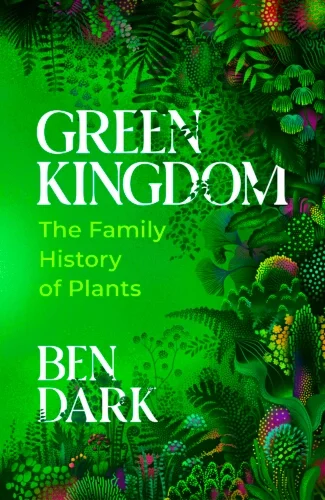
Ben Dark is a historian, broadcaster and former head gardener. Hi book Green Kingdom: The Family History of Plants is out now in the UK and will be out in North America in January 2027.
Ben holds degrees in history and horticulture and is the author of The Grove: A Nature Odyssey in 19 1/2 Front Gardens, chosen by the Sunday Times and Telegraph as a best book of the year. He is also creator and host of the award-winning Garden Log and Dear Gardener podcasts and a winner of Journalist of the Year at the Garden Media Guild awards.
CREDITS
This week's show featured Whistle by BenJamin Banger (@benjaminbanger on Insta; website benjaminbanger.com).